cardiology
(21)
Boston Scientific Built a $20 Billion Business From Smaller Incisions
The company’s most durable idea is also its smallest: reach the disease through a vessel, an opening or a pinprick - then turn that procedure into a platform.

Springfield Regional Medical Center
In 2011, two competing Springfield hospitals stopped competing and poured $275 million into a single building on North Fountain Boulevard. Today, Mercy Health - Springfield Regional Medical Center is the 234-bed answer to nearly every medical question in Clark County, Ohio.

Evolent
The company betting that the most expensive corner of American medicine - cancer, cardiology, and back surgery - can be run better when the people paying for care and the doctors delivering it are finally pulling in the same direction.

Axon Therapies, Inc.
Axon Therapies is a clinical-stage medical device company developing SAVM (Splanchnic Ablation for Volume Management), a minimally invasive, implant-free catheter procedure that ablates the greater splanchnic nerve to calm an overactive sympathetic nervous system and rebalance blood volume in patients with heart failure - particularly heart failure with preserved ejection fraction (HFpEF). Incubated by the medtech studio Coridea and backed by leading healthcare investors, the company is advancing its Satera Ablation System through randomized, sham-controlled feasibility trials.
Heartflow
Heartflow is a Silicon Valley medical technology company that uses AI and computational fluid dynamics to turn a standard coronary CT scan into a personalized, color-coded 3D model of a patient's heart. Its FFRCT, Plaque and RoadMap analyses help cardiologists diagnose and manage coronary artery disease non-invasively, reducing the need for invasive angiograms. Founded in 2007 and headquartered in San Francisco, Heartflow has analyzed hundreds of thousands of patients across more than 1,500 U.S. hospitals and went public on the Nasdaq (HTFL) in August 2025.

Revamp Medical
Revamp Medical is an Israeli medical device company building the Doraya catheter, a temporary, adjustable flow-reducing catheter for patients hospitalized with acute heart failure. Deployed in the infrarenal inferior vena cava for up to 12 hours, Doraya is designed to relieve venous congestion and improve response to diuretic therapy in patients who respond poorly to standard drugs - addressing the local mechanism of diuretic resistance rather than relying on systemic drugs or dialysis. Founded in 2016 and based in Netanya, the company won FDA Breakthrough Device designation in 2020 and closed a KCK Medtech-led Series A in 2023 to fund U.S. clinical trials.

HelpWear
HelpWear is a Toronto-based medical device company building the HeartWatch, a medical-grade ambulatory ECG monitor engineered for extended, continuous wear. Its signature dry-electrode, non-adhesive design avoids the skin irritation that limits traditional adhesive patch monitors, letting patients wear it comfortably for long stretches while it streams clinical-grade heart-rhythm data to physicians. The company targets hard-to-catch conditions like cryptogenic stroke, unexplained syncope and long-term arrhythmia detection, positioning the device as a tool to guide physician decisions and support telemedicine.

Karoo Health
Karoo Health is an Albuquerque, New Mexico company building tech-enabled, value-based cardiovascular care. It pairs wraparound care teams - nurses, dietitians, pharmacists, health coaches and advanced-practice providers - with Kohere.ai, a proprietary platform that aggregates patient data, flags risk and coordinates communication. The model helps cardiology networks, health systems and health plans move from fee-for-service to value-based arrangements, aiming to improve heart-patient outcomes while lowering the cost of care.

Wearlinq
Wearlinq is a San Francisco healthtech company building eWave, described as the first continuous, wireless, FDA 510(k)-cleared 6-lead ECG cardiac monitor. About the size of a coin and worn on a skin-like adhesive patch, eWave pairs with a patient's own smartphone, runs 5+ days between charges in an AirPods-style case, and streams near-real-time data so clinicians get hospital-grade multi-lead visibility without the bulk of a wired Holter monitor. The company also operates an IDTF (independent diagnostic testing facility) staffed by certified cardiographic technicians who turn around STAT reports, closing the loop from device to diagnosis.
Ian Koons
Ian Koons is the co-founder and CEO of Karoo Health, an Albuquerque-based startup building tech-enabled, value-based cardiovascular care. A former college tennis player who once did post-game radio for an NFL team, Koons turned a personal loss - a best friend's fatal heart attack in 2014 - into a company that pairs on-site and virtual care teams with software to help cardiologists move from volume to value. Since founding Karoo in 2021, he has grown it to dozens of employees, raised seed funding, partnered with cardiology networks across roughly a dozen states, and teamed with Heartbeat Health to assemble a national end-to-end cardiac care solution.
Scott Klein
Scott Klein is the CEO of HelpWear, a Toronto-based medtech company building HeartWatch, a medical-grade ambulatory ECG monitor with a dry-electrode design worn on the bicep for extended, comfortable heart-rhythm monitoring. A biomedical engineer with a Notre Dame MBA and roughly 25 years in cardiology medical technology, Klein spent 14 years at Medtronic, then led global marketing and strategy for heart-failure therapies at Abbott and product strategy at Starkey Hearing before taking the helm of HelpWear. He is known in the industry for building and scaling cardiac-monitoring businesses into markets measured in the billions.

AngioWave Imaging
AngioWave Imaging is a Massachusetts-based medical AI company building post-processing software that sharpens fluoroscopic angiograms in the cardiac catheterization lab. Its FDA 510(k)-cleared AngioWaveNet uses a spatiotemporal, convolutional deep neural network (branded STEP) to reveal blood-vessel detail that is hard to see on the raw angiogram, helping interventional cardiologists diagnose and treat coronary artery disease. The software runs on top of any existing fluoroscopy system, requiring no new hardware.

Auxilius Pharma
Auxilius Pharma is a clinical-stage cardiovascular pharmaceutical company developing AUX-001, a once-daily extended-release formulation of nicorandil for the roughly 11 million Americans living with chronic stable angina. By reformulating an established molecule through the FDA's 505(b)(2) pathway, the company aims to deliver what would be the first new innovative oral angina therapy in the US since 2006 - improving adherence, tolerability and outcomes for patients who still suffer symptoms despite optimal treatment.
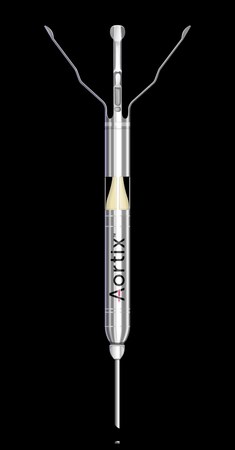
Procyrion, Inc.
Procyrion, Inc. is a Houston-based medical device company developing Aortix, a catheter-delivered percutaneous mechanical circulatory support (pMCS) pump. About the width of a pencil, Aortix is anchored in the descending aorta where it unloads the failing heart while boosting blood flow to the kidneys, targeting acute decompensated heart failure and cardiorenal syndrome. The device holds FDA Breakthrough Device Designation and is in the DRAIN-HF pivotal IDE trial after closing a $57.7M Series E in February 2024.
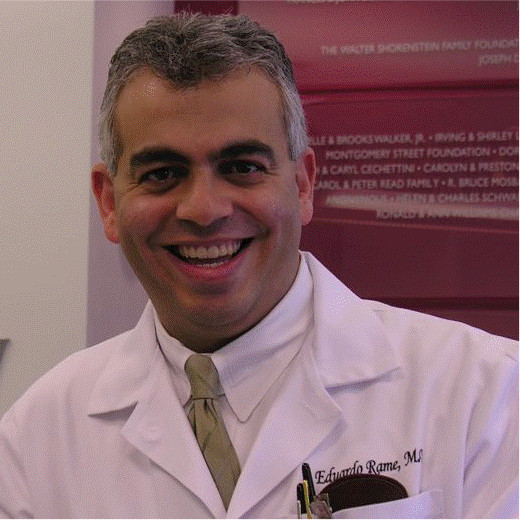
J. Eduardo Rame
J. Eduardo Rame is a Philadelphia cardiologist who treats the sickest hearts in medicine - patients in the final stage of heart failure who depend on pumps, transplants and the chance their own muscle can be coaxed back to life. As the Louis R. Dinon MD Professor and enterprise chief of Advanced Cardiac and Pulmonary Vascular Disease at Jefferson Health, he runs an integrated division built around recovery rather than replacement. Yale-trained in biophysics, Oxford-trained in health economics and Harvard-trained in medicine, he spent a decade founding Penn's mechanical circulatory support program before bringing that work to Jefferson. His research on left ventricular assist devices, including the landmark MOMENTUM 3 trial, has been cited more than 12,000 times.
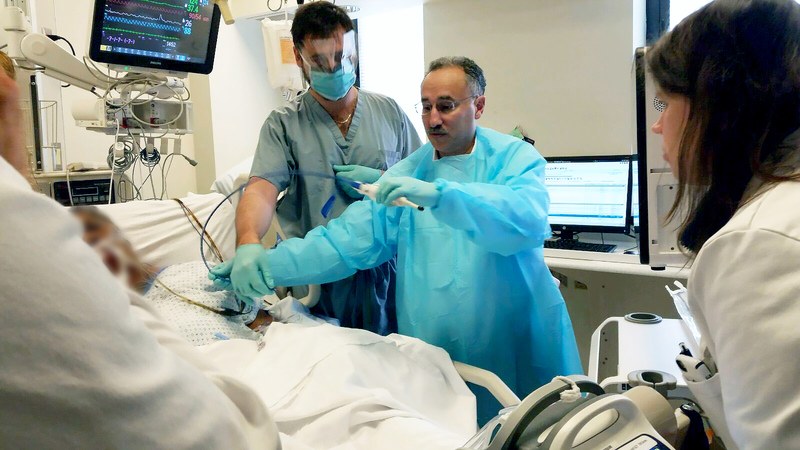
Scott Roth
Scott Roth is a cardiologist who spent two decades reading echocardiograms before deciding the ICU needed a faster way to see the heart. As founder and CEO of ImaCor, he built hemodynamic ultrasound (hTEE) around the disposable, pencil-thin ClariTEE probe that stays in a patient for up to 72 hours, giving clinicians a live look at cardiac filling and function instead of waiting on lab results. In 2022 ImaCor and Clarius released the Zura Handheld, billed as the world's first handheld TEE system, putting that view in a 22-ounce device.

Tempus AI
Tempus AI is a Chicago-based health technology company that has built one of the world's largest libraries of clinical and molecular data, paired with an AI operating system that helps physicians and researchers make data-driven decisions in oncology, cardiology, radiology, and beyond. Founded in 2015 by Groupon co-founder Eric Lefkofsky after his wife's cancer diagnosis, the company sequences patient genomes, structures messy clinical records, and turns that data into diagnostics and AI tools used across a majority of U.S. academic medical centers. It went public on Nasdaq in June 2024 under the ticker TEM.

John McCutcheon
John McCutcheon is President, CEO, and Director of EBR Systems, Inc., the Sunnyvale-based medical device company behind the WiSE CRT system - the world's first FDA-approved leadless solution for left ventricular pacing. With over 40 years in medical device sales, marketing, and general management, McCutcheon has shepherded EBR through pivotal clinical trials, FDA Breakthrough Device Designation, and the landmark FDA approval in April 2025. Before EBR, he led Ceterix Orthopaedics to a $105 million acquisition by Smith & Nephew. He brings a track record of building and selling medical device companies, now steering EBR's commercial launch of a technology that could transform how heart failure patients receive cardiac resynchronization therapy.
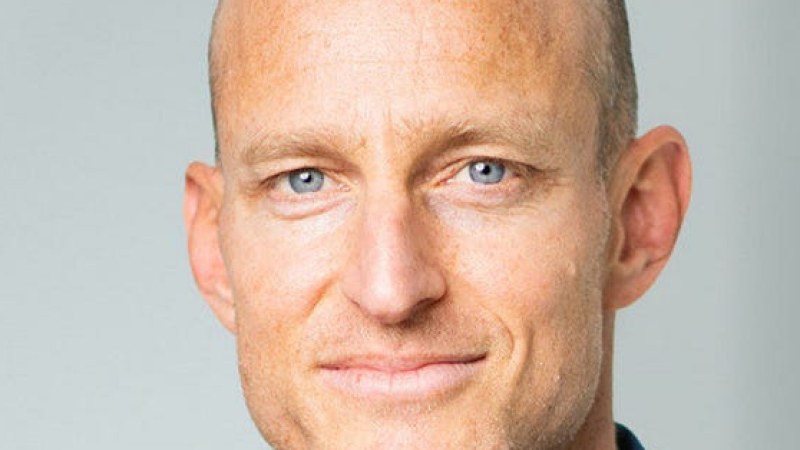
Eric Green
Eric Green is the Founder and CEO of Trace Neuroscience, a South San Francisco biotech company racing to develop the first effective ASO therapy for ALS. A Harvard-and-Stanford-trained physician-scientist with a background in cardiology, Green co-founded iLab Solutions (acquired by Agilent), Respira Design (Stanford $50K Challenge winner), and Maze Therapeutics before launching Trace with a $101 million Series A in November 2024. Trace's lead program targets UNC13A - a protein lost in ALS patients - using an antisense oligonucleotide designed to restore healthy nerve-muscle communication. With clinical trials targeting early 2026, Green is betting human genetics can do for ALS what it did for heart failure.

Josh Lehrer
Josh Lehrer is a physician-scientist and biotech executive serving as CEO of Marea Therapeutics, a clinical-stage company harnessing human genetics to develop first-in-class medicines for cardiometabolic diseases. A cardiologist by training with degrees from Harvard, Cambridge, and UCSF, Lehrer brings over two decades of drug development experience spanning Genentech, Global Blood Therapeutics (where he oversaw the FDA approval of Oxbryta for sickle cell disease), and Graphite Bio. At Marea, he has led the company from a Third Rock Ventures incubation to a $190 million-funded enterprise with two clinical-stage programs showing strong early efficacy data, including a 53% reduction in remnant cholesterol with MAR001 published in The Lancet.
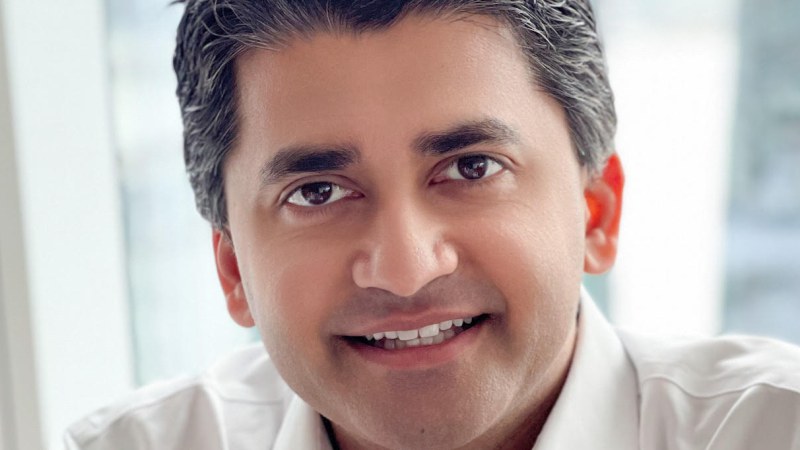
Pavan Cheruvu
Dr. Pavan K. Cheruvu is the President and CEO of Bitterroot Bio, a Palo Alto-based biotech pioneering the field of cardio-immunology — the intersection of the immune system and cardiovascular disease. A Rhodes Scholar, board-certified cardiologist, and physician-scientist who trained at Duke, Oxford, Harvard/MIT, Johns Hopkins, and UCSF, Cheruvu is guiding Bitterroot Bio's lead program BRB-002 — a first-in-class CD47-targeting therapy for atherosclerosis — through clinical development after a landmark $145M Series A in 2023 and positive Phase 1 results in 2025.