Grain of Rice. Billion-Dollar Bet.
There is a device in the hearts of some patients at Cleveland Clinic that is smaller than a grain of rice. It communicates through ultrasound. It has no leads, no wires connecting it to anything outside the body. It arrived there in April 2025, when the FDA gave its blessing - and John McCutcheon had been preparing for that moment since 2019.
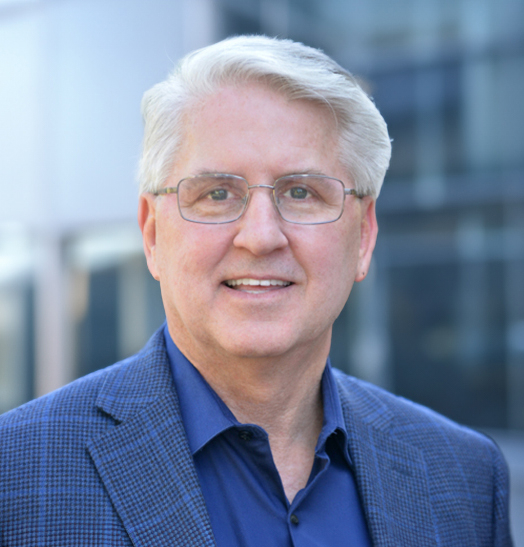
McCutcheon joined EBR Systems the same summer the company closed a $30 million funding round. The announcement covered both events in a single press release. That is the kind of decisive momentum that tends to follow him. Before EBR, he built Ceterix Orthopaedics into a $105 million acquisition target for Smith & Nephew. Before that, a string of companies - Perclose (acquired by Abbott), Emphasys Medical (acquired by Pulmonx), Ventus Medical - each one adding another line to a track record that reads like a merger document.
But EBR is different. The WiSE CRT system is not an incremental improvement on existing technology. Cardiac resynchronization therapy has relied on wired leads for decades. Threading a lead through the coronary sinus to pace the left ventricle is a procedure with known failure rates, complications, and a population of patients for whom it simply cannot be done. The WiSE system skips all of that. A transmitter sits outside the heart; an electrode the size of a grain of rice is implanted endocardially; ultrasound carries the energy across the gap. No lead. No problem.
The pivotal SOLVE-CRT trial told a compelling story - 16.4% improvement in heart function, 80.9% of patients free from device-related complications, a procedure success rate of 97.1% in the SELECT-LV trial. The data was strong enough that the trial was halted early for success in May 2023. By January 2025, JAMA Cardiology had published the results. By April, the FDA had approved the device. By June, Cleveland Clinic and St. David's Medical Center in Austin, Texas, had completed the first commercial implants.
McCutcheon's job now is the hardest part: turning a landmark approval into a functioning business. That means reimbursement (secured - up to $41,145 per case through NTAP), hospital purchasing agreements (HCA Healthcare signed), physician training, and a commercial infrastructure that can scale. The new 51,136-square-foot headquarters in Santa Clara, with occupancy planned for fall 2026, is the physical expression of that bet.
"I'm delighted to join the fantastic team at EBR Systems to bring the unique WiSE System to the market and help improve patient outcomes."
Six years after that statement, the WiSE system is in hospitals. McCutcheon picked an interesting word: "unique." Most executives in medtech reach for "breakthrough" or "transformative." Unique is more honest. It is the only thing like it that exists. The FDA gave it Breakthrough Device Designation in September 2019 - three months after McCutcheon arrived. The regulatory pathway confirmed what the technology suggested.
The commercial strategy is measured and deliberate. A limited market release in 2025 gives EBR the ability to learn before scaling. Full market release is planned for the second half of 2026. Meanwhile, the WiSE-UP Study is enrolling patients to expand the evidence base and reach additional heart failure populations. The clinical story is not finished; it is just getting commercially relevant.
EBR Systems is listed on the Australian Securities Exchange (ASX: EBR), an unusual arrangement for a Sunnyvale medical device company that reflects the company's history and investor base. McCutcheon manages a business that operates in California, implants devices in Texas and Ohio, and reports to shareholders in Sydney. That geographical spread is its own kind of complexity - the administrative equivalent of wireless pacing: everything connected, nothing wired.
How the WiSE System Works
No coronary sinus lead. No venous access required for the electrode. No lead-related complications.
A Run Sheet Worth Reading
-
★Led EBR Systems to FDA Breakthrough Device Designation for the WiSE CRT system in September 2019 - three months after joining the company
-
★Oversaw the SOLVE-CRT pivotal trial, which was halted early for success in May 2023 after demonstrating 16.4% improvement in heart function (p = 0.003) and 97.1% procedure success
-
★Secured FDA PMA approval in April 2025 - the WiSE CRT became the world's first FDA-approved leadless solution for left ventricular pacing
-
★Secured NTAP reimbursement of up to $41,145 per case from CMS, removing a critical commercial barrier for hospital adoption
-
★Negotiated major purchasing agreement with HCA Healthcare, one of the largest healthcare systems in the United States
-
★Guided the first commercial WiSE implants at Cleveland Clinic and St. David's Medical Center, Austin, Texas - June 2025
-
★As CEO of Ceterix Orthopaedics (2013-2019), led the company to a $105 million acquisition by Smith & Nephew
-
★Leased 51,136 sq ft in Santa Clara for a new EBR headquarters combining manufacturing, distribution, and R&D - 11-year lease, occupancy Fall 2026