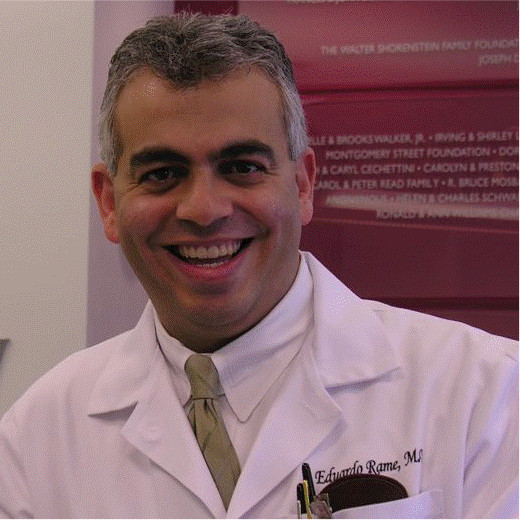
The clearest way to understand J. Eduardo Rame is to look at the order he did things in. Molecular biophysics and biochemistry at Yale. A master's in economics and health outcomes at Oxford. Then, and only then, a medical degree from Harvard. Most physicians pick a lane early. Rame spent his twenties gathering tools from three of them.
Today those tools point at a single problem. As enterprise chief of Advanced Cardiac and Pulmonary Vascular Disease at Jefferson Health, and the Louis R. Dinon MD Professor at Thomas Jefferson University, he runs an integrated division for heart failure and pulmonary hypertension. The patients who arrive there are not the ones with a manageable murmur. They are the ones whose hearts have started to quit.
His division is built around a word the field has historically been shy about: recovery. The default move in advanced heart failure is replacement - a transplant, or a pump bolted to a failing ventricle. Rame's work treats those as steps in a longer story, not the end of it. He builds multidisciplinary programs aimed at the recovery of complex cardiovascular patients, from familial aortopathies to end-stage cardiomyopathies.
It is an unusual thing to be optimistic about. The heart muscle, once damaged badly enough, is supposed to stay damaged. Rame's research career - cardiac metabolism, myocardial recovery, the physiology of a struggling heart - is essentially a long argument with that assumption.
The economics degree is not a footnote. Health outcomes is the study of what actually works, measured honestly, at scale. A cardiologist who thinks in those terms treats every device, every protocol, every transplant as a hypothesis that has to earn its place. That habit shows up in his publication record, which leans heavily on the trials and guidelines that tell the whole field what to do next.
Before Jefferson, he spent roughly a decade at the University of Pennsylvania as the founding Medical Director of its Mechanical Circulatory Support program. Founding is the operative word. He did not inherit a heart-pump service - he built one, and ran it through the years when left ventricular assist devices went from last resort to standard care.