collaboration
(45)
Sketch and the art of leaving things out
A discarded app supplied the diamond. A very particular kind of designer supplied the business. Sixteen years later, Sketch is still testing how much a design tool should do - and how much it should leave alone.
Goodnotes made handwriting searchable. Now it wants a say in what comes next.
A maths student’s battle with loose pages became a note-taking business used by more than 25 million people each month. Its next test: adding AI without crowding out the person holding the pen.
Rows Put AI in the Grid - Then Shut the Workbook
Rows made live data, AI analysis and handsome sharing feel native to a spreadsheet. Then Superhuman bought the company and wound the product down, leaving users a sharp lesson in choosing the next grid.

The Quiet War To Turn Your Documents Into Software
Coda, Notion, and Airtable all sell the same dream - one place to write, plan, and run your team. Look closer and they are three very different bets on what a document is even supposed to be.
Box
It started as a college kid's fix for a boring problem: where do you put your files? Two decades later, Box holds the paperwork for most of the Fortune 500 - and is teaching that paperwork to think.
Slab
A wiki built by the person behind Quill, run on $2.2M raised eight years ago, quietly serving Asana, Ramp, and A24 while louder rivals burn nine figures.
Rocket.Chat
Bring together messaging, voice, video, critical apps, and AI to keep teams connected and missions protected.
SupportBee
Turn customer emails into organized support tickets. Assign, comment, and resolve as a team!

Slite
The AI knowledge base that stays accurate - synced with your tools, verified by your team, trusted by every agent that depends on it.

The Company Wiki Nobody Reads, and Four Bets to Change That
Nuclino, Tettra, Notion, and SAP are chasing the same unglamorous prize - a place where a team's answers live and can actually be found. Here is how four very different bets on company memory stack up.

Nuclino
A modern, simple, and blazingly fast way to collaborate - bring knowledge, docs, and projects together in one place.
Mitel
For half a century Mitel has run the office phone. After a 2025 debt reset, the Canadian veteran is betting that hybrid - part on-premises, part cloud, part AI - is where enterprise communication actually lives.
GitBook
The documentation platform that started as an open-source tool for developers now wants to keep the world's product docs honest - for humans and the AI agents reading over their shoulder.

Lark
Lark is ByteDance's productivity superapp that stitches chat, video meetings, docs, spreadsheets, calendar, and project workflows into one platform, designed for multilingual teams that want to shrink their tool stack without losing power.
PlayPlay
PlayPlay is a Paris-based B2B SaaS company that lets communication and marketing teams turn ideas and text into professional, on-brand videos without editing skills. Its browser-based platform pairs drag-and-drop templates with AI tools - avatars, auto-subtitles, voice-over, translation and clipping - plus enterprise brand governance. Founded in 2017 by Thibaut Machet, Aurelien Dayres and Clement Moracin, PlayPlay is used by 3,000+ companies including IBM, L'Oreal and Booking.com, and has raised roughly $65.8M, led by a $55M Series B from Insight Partners in 2022.
Shortcut
Shortcut is a New York-based software company that builds a fast, lightweight project management and issue-tracking platform for software teams. Founded in 2014 as Clubhouse, it sits between the simplicity of Linear and the depth of Jira, offering sprints, boards, roadmaps, milestones, and automations. In 2025 it launched Korey, an AI agent that turns ideas into build-ready plans and orchestrates work across humans and AI agents. The platform has powered 21 million-plus completed stories across 50,000-plus organizations.
Cisco Systems
Cisco Systems is an American multinational technology company and the world's largest maker of networking hardware. Founded in 1984 by two Stanford computer scientists, it builds the routers, switches, silicon, security, and software that route much of the world's internet traffic. Today Cisco is repositioning around AI infrastructure, cybersecurity, and observability - anchored by its 2024 acquisition of Splunk - while remaining the default backbone for enterprise, service-provider, and government networks.
Zoom
Zoom is an American communications technology company that built its name on simple, reliable video meetings and has since expanded into a broad workplace collaboration platform. Founded in 2011 by former Cisco WebEx engineer Eric Yuan and headquartered in San Jose, California, Zoom now offers meetings, phone, chat, rooms, docs, a cloud contact center and an AI Companion assistant under the Zoom Workplace brand. The company went public on Nasdaq in 2019, saw explosive adoption during the COVID-19 pandemic, and today serves individuals, small businesses and large enterprises with roughly $4.9 billion in annual revenue.
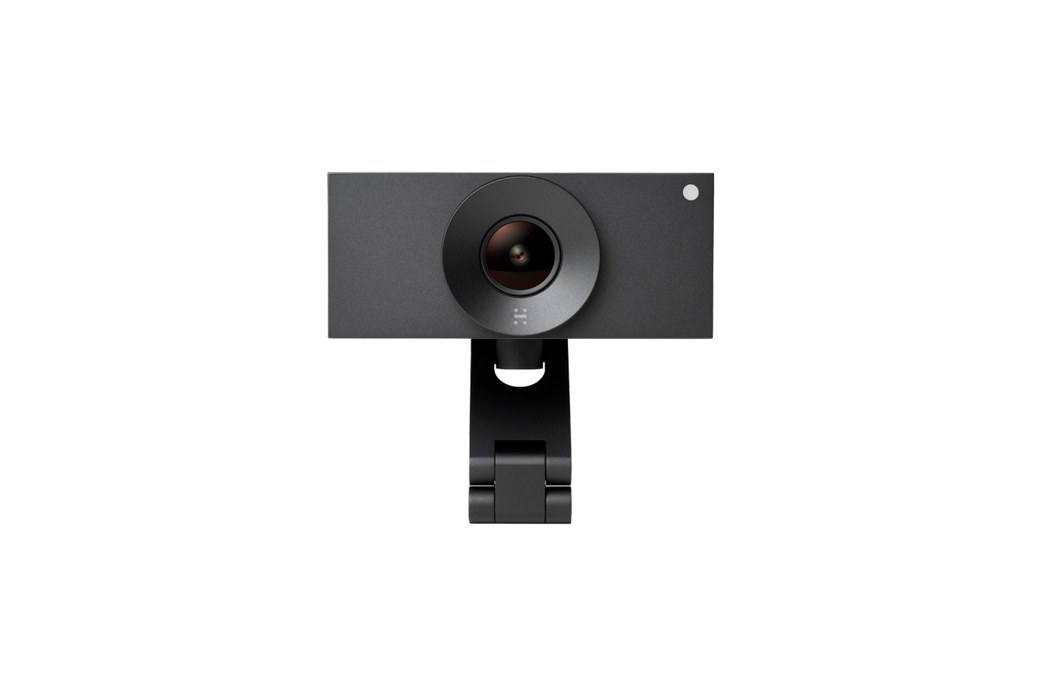
Huddly
Huddly is an Oslo-based company that builds AI-powered conference cameras for hybrid meeting rooms. By running computer-vision neural networks directly on the camera (edge AI), Huddly devices automatically frame speakers, switch angles like a TV director, and improve over time through software updates. Its products work with Microsoft Teams, Zoom and Google Meet, and range from the single wide-angle IQ to the L1 and S1 and the multi-camera Huddly Crew system marketed as the world's first AI director. Founded in 2013, Huddly listed on Euronext Growth Oslo in December 2023.

Intermedia Intelligent Communications
Intermedia Intelligent Communications is a Sunnyvale, California cloud communications company that bundles voice, video, chat, SMS, contact center, business email, file sharing and archiving into a single AI-powered platform. Founded in 1993 as a business email and web hosting provider, it now serves more than 130,000 businesses, largely through a channel of thousands of resellers and managed service providers. Its flagship Unite (UCaaS) and Intelligent Contact Center (CCaaS) products, layered with its SPARK AI suite, aim to replace a stack of separate communication vendors with one reliable, secure system aimed squarely at small and midsize organizations.

Mattermost
Mattermost is an open-source, self-hostable collaboration platform built for organizations that cannot put their conversations in someone else's cloud. Started as a game studio's internal chat tool and open-sourced in 2015, it grew into the leading self-hosted alternative to Slack and Microsoft Teams, combining channel messaging, voice and screen sharing, incident-response Playbooks, and integrated AI agents. Its customers skew toward defense, government, financial services, and technology organizations - from the U.S. Air Force to Uber - that need data sovereignty, air-gapped deployment, and government-grade security.
Padlet
Padlet is a San Francisco- and Singapore-based software company behind the popular collaborative platform of the same name, where users post text, images, links, files, and audio to shared digital bulletin boards called 'padlets'. Founded in 2008 as Wallwisher by Nitesh Goel and Pranav Piyush, the company grew into one of education technology's most widely used tools, reporting tens of millions of monthly active users - most of them teachers and students. It has since expanded beyond bulletin boards into an infinite-canvas whiteboard called Sandbox and a suite of AI creation tools, while remaining a small, largely bootstrapped team.
Tana
Tana is an AI-native workspace that turns messy notes, meetings and voice memos into structured, queryable knowledge. Its signature feature, Supertags, lets any bullet point become a database record with defined fields, so notes double as a living knowledge graph that AI agents can read, summarize and act on. Founded in 2021 by ex-Googlers and productivity builders and based in Palo Alto with an engineering hub in Oslo, Tana raised a $14M Series A in February 2025 (led by Tola Capital), reaching $25M total funding after emerging from a stealth beta with a 160,000+ person waitlist.

Everchron
Everchron is a Los Angeles-based, cloud litigation and transcript management platform built by lawyers for lawyers. It lets legal teams collaboratively build case chronologies, organize case documents in a master file, auto-generate witness profiles, and manage deposition transcripts and designations - now augmented with generative-AI features (EC:AI) for document interrogation and case insights. Customers range from AmLaw 100 firms and litigation boutiques to corporate legal departments and pro bono organizations.
InnovationForce
InnovationForce is a Durham, North Carolina software company behind InnovationWorks, an AI-powered SaaS platform that helps organizations run structured innovation at scale. Founded by CEO Kim Getgen and Harvard Business School professor Dr. Linda Hill, the platform turns organizational documents into sharp problem statements, then matches those challenges against a library of thousands of peer-validated solutions - claiming teams reach decisions roughly 85% faster and complete pilots far sooner. It has become especially well known in the energy and utilities sector, and was named to Fast Company's Top 10 Most Innovative Workplace Solutions of 2024 and Inc.'s Best in Business 2024.
Optiverse
Optiverse is a Swiss AI meeting platform that turns everyday conversations into structured, actionable work. Its assistant, OptiAgent, transcribes meetings, writes custom summaries, extracts action items, pushes updates into CRMs, and makes past calls searchable across a company. Founded in Zurich in 2024 by researchers from ETH Zurich, EPFL, MIT and HSG, the company positions itself as the 'digital brain of the enterprise' and reports supporting over 1,000 companies while emphasizing Swiss-hosted, privacy-first data handling.

Roger
Roger (legally Iris Technologies) is a Salt Lake City-based construction-tech startup building an AI-powered collaboration workspace for construction project managers. By syncing with email tools like Microsoft Outlook and Gmail and layering on task boards, material trackers, and submittal logs, Roger turns the chaos of coordinating 50+ stakeholders into structured, trackable work. Its AI drafts follow-up emails, chases vendors on long-lead items, updates logs, and keeps details from slipping through the cracks - aiming to make every project run like a team's best project.
Notion
Notion is an all-in-one connected workspace that blends notes, docs, wikis, databases, projects, calendar, and email into a single, modular tool - 'LEGO for software.' Founded in San Francisco in 2013 by Ivan Zhao and Simon Last, it nearly collapsed before its 2016 rebirth and has since grown to more than 100 million users, $600M+ in annual recurring revenue, and an $11 billion valuation, increasingly positioning itself as an AI workspace with built-in agents.
Prezi
Prezi is a cloud-based visual communication company best known for inventing the zooming, non-linear presentation - an open-canvas alternative to slide-by-slide decks. Founded in Budapest in 2009 and now dual-headquartered in San Francisco and Budapest, Prezi has grown into a full suite spanning Prezi Present, Prezi Video (presenter-on-screen overlays), Prezi Design/Infograms, and Prezi AI. More than 160 million people have used it to create roughly 400 million presentations.

Amanda Greenberg
Amanda Greenberg is the CEO and co-founder of Balloon, a SaaS platform that eliminates groupthink and cognitive bias from team collaboration through anonymous idea submission and merit-based voting. A former public health researcher who developed behavior-change campaigns for the CDC, EPA, and DOE, Greenberg pivoted to tech entrepreneurship after observing how social dynamics suppress good decision-making in rooms full of smart people. She co-founded Balloon in 2015 with her husband and CTO Noah Bornstein, bootstrapped to a Fortune 50 client within 11 months, raised $2.6M in seed funding from investors including Jason Calacanis and Matt Mullenweg, and was named to Inc. Magazine's Female Founders 100 list in 2022. Balloon's advisory board includes Adam Grant, Amy Edmondson, and Daniel Pink.