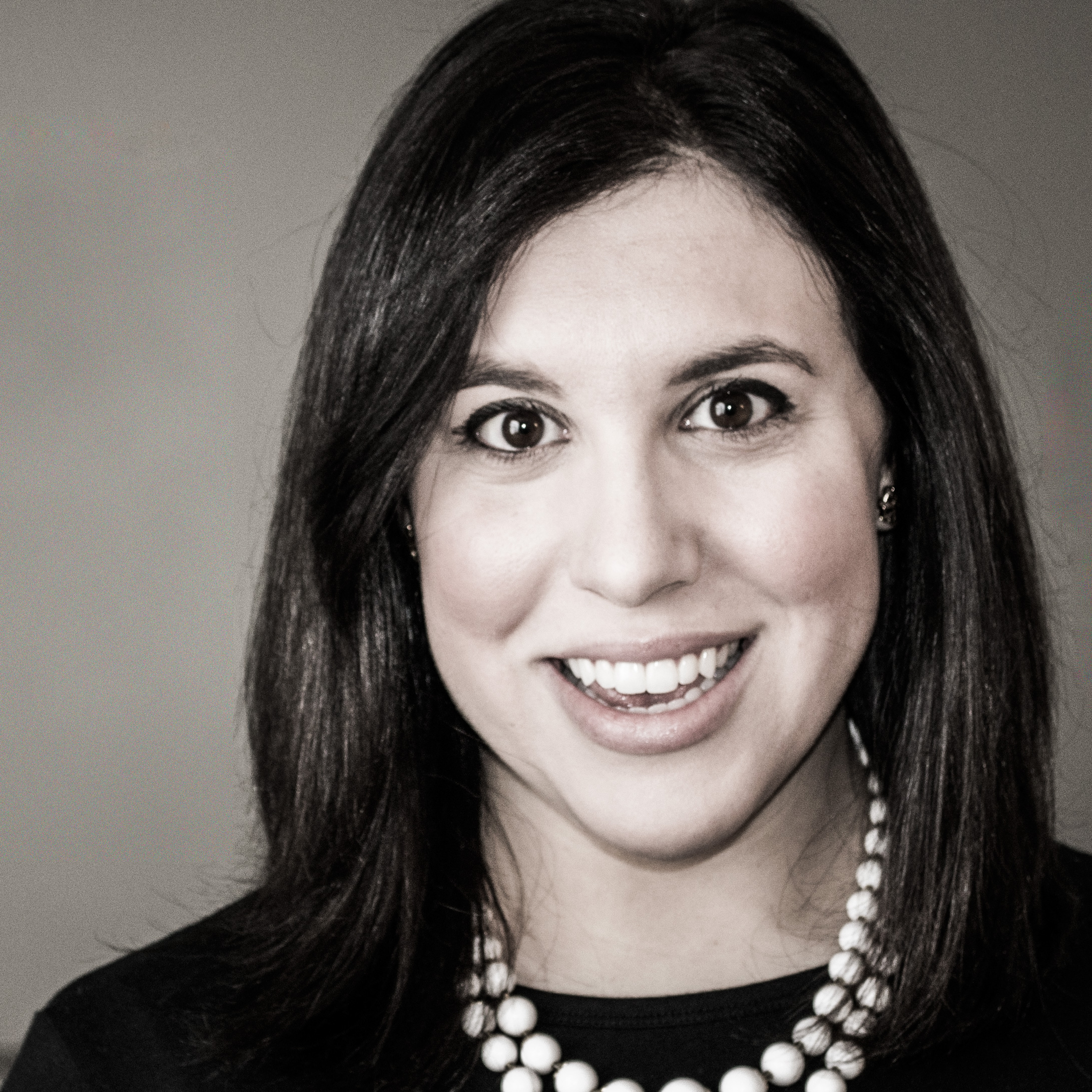
She was studying groupthink before groupthink was a boardroom word.
Amanda Greenberg grew up in Oxford, Ohio - a town small enough that you'd know your kindergarten classmate's father by the coffee he took. Her dad was an anthropology professor. Her mother a science teacher and guidance counselor. In that house, dinner conversations weren't about what you thought - they were about why you thought it, and whether that thinking held up. That early habit of interrogating bias did not go away.
At Dartmouth she sharpened it. At UNC-Chapel Hill's Gillings School of Global Public Health - where she graduated first in her cohort - she weaponized it. Her graduate work landed her in Washington, D.C., developing national behavior-change campaigns for the EPA, CDC, and DOE, working on federal initiatives tied to Vice President Joe Biden's office. Her job was to get people to change how they acted by first understanding why they acted that way at all.
"In every public health campaign I ran, the same thing kept breaking the process: the loudest voices drowned out the smartest ones. The data was clear. The decision wasn't."
That observation - which started in community health settings - turned into an obsession. Greenberg watched rooms full of smart people produce mediocre decisions not because the right answer wasn't present, but because the social dynamics of the room prevented it from surfacing. Hierarchy. Fear. The gravitational pull of whoever spoke first. She'd spent years studying this in public health. Then she decided to build a solution.
The co-founder she chose was Noah Bornstein - her husband, her CTO, and a man she has known since they were five years old. Their fathers taught at the same university. They played on the same t-ball team. Decades later, they would bootstrap a company together from her parents' house while their newborn slept in the next room.
I founded Balloon because I knew it was what the world needed but didn't yet exist.
- Amanda GreenbergWhat they built is called Balloon - originally Balloonr, renamed in 2018. The product works by removing the human cues that corrupt collaboration: no one knows who said what until the ideas are evaluated on merit alone. Teams submit thoughts anonymously. Voting surfaces the strongest signals. Hierarchy temporarily dissolves. The quiet analyst in the back row suddenly has the same weight as the VP at the front of the table.
The early results were strange - in the best way. Eighty percent of what people shared on Balloon turned out to be ideas they had never voiced in a meeting before. They weren't withholding because they were lazy. They were self-censoring because rooms are socially treacherous. Balloon removed the danger. The ideas flooded in.
Within eleven months of launch, as a two-person team working without VC backing, Greenberg and Bornstein closed their first Fortune 50 customer. She was on a cross-country road trip when it happened. Capital One, Google, Amazon, the New York Mets, the LA Angels, Medtronic - these weren't logos on a pitch deck. They were clients who'd seen the product work and come back for more.
The academic scaffolding Greenberg built around Balloon is what separates it from a voting app. Her advisory board is a roster of people who have spent careers writing books about the things Balloon tries to solve: Adam Grant (Wharton, organizational psychology), Amy Edmondson (Harvard Business School, the woman who defined psychological safety as a field), Daniel Pink (behavioral science and motivation theory), and Arianna Huffington. She didn't recruit them for the press release. She recruited them because their research is baked into how the product thinks.
In December 2019, LAUNCH (Jason Calacanis) and Wavemaker Partners co-led a $2.1M seed round. Matt Mullenweg - the founder of WordPress and Automattic, a man who has led a remote-first company longer than most tech CEOs have known what remote-first means - participated. So did XFactor Ventures, Luma Launch, Imagination Capital, and Streamlined Ventures. The total raised has since reached $2.6M.
COVID-19 arrived before the ink was dry on most of those checks. Greenberg gave birth to her second son in the early weeks of the pandemic with only Noah present. She then pivoted Balloon's feature roadmap for a world that had just been forced to collaborate asynchronously at scale. Flight templates. Remote participation tracking. Shortlinks for distributed teams. The crisis that broke most workplace tools was the market validation Balloon had been waiting for.
In 2022, Inc. Magazine named her to its Female Founders 100 list. The Thoreau quote she has carried in her wallet for over a decade - "The mass of men lead lives of quiet desperation, and go to the grave with the song still in them" - sits next to her debit card. A personal reminder, she has said, that the cost of not taking a risk is paid slowly and invisibly, but it is paid.
She lives now in Mill Valley, California, with Noah and their sons. She describes herself as "eternally optimistic" and says that when she focuses on gratitude, everything - even the brutal parts of building a company - becomes fun. Whether that's a founder coping mechanism or genuine temperament is beside the point. The platform she built keeps working either way.