The conference camera that thinks like a film crew - and gets smarter after you buy it.
Walk into most conference rooms and the camera does one thing: it points at the whole table and never moves. The people dialing in from home get a wide, flat, faraway shot and are left to guess who is speaking. Huddly, a company founded in Oslo in 2013, was built on the idea that this default is broken - and that the fix belongs inside the camera itself.
Huddly makes AI-powered conference cameras. Instead of streaming a static frame, its devices run computer-vision neural networks directly on the hardware - what the industry calls edge AI - to find the person talking, frame them cleanly, and switch angles as the conversation moves. The company describes its craft as combining "artificial intelligence, software, hardware, and UX" to build intelligent camera systems for inclusive, productive teamwork.
The cameras plug in over USB and work with the platforms companies already run: Microsoft Teams, Zoom and Google Meet. There is no separate operator, no control surface to learn. The intelligence is meant to disappear into the room.
The problem Huddly attacks is specific: hybrid meetings tend to fail the people who are not physically present. Remote participants miss the nods, the side glances, the person who leans in to disagree. Huddly's software, branded Huddly Director, edits the meeting in real time - cutting between the active speaker, listener reactions and a room overview - so the far end feels closer to being in the room.
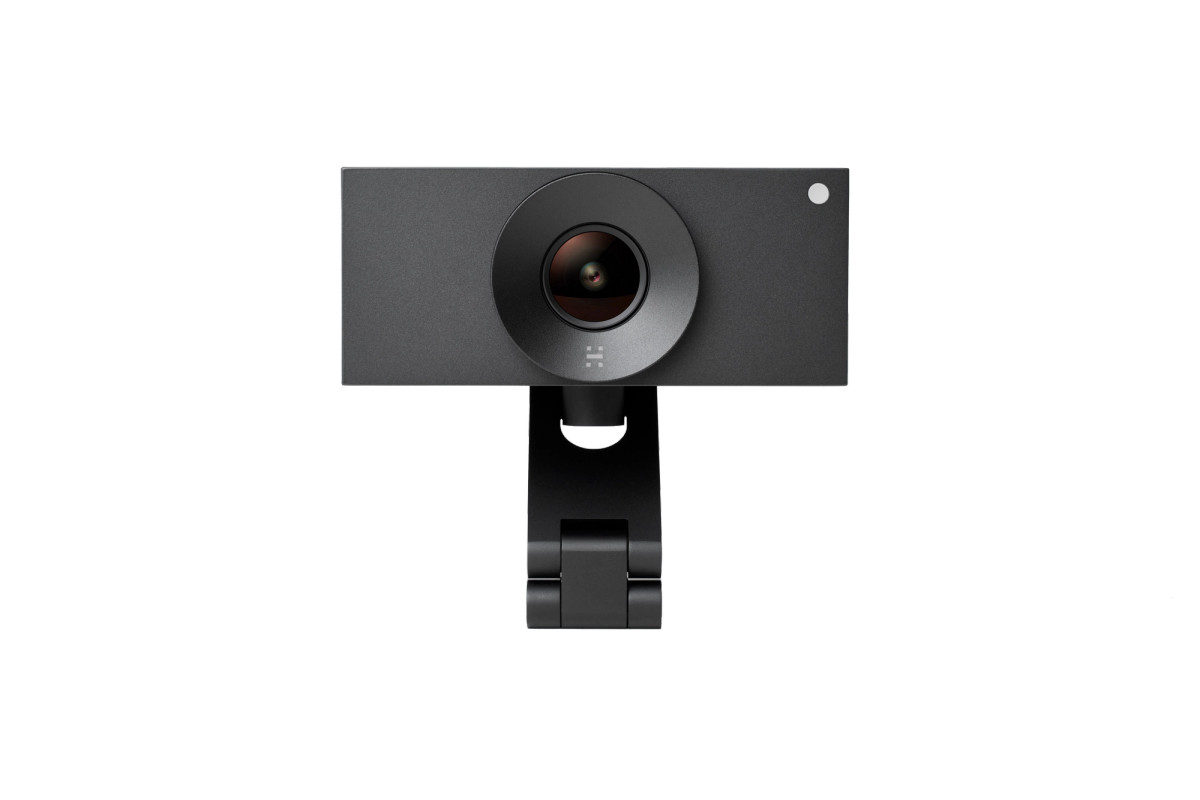
Disruptive innovation is our heartbeat. We're committed to pushing technology and challenging the status quo to empower human collaboration.
Huddly borrows from television production. Its neural networks were trained on the choices a broadcast crew makes, then compressed to run on the camera in the room - no cloud round-trip required.
A wide sensor takes in every participant across the space.
→On-device AI identifies who is talking and reads body language.
→Huddly Director picks speaker, reaction or overview shots.
→The edited feed streams to Teams, Zoom or Google Meet.
From a huddle space to a boardroom to a multi-angle studio, Huddly's range scales with the room - and shares the same directing brain.
The wide-angle camera that brought AI-powered smart video to small and medium rooms starting in 2018. Plug-and-play over USB.
A collaboration camera with on-device AI framing and real-time editing via Huddly Director. Certified for Zoom Rooms and Intelligent Director.
Here Huddly Director acts like a TV director, choosing the best angles to keep the whole team engaged throughout the call.
An AI-directed multi-camera system - billed as the world's first AI director - that captures a room from several angles and edits the meeting live.
The intelligence that runs the show: Speaker Mode locks onto the primary talker; Conversation Mode showcases listener reactions.
Plenty of vendors now stamp "AI" on a conference camera. Huddly's difference is where the intelligence lives and how long the hardware stays useful.
The computer vision runs on the camera itself. Video does not have to leave the room for the system to decide what to frame - lower latency, and the footage stays local.
New AI capabilities arrive as software updates. A camera bought years ago can gain new abilities, pushing back against hardware obsolescence.
Trained on TV-production technique, Huddly Director cuts a meeting like a broadcast - speaker shots, reactions, overviews - rather than a flat security feed.
One USB camera works across Microsoft Teams, Zoom and Google Meet, so rooms upgrade without ripping out existing infrastructure.
The meeting-room camera market has become crowded, populated by Logitech, Poly (now part of HP), Cisco, Owl Labs, Neat, Jabra and AVer. Huddly competes by leaning on its earliest bet - on-device computer vision - and on a design-led approach that treats the remote participant as the primary customer.
The business is fundamentally hardware: cameras and multi-camera systems sold business-to-business, largely through AV integrators and platform partners such as Crestron, AVI-SPL and proAV. Layered on top is a software dynamic - ongoing Huddly Director updates - that extends the life of each device and deepens the platform relationships.
Its customers are the enterprises and educational institutions kitting out hybrid meeting rooms and classrooms worldwide. Huddly reports roughly $21M in trailing revenue and around 120 employees, working from Oslo with a presence across the US, EMEA and APAC.
Roughly $20M in venture funding across three rounds, then a step onto the public market.
Stein Ove Eriksen and Anders Eikenes start Huddly to reinvent the camera around computer vision.
Funding to build a computer-vision platform for video meetings, taking total equity to about $20M.
The wide-angle IQ brings AI-powered smart video to small and medium meeting rooms.
A round led by Mertoun Capital and others fuels product and AI development.
A camera for larger rooms introduces real-time meeting editing with Huddly Director.
The multi-camera system is premiered as the world's first AI director for video conferencing.
Huddly lists via a NOK 130M private placement and builds out a new commercial leadership team.
Huddly Director edits your meeting in real time - switching between shot types, focusing on the speaker, and capturing the reactions of everyone else in the room.
Huddly trained its AI on real TV-production technique, so meetings are cut like a broadcast rather than a security feed.
The intelligence runs on the camera itself - the AI never has to send video to the cloud to decide what to frame.
A Huddly camera bought years ago can gain new AI abilities through a software update.
Every camera speaks USB plug-and-play, working across Teams, Zoom and Google Meet with no new infrastructure.
Huddly Crew coordinates multiple cameras and directs a single live edit autonomously - no human operator required.
AI-powered conference cameras and multi-camera systems that automatically frame speakers and switch shots for hybrid meetings, working with Microsoft Teams, Zoom and Google Meet.
A multi-camera system marketed as the world's first AI director. It captures a room from several angles and edits the meeting in real time, switching between the active speaker and listener reactions.
Huddly (Huddly AS) was founded in 2013 and is headquartered in Oslo, Norway, with a presence in the US, EMEA and APAC. It listed on Euronext Growth Oslo in December 2023.
Huddly runs its computer-vision AI on the camera itself (edge AI) rather than in the cloud, and adds new capabilities to existing hardware through software updates, extending each device's useful life.
Enterprises, educational institutions and other organizations outfitting hybrid meeting rooms and classrooms, typically buying through AV integrators and platform partners such as Crestron, AVI-SPL and proAV.