critical-minerals
(35)
Exiger Put the Supply Chain Under an X-Ray - Now It Wants to Tell You What Breaks Next
The company began by helping banks survive regulatory scrutiny. A decade, several acquisitions and one decisive divestiture later, it is selling a more ambitious promise: see every hidden dependency before it becomes an expensive surprise.
Granger Whitelaw Is Trading Rocket Fuel for the Ocean Floor
After Indy wins, rocket-plane patents and a long tour through technology companies, Granger Whitelaw has taken on a quieter race: turning Impossible Metals' hovering robots into a working ocean-resource system.
Nicholas Myers Put $7,000 Into a Backyard Experiment. Now He Is Building America’s Rare-Earth Middle.
A physics graduate with no mining résumé helped turn a backyard reactor into a rare-earth business. His wager is that America’s missing industrial link can be rebuilt with cleaner chemistry, patient capital, and a team willing to learn in public.
Electra Wants to Make Iron at Coffee Temperature - Then Sell It to the Steel Giants
The Boulder startup replaced a 1,600°C blast furnace with chemistry at roughly 60°C. Its first experiment said the idea was dead; a month later, it had the workaround - and now steelmakers are buying the demonstration output.
Phoenix Tailings Found a $1 Billion Business Hiding in Mining's Trash
The Massachusetts startup began with buckets of mine waste in a backyard. Seven years later, it has commercial metal shipments, a strategic trading partner, and a conditional $500 million government loan - but the real test is whether a tiny refinery can become industrial infrastructure on schedule.

The Fund Betting That 60% of the Economy Will Soon Be Grown, Not Made
Jennifer Kan spent years at a Nobel laureate's bench teaching enzymes new tricks. Now her fund backs the founders trying to grow the physical economy - chocolate, copper, chemicals, even data - one engineered cell at a time.
Impossible Metals
Impossible Metals is a San Jose-based ocean robotics company building autonomous underwater vehicles that harvest polymetallic nodules from the deep seabed one at a time. Its Eureka Collection System uses AI computer vision and a buoyancy engine to hover above the seafloor, pick up individual nodules containing nickel, cobalt, copper and manganese, and leave nodules with visible marine life untouched - an approach the company positions as a lower-impact alternative to both land mining and the seabed-dredging methods used by rivals.

6K
6K is a North Andover, Massachusetts advanced materials company that uses its proprietary UniMelt microwave plasma technology - which reaches roughly 6,000 degrees, hence the name - to produce battery cathode materials and additive-manufacturing metal powders faster, cleaner, and with fewer processing steps than conventional methods. Spun out of research at MIT and the University of Connecticut, the company operates through two divisions, 6K Energy (battery cathode active materials) and 6K Additive (sustainably sourced metal powders), and is building a domestic U.S. supply chain for critical materials backed by federal grants and more than $348 million in venture funding.
Allonnia
Allonnia is a Boston-based environmental biotechnology company that uses biology and engineered systems to solve stubborn contamination and resource-recovery problems. Spun out of Ginkgo Bioworks' Ferment Consortium in 2020, it removes PFAS from water at scale using SAFF foam-fractionation technology and is commercializing biological methods to recover critical minerals and rare earth elements from ore. The company has raised more than $100 million to bring 'bio-ingenuity' to water treatment and mining.
VerAI Discoveries
VerAI Discoveries is a Boston-based AI mineral-discovery company that uses machine learning to detect concealed metal deposits hidden beneath covered terrain - forests, ice sheets, gravel and young rock - that conventional exploration misses. By analyzing magnetic, gravimetric, electromagnetic and seismic data, its proprietary AI Discovery Platform generates high-probability, drill-ready targets faster and far cheaper than traditional methods, then advances a 60+ project portfolio of critical-mineral assets through joint ventures and partnerships across North and South America.

Alex Grant
Alex Grant is the co-founder and CEO of Magrathea, an Oakland-based startup building a new electrolytic process to make magnesium metal from seawater and brine with near-zero carbon emissions. A chemical engineer who previously founded lithium-extraction company Lilac Solutions and modeled battery supply chains at Minviro, Grant started Magrathea in 2022 to reshore US magnesium production. What began as a climate play turned into a national-security one: after Russia's invasion of Ukraine tightened global magnesium supply, Magrathea won a Defense Production Act partnership with the US Department of Defense. He was a Forbes 30 Under 30 honoree in Energy in 2021.
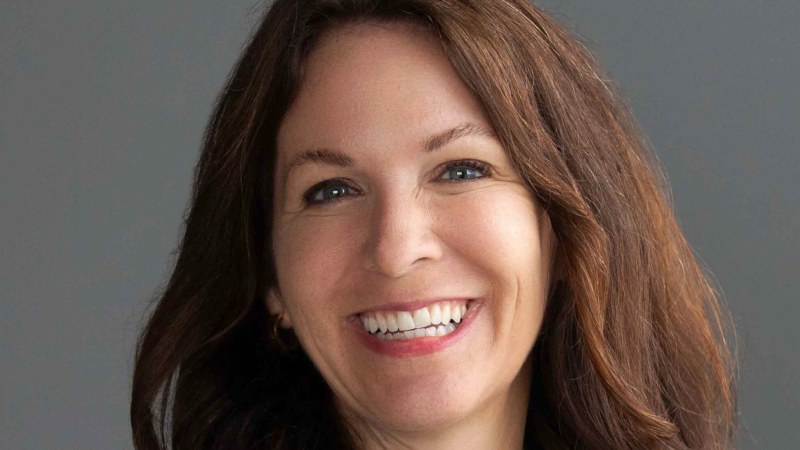
Nicole Richards
Nicole Richards is the founding CEO of Allonnia, a Boston-based synthetic biology company that engineers microbes to destroy forever chemicals like PFAS and 1,4-dioxane, and to pull critical minerals out of ore and waste streams. A chemical engineer with nearly three decades in water, mining and specialty chemicals, she spun Allonnia out of Ginkgo Bioworks' Ferment Consortium in 2020 with a $40M Series A and has since raised more than $109M in total funding.
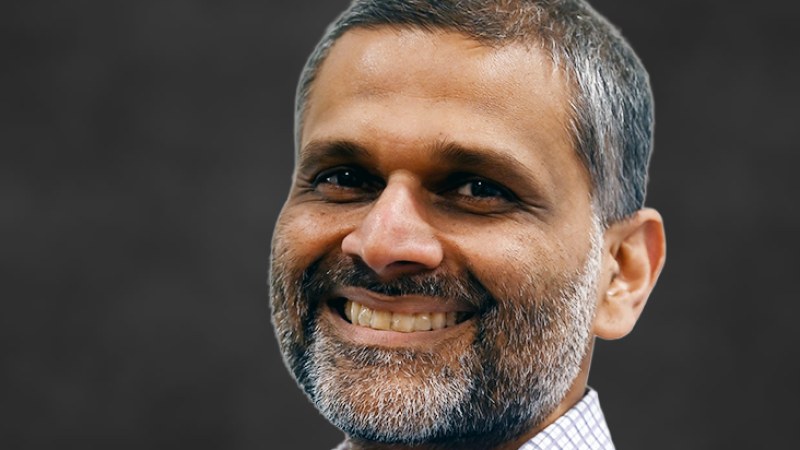
Saurabh Ullal
Saurabh Ullal is the CEO of 6K, an advanced materials company in North Andover, Massachusetts that uses a microwave-plasma process called UniMelt to make battery cathode powders and metal powders for additive manufacturing. A chemical engineer by training with a PhD from UC Santa Barbara, he joined 6K as COO and stepped into the CEO role in September 2024 alongside an $82M Series E close, tasked with scaling a technology invented at MIT into industrial tonnage.

Yair Frastai
Yair Frastai is the co-founder and CEO of VerAI Discoveries, a Boston-based company using proprietary AI to find concealed mineral deposits buried under covered terrain. A former Israeli Intelligence special operations officer and Israel Defense Prize recipient turned mining-sector executive, Frastai built VerAI in 2020 with longtime partner Amitai Axelrod to attack what he calls mining's biggest problem: only 1 in 1,000 exploration projects ever becomes a mine. VerAI reads raw geophysical signals from deep underground with machine learning, and has raised roughly $39 million to date, including a $24M Series B led by Insight Partners in 2025.
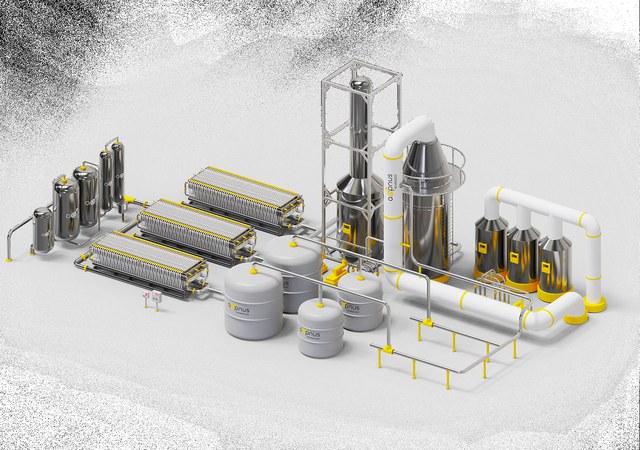
Aepnus Technology
Aepnus Technology is an Emeryville, California cleantech startup that builds ultra-efficient, catalyst-free electrolyzers to turn sodium sulfate - a low-value waste salt produced in enormous volumes by battery-material and critical-mineral plants - back into two industrial staples: caustic soda (sodium hydroxide) and sulfuric acid. By splitting waste salt on-site with renewable electricity, Aepnus lets manufacturers cut disposal costs, reduce emissions, and shorten fragile chemical supply chains, converting a roughly $350-per-tonne waste-handling problem into about $700 of usable reagents per tonne.

Alta Resource Technologies
Alta Resource Technologies is a Boulder, Colorado deep-tech startup using engineered proteins to selectively separate rare earth elements and other critical minerals from low-grade ores, mining tailings, and electronic waste. Its 'precision mining' platform, licensed from Lawrence Livermore National Laboratory and co-developed with Pennsylvania State University, binds individual metals with high selectivity, aiming to cut the cost and environmental damage of conventional chemical refining while helping secure a domestic U.S. supply of materials used in EVs, wind turbines, electronics, and defense systems.

BANIQL
BANIQL is a Santa Clara / San Jose-based climate-tech startup building a low-acid, low-energy chemical process to extract nickel and cobalt from laterite ore for lithium-ion batteries. Its patented method runs at atmospheric pressure and lower temperatures, cutting energy use and CO2 emissions by roughly 80%, lowering costs by about 30% versus conventional high-pressure acid leaching (HPAL), and generating virtually zero waste. Founded in 2021, the company runs R&D and pilot production in the U.S. and ton-scale prototype production in Indonesia, targeting the EV and battery-materials supply chain.

Duranium
Duranium is a Y Combinator (S25) advanced-materials company reshoring U.S. production of critical metals - titanium, magnesium, aluminum, zirconium and hafnium. It modernizes carbochlorination metallurgy with a novel reactor that recirculates CO and chlorine streams back into feedstock and spins off a saleable co-product (bleaching agents/hypochlorite), aiming to match Chinese-level pricing without subsidies while eliminating direct emissions. Founded in 2025 by CEO Brenden Prins-McKinney and CTO Berkley Noble, the company targets a pilot facility by June 2026 and roughly 12% of the U.S. magnesium market by 2029.

Electroflow Technologies
Electroflow Technologies is a San Bruno, California startup building an electrochemical direct lithium extraction (DLE) process that turns low-grade, dilute North American brines into battery-grade lithium and lithium iron phosphate (LFP) powder. By collapsing a conventional 10-step brine-to-LFP process down to three steps and using lithium-selective electrodes, the company aims to produce LFP cathode material domestically at under $2,500 per metric ton - roughly 40% below current Chinese producers - while using minimal water, chemicals, and electricity.

SiTration, Inc.
SiTration is a Cambridge, Massachusetts materials-recovery company spun out of MIT that uses a patented, ultra-durable porous silicon membrane paired with electro-extraction to pull critical metals - lithium, cobalt, nickel, copper, and precious metals - out of mining waste, spent lithium-ion batteries, and refining streams. By replacing chemical-heavy, acid-dissolution processes with a tunable, energy-efficient membrane, SiTration aims to make the recovery of the metals behind batteries, EV motors, wind turbines, and data centers cheaper and cleaner.

Still Bright
Still Bright is a Newark, New Jersey hard-tech company reinventing how the world makes copper. Its patented RACER process (Rapid and Complete Electrochemical Reduction) soaks copper-bearing ore and mine waste in a vanadium-based solution that pulls the metal out in minutes at room temperature and pressure, then uses electricity to regenerate the solution - a trick borrowed from vanadium flow batteries. The result: up to 99% copper recovery with equipment that runs 70-90% cheaper than traditional smelters and produces no toxic emissions. Founded in 2022 by CEO Randy Allen and CTO Jon Vardner, the company raised $18.7M in seed funding in 2025 and is scaling toward pilot production of domestic, clean copper.
Tidal Metals
Tidal Metals is a Trenton/Hamilton, New Jersey deep-tech company that extracts primary magnesium metal from seawater and desalination brine using nothing but renewable electricity and physical processes - no ore mining, no carbon emissions, and no waste stream. Founded by three plasma-physics PhDs who met at the Princeton Plasma Physics Laboratory, the company aims to rebuild a domestic U.S. magnesium supply chain currently dominated by China, serving aerospace, defense, and next-generation automotive manufacturing.
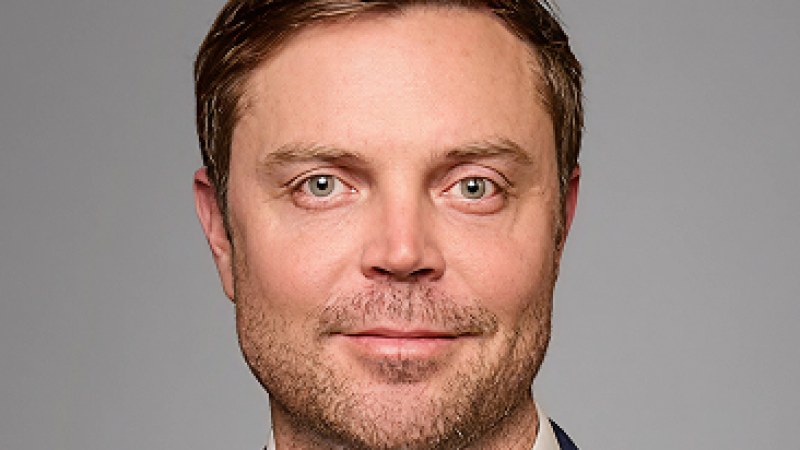
Nathan Ratledge
Nathan Ratledge is the co-founder and CEO of Alta Resource Technologies, a Boulder, Colorado startup using computationally designed proteins to pull rare earth elements out of low-grade ores, mine tailings, and electronic waste. A Stanford-trained economist and environmental scientist who once ran a poverty-and-electrification research agenda across East Africa, he pivoted from policy and academia to deep tech, betting that biology - not brute-force chemistry - is the way to break China's grip on the critical-mineral supply chain. Alta has raised about $10 million in seed funding from DCVC, Voyager Ventures, Orion Industrial Ventures and In-Q-Tel (the CIA's venture arm), and advanced to the final phase of DARPA's EMBER program alongside Lawrence Livermore National Laboratory.
Brendan Smith
Brendan Smith is the co-founder and CEO of SiTration, an MIT spinout commercializing a tunable silicon membrane that recovers critical metals like copper, cobalt, nickel and lithium from mining waste and spent batteries without the mountains of chemicals the old way demands. A materials scientist who came to MIT from Canada in 2013, he turned a desalination-lab discovery into a venture-backed company that has raised roughly $14.4 million and partnered with mining giant Rio Tinto. He runs the company from a 11,000-square-foot pilot facility in Watertown, Massachusetts.
Howard Yuh
Howard Yuh is a plasma physicist turned founder who is trying to break China's grip on magnesium by pulling the metal out of the ocean. As CEO and cofounder of Tidal Metals, the New Jersey deeptech he spun out of his earlier desalination venture GreenBlu, he uses an adsorption temperature-swing vapor pump - a trick borrowed from fusion research - to extract magnesium salt from seawater with only electricity, no mining, and no waste. The company raised $8.5M in seed funding led by DCVC in 2024 and won the World Economic Forum's Sustainable Mining Challenge the same year.
Willy Halim
Willy Halim is a chemical engineer and the founder of BANIQL, a San Jose climate-tech startup he started in his backyard in 2021 to refine nickel and cobalt without the heat, pressure, and toxic waste of conventional mining. Trained at UC Berkeley and Cornell and seasoned as a battery engineer in Silicon Valley, he built a low-temperature, atmospheric-pressure chemical process that BANIQL says uses about 80% less energy than industry-standard high-pressure acid leaching, produces net-zero toxic waste, and turns leftovers into fertilizer and construction material. The company raised a $1.6M seed round led by BEENEXT in 2024 and added 500 Global and Genesia Ventures in 2025, aiming first at Indonesia, which holds roughly a quarter of the world's nickel.
Magrathea
Magrathea is an Oakland, California clean-tech company rebuilding American magnesium production. Using a next-generation electrolytic process, it makes magnesium metal from seawater and brines with near-zero carbon emissions, aiming to break the West's dependence on Chinese supply for a metal critical to aerospace, automotive, and defense.
Terra AI
Terra AI is a Palo Alto geoscience company building generative AI that turns the messy, expensive guesswork of subsurface exploration into fast, probabilistic 3D models of what lies underground. By fusing geophysics, geochemistry, and drilling data, its platform generates millions of geological scenarios in minutes, helping mining and energy teams decide where to drill, how many wells they need, and whether a project is worth the capital - shrinking exploration timelines and pointing capital at the critical minerals the clean-energy transition depends on.

KoBold Metals
KoBold Metals is a Berkeley-based mineral exploration company that uses artificial intelligence, data science, and geophysics to find the copper, lithium, cobalt, and nickel deposits the energy transition will require. Founded in 2018, it has raised roughly $1 billion from investors including Breakthrough Energy Ventures, Andreessen Horowitz, T. Rowe Price, Bill Gates, and Jeff Bezos, and is developing the Mingomba copper project in Zambia, called the country's largest copper discovery in a century.
Mariana Minerals
Mariana Minerals is a software-first, vertically integrated critical minerals company building MarianaOS, an AI platform that turns mineral discovery, extraction and refining into a live, data-driven operation. The company is restarting and building lithium, copper and nickel projects across the U.S., starting with Copper One in Utah - billed as the world's first autonomy-first copper mine.