The engineer who decided the cleanest battery starts with cleaner chemistry - and built it in his backyard.
In January 2021, the future of clean nickel fit inside a backyard in California. That is where Willy Halim started BANIQL, nine months before there was a company to incorporate. He had spent his career building batteries, and he kept arriving at the same uncomfortable fact: the cell can be as green as you like, but the nickel inside it usually arrives caked in carbon and toxic tailings.
BANIQL is his answer. The company extracts nickel and cobalt from laterite ore using a low-temperature, atmospheric-pressure chemical process, marrying electrochemistry to a custom mechanical reactor design. The claim is bold and specific: roughly 80% less energy than conventional high-pressure acid leaching, temperatures up to 70% lower, no extreme pressures, and net-zero toxic waste. The leftovers, instead of poisoning a tailings pond, are meant to become fertilizer and construction material.
Most refining stories ask you to admire the size of the plant. Halim's asks you to notice its absence. Skip the pressure vessels and the extreme heat, and the equipment shrinks to something modular you can drop next to a mine. That is the quiet radicalism here: not a bigger machine, but a smaller one that does more with less.
IP influences every major decision.— Willy Halim, on why BANIQL files patents before it files press releases
High-pressure acid leaching - HPAL - is how the industry usually pries nickel out of laterite. It works. It also cooks ore at brutal heat and pressure and leaves behind acidic waste. Halim's process aims to do the same job at a fraction of the inputs.
Halim did not wander into mining. He arrived from the opposite end of the supply chain. He studied at the University of California, Berkeley, then earned a master's in chemical and biomolecular engineering at Cornell, where his research circled lithium-sulfur batteries. The thread of his work has always been energy storage and the chemistry that makes it possible.
In Silicon Valley he worked as a battery engineer, with stints at Imprint Energy, EnerVenue, and EEnotech. Designing cells teaches you exactly what they are hungry for - and where that appetite gets dirty. Nickel is the battery's backbone, and the standard way of refining it is also one of the most carbon-heavy. Halim looked upstream and saw a chemistry problem nobody had bothered to redo from scratch.
So he did. BANIQL describes its method as built from first principles, which is engineer-speak for refusing to inherit the old assumptions. He filed the first patent in July 2022. By December that year, MVP samples were passing evaluation at third-party labs in South Korea. The chemistry checked out before the company had a polished pitch deck.
The IP came first by design. Halim talks about patents the way other founders talk about hiring - as the thing that shapes every other choice. BANIQL prioritizes research with patent potential and structures partnerships to protect the technology, with Patent Cooperation Treaty filings planned across Australia, the Philippines, Europe, and Indonesia. When the $1.6M seed round closed, the patents were a centerpiece, not a footnote.
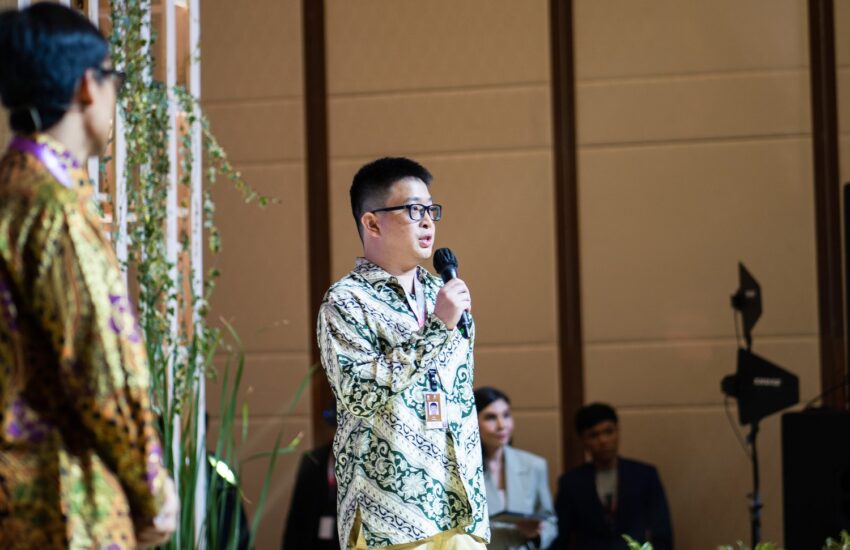
We are confident that this funding will enable us to make a significant contribution to the transition towards a more sustainable future for the critical minerals industry.— Willy Halim, on closing BANIQL's seed round
Indonesia holds roughly a quarter of the world's nickel reserves, which is why BANIQL planted its flag there first. The company secured 20-plus tonnes of Indonesian ore early and set its sights on pre-pilot production of about 100 kg a month. From there the plan widens: South Korea, Australia, the Philippines - the places where nickel comes out of the ground and the refining is dirtiest.
The go-to-market is licensing, not empire-building. Rather than own every plant, BANIQL wants its chemistry running inside other people's operations - which is exactly why the patents matter so much. A process you can license is only as defensible as the IP wrapped around it. Halim has been quietly building both at once.
It is a long game. Refining is unglamorous, capital-heavy, and slow to change. But the demand for clean batteries is not slowing, and somebody has to fix the part of the supply chain that nobody photographs. Halim picked the unglamorous part on purpose. The backyard was never the constraint. It was the proof.
BANIQL literally started in a backyard before it was ever a company on paper.
He came to mining from batteries - he understood what the cell needed before he tried to refine it.
The process aims to turn leftovers into fertilizer and construction material rather than toxic tailings.
BANIQL files for IP first; Halim says it shapes every major decision the company makes.
Sources: BANIQL, WIPO Magazine, TNGlobal, Capital Brief, Crunchbase. Facts as publicly reported.