BREAKING — BANIQL closes US$1.6M seed round led by BEENEXT 99.7% nickel sulfate purity, net-zero toxic waste ~98% less electricity than conventional HPAL 100 kg/month pre-pilot plant online, Q4 2024 Two patents filed — IP first, plants later BREAKING — BANIQL closes US$1.6M seed round led by BEENEXT 99.7% nickel sulfate purity, net-zero toxic waste ~98% less electricity than conventional HPAL 100 kg/month pre-pilot plant online, Q4 2024 Two patents filed — IP first, plants later
Profile / Climate Tech / Founders

Eric
Januar

He spent a decade inside batteries and silicon chips. Now he is going one step further up the supply chain - into the dirt - to make the nickel those batteries are starving for, without the smokestacks.

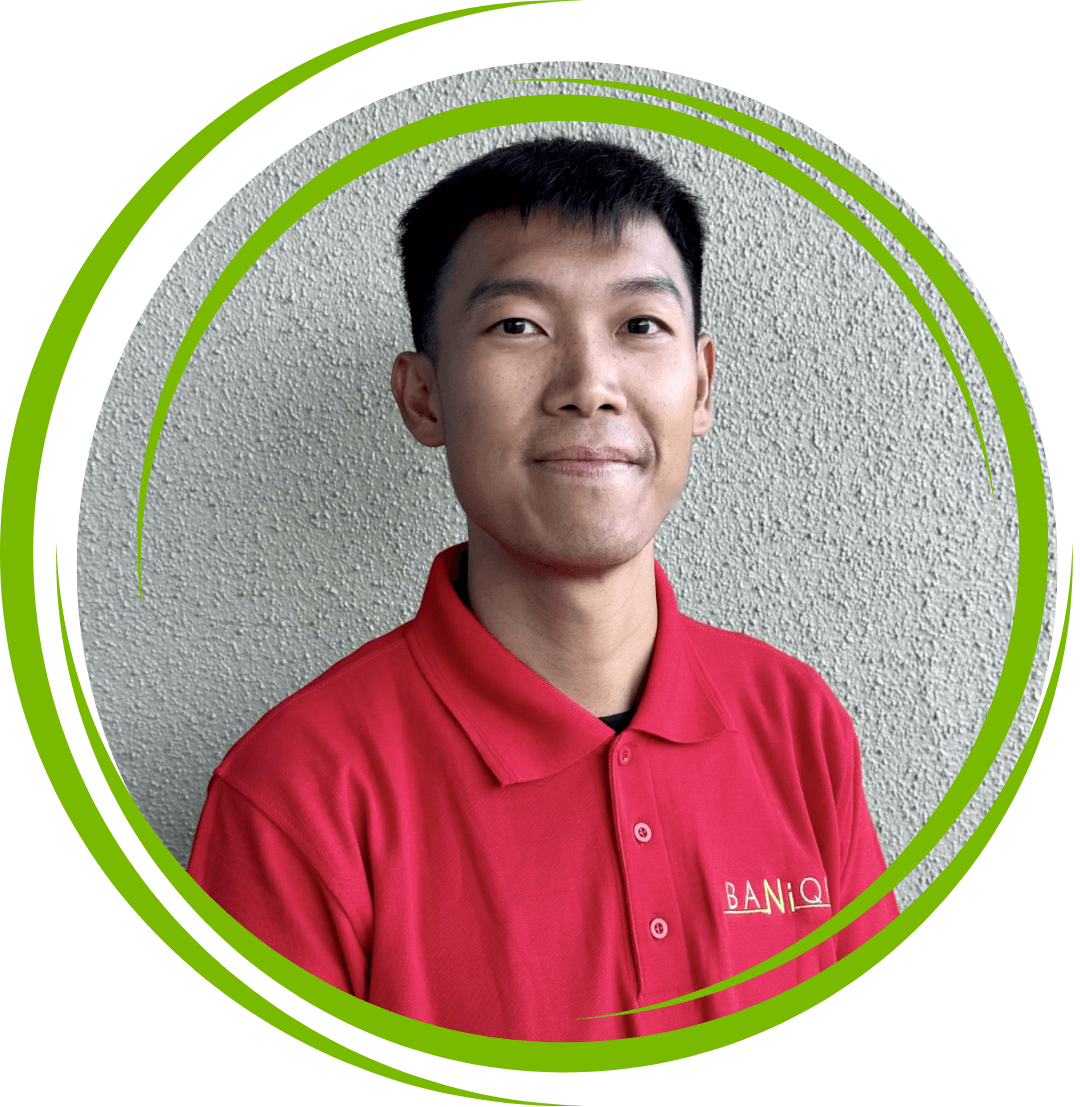
co-founder & ceo Eric Januar, co-founder and CEO of BANIQL

ERIC JANUAR. BANIQL, Silicon Valley.
The chemist's answer to a mining problem.

99.7%
Nickel sulfate purity
~98%
Less electricity used
$1.6M
Seed round, 2024
12 yrs
In batteries & chips
The Story

The metal that powers your car has a dirty secret. He is trying to fix it.

Every electric vehicle on the road runs on a paradox. The battery is clean. The nickel inside it, very often, is not. Conventional nickel extraction leans on a process called high-pressure acid leaching - HPAL - which demands extreme heat, brutal pressure, billion-dollar plants, and leaves behind tailings that haunt the landscape for decades. Eric Januar looked at that and asked a question chemists love and incumbents hate: what if you did not need any of it?

That question became BANIQL, the Silicon Valley deep-tech company where Januar is co-founder and chief executive. The pitch is deceptively simple. Nickel and cobalt are the beating heart of EV batteries and grid storage. Demand is exploding. Supply is filthy. BANIQL wants to make the supply clean - and, crucially, cheap enough that being clean is not a tax but an advantage.

Januar did not arrive at mining through mining. He arrived through the things mining feeds. Twelve years of research and development across electronics, batteries and semiconductors - including a stint at Merck and a successful exit at an earlier startup - taught him how the downstream world actually consumes these metals. He had seen the battery from the inside. BANIQL was the logical, if unlikely, move one rung up the chain: to the rock itself.

The result is a process the company calls BEST - the Baniql Extraction SysTem. It marries electrochemistry with an advanced mechanical reactor design, and the headline claim is the absence of two things: high temperature and high pressure. Strip those out and the whole economics of nickel changes. The plant shrinks. The energy bill collapses. The waste, BANIQL says, goes to net zero.
We don't need the multibillion-dollar plants that conventional methods demand.
— Eric Januar, on why small is the whole point
The Chemistry, In Three Numbers

Less heat. Less acid. Less of everything you don't want.

70%
Lower temperature
BEST runs cooler than HPAL - and skips its extreme pressures entirely.
>90%
Less fossil fuel
Januar puts the fuel reduction at more than ninety percent versus conventional routes.
0
Net toxic waste
The process is built to leave virtually zero waste behind - recyclable by-products instead of tailings.

HPAL vs. the BANIQL method

Relative resource intensity — illustrative, per company figures
Electricity — conventional HPAL100
Electricity — BANIQL BEST~2
Operating temperature — HPAL100
Operating temperature — BANIQL~30
Why Now

A patent, a pilot, and a quarter of the planet's nickel

Indonesia - BANIQL's primary target market - sits on roughly a quarter of the world's known nickel reserves. The country has bet its industrial future on processing that nickel for batteries. The problem is that the dominant way to do it is also one of the most carbon-heavy. A cleaner process is not a nice-to-have there. It is the whole game.

BANIQL's strategy, the one Januar keeps returning to, is to lead with intellectual property rather than capital. File the patents first. Validate the chemistry in your own pilots. License later. The company filed its first patent in 2022, a second in 2024, kept the specific formulas and purification steps as trade secrets, and used the Patent Cooperation Treaty to reach across borders. In Q4 2024 it brought a 100 kilogram-per-month pre-pilot plant online and started running trials.

It is a patient, almost old-fashioned way to build a hard-tech company - and it is exactly how a chemist thinks. Prove the reaction. Protect the reaction. Then, and only then, scale it.

The Path Here

From the lab bench to the rock face

EARLIER
Twelve years of R&D across electronics, batteries and semiconductors - including time at Merck and across EV and advanced-materials work.
EARLIER
A successful startup exit - the founder's apprenticeship before the founder's leap.
2022
BANIQL files its first patent on a low-acid, low-energy nickel and cobalt extraction process.
MAY 2024
BANIQL closes a US$1.6M seed round led by BEENEXT, with Seedstars, A2D Ventures, Sopoong and angels from five countries.
Q4 2024
A 100 kg/month pre-pilot plant is built; trial production begins.
2025
Continued fundraising and scale-up at seed stage.
In His Words

Three lines that explain the bet

“We don't need the multibillion-dollar plants that conventional methods demand.”
On modular scale
“The Baniql method cuts electricity use by about 98 percent and reduces fossil fuel consumption by more than 90 percent.”
On the energy math
“Our patents were pivotal in securing a US$1.6 million seed round.”
On IP as leverage
Footnotes & Curiosities

The small, telling details

Chips, then rocks
Before mining, Eric spent 12 years in semiconductors and batteries - Merck included. He learned the metal as a customer first.
Mine-site sized
Because BEST drops the heat and pressure, the units are compact enough to deploy right where the laterite is dug.
A name like a formula
BANIQL reads like something off a periodic table - fitting for a company built on first-principles chemistry.
The Rolodex

Follow the work

Share this profile

Profile compiled from public sources: BANIQL, WIPO Magazine, TNGlobal, Daily Guardian, A2D Ventures, Crunchbase and LinkedIn. Figures are as reported by the company. Where titles differ across registries, the subject's own profiles are used.