She spent 13 years inside a global chemicals company, then ran M&A at DuPont Water. Now she runs a Boston startup whose thesis is that biology often beats chemistry.
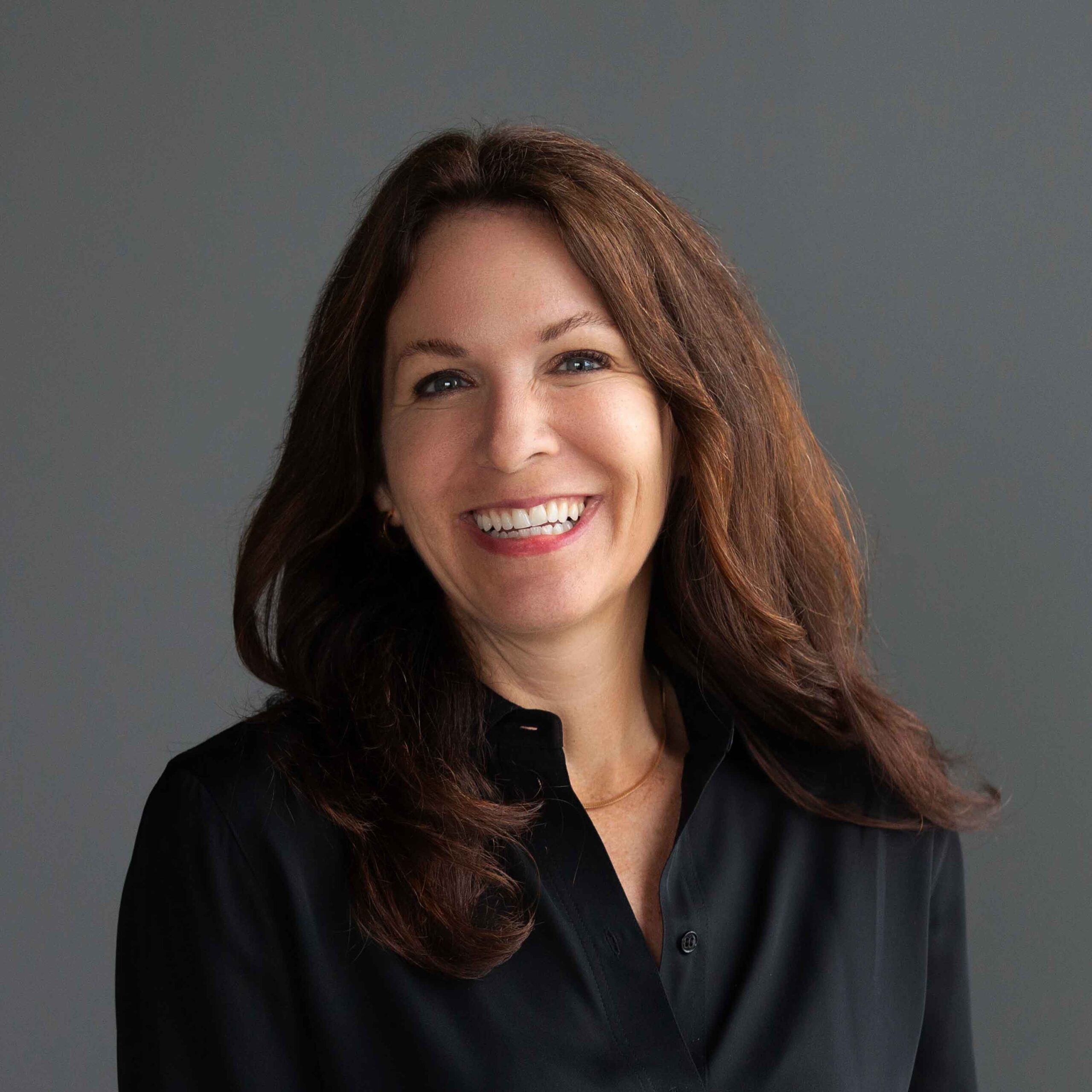
RICHARDS, PHOTOGRAPHED FOR ALLONNIA'S MEDIA KIT. THE COMPANY OCCUPIES A FLOOR INSIDE GINKGO BIOWORKS' SEAPORT FACILITY - THE FIRM SHE WAS SPUN OUT OF.
The pitch, delivered in the clean version, is that Allonnia uses synthetic biology to solve problems that industrial chemistry created. The pitch, delivered in the shorter version Nicole Richards prefers, is that waste is a failure of imagination. Both are on the website. Both get used in investor decks. Neither, she'd tell you, means much until a microbe actually does the work.
Richards has been the founding CEO of Allonnia since September 2020, when Ginkgo Bioworks announced it was spinning the company out of its Ferment Consortium with a $40M Series A. Ginkgo makes engineered organisms. Allonnia deploys them - specifically, into some of the least glamorous environments in industrial capitalism: PFAS-laden wastewater, 1,4-dioxane plumes creeping under municipalities, tailings piles at old mines that still contain rare earths if you can figure out how to get them out.
The work is unshowy in the way large environmental problems tend to be. As of Allonnia's most recent milestones update, its foam-fractionation technology (SAFF) has been used to concentrate PFAS in 185 million gallons of contaminated water. Its 1,4 D-Stroy solution is being deployed on 1,4-dioxane - a groundwater contaminant that has been on the EPA's watch list for years and is stubbornly resistant to conventional treatment. And its critical-minerals arm, which raised more than $20M in a December 2025 round, is aimed at using microbial bioextractants to pull copper, rare earths and other in-demand metals out of ore and waste streams that traditional mining chemistry can't quite reach.
None of this is particularly obvious as a career choice for a Villanova-trained chemical engineer who spent 13 years at Cytec / Solvay running specialty additives and then went to DuPont to run growth, strategy and M&A for the water division. It is, on paper, a bet against the industry Richards spent her career inside.
Allonnia's product surface is easier to understand as a list of contaminants than as a list of technologies. The technologies - microbial detoxification, foam fractionation, microbial bioextractants, engineered protein functionalization - are downstream of a decision about which molecules are worth fighting. Under Richards, the company has picked three fronts, and the split of effort roughly looks like this:
PFAS - the family of per- and poly-fluorinated compounds better known in headlines as "forever chemicals" - is the anchor. Allonnia's approach is a two-step: SAFF (Super-critical fluid and Foam Fractionation) hyper-concentrates PFAS out of contaminated water, producing a much smaller, much dirtier waste stream. The engineered microbes then work on that concentrate. The math is favorable in the way remediation math sometimes is: you can afford aggressive treatment on a few hundred gallons of hyper-concentrate that you cannot afford to run on a hundred million gallons of groundwater.
1,4-dioxane is the second front. It's the sort of contaminant that regulators have been increasing scrutiny on for a decade - a probable human carcinogen that dissolves easily in water, doesn't stick to soil, and shrugs off most conventional treatment. Allonnia's 1,4 D-Stroy product is a biological approach to breaking the molecule down, aimed initially at municipal and government sites where the plume is well-mapped and the alternatives are expensive.
The third is the newest, and the reason Richards raised the December 2025 round: critical minerals. The pitch is that mining chemistry has picked the low-hanging ore, that the world's demand for rare earths and copper is heading in one direction, and that microbes - which have spent a couple billion years learning how to move metals around - are unusually well suited to selective extraction from complex feedstocks. Whether it's cheaper than incumbent methods at scale is the question the next few years will answer.
Waste is a failure of imagination.
Richards graduated from Villanova with a chemical engineering degree in 1992, then went back for an MBA at the University at Albany, SUNY, in the late nineties. She joined Cytec in 2004 as Global Marketing Director of Polymer Additives and stayed for what became, after the Cytec / Solvay merger, thirteen years - long enough to run Global Sales and eventually to serve as Global Business Director for Specialty Additives.
Those are exactly the kind of jobs that produce executives who understand industrial P&Ls, know how to sell into procurement organizations at big utilities and mining companies, and are unusually comfortable with the fact that most industrial change happens slowly. In interviews she talks about them, sensibly, as training.
Her next stop - DuPont Water Solutions, where she was hired to lead Strategy, Growth and M&A - is more revealing about how she thinks. Water is the biggest and slowest industry Richards has worked in, and running M&A inside it teaches a very specific lesson: that a lot of the hard technical work of removing contaminants from water has, historically, been done by adding more chemistry. Her decision to leave was, in effect, a bet that this era is ending.
Ginkgo Bioworks called in 2020. The Ferment Consortium was Ginkgo's model for spinning promising remediation applications into standalone companies with independent capital. Allonnia was the environmental one. Richards was the CEO Ginkgo brought in to run it. She has been there since.
Richards has been unusually explicit, in a category of executive who is often not, about the gendered baggage of standard leadership advice. She has said, in a Mission North interview, that "fake it till you make it" was the phrase she found most demotivating early in her career - and that she now recommends a different practice to women coming up behind her: write down your actual strengths and the experiences that built them. Her language, on this and on the industry more broadly, is direct.
For me, it's about being authentic, being myself, and not trying to portray a certain image.
As women, we don't have to fake it as leaders. We're in a role for a reason.
It's easy to look back and say things are great now, but they still are not where they need to be.
You're not playing on the same field, so how can you compete when you don't have the same opportunities?
The company Richards runs is small - roughly 56 employees, headquartered inside Ginkgo's Seaport campus - and the operational surface area is deliberately narrow. What follows is what the public record shows.
Series A at launch in September 2020, alongside the appointment of Richards as CEO.
Additional round closed in December 2025 to accelerate critical materials biotechnology.
Gallons of PFAS-contaminated water processed through Allonnia's SAFF workflow to date.
NAICS codes Allonnia operates under: environmental consulting (54138), R&D biotech (541714), remediation (562910).
Two details about Richards are worth holding at the same time. She is a chemical engineer by training. And she has, for five years, run a company that quietly argues that chemistry has run out of new ideas for the hardest environmental contaminants and that biology - specifically, engineered biology - is where the next generation of solutions live.
You can read that as apostasy. Richards doesn't. In her framing, the underlying discipline of both fields is the same: manipulate molecules to get the outcome you want. Chemistry does it by adding reagents. Synthetic biology does it by engineering an organism that does the reagent's work for you, often more selectively, sometimes at a fraction of the operating cost. The difference is not philosophical; it's operational. Under a certain set of assumptions about labor, energy and regulatory pressure, biology wins.
The other detail is that she runs Allonnia inside Ginkgo Bioworks' building. Ginkgo's business is engineering organisms on contract for other companies; Allonnia is, in a real sense, Ginkgo's proof that the model works for environmental remediation. Richards is running that proof. If Allonnia scales - if 185 million gallons becomes 1.85 billion, if 1,4-dioxane treatment becomes a standard utility line item, if microbial bioextractants become a real input into critical-minerals supply - the case for engineered organisms in industrial applications gets substantially easier to make. That is not a small thing, and it is at least part of why Ginkgo installed a chemical engineer with three decades of industrial-sales experience to run it, rather than a biologist.
Her leadership style, to the extent she's talked about it publicly, is consistent with all of this: pragmatic, allergic to performance, more interested in what has actually happened than in what a slide deck says will happen. In the Mission North interview she pushes back on the notion that being a woman CEO in a majority-male industrial category means adopting an image; she prefers being direct about what she doesn't yet know. Her advice to younger women in the field is not a mantra. It's a homework assignment: write down what you're good at, and what experiences made you good at it. Keep the list.
What Allonnia does over the next few years will settle a set of open questions about synthetic biology as an industrial input. Whether the microbes can be manufactured at cost. Whether municipal buyers will trust a bio-based process on a regulated contaminant. Whether the critical-minerals thesis holds at scale. These are the questions Richards has spent the past five years narrowing. The company's most recent funding suggests investors are willing to keep paying to find out.
Her tagline - "waste is a failure of imagination" - shows up in her keynotes, in her posts, and, more recently, printed on Allonnia's merchandise.
She spent 13 years inside the Cytec / Solvay universe before jumping to synthetic biology. Almost nobody makes that move.
Allonnia's HQ is inside Ginkgo Bioworks' Seaport building. Her landlord is her cap-table cousin.
Her daughter recently graduated college; she has been married through most of her executive career.
The founding CEO of Allonnia, a Boston-based synthetic biology company that develops microbial solutions for PFAS, 1,4-dioxane, and critical-mineral recovery.
A bio-ingenuity company spun out of Ginkgo Bioworks' Ferment Consortium in 2020, headquartered in Boston's Seaport, focused on bioremediation and bio-based extraction.
She is a chemical engineer trained at Villanova with an MBA from SUNY Albany. Before Allonnia she spent 13 years at Cytec / Solvay and led M&A at DuPont Water Solutions.
More than $109 million, including a $40M Series A at launch in 2020 and a $20M+ round in December 2025.
PFAS removal and destruction, 1,4-dioxane degradation, industrial wastewater treatment, and bio-based recovery of critical minerals and rare earths.