The first Phoenix Tailings reactor sat in a Cambridge backyard. Its feedstock was red sludge, the unlovely residue of mining. Its budget was $7,000, pooled from the life savings of four founders. When the machine produced something, the team had to borrow scientific equipment to discover what the something was. The answer was a little rare-earth concentrate and pure iron. It was not yet a business, much less an answer to a strategic supply-chain problem. But it was matter transformed, and therefore an argument.
Nicholas “Nick” Myers had arrived at that backyard by an indirect route. He grew up in Connecticut’s Farmington Valley and attended The Master’s School in West Simsbury. He later studied physics at Saint Michael’s College, earned an MBA from Northeastern University in 2017, helped establish the student-run Huntington Angels Network, worked with founders at Techstars, and served in an operating role at the electric-vehicle charging company SparkCharge. The résumé contained technology, finance, networks, and young companies. Mining was conspicuously absent.
That absence became part of the company’s character. Myers did not inherit a miner’s attachment to the way metals had always been made. He did, however, know enough physics to respect the machinery of the real world, and enough business to understand that an elegant reaction without a customer is merely an expensive demonstration.
A conversation that refused to stay theoretical
The origin arrived in 2018, during a Bible-study conversation with materials scientist Tomás Villalón. They were discussing large problems, electrification, and the raw materials required to make a low-carbon economy physical. Villalón had spent years thinking about more sustainable metallurgy. At some point he suggested they stop admiring the problem and work on it. Myers agreed. Villalón initially wondered whether the agreement was simply the agreeable sort people make during earnest conversations.
Then Myers called. He had $7,000. When could they begin?
Villalón recruited his former MIT classmate Michelle Chao. Myers brought Anthony Balladon, a former colleague. Their skills fit together: materials science, process design, commercial work, finance, operations. Myers’s favorite family maxim is that nobody who does anything great does it alone, and that the people around you make you great. In industrial technology, this is less a greeting-card sentiment than a technical requirement. Chemistry, machinery, permits, customers, capital, and patience must all report for duty.
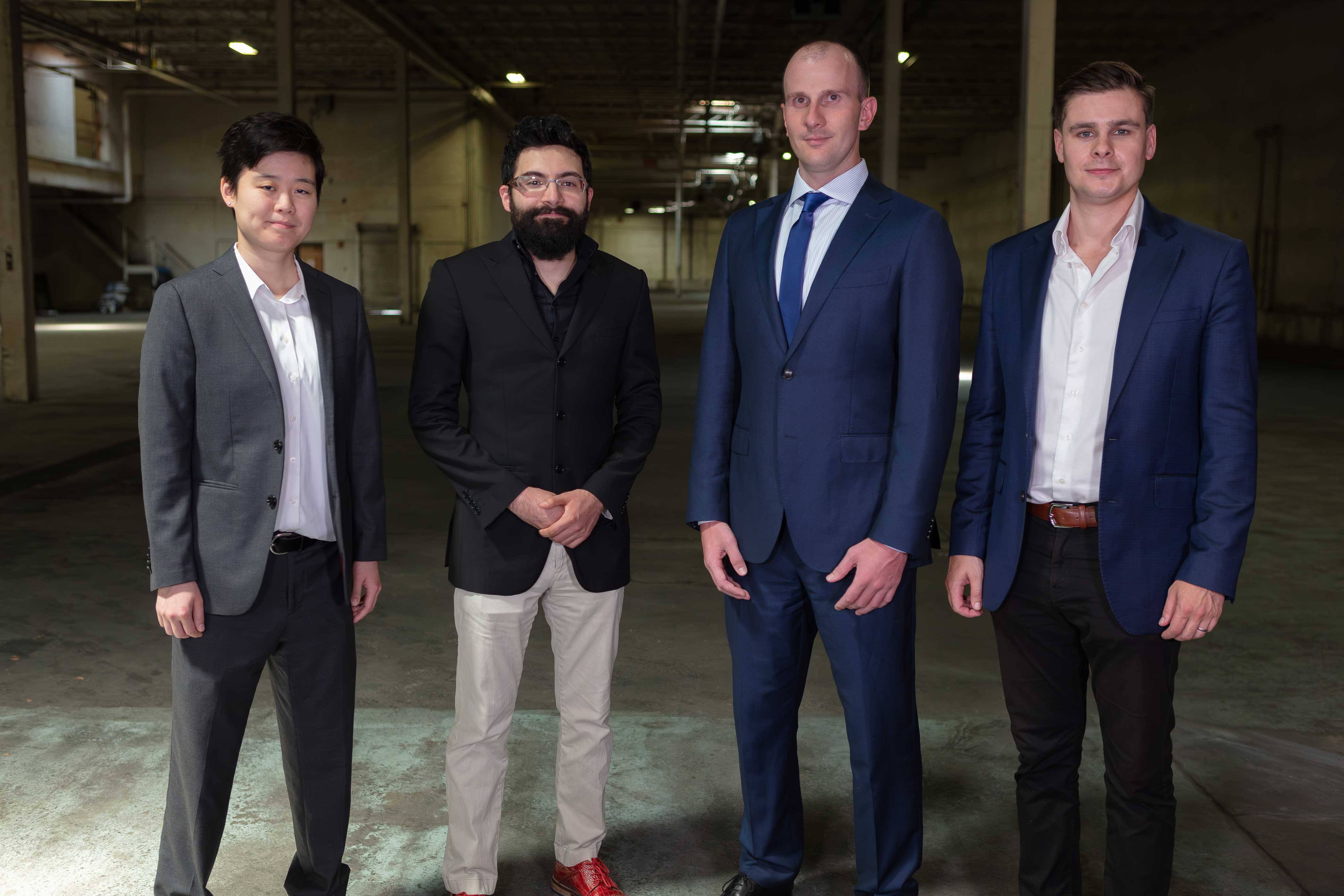
Their early work returned to first principles. They bought an experimental amount of waste, assembled the backyard reactor, and tested whether useful materials could be separated from what mining had left behind. The awkward trip to borrowed analytical equipment was a fitting first lesson. A metal does not care about the founder’s pitch deck. It either has the required purity or it does not.
The unglamorous middle
Rare earths are a linguistic prank. Many are not exceptionally scarce in the earth’s crust. The trouble lies in separating them, refining them, and converting oxides into metals and alloys with the purity modern magnets demand. These magnets sit in electric motors, wind turbines, electronics, aerospace systems, and defense equipment. The glamorous object is the car, turbine, robot, or aircraft. The stubborn bit is the industrial middle between the material in the ground and the component in the machine.
Phoenix Tailings built itself around that middle. Its process begins with tailings or other feedstocks, extracts a concentrate, separates individual elements into oxides, and turns those oxides into metal. At its Massachusetts refinery, the company has used a molten-salt mixture heated to roughly 1,300 degrees Fahrenheit, then applied electric current so pure metal collects on an electrode. The company says renewable electricity, recyclable solvents, and closed-loop process design allow it to avoid the toxic byproducts and direct carbon emissions associated with conventional routes.
Purity is the tyrant. An impurity introduced upstream can spoil the metal downstream, so every step must be designed as part of one system. Myers’s role is not to pretend to be the chief metallurgist. It is to keep the scientific, commercial, and institutional systems moving in concert. His public vocabulary is revealing: troubleshoot, identify, fail fast, grow. These are startup verbs wearing steel-toed boots.
Customers before consensus
The early reception was bracing. Myers has recalled asking a straightforward question: if Phoenix could make rare-earth metals domestically, competitively, and without the same waste burden, would people want them? Early investors often answered no. Conversations with customers delivered a different answer. Buyers understood the risk of relying on a supply chain concentrated in one country. They also understood why a cleaner process might matter.
The disagreement supplied a useful compass. Investor enthusiasm can be fashionable; an operational bottleneck is generally less so. Phoenix entered Northeastern’s IDEA venture accelerator, received guidance from MIT’s Venture Mentoring Service, went through the National Science Foundation’s I-Corps program, and joined Techstars Boston in 2020. Each program widened the circle around a problem the founders had first discussed among themselves.
Commercial production began to replace theoretical confidence. Phoenix Tailings started shipping rare-earth metal products in 2023. By 2025, Myers described a path from an operation capable of about 40 metric tons annually in Massachusetts toward a larger New Hampshire operation designed for about 400 metric tons. Those figures are modest beside total American demand. They are substantial beside a backyard.
When the experiment becomes infrastructure
Capital arrived in quantities that changed the nouns. In February 2026, Phoenix announced $40.2 million in new equity and venture debt, taking its Series B total to $116.6 million. The company said the money would expand production beyond neodymium-praseodymium, dysprosium, and terbium to samarium, yttrium, and other metals. In May, it acquired Machinery Partner, adding AI, automation, and operational intelligence to what Myers describes as three linked technology pillars: chemistry, industrial hardware, and digital infrastructure.
June brought two public commitments. The Department of Energy selected Phoenix for a $66 million grant toward a $147.8 million demonstration project with MIT and the University of Minnesota. Separately, the federal Office of Strategic Capital conditionally committed $500 million in long-term debt financing toward a planned facility known as the Freedom Facility, anchoring an initiative of roughly $1 billion. The loan remains conditional, with financial, legal, and technical requirements before closing. Initial operations are targeted for 2028.
The proposed facility is meant to connect mines and recyclers upstream with magnet makers, manufacturers, and government buyers downstream. Phoenix plans to accept varied feedstocks and produce both light and heavy rare-earth metals. In this vision, the refinery is not merely a factory. It is connective tissue for an industrial ecosystem whose parts currently depend on processing abroad.
The responsibility has changed with the scale. A $7,000 mistake may be painful. A billion-dollar industrial initiative carries workers, taxpayers, customers, and national strategy inside it. Myers’s rhetoric has accordingly become more institutional. He talks about strengthening American industry, serving allied supply chains, and building an organization capable of disciplined execution. Still, the old startup rhythm remains audible. Learn, build, test, repeat.
The useful outsider
Myers’s story is tempting to flatten into a parable about audacity. That would miss the interesting part. Calling with $7,000 was audacious. Calling the right materials scientist was judgment. Recruiting complementary founders was judgment. Listening when customers contradicted investors was judgment. So was accepting that cleaner chemistry would need government partnership, patient capital, and a production culture able to measure itself against unforgiving physical reality.
He remains fond of the tangible result. In one public reflection, Myers described holding pieces of neodymium-praseodymium, dysprosium, and yttrium and feeling their significance anew. The supply-chain abstractions suddenly had weight. He also digressed about his affection for American muscle cars and uncertainty over an electric Corvette. It is a charming complication for a clean-technology executive: the future may be electric, but the V8 still has a lobbyist in his chest.
Phoenix Tailings now faces the less romantic test of industrial companies: repeatability at scale. Can its processes preserve purity as volumes rise? Can facilities arrive on schedule? Can new feedstocks be qualified, contracts fulfilled, and costs controlled? Conditional financing is not an operating plant, and a promising process does not suspend chemistry or construction risk. Myers’s aspiration is larger than any single demonstration: extend the company’s knowledge into more metals and help make the United States a dependable center of rare-earth processing for itself and its allies.
The backyard reactor offers no guarantee. It offers a pattern. Begin with the bottleneck others overlook. Assemble people whose knowledge exceeds your own. Make one piece of matter behave differently. Then earn the right to make the next piece, and the next. Somewhere between $7,000 and a planned industrial facility, Nicholas Myers stopped being an outsider to metals. He did not stop asking an outsider’s most useful question: why must the old way remain the only way?
Follow the work
Phoenix Tailings Nicholas Myers on LinkedIn Nicholas Myers on X Watch: Shaping the Future of the Metals Industry Read: the Phoenix Tailings origin story Listen: How Phoenix Tailings Is Transforming Rare-Earth RefiningFounder photograph used under a Creative Commons Attribution-NonCommercial-NoDerivatives license; image courtesy of Phoenix Tailings.