industrial-decarbonization
(34)
Kevin Krausert and the education of an energy insider
He worked his way from a northern Alberta drilling rig to the chief executive’s office. With Avatar Innovations, Kevin Krausert is giving energy workers a route from industrial know-how to companies of their own.

Justin Riemer and the difficult art of getting an idea to work
From economic development to Emissions Reduction Alberta, Justin Riemer has spent his career connecting people, capital and technology. His next challenge is getting more of Alberta’s clean technology out of the pilot stage and into everyday industrial use.
Greentown Labs and the value of a useful neighbor
Four startups shared a warehouse to make the rent manageable. They discovered that the person next door could be worth as much as the equipment - and built a climate incubator around that discovery.

Manan Thakkar and the hours after sunset
From carbon consulting to solar parks, Manan Thakkar has helped build Prozeal around the energy needs of industry. His next challenge begins when the panels stop producing.
ENCINA found a better feedstock. Then came the billion-dollar test.
Waste plastic gave ENCINA a new business. Chemical buyers gave it a market. Its next test is turning those agreements into a commercial plant.
The Battery That Sells Steam
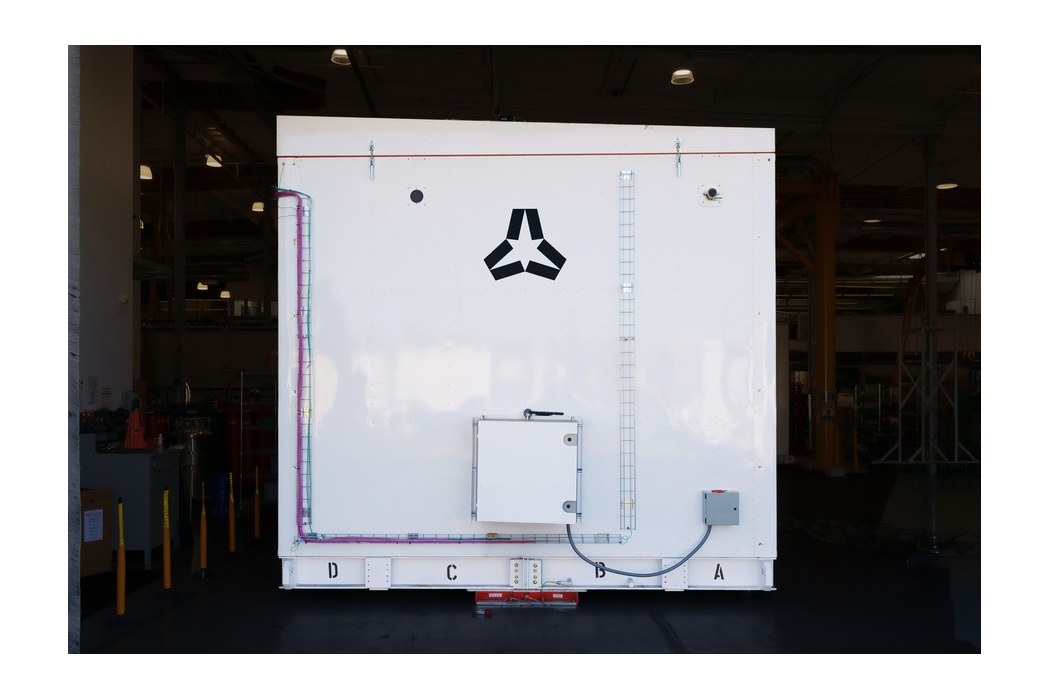
Antora Energy packed a South Dakota field with more than 200 boxes of hot carbon. The surprise is not the heat. It is the contract, the utility rate, and the factory that made continuous industrial energy possible.

Andrew Ponec Put the Future in a Black Box
The Antora Energy co-founder has spent half his life chasing a stubborn question: how do you make clean energy keep factory hours? His answer is disarmingly physical - heat solid carbon until it glows.

Nicholas Myers Put $7,000 Into a Backyard Experiment. Now He Is Building America’s Rare-Earth Middle.
A physics graduate with no mining résumé helped turn a backyard reactor into a rare-earth business. His wager is that America’s missing industrial link can be rebuilt with cleaner chemistry, patient capital, and a team willing to learn in public.

Janice Tran Found a Power Plant Hiding in Plain Sight
The machinery was already proven. The heat was already there. Janice Tran’s wager was that the real invention industrial decarbonization needed was a better deal.

Sandeep Nijhawan Is Teaching Iron to Take a Cold Bath
At Electra, a former semiconductor operator is replacing the blast furnace's inferno with a 60°C electrochemical process - and betting that cleaner iron must compete without a green premium.
StormFisher Bought a $1.5 Billion Clean-Fuel Headache for $17.5 Million - Now It Has to Make the Math Work
A Canadian project developer picked up a stranded Quebec fuel complex at a steep discount, scrapped its original process and bet on e-methanol. The clever part is reuse; the hard part is turning cheap infrastructure into bankable fuel.

Ecolectro Is Trying to Make Green Hydrogen Cheap by Removing the Expensive Parts
The Cornell spinout spent a decade turning stubborn polymer chemistry into an industrial machine. Its wager is simple: green hydrogen gets cheaper when the stack stops shopping for precious metals.
Electra Wants to Make Iron at Coffee Temperature - Then Sell It to the Steel Giants
The Boulder startup replaced a 1,600°C blast furnace with chemistry at roughly 60°C. Its first experiment said the idea was dead; a month later, it had the workaround - and now steelmakers are buying the demonstration output.

Phoenix Tailings Found a $1 Billion Business Hiding in Mining's Trash
The Massachusetts startup began with buckets of mine waste in a backyard. Seven years later, it has commercial metal shipments, a strategic trading partner, and a conditional $500 million government loan - but the real test is whether a tiny refinery can become industrial infrastructure on schedule.
The Startup That Turns Factory Exhaust Into a Power Plant - and Bills Nobody For It
Up to 58% of the energy fed into heavy industry escapes as waste heat. Kanin Energy built a business model that catches it, converts it to power, and hands the factory a check instead of an invoice.
The Venture Firm Betting the Next Tech Boom Will Be Built From Atoms
8090 Industries is wagering that the next generation of valuable technology companies will sell electrons, molecules, machines and infrastructure - and that old industrial networks can help new founders build them faster.
The Climate Fund Betting the Future Still Runs Through a Pipe
Energy Capital Ventures built a narrow venture thesis around an unfashionable premise: decarbonization will have to work with existing gas infrastructure, not merely wish it away. Now data centers, industrial demand and a portfolio of strange machines are putting that bet to work.
At One Ventures
At One Ventures is betting that climate technology wins when it is cheaper, better and difficult for incumbents to ignore. Its $525 million experiment stretches from honeybee vaccines to underground ammonia reactors.
PlasmaLeap Technologies
PlasmaLeap Technologies is a Sydney-based cleantech company building modular, non-thermal plasma reactors that make ammonia, nitric acid, fertiliser and hydrocarbon eFuels from just air, water and renewable electricity. Spun out of the University of Sydney in 2019, its 'lightning-mimicking' process replaces the century-old, fossil-fuelled Haber-Bosch route with room-temperature, on-site chemical production. Its eNFix containerised units let farmers make green nitrogen fertiliser at the farm gate, cutting emissions and supply-chain dependence. The company raised roughly A$30 million in a Series A led by the Gates Foundation, Investible and Yara Growth Ventures to build first-of-a-kind fertiliser hubs in New South Wales and Tasmania.

Gravity
Gravity (formerly Gravity Climate) is a San Francisco-based enterprise software company that combines carbon accounting and energy management in a single platform built for industrial businesses and their supply chains. Founded in 2022 by Saleh ElHattab, the company automates the collection of utility and emissions data, generates audit-ready Scope 1, 2, and 3 disclosures, and runs a marketplace that helps customers identify, finance, and implement energy-efficiency projects that cut both costs and emissions. Backed by more than $20M in funding, Gravity works with companies like Autodesk, WM, Geotab, Xometry, and MiddleGround Capital.
Infinitum
Infinitum is an Austin, Texas company reinventing the electric motor. Founded in 2016 by Ben Schuler, it replaced the century-old iron-and-copper stator with a printed circuit board (PCB) stator, producing air core motors that are roughly 50% smaller and lighter, use 66% less copper, and consume about 10% less energy than conventional motors. Its Aircore EC motor system integrates a variable frequency drive and targets HVAC fans and pumps, data center cooling, industrial equipment, power generation and mobility. Backed by more than $385M in funding and partners such as Rockwell Automation, Infinitum was named to Fast Company's 2025 list of the World's 50 Most Innovative Companies, ranking No. 1 in energy.
Circe
Circe (Circe Bioscience) is a Boston-based climate biotech company that engineers microbes to eat carbon dioxide and build valuable molecules - fats, oils, sugars, plastics and fuels - using only CO2, water and electricity. Spun out of Harvard's Wyss Institute in 2021, its gas-fermentation platform consumes roughly 3 kilograms of CO2 for every kilogram of oil it produces, making the process carbon-negative. The company has made the world's first chocolate using fermentation-derived cocoa butter and, in September 2024, raised a $5M seed round to open a pilot plant in Waltham, Massachusetts.

Gurinder Nagra
Gurinder Nagra is the founder and CEO of Furno Materials, a South San Francisco climate-tech company building the world's first modular, energy-efficient cement plant. Born in India, raised in rural Griffith, Australia, and trained as a geoscientist at UNSW and Stanford, he traded a boyhood cricket dream for a fight against cement's outsized carbon footprint. Furno's compact kilns use oxyfuel combustion to make ASTM-certified cement at lower cost and far lower emissions; in 2024 the company's cement tested at twice the ASTM strength standard, closed an oversubscribed $6.5M seed round, and Nagra landed on the Forbes 30 Under 30 list.

Shannon Nangle
Shannon Nangle is a microbe-wrangling scientist turned CEO who co-founded Circe Bioscience to make fats, oils, and even chocolate out of thin air. Her company feeds carbon dioxide, water, and electricity to engineered microbes that grow like plants and excrete valuable molecules, producing food and industrial ingredients in a carbon-negative way. Spun out of Harvard's Wyss Institute in 2021, Circe made what it calls the world's first gas-fermentation-derived chocolate and has raised over $17 million to scale a manufacturing process Nangle spent six years building.
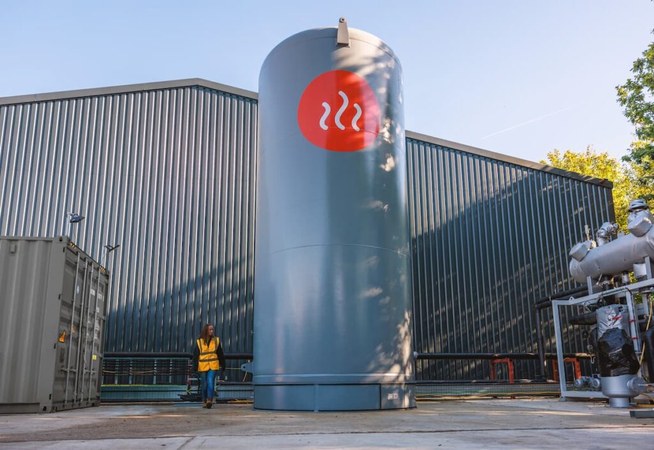
Caldera
Caldera is a UK clean-energy company decarbonizing industrial heat with Warmstone, a thermal battery built from recycled aluminium and volcanic rock inside vacuum-insulated heat cells. Its electric Storage Boiler converts cheap off-peak renewable electricity into industrial steam and hot water up to roughly 200C, offering factories a zero-emissions alternative to gas boilers. Founded in 2017 in Fareham, England, Caldera closed a 10M pound Series A led by Germany's GEA Group in 2025 and landed its first commercial order from the NHS.

Molten Industries
Molten Industries is an Oakland, California climate-hardware startup that uses methane pyrolysis to crack natural gas into clean hydrogen and high-value synthetic graphite, with no carbon dioxide emitted in the process. Founded in 2021 by Dr. Caleb Boyd and Dr. Kevin Bush, the company aims to onshore battery supply chains and decarbonize heavy industry by producing battery-grade graphite for lithium-ion cells and low-cost clean hydrogen for fuels, ammonia, plastics, and green steel. It raised a $25M Series A in June 2024 led by Breakthrough Energy Ventures to build its first modular commercial reactor.

Parker Meeks
Parker Meeks is the President and CEO of Utility Global, a Houston-based clean-energy company commercializing H2Gen, a system that makes low-cost clean hydrogen on-site from industrial waste gases without electrolysis. A Houston native and electrical engineer turned McKinsey partner, he previously led hydrogen fuel-cell maker Hyzon as CEO. At Utility he is steering the company from demonstration into global commercialization, including a first commercial-scale steel project with ArcelorMittal in Brazil.

Utility Global
Utility Global is a Houston-based clean-energy technology company whose proprietary eXERO platform and H2Gen system produce high-purity hydrogen and a capture-ready CO2 stream from industrial off-gases and biogases - without using external electricity. By bolting onto the existing infrastructure of steel mills, refineries, petrochemical plants and other hard-to-abate sites, the company aims to make industrial decarbonization economically competitive with fossil-based hydrogen rather than dependent on subsidies or pilots.
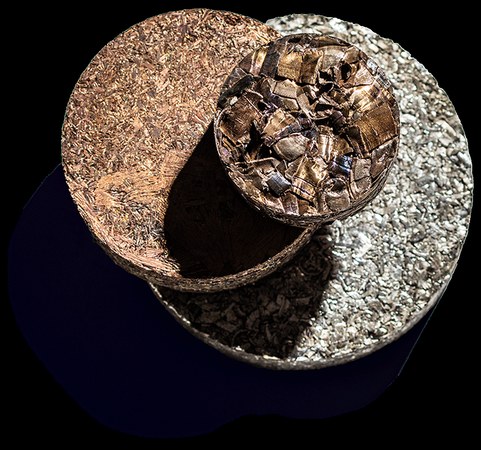
Sun Metalon Inc.
Sun Metalon Inc. is a deep-tech company decarbonizing the metal industry. Its patented electromagnetic heating technology turns contaminated machining swarf and chips - normally landfilled or downcycled - into clean, dry briquettes of the original alloy, on-site and with near-zero CO2 emissions. The company claims up to 85% lower energy use versus conventional remelting. Founded in 2021 by ex-Nippon Steel engineers, it operates in the United States and Japan, has raised about $42 million, and counts Toyota, Sumitomo, Nippon Steel and Airbus Ventures among its partners and backers.
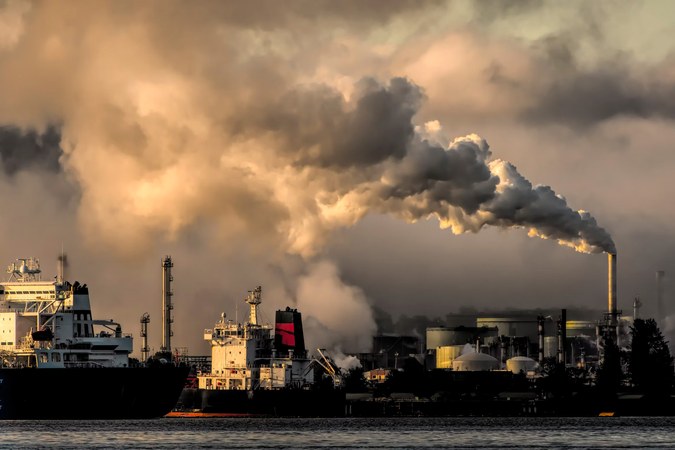
Mantel
Mantel is a Cambridge, Massachusetts cleantech company building a molten-salt approach to industrial carbon capture. Spun out of MIT in 2022, its molten borate materials operate inside the high-temperature guts of boilers, kilns and furnaces, absorbing more than 95% of CO2 while recovering high-grade heat that offsets the energy cost of capture. The pitch is blunt: cut the cost of capturing a ton of carbon by more than half and make it work in the dirtiest, hottest corners of heavy industry - cement, steel, pulp and paper, power and refining.