She feeds carbon dioxide to microbes and gets back the fat for your chocolate. The trick is convincing the bacteria to cooperate.
Consider the chocolate bar. To make it the usual way, you need a cacao tree, a tropical climate, a few years of patience, and increasingly, a willingness to ignore the fact that cocoa is getting scarce and expensive. Shannon Nangle skips all of that. Her company, Circe Bioscience, makes the fat in chocolate from carbon dioxide, water, and electricity - no tree, no farm, no harvest.
The way it works sounds like science fiction and is, by now, just engineering. Circe grows microbes the way you might grow tomatoes, except the food isn't soil and sunlight, it's greenhouse gas. The microbes eat the gas, build molecules inside their cells, and Circe harvests those molecules. The output is identical to the fats, sugars, plastics, and fuels we already use. The input is, more or less, pollution.
Nangle calls this making products "in a carbon-negative way." Most people call it impossible until they see the chocolate.
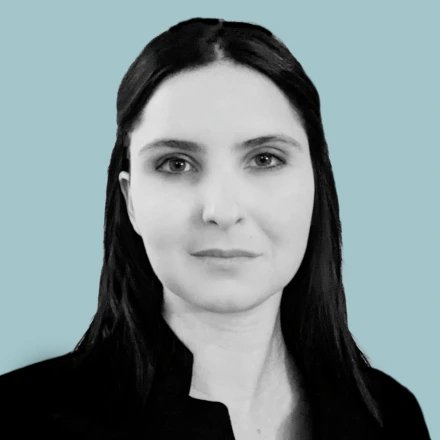
Circe is addressing this critical problem by using gas fermentation to manufacture products in a carbon-negative way.
No cows, no palm plantations, no cacao orchards. Just a metabolism, rewired.
Carbon dioxide and hydrogen become the raw feedstock. The same gas that warms the planet becomes the thing you eat for breakfast.
Engineered microbes "eat" the gas and grow, the way plants grow on air and light, building useful molecules inside their cells.
Out come triglycerides - fats, butters, oils - chemically identical to the real thing, ready for food, cosmetics, or fuel.
Nangle did not set out to feed the world. She earned her PhD at the University of Washington studying crystallography and structural biology - the painstaking work of figuring out the exact three-dimensional shape of protein complexes. It is about as far from running a factory as a scientific career gets.
The pivot came at Harvard. As a postdoctoral fellow from 2016 to 2020 in Pam Silver's lab at Harvard Medical School, she was drawn to a different question: what if biology could be used as industrial technology? Silver's lab had a track record of putting microbes to work on environmental problems. Nangle started engineering microbes, building electrochemistry rigs, and customizing fermentation systems - the unglamorous hardware of turning a lab idea into a process.
Six years of that work became Circe. In 2021 she co-founded the company with fellow Wyss researcher Marika Ziesack, licensing the technology out of Harvard and pointing it at one of the largest carbon problems on Earth: how we manufacture the everyday stuff of modern life.
Circe spun out of the Wyss Institute for Biologically Inspired Engineering at Harvard. While there, Nangle and Ziesack won a $3.2M ARPA-E ECOSynBio award from the US Department of Energy and were both named 2021 Activate Fellows.
The name nods to the enchantress of Greek myth who transformed one thing into another. Fitting, for a company that turns greenhouse gas into butter.
The chocolate is a demonstration, not the destination. The first products Circe is developing are triglycerides - the fats in butter, oils, and cocoa - because fat is everywhere in the food system and notoriously hard to make without land, animals, or tropical deforestation.
Nangle's longer aim is to lean on large-scale animal agriculture less, freeing the enormous footprint of land used for grazing and feed. Milkfat for dairy and non-dairy products. A palm oil that doesn't level rainforests. Fats that make plant-based meat juicier and ice cream creamier. The pitch is not sacrifice. It's the same pleasures, sourced from the air.
We're trying to incentivize regenerative practices to support a revitalized food system.
A taste for surrealist cinema. Of course the person rewriting what's possible likes films that bend reality.
Absurdist literature. Helpful, perhaps, when your day job is making chocolate from air.
Tends her own garden, inspired by Voltaire's advice to cultivate it. The fermenter is just a bigger pot.
Active in the biotech-for-space community - because making food from gas is exactly what you'd want far from Earth.
Get it in writing.
It's not over until it's in the bank.