Carbon lost the first round. When Andrew Ponec and the small team that would become Antora Energy compared possible materials for a giant heat battery, they built the natural instrument of young engineering companies everywhere: a spreadsheet. Cost went in. Availability went in. Heat capacity went in. The candidates were ranked. Carbon, sturdy and familiar and black as a dead screen, landed near the bottom.
Months passed. Other materials were considered. Yet carbon continued to look perfect in every respect except the one that mattered most: it did not appear to store enough heat. The disappointment nagged. When the team returned to the calculation, they found Ponec's mistake. He had used carbon's heat capacity at room temperature. The material behaves differently when hot. By roughly 800 degrees Celsius, its capacity to hold energy increases about threefold. The correction sent carbon to the top of the list.
It is an origin story with unusual honesty. No apple fell. A founder had typed in the wrong number, noticed that reality remained inconvenient, and looked again. Antora's core technology grew from that revision: use cheap electricity to heat insulated blocks of solid carbon, hold the energy there, then deliver it to factories as heat or turn the fierce glow back into electricity.
“The team is where the value of the company is, not the IP.”Andrew Ponec, reflecting on his first startup
The useful thing that refused to die
Ponec's first company also began with technology that seemed too useful to abandon. At Stanford, an introductory green-electronics course led him and classmates Daniel Maren and Darren Hau to redesign circuitry used behind solar panels. Their junction-box electronics promised to reduce hardware and installation costs while improving a plant's output. Ponec was 19. Starting a company was not on the syllabus, or in his plan.
The three students took leave and formed Dragonfly Systems in 2013. It was an awkward moment to enter solar. Solyndra's collapse still haunted the sector, established companies were struggling, and the founders were learning the practical curriculum of a hardware startup. One account has them turning down the heat, keeping little more than white bread and peanut butter in a leaky Craigslist refrigerator, while Ponec sometimes ate oatmeal for all three meals. Glamour is mostly a retrospective coating.
His first funding, Ponec later said, came from a pitch literally given in an elevator. The company did not glide upward from there. Its initial idea failed to gain much traction, forcing the team to decide whether to continue. They did. Ponec credited the people around him, and their willingness to share ideas and ask outsiders for help, more than the sanctity of the invention. His enduring advice to students was brief: do not do it alone.
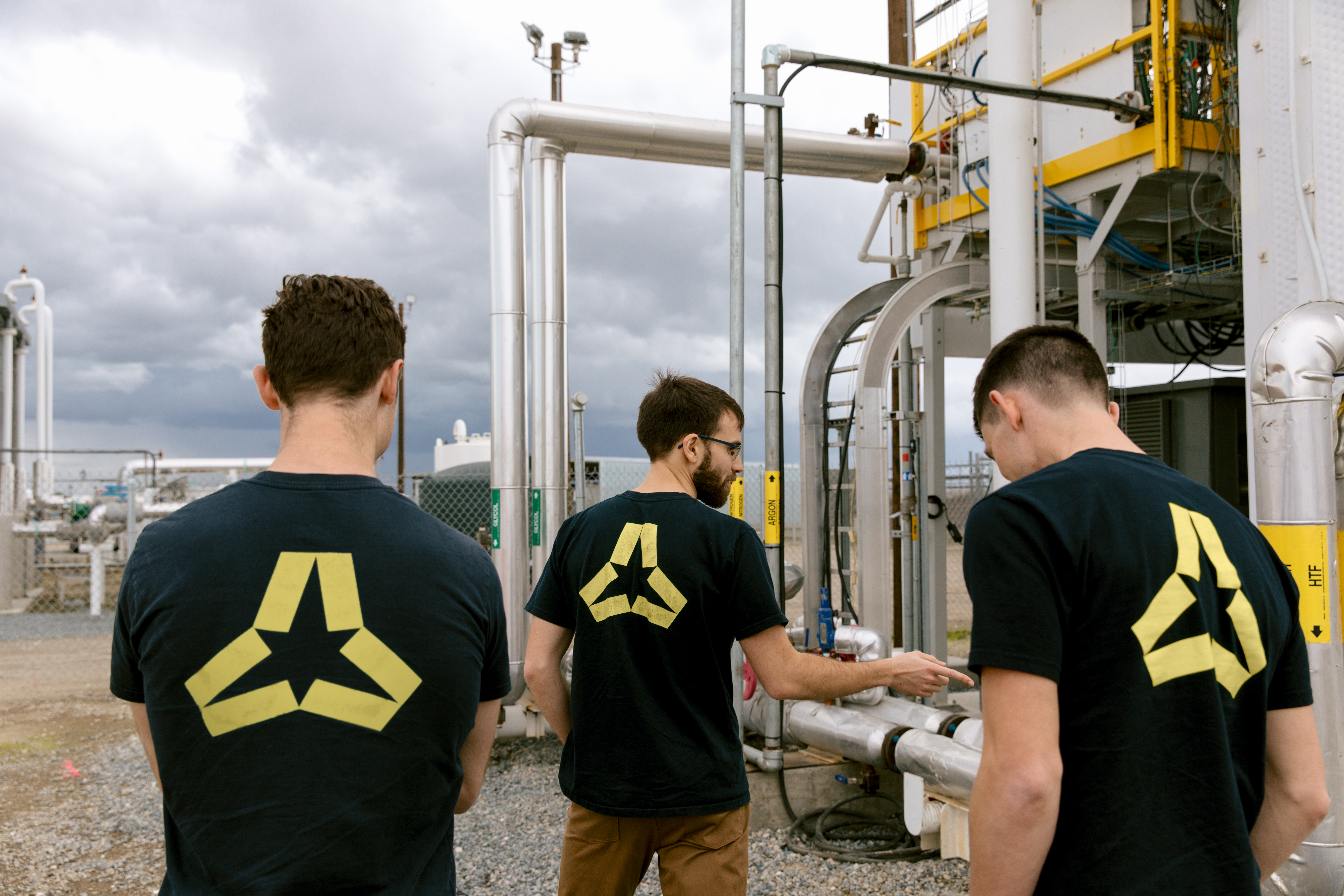
SunPower acquired Dragonfly in 2014, about 18 months after it began. Ponec helped carry the technology through prototyping, testing, manufacturing, and installations totaling more than 10 megawatts. He and his co-founders had already appeared on Forbes' 30 Under 30 list. Then he did something pleasingly unmythic: he went back to school.
A childhood alarm becomes an engineering brief
Ponec grew up in Oregon, among mountains, forests, and enough weather to make energy feel less abstract. In middle school he began reading about climate change and had what he called a light-bulb moment: “I can't believe that we're not all talking about this!” He did not yet know the language of engineering or entrepreneurship, but he made small solar panels and wind turbines. The worry acquired tools.
At Stanford, he studied photovoltaics and power conversion and ultimately earned a bachelor's degree in energy systems engineering. He also moved among unusually varied campus projects: Grid Alternatives, the Solar Car Project, Solar Decathlon, and the Stanford Symphony Orchestra. When he returned after Dragonfly, conversations with applied physicist Justin Briggs turned toward a question larger than solar hardware. Which important climate problem had no adequate solution and too few people working on it?
They kept arriving at industrial heat. Factories need far more than wires and motors. They boil, dry, smelt, roast, and react. Their appetite for heat is enormous, largely invisible to ordinary life, and difficult to serve with variable wind and sunlight. Ponec and Briggs joined with thermophotovoltaics researcher David Bierman, whose company Marigold Power became part of Antora. The three co-founded Antora in 2018.
The bright interior of a dark block
Antora's chosen carbon is not exotic battery-grade graphite. It is closer to the abundant industrial material used in aluminum and steel production, selected because established supply chains already move it by the millions of tons. In the battery, it mainly has to do one job extremely well: get hot repeatedly without losing its composure.
Above roughly 1,000 degrees Celsius, the carbon's heat travels powerfully as light. This matters. Other high-temperature storage designs may circulate molten salt, liquid metal, or another working fluid. Antora can open a shutter and let radiation pass through channels toward tubes carrying industrial fluid. The same intense light can strike thermophotovoltaic cells and become electricity. An infrared mirror returns unusable photons for another chance. The black block becomes an indoor sun with office hours.
The founding team spent its early years asking whether this elegant picture would survive arithmetic. A group of four, then six, then seven people modeled the physics and economics before committing to expensive development. They worked for a time from a trailer at Lawrence Berkeley National Laboratory through the Activate fellowship. The restraint is part of Ponec's method: before spending years on a beautiful mechanism, establish that success would matter.
When the box meets the field
In 2023 Antora commissioned a 5 megawatt-hour pilot at an industrial site in Fresno County. Ponec described it without perfume: a big steel box full of glowing hot carbon, somewhere between half a shipping container and a full one. The host had agreed to be first, a valuable species in industrial technology. A prototype in a controlled room demonstrates physics. A box beside a working plant has to demonstrate manners.
The scale changed sharply in South Dakota. At POET's bioprocessing facility in Big Stone City, Antora deployed more than 200 factory-built batteries with 5 gigawatt-hours of storage capacity and 50 megawatts of round-the-clock delivery. The project advanced from an empty lot to delivering energy in under 12 months. It also required a tailored electric rate with Otter Tail Power so the system could charge during periods of local surplus without raising costs for other customers.
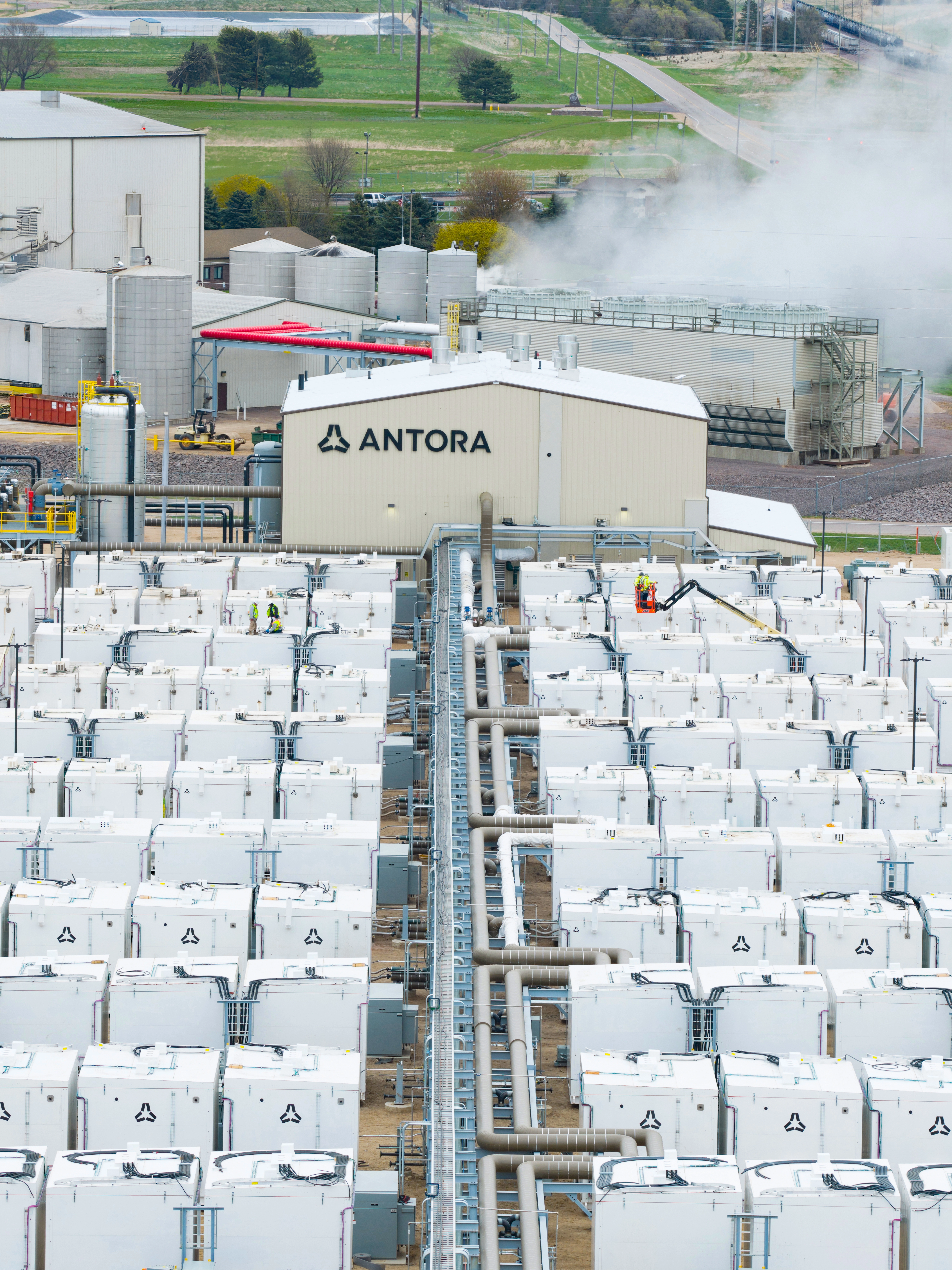
That detail is easy to miss amid the giant numbers. Energy technology succeeds inside contracts, tariffs, construction schedules, and customer operations. Ponec's job has moved well beyond finding the right material. He now leads a company turning an uncommon machine into a product that welders, electricians, pipefitters, and project financiers can repeat.
Dragonfly Systems moves from a Stanford course project to acquisition by SunPower.
Ponec, Justin Briggs, and David Bierman co-found Antora Energy.
A Fresno pilot turns on; Antora opens its San Jose factory and raises a $150 million Series B.
Project Big Stone begins delivery; Antora closes a $550 million Series C.
The night shift
In July 2026, Antora closed a $550 million Series C, co-led by G2 Venture Partners and Eclipse. The company said the money would speed deployments, expand production, establish a second American manufacturing hub, and strengthen its supply chain. The round followed a $150 million Series B announced in 2024. Capital has caught up with the ambition; execution must now keep pace with both.
Ponec's public argument has broadened, too. Data centers and new factories are straining for power while grid connections and conventional generation can take years. In his formulation, cheap clean energy is already available but stranded in the wrong hours. Thermal storage turns a generation problem into a timing problem. It can charge when electrons are abundant and wait while the factory ignores the weather.
There is a neat circle here. The boy in Oregon built little wind turbines and solar panels because climate change seemed urgent and strangely undiscussed. The college student learned that useful hardware needs a team, a factory, and a customer. The second-time founder discovered that one of the materials most associated with the climate problem could, in solid form, help address it. Carbon, after all, is neither villain nor hero. It depends where you put it.
Ponec has said Antora's culture measures itself in carbon reductions and asks how people can put their limited time toward the most impact. The sentiment could become ponderous. His company pairs it with laughter as a stated value, which is probably wise. A mission long enough to span materials science, utility regulation, steel fabrication, and industrial sales requires stamina. It also benefits from people who can enjoy correcting the spreadsheet.
“The cheap, clean energy we need is already here. It's just in the wrong place at the wrong time.”Andrew Ponec
The carbon blocks themselves will remain unseen, sealed behind insulation and steel. Inside, however, they glow hundreds of times brighter than sunlight. That is Ponec's wager in miniature: make the invisible useful, give daylight a night shift, and let a dark block keep the lights on.