An old laptop is a surprisingly effective way to inconvenience an engineer. It has stopped doing the thing it was bought to do, yet remains stubbornly present. Nitin Gupta and his brother Rohan found themselves with just such a problem: a computer that had reached the end of its useful life, and no satisfactory route for getting rid of it. They began investigating. Eventually, the object left them with a business.
That business was Attero, which the brothers established in 2008. Gupta now speaks about critical minerals, refining and urban mining. The vocabulary has grown more imposing than the original question. But the question remains recognizable to anyone with an obsolete phone in a drawer: what should happen to the stuff we have finished using?
Most of us grant these objects a quiet retirement in a cupboard. Gupta gave the problem a career. The distinction matters because a recycling company has to complete a journey the customer can barely begin. A device must leave its owner, reach a plant and emerge as something another customer actually wants.
The engineer at the other end of the device
Before Attero, Gupta worked in signal processing, designing chipsets for mobile phones and home access devices in India and the United States. He had studied electrical engineering at IIT Delhi, then earned an MBA at NYU Stern. His early work helped electronics function. His later work would address what remained when they ceased to.
The reversal gives his story a pleasing symmetry. An engineer can spend a working life thinking about the performance of a device without being responsible for its final destination. Gupta moved toward that destination. It required a different set of questions, concerned with separating and recovering the materials that a finished product had brought together.
Rohan, his co-founder and brother, brought chemical engineering training. In the company’s early account, Nitin held the CEO role and Rohan the COO role. Their partnership joined two ways of understanding the same object. Electronics make useful things from a complicated assembly of materials. Recycling has to make that assembly useful again, on different terms.
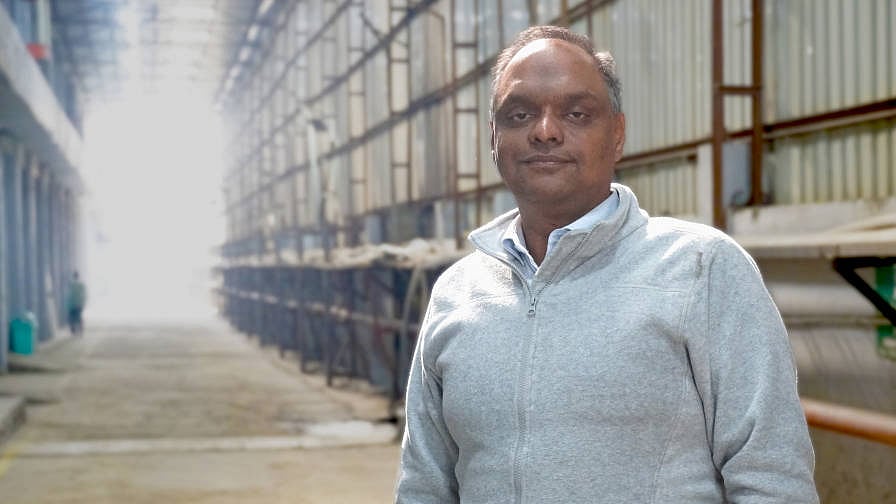
A presentation is easier to build than a plant
Gupta returned to India in 2007 and began looking for investment. The brothers initially met resistance from venture firms that saw a mismatch with their preferred sectors. A recycling venture was an unfamiliar proposition. Family support gave them room to concentrate on getting it started, an advantage Gupta acknowledged in an early account.
He approached Kumar Shiralagi of IndoUS Venture Partners while the enterprise was still a presentation rather than a registered company. The conversation moved from the pitch to the founders’ reasoning: the problems they had identified and how they proposed to solve them. The idea had to survive questions before it could acquire machinery.
Then came the expensive, physical part. Land, equipment, permissions and a collection network all had to exist together. Gupta later recalled that obtaining the necessary licences took more than a year. For a business built around tangible materials, enthusiasm has several departments to visit before it reaches the production floor.
By 2011, IFC’s investment record showed an equity investment in Attero. Its project description covered the full chain, from sourcing discarded electronics to recovering their component materials. Collection logistics and research appeared alongside capacity expansion. Those priorities capture the early business rather better than a photograph of a shiny machine could.
What survives the product
Attero’s economic proposition depends on the difference between a worn-out device and the materials inside it. Copper, gold and other metals remain usable after the product containing them has become obsolete. Gupta’s business collects the product, separates its components and sells recovered material back into the economy.
He has described destinations that are refreshingly concrete: copper for wire manufacturing, silver and tin for solder makers, gold for jewelers. Circular economy language becomes easier to follow when the circle has a buyer at the next stop. Recovered material needs a job, and somebody prepared to pay for it.
By 2013, Attero was working with IFC on the Clean e-India initiative, drawing informal collectors into its supply network. It also worked with NGOs and had an initiative involving NASSCOM to supply refurbished electronics to schools and nonprofit organizations. Reuse and material recovery offered different routes through the same practical problem.
This was a business with several clocks running. A device might have more service left in it. Its components might be useful separately. Its metals might be recovered. The skill lay in building a process that could find value without assuming every discarded object should take precisely the same route.
- 01CollectRetired electronics enter a traceable chain.
- 02SeparateComponents and material streams are sorted.
- 03RecoverProcessing and refining produce usable materials.
- 04ReturnManufacturers buy inputs for another round.
A simplified view of the recycling chain; individual products take different routes.
The patient years in Roorkee
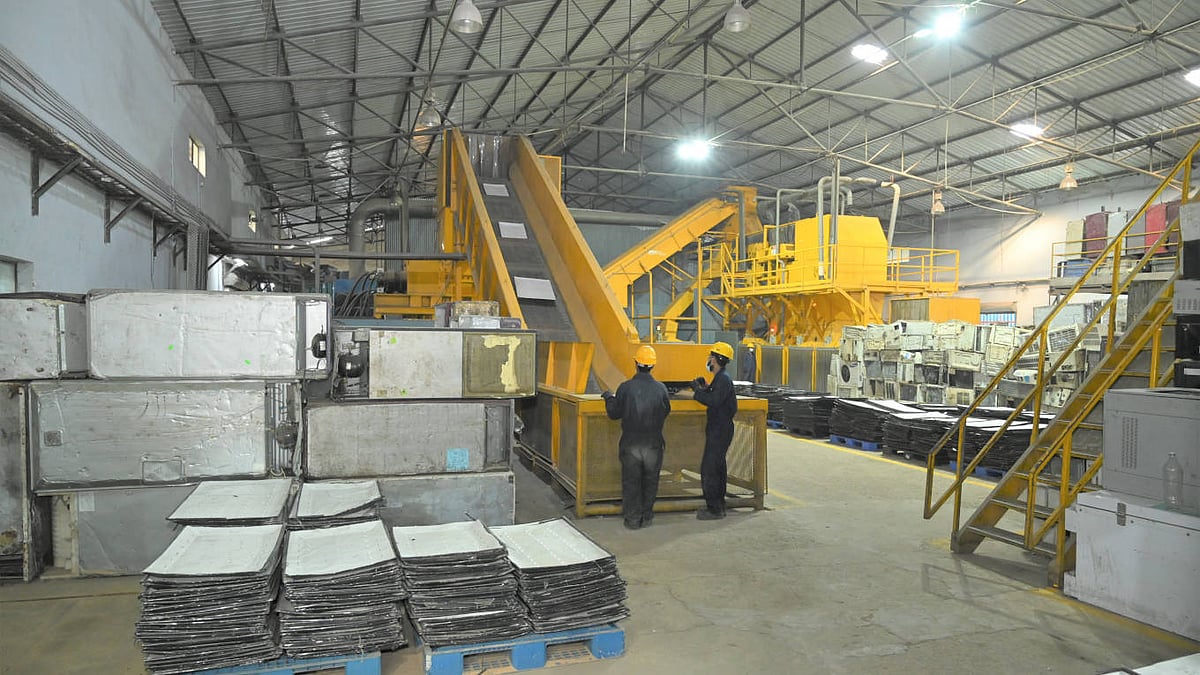
The work acquired a physical home in Roorkee, with the company’s headquarters in Noida. Behind the administrative building were storage areas and processing machinery. A 2023 account of the plant described a lithium battery recycling section added in 2019. The business was extending from the electronics themselves into another important material stream.
The new direction was already arriving inside the old one. Phones and laptops brought batteries into the recycling chain. Electric vehicles gave the battery question a larger industrial horizon. Gupta’s interest followed material that the company was encountering, then pursued the research needed to recover more of its value.
Attero appeared on the Global Cleantech 100 list in 2013. Gupta also participated in LAUNCH Beyond Waste in 2012, presenting the company’s approach to recovering metals from electronic waste. These moments brought recognition to an enterprise whose everyday work involved far less ceremonial activities: collecting, sorting, processing and finding customers.
The factory photographs make the distinction clear. Recycling takes space. It takes equipment. It produces material that can be handled and examined. For Gupta, the idea eventually had to become a system that kept working after the presentation was closed and the visitors had gone home.
The adventure with no instructor
Gupta has a more personal explanation for the uncertainty involved. In a 2024 conversation, he recalled his first skydive in New York. Anticipation turned to fear on the aircraft, then to exhilaration after the jump. Asked about the comparison with starting Attero, his answer was dry: “Skydiving was normally easier.”
He explained that a first jump comes with an instructor and backup arrangements. Entrepreneurship offers less reassurance. The anecdote suits someone who describes an affection for adventure and the outdoors. It also gives the industrial founder a sense of humor: apparently, stepping out of an aircraft has its administrative advantages.
His public writing about leadership makes room for uncertainty in another form. He advocates admitting that an answer is unknown and working it out together. Experimentation and iteration are recurring themes. For a founder whose business depends on research, that stance gives the team something more useful than the appearance of permanent certainty.
“I am passionate about technology and sustainability.”Nitin Gupta, 2024
The collection problem comes home
In 2024, Attero introduced Selsmart, a consumer take-back platform. It brought the original household problem back into view. Owners could arrange for old electronics to enter a formal collection channel. Gupta described consumer education and dependable logistics as challenges alongside expansion. An efficient process still needs somebody to hand over the device.
MetalMandi, launched in 2025, addressed another part of the chain: the scrap trade. It gave collectors and aggregators a digital route for sourcing and trading material. By April 2026, Gupta was discussing its reach across 28 states and a procurement volume of approximately 15,000 metric tonnes a month, alongside targets for further growth.
The two platforms reveal how much of the job takes place before refining begins. One reaches the person with an unwanted appliance. The other connects participants who already collect and trade scrap. Building machinery without solving those relationships would leave an awkward question at the factory gate: where is the material?
In September 2026, Gupta described digital sourcing as central to Attero’s supply. He put MetalMandi’s share at around 85 percent, with smaller shares coming through Selsmart and directly from manufacturers. His emphasis was on visibility and traceability: extending the organization inside the plant to the point where material first enters the chain.
A cupboard enters the minerals conversation
Gupta’s more recent interviews place recycling inside a wider discussion about critical mineral supply. In August 2025, speaking on FINTECH.TV from the New York Stock Exchange, he explained the company’s aim of reducing dependence on mining through urban mining. The discarded device had acquired a place in an international industrial conversation.
In July 2026, he reported that Attero held more than 50 global patents and described automation using robotic arms and vision processing. He also outlined additional recycling facilities in India. These are extensions of the same operating challenge: recovering materials consistently while expanding the system that brings them in.
Global recycling patents reported by Gupta at Attero. A company-reported count, rather than an independently audited total.
The investment ambition is considerable. In February 2026, Gupta discussed roughly ₹7,000 crore of proposed investment over five years in processing and refining within India’s planned critical mineral corridors. Tamil Nadu and Andhra Pradesh were being evaluated. He located the technical bottleneck downstream, in processing and refining capability.
Those are plans, with the work of execution still attached. They suggest where he wants to take the company: toward a larger role in supplying materials that industry needs. The scale has changed since the laptop. The practical logic has endured. An object that has finished one job may contain the ingredients for another.
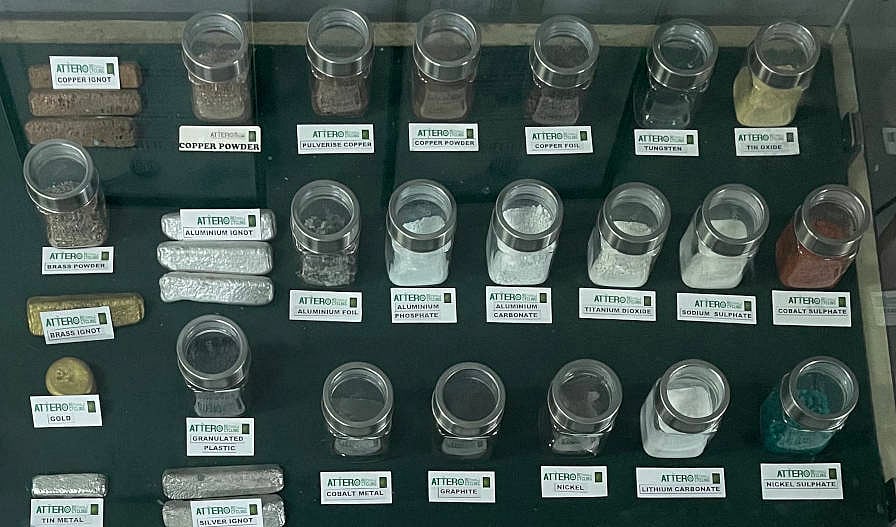
Gupta’s career has followed that possibility from circuit design to collection networks and industrial equipment. The pleasure of the story lies in its stubbornly ordinary beginning. Two brothers wanted to know where a laptop should go. Years later, the answer still requires chemistry, commerce, research and someone willing to collect it.
Continue the conversation
- Nitin Gupta on LinkedIn
- Attero website
- Attero on LinkedIn
- Attero on X
- Attero on Facebook
- Watch: Rare Earth Exchanges interview
- Watch: FINTECH.TV interview
- Read the 2024 adventure and recycling conversation
- Read the September 2026 interview
- Read the February 2026 refining plans
- Read the early fundraising account