Consider a piece of telecom equipment that still does its job. It has not learned that its manufacturer would prefer to sell a newer model. It has no opinion about a procurement cycle. Its problem begins when the organisation around it can no longer find a replacement part, a repair route, or someone willing to stand behind its performance. A working network can become expensive to maintain before its hardware becomes useless.
- New and refurbished parts for telecom networks, plus multi-vendor repair and testing.
- Spare-parts pools and advance replacement help operators bridge repair time.
- Resale and documented recycling give retired assets somewhere useful to go.
Peachtree Networks works in that awkward interval. Founded in 2008, the company supplies new and refurbished telecom equipment, repairs hardware from multiple manufacturers, manages spare parts, and recovers value from retired assets. Its customers include mobile operators, service providers, equipment manufacturers, and tower companies. These are businesses buying continuity: the ability to keep an existing network working while deciding what should come next.
The interesting part is how those activities fit together. Resale, repair, and recycling are often treated as separate purchasing decisions. Peachtree presents them as successive options for the same asset. An operator can acquire a unit, keep it running, redeploy it, and eventually send it for material recovery. The hardware changes status; the relationship need not end every time it does.
01A repair bench, built for fleets
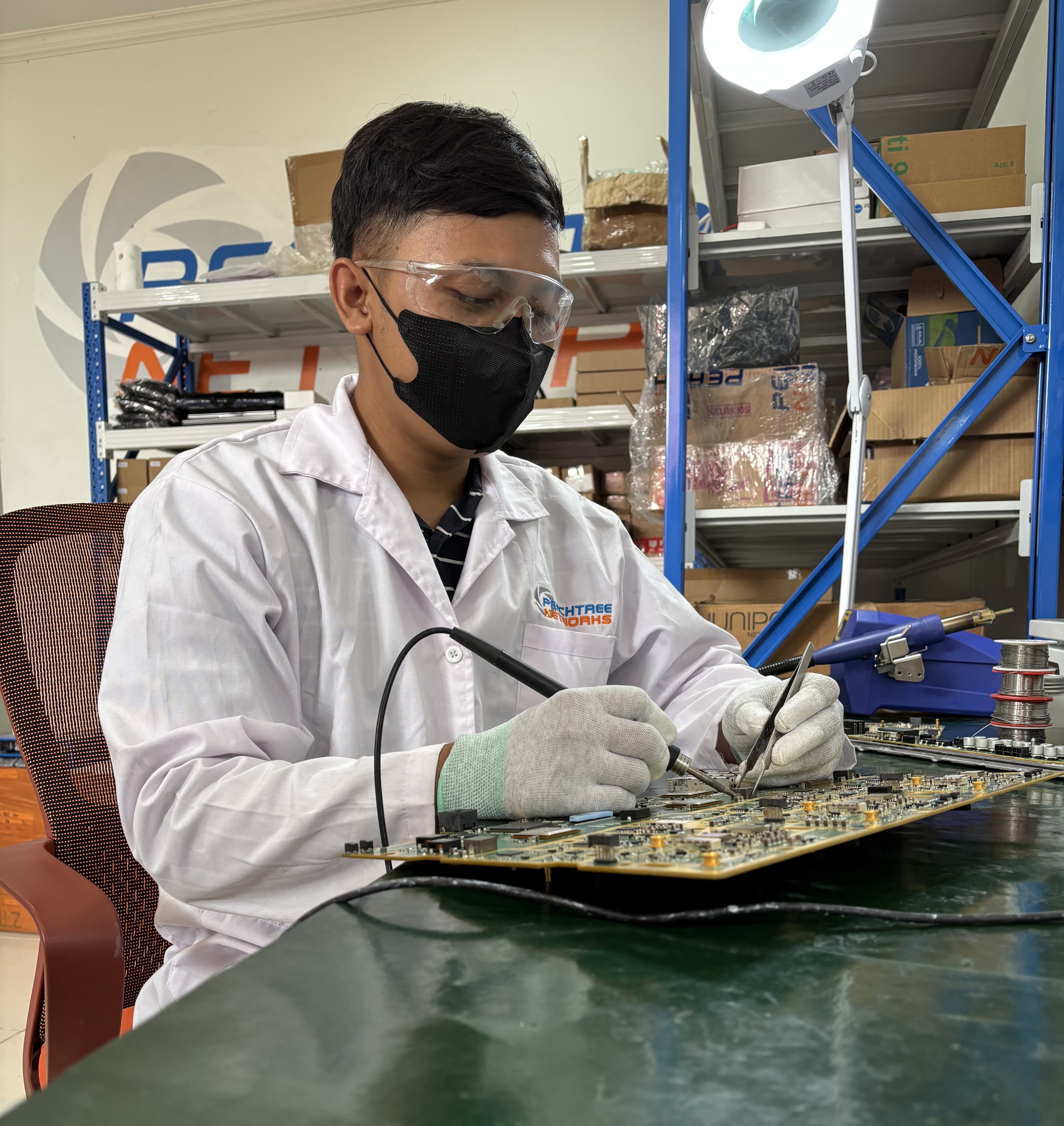
The repair offer reveals the intended scale. Peachtree advertises a minimum of 500 units for bulk engagements. For customers with at least 2,500 units a year, it offers to establish an in-country repair facility near their warehouse. That is a useful corrective to the word repair. This is an industrial service organised around a fleet, its failure history, and the distances its components must travel.
The company says it repairs at component level, tests with live network simulation and OEM tools, and returns repaired units with a warranty. Its advertised standard turnaround agreement is 30 days, configurable down to seven. The distinction matters because an operator needs more than a box that powers on. It needs evidence that the returned equipment can do the job for which the network was designed.
Peachtree also offers advance replacement: a working unit arrives before the faulty one is sent back. That changes the sequence of events. The network does not have to wait for the repair bench to finish its work. Managed spare-parts pools serve the same practical purpose. They put availability into the contract, rather than leaving it to an emergency search after something has already stopped working.
Published service terms; individual engagements depend on the agreed proposal.
02Cheap hardware is only half the calculation
The price argument is easy to like. In a public sales post, Peachtree advertised original spares at 40% to 60% below OEM list prices. That is a company sales claim, not a promise about every order. List price is also only one comparison point. The useful question is what a particular part costs to buy, qualify, ship, install, and support in the network that actually needs it.
A lower purchase price can be spoiled by the wrong revision, an unsuitable delivery schedule, or a repair that arrives after the replacement was needed. Conversely, a tested legacy component may have value well beyond its invoice if it lets an operator postpone a larger migration. The decision belongs in an equipment-level business case, with compatibility and downtime considered alongside the purchase order.
Peachtree sells equipment and quotes repair, testing, and managed-inventory engagements. Its recycling offer includes revenue sharing on recovered materials. Those are different ways of charging for different stages of an asset’s life. The website’s equipment search spans fixed-line, radio-access, ISP, optical, and cable categories, including PTNW-branded optics. A customer can search stock or submit requirements for sourcing beyond the online listing.
“When manufacturers say replace, we say repair.”Peachtree Networks, on its approach to managed services
03The last journey needs paperwork
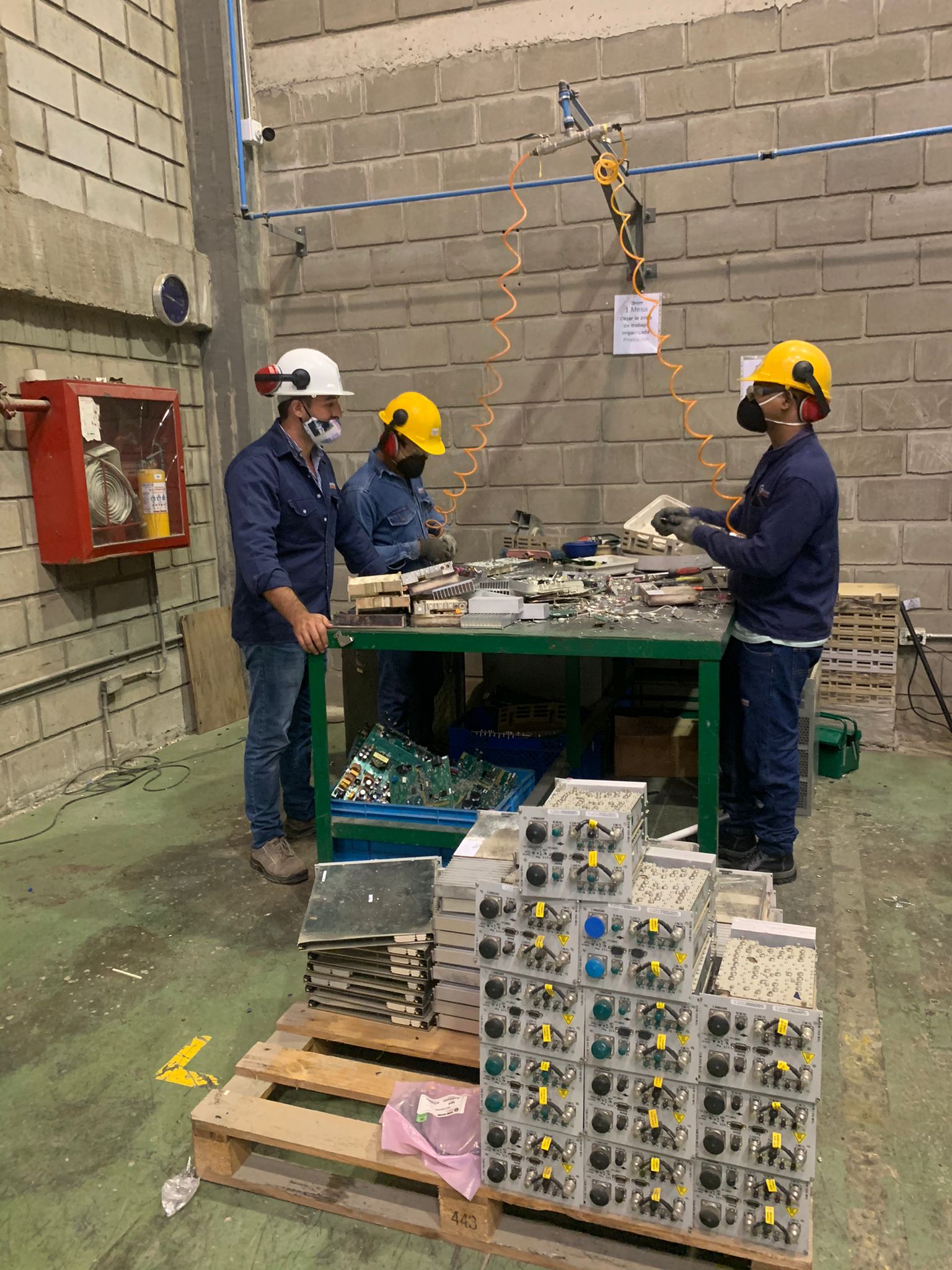
Eventually, some equipment really is finished. Here Peachtree’s offer shifts from restoring function to accounting for what leaves the network. Its recycling service covers collection, data destruction, sorting, material recovery, and reporting. The company advertises an ISO-certified facility, chain-of-custody documentation, and data destruction aligned with NIST 800-88. It also accepts outsourced processing work from recyclers and asset-disposition businesses.
That paperwork is part of the product. A departing asset can contain information as well as recoverable material. Its owner needs a defensible account of where it went and how it was handled. Peachtree’s published process ends with environmental reports and certificates. Recycling, in this account, is a documented handover with obligations attached; the skip at the back of the building would make a poor account manager.
04One supplier, several kinds of old
Peachtree occupies the space between buying new from an equipment maker, hiring a specialist repair company, and using an asset-disposition provider. Its proposed advantage is coordination across those jobs and across vendor families. The current company website names Cisco, Nokia, Huawei, Ericsson, and ZTE among the platforms its engineering teams cover. Stocking or repairing those brands does not, by itself, establish a formal partnership with their manufacturers.
This approach is most persuasive where installed equipment still meets the operator’s needs, but support and sourcing have become inconvenient. It becomes less attractive when capacity, security, software compatibility, or the cost of repeated failures makes migration the better decision. A refurbished unit cannot answer every reason for upgrading. The repair volumes also make clear that the advertised bulk programme is aimed at substantial operators, rather than someone with one troublesome router.
05What the buyer can copy
The practical lesson starts with an inventory. Peachtree asks repair customers for volumes, service requirements, fault history, and equipment details before engineering review and a proposal. Anyone managing infrastructure can borrow that discipline. Know what is installed, which units are failing, which spares are available, and which assets have a plausible second use. A purchasing decision becomes much better when it begins with those records.
Then separate the decision to keep a network from the decision to keep every individual component. Repair some units, replace others, sell usable surplus, and document the disposal of what cannot return. Peachtree has built its offer around those distinctions. The appeal is refreshingly practical: equipment can grow old without immediately becoming worthless. The trick is having the testing, stock, logistics, and records that make another year of service a sensible purchase.