The curious thing about a dead battery is how much life remains inside it. Not charge, necessarily. The useful voltage may be gone, the car may have rejected the pack, and the warranty department may have closed the file. Yet the cathode still contains something harder to price than lithium or iron: years of engineering. Its particles were shaped, fired, coated and arranged to perform a very particular job. Then, in much conventional recycling, that careful architecture is treated like an inconvenience. It is broken down so the ingredients can be recovered and built up again.
Zheng Li has spent much of his career asking whether that demolition is always necessary. The materials scientist and co-founder of Li Industries prefers a more direct proposition: identify the battery, separate its useful electrode material, repair the changes caused by years of cycling, and send it back toward production. A cathode, in other words, should be allowed to remain a cathode.
This is not an argument against chemistry. It is an argument about how much chemistry needs to be undone. Smelting and hydrometallurgy can recover valuable elements from a mixed and unruly stream of batteries. Direct recycling tries to preserve more of the material’s manufactured value. The ambition is elegant; the factory work is not. Old cells arrive in different shapes, chemistries and conditions. Sorting errors become process errors. Impurities have opinions. Every laboratory success must survive the unsentimental demands of throughput.
The battery student
Li’s route to this problem began long before recycling became an industrial slogan. He studied materials physics at Jilin University, then materials science and engineering at Tsinghua University. At Binghamton University, where he completed his doctorate in 2011, his adviser was M. Stanley Whittingham. Whittingham’s early work on lithium batteries would later share the 2019 Nobel Prize in Chemistry. Years after supervising Li’s doctoral work, he would join Li Industries as chief scientist.
There is a pleasing circle in that connection, but Li’s career between those two points was notably practical. He went to MIT as a postdoctoral associate, spent a year as a senior research scientist at battery startup 24M Technologies, then returned to MIT and became a research scientist. In 2016 he joined Virginia Tech’s mechanical engineering faculty. Across those appointments, the subject widened from battery materials to energy-storage systems, manufacturing, automation and recycling.
His Virginia Tech group treated end-of-life batteries less like static waste and more like a production system waiting to be designed. Graduate work under his supervision examined direct cathode recycling, automated disassembly, online sensing, machine learning and internet-connected recovery. These threads matter together. A pristine sample in a beaker is a scientific object. A pile of anonymous used batteries is a logistics problem wearing safety gloves.
“One key element in optimizing the benefits of recycling is to ensure that we identify and capture as much of the used material as possible.”Leo Raudys, then CEO of Call2Recycle, on the Li Industries partnership
First, know what you are holding
Li Industries was founded in 2017 around closed-loop battery materials. Its early public milestones reveal a company trying to solve the front and back of the same puzzle. Before material can be restored, batteries have to be collected and correctly identified. The company developed a sorting system that uses sensing and machine learning to distinguish batteries by chemistry. In 2022, Call2Recycle partnered with Li Industries to commercialize the system. That year, Li Industries was also one of four Phase III winners of the U.S. Department of Energy’s Lithium-Ion Battery Recycling Prize.
Sorting can sound like the prologue to the interesting science. It is closer to the plot. Battery chemistries do not share identical processing needs or economics. A mixed feed can dilute value and complicate recovery. Better identification gives a recycler a chance to choose the route that fits the object instead of forcing every object down the same route.
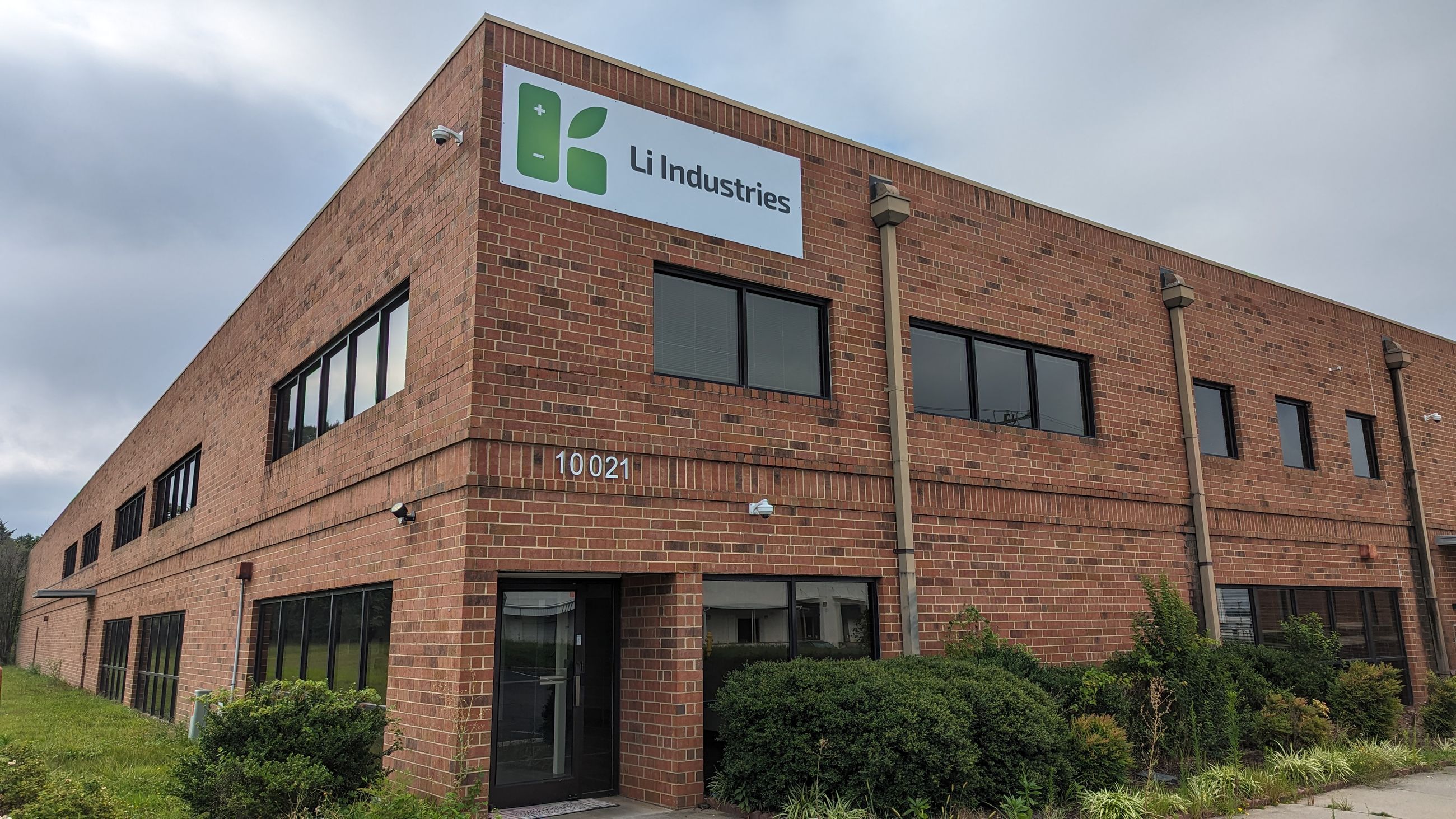
Behind the sorting work sat a growing patent portfolio. Li appears among the inventors on systems for identifying and processing spent cells and on methods for scalable direct recycling. One family of patents describes separating cathode material and restoring it through controlled treatments. Another addresses the basic industrial headache of deciding what has arrived. The recurring theme is not a single clever reaction. It is orchestration.
Doctoral work at Binghamton University under M. Stanley Whittingham.
Battery research at MIT, interrupted by a year at 24M Technologies.
Mechanical engineering faculty member at Virginia Tech; Li Industries founded in 2017.
Commercial sorting partnership and a Phase III Department of Energy recycling-prize win.
$36 million Series B and selection for a $55 million federal award.
The chemistry with less treasure
The economic test grows sharper with lithium iron phosphate, or LFP. The chemistry has become important for electric vehicles and stationary storage partly because it does without nickel and cobalt. That is useful for cost and supply, but awkward for recyclers accustomed to earning revenue from expensive recovered metals. A battery designed with cheaper ingredients naturally leaves a less glamorous scrap pile.
Li’s answer is to compete on retained value. If the cathode material can be recovered and restored as cathode material, its economics need not depend entirely on selling its elemental constituents. Li Industries calls its approach Direct E2E, short for direct electrode-to-electrode. The name is less romantic than alchemy and more accurate: the goal is not to turn lead into gold, but to avoid turning a finished material back into a shopping list.
Those figures belong to a project, not a completed verdict. In September 2024, Li Industries said it had been selected for a $55 million Department of Energy award to establish a 10,000-ton-per-year LFP cathode active material recycling and manufacturing plant. The company expects the plant to produce material sufficient for five gigawatt-hours of batteries annually and projects a 23 percent reduction in domestic LFP cathode production costs compared with traditional manufacturing. General Motors is supporting technology development for the direct recycling process.
Four months earlier, Li Industries had announced a $36 million Series B co-led by Bosch Ventures, Khosla Ventures and LG Technology Ventures, with strategic and industrial investors joining the round. The money was intended to carry Direct E2E toward the same 10,000-ton scale. Series A funding had supported a 500-ton recycling facility in Pineville and a 1,000-ton sorting facility in Charlotte.
From proving a line to proving a plant
The factory is a harsher peer reviewer
The leap from 500 tons to 10,000 is not merely a bigger version of the same experiment. Scale introduces its own chemistry: batches vary, equipment fouls, maintenance interrupts, suppliers arrive late, and customers demand qualification data before committing their own production. A professor can isolate a variable. A chief executive inherits all of them at once.
It also changes the meaning of evidence. In a paper, performance may be reported for a carefully prepared sample over a defined number of cycles. In a supply agreement, evidence includes whether the next shipment resembles the last one, whether its provenance is documented and whether a production manager can schedule around it. The cathode does not leave science behind when it enters commerce. It simply acquires paperwork, deadlines and a customer.
Li’s public comments have therefore become increasingly concerned with partners. Announcing the Series B, he emphasized not only capital but the resources, experience and commercial relationships of Li Industries’ investors. Discussing Call2Recycle, he pointed to the organization’s operating footprint as the route to significant impact. The language is revealing. Laboratory invention may begin with a small group. A circular supply chain requires collectors, sorters, manufacturers, cathode producers, automakers and buyers to agree that yesterday’s material belongs in tomorrow’s product.
“Our investors bring invaluable resources, experience, and commercial partnerships that are essential for us to successfully scale and commercialize our Direct E2E technology.”Zheng Li, announcing Li Industries’ Series B
Whittingham’s presence at Li Industries gives the story an elegant academic bookend. The scientist associated with the birth of the lithium-ion battery is advising a company concerned with its return. Yet the more consequential loop is industrial. Batteries are manufactured with exacting care, sold into products, used for years and eventually scattered across a continent. Closing that loop means making the return journey ordinary.
That ordinariness depends on trust between people who value different things. A recycler wants steady feedstock. A materials buyer wants purity and predictable performance. An automaker wants resilient supply. An investor wants a defensible business. A public agency wants domestic capacity and measurable benefit. Li’s task is to make one process legible to all of them without pretending their interests are identical. The machine sorts batteries; the company must align institutions.
Li has moved from studying how energy-storage materials behave to arranging the institutions that might keep them in circulation. The next chapter will be measured less in publications than in tons processed, lots qualified and contracts renewed. That is appropriate. A recycling process succeeds when it becomes boring enough to rely on.
There is still romance in the underlying idea. Inside an exhausted battery sits an object that remembers what it was made to do. Zheng Li’s work asks industry to remember, too - and to waste less of the intelligence it has already paid to create.