The first BioFiltro sales demonstration was not planned as a sales demonstration. It sat at Matias Sjögren’s father’s property in Rapel, Chile: a pool-like filter filled with earthworms and microorganisms, built to clean household sewage. Engineer Alex Villagra had installed it. Sjögren came to look. The worms, being worms, declined to pitch.
They did something better. They worked. Wastewater passed through the living filter while biology consumed the organic material. Sjögren was fascinated enough to call Villagra and ask the commercial question: could this become a company?
It was an admirably odd question for someone then employed at a family office. Sjögren was a civil industrial engineer with an MBA from Pontificia Universidad Católica de Chile, not a biologist. His business experience included agribusiness projects involving fruit, animal feed, waste and fertilizer. He had also started a made-to-measure tailoring venture with his friend Rafael Concha, sourcing suits from Vietnam. The path from lapels to liquid manure is rarely taught in business school, perhaps because it makes the diagram untidy.
In 2010, Sjögren, Concha and Villagra formed BioFiltro. Villagra brought years of work with a biological-filtration tradition developed in Chile. Sjögren later described their purpose with the clarity of an engineer who had become a salesman: take that knowledge, industrialize it, scale it and carry it beyond Chile.
The glamour of a functioning pipe
BioFiltro’s BIDA system spreads screened organic wastewater over a bed built from wood media, earthworms, microbes and layers of rock. The living community digests organic matter as water percolates downward. The process can produce water suitable for permitted reuse and vermicompost that can be used as a soil amendment. A treatment cycle takes roughly four hours.
A four-hour trip through the worm works
The charm of the story is obvious. The operational burden is less photogenic. A biological treatment plant still needs design, construction, pumps, sensors, permits, sampling and people who answer the phone when wastewater behaves unlike the spreadsheet. Wineries surge during crush. Food processors change recipes. Dairy flows do not pause because a filter would prefer a quiet afternoon.
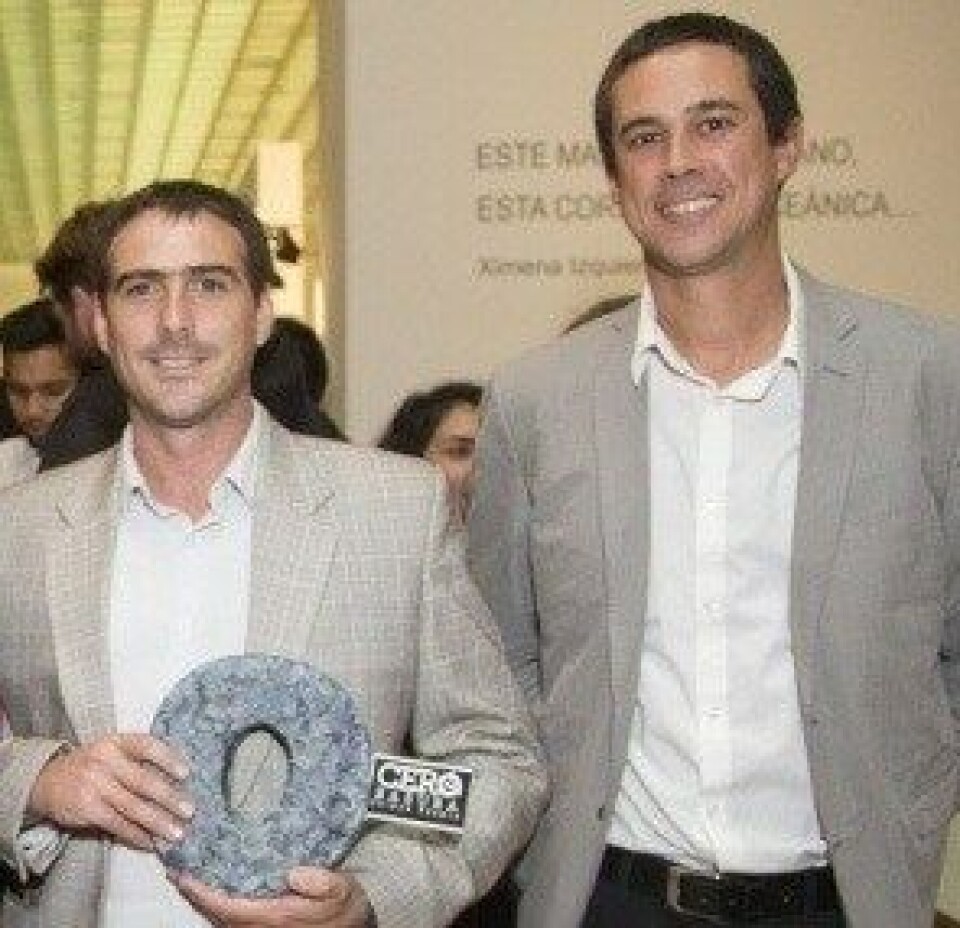
Sjögren left his family-office job to work on the company full-time. Early BioFiltro plants appeared across Chile. The team took the venture to the Cleantech Open in Silicon Valley, prevailing in a competition reported to include about 1,500 business models. Endeavor selected Sjögren and Concha as entrepreneurs in 2014. Awards offered attention; operating plants offered evidence.
“Ganábamos poco, pero soñábamos en grande.”Matias Sjögren on BioFiltro’s early California pilots
California made sense as the next serious test. Its Mediterranean climate echoed Chile’s. Its dairies, wineries and food processors shared a stubborn fact: water enters the business clean and often leaves carrying nutrients, organic matter and a regulatory obligation. BioFiltro established pilots, worked through water testing and pursued the permits that turn an interesting machine into useful infrastructure.
The business model catches up
For years BioFiltro sold treatment plants and charged for maintenance. That placed a familiar obstacle at the customer’s gate: a dairy might need cleaner water but dislike writing a large check for concrete and pipes. Around 2018, the company began pushing further into a service model. BioFiltro could finance, own and operate the plant under a long agreement. The customer supplied wastewater and received treatment. BioFiltro kept the asset and found value in its outputs.
On a dairy, that value can have several layers. Reusable water helps with irrigation and farm operations. Vermicompost replaces the less appealing prospect of sludge disposal. Treating manure in an aerobic system instead of holding it in an anaerobic lagoon may avoid methane emissions, creating a basis for verified carbon credits. The worm is still the mascot, but the business becomes a portfolio of environmental attributes attached to a physical plant.
One dirty input, three useful outputs
Conceptual view of the revenue stack, not measured proportions. The mix varies by project, contract and verified performance.
The change also altered BioFiltro’s capital needs. A vendor can collect payment after installation. An owner must fund construction before years of revenue arrive. Sjögren has been blunt about the mismatch with conventional startup finance. BioFiltro builds plants, gets permits and operates assets. In his words, “This is not venture capital.”
The company needed investors who liked long contracts, physical barriers to entry and the unfashionable heft of construction. It found one through a quiet chain of trust rather than a theatrical road show. Steven Rowe, BioFiltro’s executive chairman and an attorney with dairy-industry experience, met the principals of Utah-based Jordanelle Capital. The fund focused on industrial businesses across agriculture, water and circular systems. Negotiations ran for more than a year.
In November 2025, Jordanelle made a $35 million strategic investment. The money was intended to finance early projects in a larger U.S. dairy rollout and support expansion into food processing, municipal and industrial work. BioFiltro’s Chilean founders and early investors retained a board majority. Sjögren called the deal a chance to scale the company’s mission of using nature to recover resources and protect water.
From novelty to certainty
The financing marks a useful change in the question surrounding BioFiltro. In its youth, people asked whether worms could clean wastewater. After years of installations, the more pressing questions concern deployment: how quickly can sites be permitted, how reliably can they operate, and how cheaply can each new plant be financed?
Sjögren’s stated U.S. plan is concrete enough to be judged: systems at 80 dairies over five years, with California at the center. In 2026 he shared work on a nearly 20-acre installation with 500,000 square feet of filtration surface and a design capacity of one million gallons per day for a large dairy. At that scale, a worm bed stops looking like an ecological curiosity. It looks like land use, construction scheduling and credit underwriting.
Europe is another part of the itinerary, with dairy work in the Netherlands and winery projects in France. Sjögren has described BioFiltro as becoming an asset-management company. The phrase sounds almost comically distant from that first filter in Rapel, yet the line between them is direct. Once a company keeps ownership of its plants, its chief product is no longer a machine. It is dependable performance over time.
“Our mission has always been to harness the power of nature to recover resources and protect water.”Matias Sjögren, 2025
There is another constraint waiting behind success. More plants produce more vermicompost. Sjögren has said BioFiltro must develop a commercial channel for the volume, turning a treatment byproduct into a business line of its own. The circular economy often appears elegant in a diagram. In practice, someone must find a buyer for every circle.
That practicality seems to be Sjögren’s defining habit. He is willing to make an unusual bet, then describe its difficulties without perfume. BioFiltro needs heavy assets. It needs debt after equity. It needs stronger sales capacity. It must compete with biodigesters that offer dairy owners different economics, while arguing that its own advantage is cleaner water. These are not blemishes on the pitch. They are the pitch, once a founder has moved beyond asking to be admired and started asking to be financed.
A good idea gets heavier
The accidental poetry of BioFiltro is that its smallest workers require the largest commitments. Earthworms are ordinary, distributed and patient. Infrastructure is expensive, fixed and bureaucratic. Sjögren has spent fifteen years joining the two, first through engineering, then operations, and now through a capital structure designed to last as long as the contracts.
His earlier tailoring company provides a mischievous footnote. A custom suit is valuable because it fits one body. A wastewater plant is valuable because it fits one messy industrial reality: its flows, contaminants, seasons, permits and acres. BioFiltro’s ambition depends on repeating that customization without turning every project into a new invention.
The worms remain useful storytellers. Sjögren even posed for an Endeavor portrait in a shirt declaring that he thinks about them every single day. Yet BioFiltro’s next chapter will be decided by matters less printable on a T-shirt: utilization, maintenance, financing cost, verified emissions reductions and the market for finished compost.
That is what progress looks like for a physical climate company. The founding anecdote stays charming. The company becomes serious. A pool at a family property turns into a plant spread across twenty acres, and the engineer who once wondered whether the worms could support a business now has to prove the business can support many more worms.