The Story
An obsession with the thing everyone throws away.
Profile · Climate Tech · Founder Series
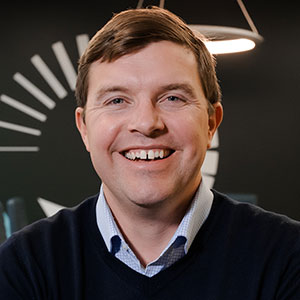
Today Graham Rihn runs RoadRunner, a Pittsburgh company that treats trash as a data problem. The pitch is almost too simple to believe: recycle more, pay less. The technology underneath it is not simple at all.
RoadRunner does not own a fleet of growling garbage trucks. It owns the intelligence layer that sits on top of one. The company builds customized, technology-driven recycling programs for businesses - then uses data and artificial intelligence to squeeze cost and waste out of every step. The headline result customers care about: recycling rates that climb from an industry-average of around 10% to as high as 50%, with waste bills that drop 10 to 15% along the way. Rihn likes to point out the counterintuitive part. Done right, recycling can cost less than landfilling. The trick is logistics, not virtue.
One small example tells the whole story. RoadRunner uses AI-enabled contamination recognition to look at a recycling container and tell when something is in there that shouldn't be. Catch the greasy pizza box before it rides the truck to the sorting facility, and a whole load stays clean and sellable instead of getting downgraded to garbage. That is the entire business in a single glance: information, delivered at the moment it can still change the outcome.
How can it be so hard to actually recycle?
— Graham Rihn, on the question that started a company
A cartoon, a sidewalk, and a $85 billion industry asleep at the wheel
The origin is genuinely a New York story. Rihn was living in Manhattan, watching the same garbage sit on the same curb, when he started imagining a faster pickup - something quick and relentless. He named the idea after the Road Runner cartoon. Beep beep. Behind the joke was a real observation: the waste and recycling industry, worth roughly $85 billion, had quietly skipped the technology revolution that reshaped almost every other corner of the economy. There were no real analytics, no optimization, no software worth the name. He launched RoadRunner in New York City in 2014.
His diagnosis came from data before it came from disgust. Earlier in his career, working at a small company analyzing the physical world - electricity, then waste - Rihn kept seeing the same mountain of inefficiency in the numbers. So he did the unglamorous thing. He called customers. He asked about their pain. Every conversation confirmed what the spreadsheets already whispered. The opportunity was real, and it was enormous, and almost nobody was building for it.
Field Note · The Name
Why “RoadRunner”?
Speed. Rihn pictured a pickup system as fast and tireless as the desert bird that never gets caught. The cartoon became a company, and the company became one of Pittsburgh's climate-tech standard-bearers.
Bringing it home
In 2017, Rihn did something founders rarely do: he moved the company out of New York and into his hometown of Pittsburgh. He grew up in Allison Park, graduated from Central Catholic High School in 2005, and clearly never stopped being a Pittsburgher. The relocation turned out to be a bet on a city remaking itself as a hub for robotics, AI, and climate tech - and RoadRunner became one of the names people cite when they argue Pittsburgh deserves the title.
From there the curve bent upward. The company went from roughly 30 employees serving three cities to more than 500 employees serving over 12,000 customers across the country. It diverted close to a million tons of recyclables from landfills and reported avoiding millions of tons of greenhouse gas emissions. Investors noticed. A pandemic-era round in 2020 brought in $28.6 million. Then General Atlantic led a $70 million Series D, pushing total funding past $150 million and the company into 18 cities with plans for many more.
By cutting costs and steps from the process of transporting materials to the right place in the right form, the materials can be recycled at a cost that is actually lower than their value.
— Graham Rihn, “There Has To Be A Better Way”
Clean Stream, not wishful thinking
The product that crystallizes Rihn's thinking is called Clean Stream Recycling. Instead of dumping everything into one bin and praying a sorting facility can untangle it later, Clean Stream keeps recyclables separated by category at the source. Less contamination. Higher-value material. A cleaner economic case. It is the same idea as the AI bin-scanner, just applied to the whole workflow: stop problems early, and recycling stops being a guilt-driven cost center and starts being a logistics business that pencils out.
The missed opportunity hiding in the dumpster
Ask Rihn where the value is and he points at the things businesses already throw away. Most companies, in his telling, treat waste as a fixed line item - a truck shows up, a bin gets emptied, an invoice arrives, nobody thinks about it again. That inattention is exactly where the opportunity lives. The materials leaving a loading dock often have real resale value, but only if they reach the right buyer in the right form. Mix them, contaminate them, or ship them inefficiently, and the value evaporates before anyone can capture it. RoadRunner's whole reason for existing is to recover that value on the customer's behalf, then split the upside three ways: lower bills, recaptured revenue, and a sustainability story the business can actually stand behind.
It is a business that rewards patience and unglamorous detail. There is no single magic trick - just hauler oversight, smarter routing, invoice accuracy, contamination monitoring, and a preferred network of vendors and local recycling partners, all wired together with software. Rihn has described the work as fully managed services, the kind of thing a customer can hand off and forget. That is the point. The companies that buy from RoadRunner are not trying to become waste experts. They want someone else to be obsessed so they don't have to be.
A test of the model
The commercial waste business is not immune to the wider economy, and Rihn has been candid about that. When offices emptied and storefronts went quiet, the commercial sector - RoadRunner's core - bore a heavy share of the disruption. Yet the company kept raising money and kept hiring straight through it, a sign that investors saw the downturn as a pause rather than a verdict. The thesis held: the inefficiency Rihn spotted in the data did not go away when the economy wobbled. If anything, leaner budgets made the promise of cheaper, smarter waste management more attractive, not less.
That resilience is part of why Pittsburgh has embraced the company as a hometown success story. RoadRunner adds jobs in waves - one expansion alone brought on roughly 140 people in a single year - and it does so in a city actively rebranding itself around robotics, artificial intelligence, and climate technology. Rihn's decision to plant the flag at home in 2017 looks, in hindsight, less like sentiment and more like strategy. He bet on a talent pool and a civic identity that were both pointing the same direction he was.
That word - obsessed - is one Rihn uses about himself, and the people who profile him reach for it too. It is not the obsession of a man who loves garbage. It is the obsession of someone who cannot stop seeing waste, in both senses of the word: the trash, and the inefficiency. His advice to other founders gives away the source code. Identify a big problem you are genuinely passionate about, he says, and build enough confidence and courage to dive in. He found his on a sidewalk in Manhattan, and he has been digging ever since.