A bubble that refuses to rise
Normal bubbles do one thing: they float up and pop. The whole point of a nanobubble is that it doesn't. At roughly a hundred nanometers across - about 2,500 times smaller than a grain of salt - it hangs in water for weeks, carrying a faint electrical charge, behaving, in Nicholas Dyner's words, "like a charged particle that wants to interact with whatever it's around." That stubbornness is the entire business. It is also the thing Dyner has spent years convincing greenhouse owners, fish farmers, wastewater operators, and lake managers to believe in.
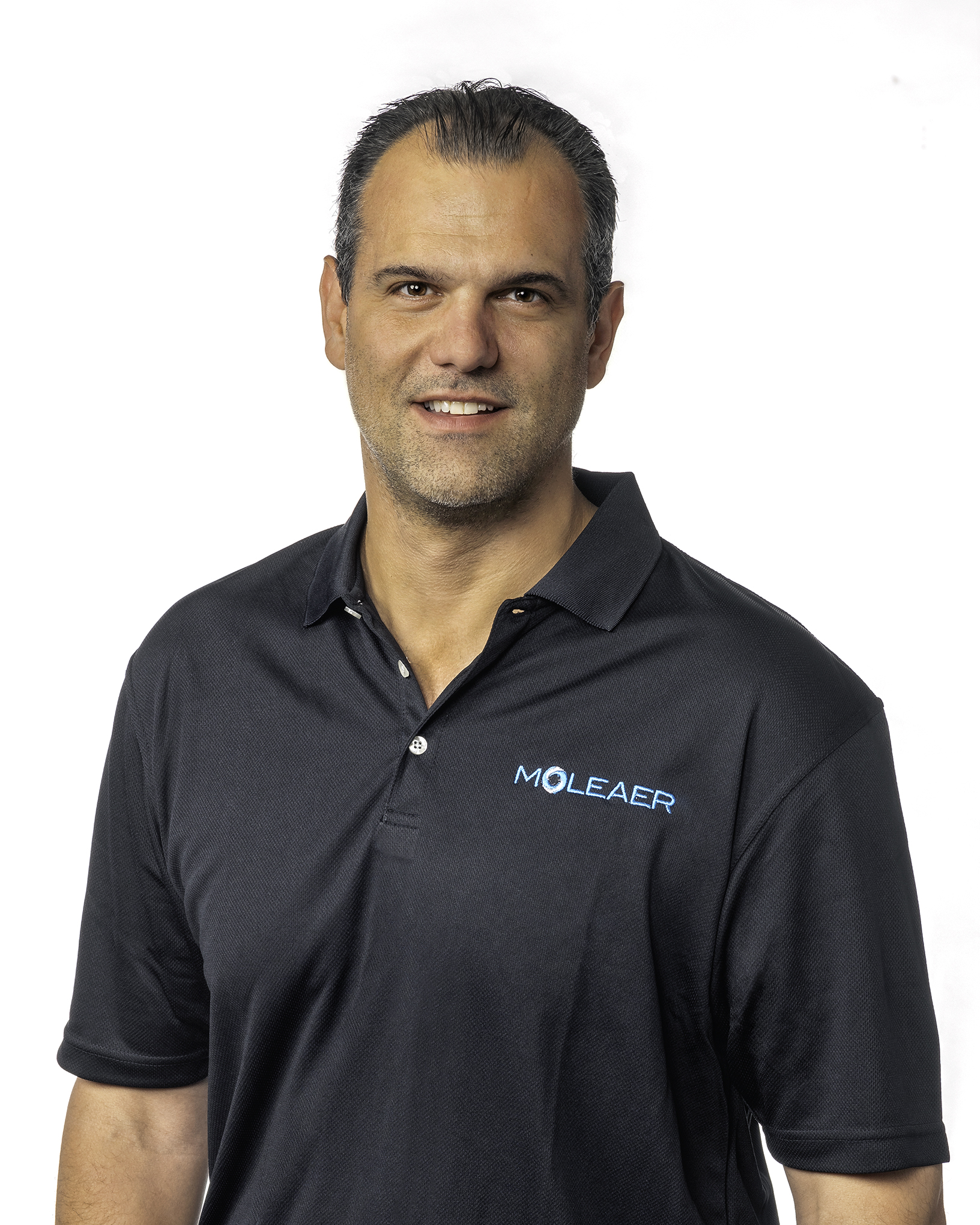
Dyner is the Chief Executive Officer of Moleaer Inc., headquartered in Hawthorne, California. He runs a company whose flagship product is functionally invisible. You cannot point at it. You cannot photograph it. You can only point at what it does: tomatoes that grow heavier with less water, shrimp ponds that need less aeration, a toxic algae bloom that quietly recedes. Selling the unseeable is a peculiar job, and he seems to relish it.
The pitch is deceptively domestic. Take any gas, push it through Moleaer's generator, and you get billions of these tiny, long-lived bubbles dissolved into water far more efficiently than conventional aeration allows. More dissolved oxygen. Better gas transfer. Fewer chemicals. The applications fan out in every direction water touches - and water, as Dyner likes to point out, touches nearly everything: "Everything we touch in this world started out as either being mined or grown. The commonality is water."
We want to unlock the power of water to help industries do more with less.
The category that didn't exist
When Dyner joined in 2017, Moleaer was barely a year old, a couple of founders and a breakthrough in making nanobubbles at industrial scale instead of in a lab. There was no market to capture because there was no category. He had to build the road and drive on it at the same time.
Today Moleaer reports more than 10,000 installations across 55 countries, treating over a million gallons of water per minute. The company has raised roughly $60 million, including a $40 million Series C in 2022, and in 2024 announced a partnership with water-technology giant Xylem to push nanobubble systems into water treatment globally. What began as a wastewater experiment is now, by Dyner's framing, a multi-billion-dollar opportunity.
The hard part, he'll tell you, was never the science. It was focus. "Clarity is really hard for a nanobubble company - there's so many cool things you can do."
When a single technology improves crop yields, fish health, lake water, and industrial process efficiency, the temptation is to chase all of it. Dyner's job is to keep saying no.
Agriculture
More dissolved oxygen at the root zone means healthier crops and higher yields - using less water to grow the same harvest.
Aquaculture
Oxygen-rich water lifts fish and shrimp health, cutting the energy and chemicals that traditional aeration demands.
Lake Restoration
Nanobubbles help starve toxic algae of the conditions it needs. "It's helping the lake restore itself."
Wastewater
The original problem. Better gas transfer means treatment plants run more efficiently, with lower operating costs.
Industry
Anywhere water is used in a process, nanobubbles can intensify reactions and shrink resource consumption.
Surface & Sanitation
Disinfection and surface cleaning, chemical-free, riding on the same simple physics of the tiny charged bubble.
The history major who fell into water
Dyner did not arrive by way of fluid dynamics. He studied history and economics at Cornell - a liberal-arts route into one of the most engineering-heavy industries on earth. The pivot came through GE Water & Process Technologies, where a two-year commercial leadership program turned a generalist into a water-treatment professional and, somewhere along the way, a Six Sigma Black Belt.
What hooked him wasn't the chemistry. It was the shape of the industry itself. "Fell in love with the water industry. Fell in love with the local nature of the industry, but on a global scale."
Water is intensely local - every lake, farm, and plant has its own problem - yet the same problems repeat across continents. For a man who reads markets the way he once read history, that pattern was irresistible.
From GE he went to NanoH2O in Los Angeles in 2010, leading sales and brand strategy and launching the company's first product. When LG Chem acquired NanoH2O - one of the larger deals the water industry had seen - Dyner stayed on as senior vice president of global sales and marketing. By his own count he has personally done business in more than 90 countries, selling a product, then as now, that most customers had to be taught to want.
The Moleaer chapter started as a side bet. In January 2017 he invested in the company's co-founders, Bruce Scholten and Warren Russell, and joined the team shortly after. "I joined what I thought would be sort of a short project, see what happens. Sounded fun and luckily it worked out well."
The short project became the rest of his career.
From trainee to category leader
Optimism as job requirement
Ask Dyner how he sustains a company built on a counterintuitive product in a slow-moving industry, and he doesn't reach for a strategy framework. He reaches for temperament. "I have to be an optimist to do this job."
Selling water customers something new is selling them risk, and he's candid about why caution runs deep in the industry: "If they bought something and it goes terribly wrong, they may get fired."
The first task is always to respect the fear, then dissolve it.
His own appetite for risk runs the other way. "If you're not taking risks, calculated risks, you're really not trying hard enough."
And beneath the commercial pitch sits a genuine climate argument: as droughts intensify and water grows scarcer, doing more with less stops being a marketing line and becomes a survival skill. "If we are to mitigate and adapt to climate change," he has said, "we need to start thinking about how to manage our water more effectively."
"The science is exploding - and so are the applications."
"In simplest terms, nanobubble treatment is helping the lake restore itself."
"Everything we touch started out as either being mined or grown - the commonality is water."
"How do we help industries get more out of that water, so they need less of it?"
Nanobubbles, explained
Dyner makes the rounds of climate and water podcasts, and he's at his best translating physics into plain talk. A good starting point is his conversation on how nanobubbles tackle climate challenges.
▶ "How nanobubbles solve climate challenges" - Nick Dyner (YouTube)