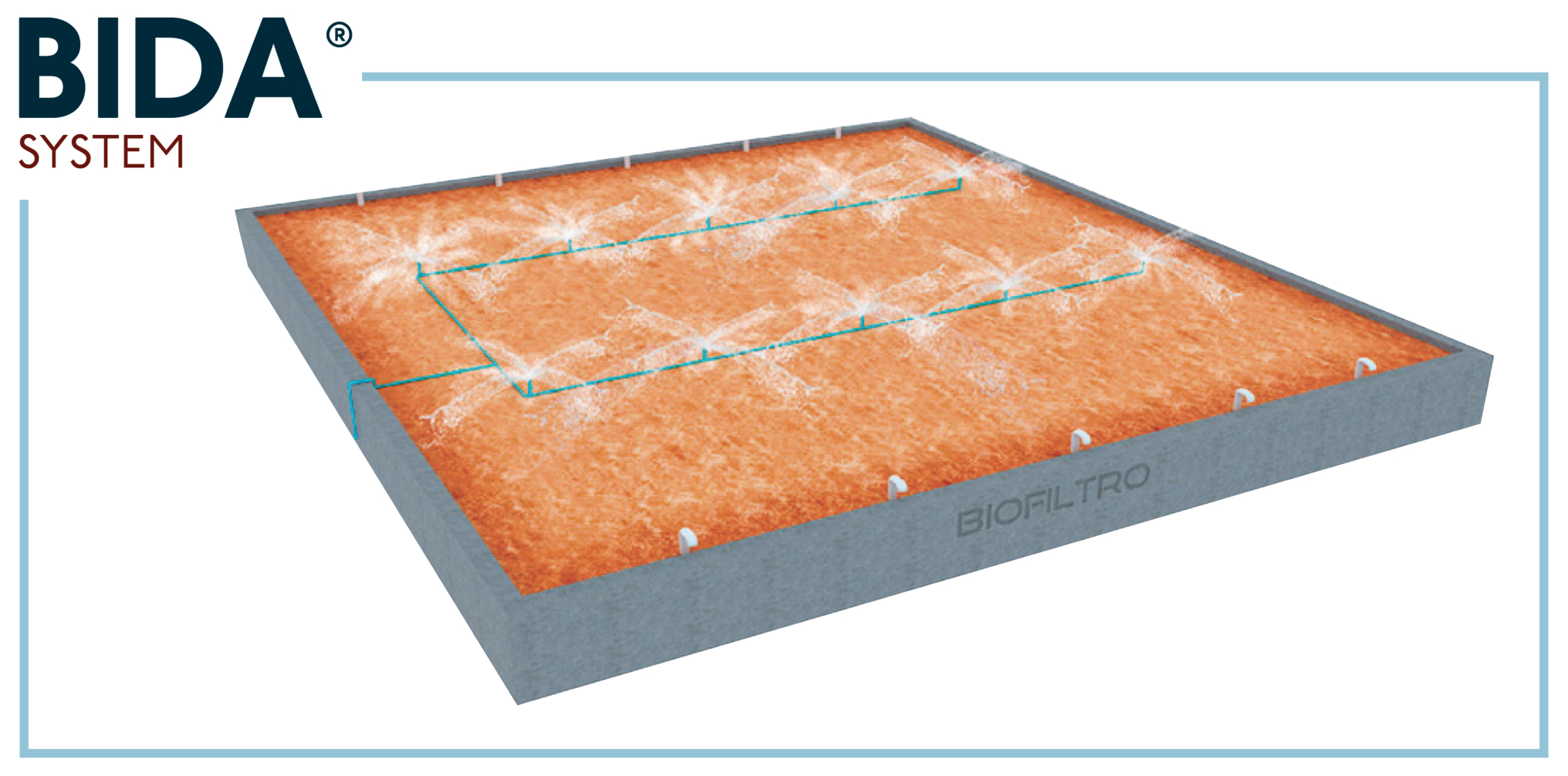
The first thing BioFiltro sells is a story you can repeat at dinner: earthworms clean filthy water. The second thing it sells is an industrial treatment plant, which is harder to explain and considerably more useful. At dairies, wineries, fruit processors and sanitary facilities, screened wastewater is sprinkled over deep beds of wood shavings. Red wigglers burrow through the surface. Microbes form a busy biofilm around them. Gravity pulls the liquid through rock and into a drainage basin. In roughly four hours, water emerges with a sharply smaller load of suspended solids, organics and nutrients.
The Davis, California company calls the contraption BIDA, short for Biodynamic Aerobic System. It is neither a petting zoo nor a compost heap with delusions of grandeur. It is secondary wastewater treatment designed around biology instead of energy-hungry mechanical aeration. Pumps, screens, irrigation controls and telemetry still matter, but the treatment bed remains passively aerobic. The organisms do most of the digestion.
A treatment plant with a pulse
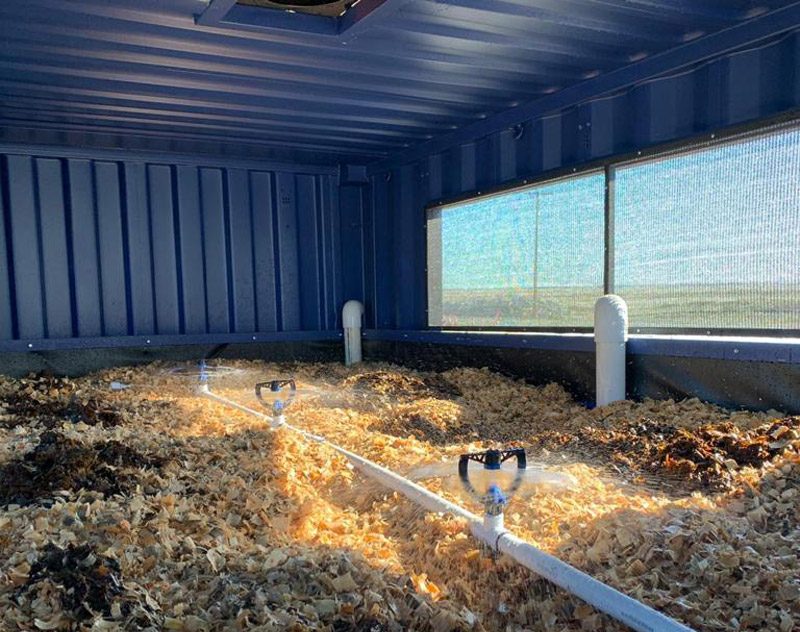
The system starts before the worms. Coarse solids are separated so pipes and filter media do not choke. An equalization tank smooths the flow and lets operators watch pH and other conditions. Timed sprinklers apply wastewater intermittently across the bed, leaving enough air in the media for aerobic microbes. Wood creates surface area for that microbial film; worms graze the biomass, digest solids and keep channels open. A rock layer supports drainage and, in some designs, denitrification. Sensors report flow and water conditions to BioFiltro, whose operators can adjust loading remotely.
Performance depends on the waste stream. “Up to 99 percent” is BioFiltro's broad marketing ceiling, not a universal outcome. Wawona Frozen Foods reported average biological oxygen demand and suspended-solids removal of 89 percent. Royal Dairy's commissioned system was reported by Newtrient at 75 percent total nitrogen, 85 percent phosphorus and 94 percent suspended solids removal. A Washington State University evaluation found nitrogen reductions that varied by form and sampling period. That variability is not a footnote. It is why an industrial buyer should demand a pilot and define the permit target before anyone pours concrete.
The customer is anyone with an expensive puddle
BioFiltro's customers share an awkward problem: their wastewater is too dirty to reuse or discharge cheaply, yet too valuable to ignore. A winery needs to handle an intense seasonal crush. A frozen-fruit processor must lower its organic load before sending water to a city sewer. A dairy wants fewer nutrients, odors and solids in its lagoon. A municipality or landfill has a permit with numbers that do not care how charming the worms are.
The named customer list includes Royal Dairy, Fetzer Vineyards, Wawona Frozen Foods, O'Neill Vintners & Distillers and a third-generation California dairy supplying Nestlé. Fetzer's 21,600-square-foot system was designed to recycle up to 15 million gallons annually and reduce energy use by as much as one million kilowatt-hours. Nestlé's featured installation covers 360,000 square feet and can process up to 200,000 gallons a day. In 2026 BioFiltro also announced a landfill-leachate project with Western Placer Waste Management Authority; the design adds granular activated carbon because the worm bed alone is not the entire answer for that discharge standard.
The company began in Chile in 2010 with civil engineers Matias Sjögren and Rafael Concha and engineer Alex Villagra. Sjögren and Concha had previously tried a made-to-measure tailoring business. The decisive encounter came when Sjögren's father hired Villagra to build a household sewage filter using worms. They saw a commercial route for biological-filtration research developed in Chile over decades and set about industrializing it. That origin left BioFiltro with an unusual blend of process engineering, microbiology, agricultural operations and environmental permitting. Sjögren remains chief executive; the company now runs teams across the Americas and Europe.
“Most things don't work.”Russ Davis, recalling his first reaction before Royal Dairy ran a pilot03 / The sale
What failed first was certainty
Royal Dairy offers the cleanest account of how an unfamiliar system earns trust. Owner Austin Allred wanted to stop trucking roughly 50 million gallons of lagoon water across 4,000 acres each year. When he asked industry veteran Russ Davis whether worms could help, Davis was suspicious. So the dairy did not begin with a heroic construction budget. It tried a 2,000-square-foot test unit. The improvement in water quality changed the conversation. A 5,000-gallon-a-day pilot led to a 200,000-gallon-a-day plant, then a much larger expansion intended to handle the full flush stream.
Wawona followed a similar pattern: 3,000 gallons a day in the 2015 pilot, 50,000 a day at the 2016 facility. This is the part readers can steal. For infrastructure, a glossy case study is weak evidence. A small system running the buyer's actual wastewater is a sales document that smells exactly like the problem. Measure influent and effluent. Prove reliability through the ugly season. Scale only after the operator trusts both the biology and the maintenance routine.
There is no honest single price
Published numbers span a distracting range because they describe different farms, collection systems and ownership structures. A California state review cited approximately $180 to $280 of capital per cow and $40 to $50 per cow per year to operate one configuration. A newer conservation protocol put a full-manure-collection BIDA system at $2,000 to $3,000 per milking cow. A Fanelli Dairy assessment gave a buy-option range of $416 to $1,300 per cow, with annual operations between $33 and $110. Royal Dairy's Allred described his own cost as roughly $25 to $30 per acre served. Fetzer and BioFiltro declined to disclose their winery system's price.
The more interesting answer is that BioFiltro changed what it sells. For years it sold plants and charged for maintenance. Around 2018, it pushed deeper into Wastewater as a Service, especially on dairies. BioFiltro can finance, own and operate the asset under a long contract, while treatment fees, harvested vermicompost and verified carbon credits support the project. The customer may avoid a large upfront check; BioFiltro inherits construction, biology, performance and financing risk.
That model also explains the investor fit. Hardware, permits and acres of filter media need capital before revenue arrives. Sjögren has said this was not a natural venture-capital story. Jordanelle Capital's $35 million private-equity investment in November 2025 is meant to fund dairy growth and expansion into food processing, sanitary, industrial and municipal work. This is project finance wearing a worm pin.
05 / The edgeThe moat is everything around the worm
Earthworms are not proprietary. BioFiltro's defensibility is the installed knowledge around them: sizing beds for volatile loads, choosing media, acclimating organisms, navigating permits, integrating pretreatment, tracking water quality, harvesting castings and financing long-lived projects. Its alternatives include aerated lagoons, activated sludge, nitrification-denitrification plants, constructed wetlands, membrane systems, hauling and anaerobic digesters.
The digester comparison deserves precision. A digester intentionally creates methane, captures it and makes biogas. BIDA keeps treatment aerobic and removes much of the organic material before prolonged lagoon storage can make methane. One makes a fuel; the other emphasizes cleaner water, nutrient reduction and avoided emissions. At a California dairy, a peer-reviewed study estimated the vermifiltration system emitted about 1 percent of the methane the liquid manure could otherwise have produced. BioFiltro funded that research and several authors disclosed consulting relationships, so buyers should read the method, not merely the number.
Land is available, organic wastewater is biodegradable, reuse has value, energy is costly, odor matters, and the operator can support screening and routine monitoring.
The stream is toxic, saline or chemically hostile; solids overwhelm pretreatment; temperatures cannot be managed; acreage is scarce; or the permit demands advanced polishing.
The footprint is the most visible trade-off. A California review used roughly one square foot of vermifilter for each gallon of daily dairy flow. By that assumption, a 5,000-cow dairy could need more than six acres. Living filters also dislike biocides, heavy metals, severe pH shocks and unmanaged temperature extremes. Too many solids invite clogging. Very strict pathogen, salt, pharmaceutical or PFAS limits may require other treatment. The system can work in Antarctica and the Atacama, but those installations are engineered environments, not proof that worms ignore climate.
06 / What to copyBorrow the playbook, not the worms
- Make the technical idea repeatable. “Worm-powered wastewater” opens a door that “biodynamic aerobic treatment” leaves shut. The memorable phrase earns attention; specific removal data keeps it.
- Turn buyer doubt into a paid experiment. Size a pilot around the riskiest season and the customer's real input, then define the scale-up trigger before installation.
- Sell the operator's whole day. Cleaner water is one benefit. Fewer trucks, less odor, smaller energy bills, easier nutrient management and useful soil products make a stronger bundle.
- Finance around customer behavior. If buyers resist owning unfamiliar infrastructure, own it, monitor it and charge for the outcome - provided the contract properly prices performance risk.
- Publish the boundary conditions. Acreage, pretreatment, temperature, toxicity and permit targets belong in the first serious conversation. Credibility compounds faster than a best-case percentage.
BioFiltro sits in an increasingly busy market for water reuse, farm methane reduction and nature-based infrastructure. Its opportunity is large because dairies and food plants cannot wish away regulation, water scarcity or neighbors' noses. Its challenge is equally physical: each project must be permitted, built, fed, monitored and kept alive. Software scales by copying. Worm beds scale by repeating disciplined field work.
That is why the $35 million matters. The money is not validating earthworms; they have been processing organic matter longer than private equity has existed. It is underwriting BioFiltro's ability to turn a biological trick into dependable infrastructure, one screened and measured waste stream at a time.