The circuit breakers were an inconvenient editor. In New York’s public e-bike charging pilot, insufficient electrical capacity interrupted service, especially at busy Cooper Square. The cabinets had reached the sidewalk. Delivery workers wanted to use them. The power supply still had a vote.
That is a useful introduction to Newlab, the Brooklyn-born company that helps startups get physical technologies into the world. Its business occupies the awkward distance between an invention that works and an organization willing to adopt it. Along that route lie machine shops, access agreements, unfamiliar customers and experiments that expose what a laboratory misses.
Newlab calls itself a venture platform for critical technology. Strip away the vocabulary and the offer is practical: somewhere to build, someone who can help, a place to test and connections to capital. For a founder developing energy equipment, a robot or a new material, those resources can determine whether a promising prototype ever gets a second outing.
A shipyard, an artist and a complicated spreadsheet
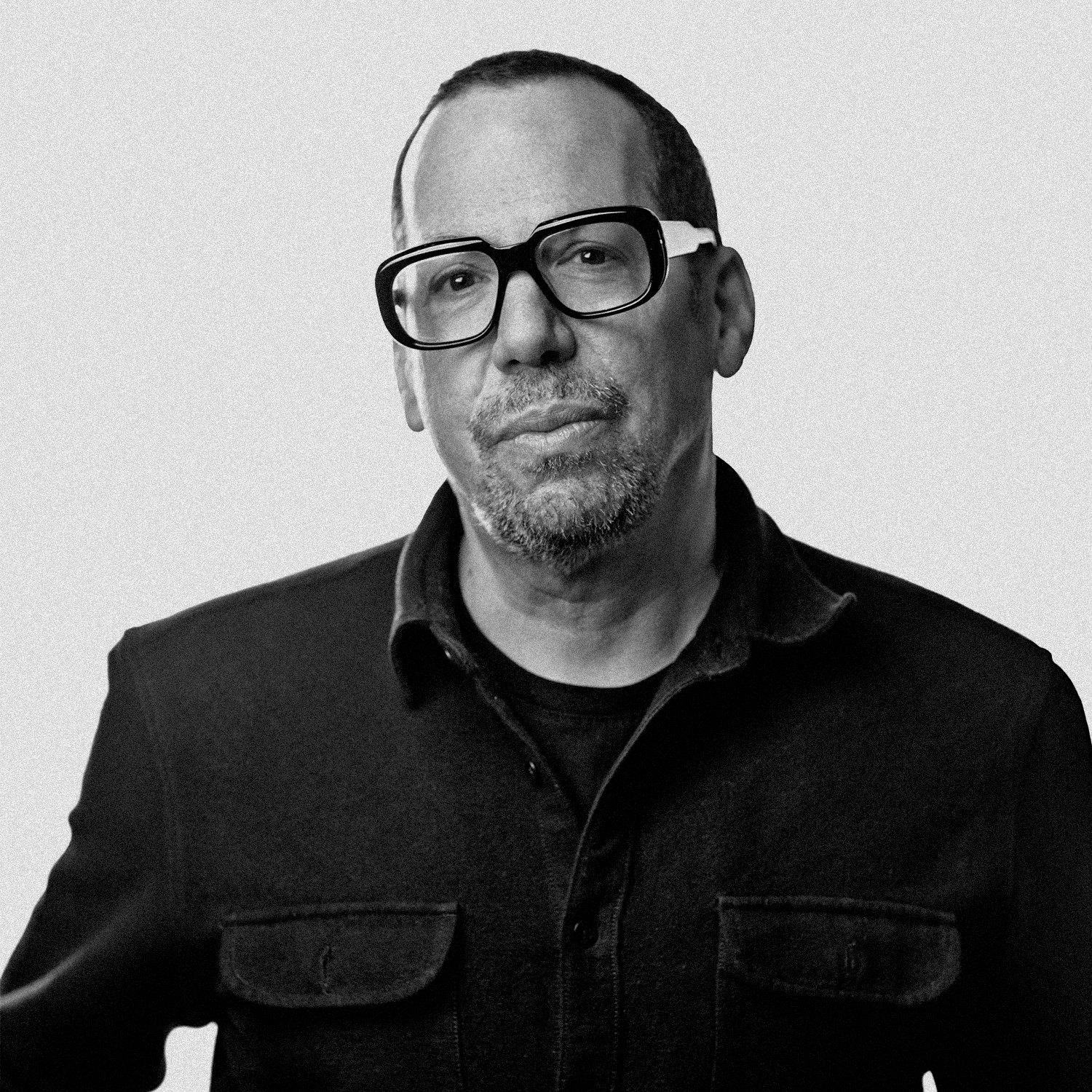
The origins are unusually architectural. Developer David Belt and artist and entrepreneur Scott Cohen began working on the idea in 2011. A former machine shop in the Brooklyn Navy Yard offered space and industrial history, along with the less romantic requirements of a substantial renovation. They tried a smaller version, Beta Space, in 2013 before opening the 84,000-square-foot flagship in 2016.
Contemporary reporting put the gut renovation at about $30 million. That was a building project, not a venture round. Financing combined historic tax credits, city and state grants, EB-5 financing, equity and loans. Belt also described roughly $500,000 raised through Fundrise. This was already a lesson in matching different kinds of money to different kinds of work.
“For New Lab, there’s all kind of crazy money.”
David Belt, discussing the project’s financing in 2015
The tenants were selected as carefully as the space was designed. By September 2016, 41 companies had been accepted from 280 applicants, according to contemporary architectural coverage. Product-realization staff and prototyping equipment supported the community. The idea was to put people building difficult things close enough to share knowledge, tools and the occasional shortcut.
That founding choice still matters. An industrial building can accommodate a community, but it cannot choose one. Newlab’s early selection process made membership part of the product: the engineer at the next bench might understand a manufacturing problem that a general business mentor would never encounter.
The customer on both sides of the workbench
Newlab serves several customers at once. Startups need facilities and commercial opportunities. Established businesses want to discover technologies they can use without building every experiment internally. Governments want safer services, investment and companies that might employ people locally. Investors want promising founders and better evidence about their products.
Its industry team scouts and vets startups, helps define a project, then manages the pilot. Verizon’s collaboration, for example, covered industrial applications of 5G over five startup cohorts. The relationship created opportunities for testing, product co-development and direct investment. A corporate partner brings a problem and operating context; a startup brings a possible answer.
The money follows those different relationships. A University of Michigan case study describes membership fees, industry and government support, regional partnerships and equity investments. Pilot sites can come through infrastructure owners, reducing the need for Newlab to own every asset itself. That arrangement makes the partner relationship a working part of the service.
There are credible alternatives. HAX pairs hard-tech investment with hands-on company development. Greentown Labs concentrates on climate-tech incubation; mHUB supports physical-product development and manufacturing. Newlab’s particular emphasis is the connection between regional industrial assets and startup deployments. The sensible comparison is which organization can remove a founder’s next obstacle.
For a software team with no need for equipment, a test site or an industrial customer, much of that offer may be unnecessary. For a hardware team, the relevant questions are more specific: can this shop make the part, does the partner control the installation site, and who will decide whether the trial deserves a contract?
The sidewalk grades the experiment
New York’s charging project shows how the arrangement works. NYC DOT developed the pilot through its Innovation Studio partnership with NYCEDC and Newlab, with FDNY involved. Swobbee and PopWheels supplied battery-swapping technology; Swiftmile supplied charging docks. The goal was to give delivery workers practical public alternatives to charging batteries at home.
Before deployment, incompatible batteries complicated technology selection. During operation, inadequate electrical capacity caused interruptions. Equipment intentionally stopping short of a full charge also confused some riders. The lesson was technical and human: supplying power and explaining the service belonged in the same deployment plan.
Same city. Very different demand.
Cooper Square accounted for 59 percent of transactions; Brooklyn Army Terminal accounted for 2 percent. The six-month trial recorded 12,100 battery swaps and 1,300 dock-charging sessions. Those results favor testing around actual delivery patterns. They do not establish that every neighborhood would use the same equipment equally.
Early focus groups also revealed a benefit beyond battery range. Riders reported greater productivity and less need to carry spare batteries or stop for charging. Some had stopped charging at home. Those interviews gave the public agencies something more useful than a demonstration: evidence about how people changed their working day.
There is a qualification founders should copy into their own experiments. Charging was free during the trial. Usage therefore demonstrates demand under those conditions; it does not settle the price customers will tolerate. Test adoption, then test the business that must support it.
A boat gets a job. A founder changes cities.
In Michigan, the setting changes from sidewalk to water. Newlab, Michigan Central and the Port of Monroe worked with Mythos AI on an eight-week autonomous-vessel pilot. The assignment was concrete: map port berths and anchorages, creating a digital representation of a working waterway and exposing the technology to local conditions.
The survey boat, Archie, used sonar to measure water depth as ships came and went. Port director Paul LaMarre told Axios that it produced more timely information than the federal updates he typically received once or twice a year. A grand ambition for autonomous shipping had found a smaller, immediate job.
Access can also change where founders choose to build. Grounded founder Sam Shapiro told Fast Company in 2023 that Newlab’s Detroit facilities persuaded him to abandon a nearly signed Austin warehouse lease. It is a revealing relocation story: the attraction was a place suited to the work, with the support around it.

Eventually, somebody needs a loading dock
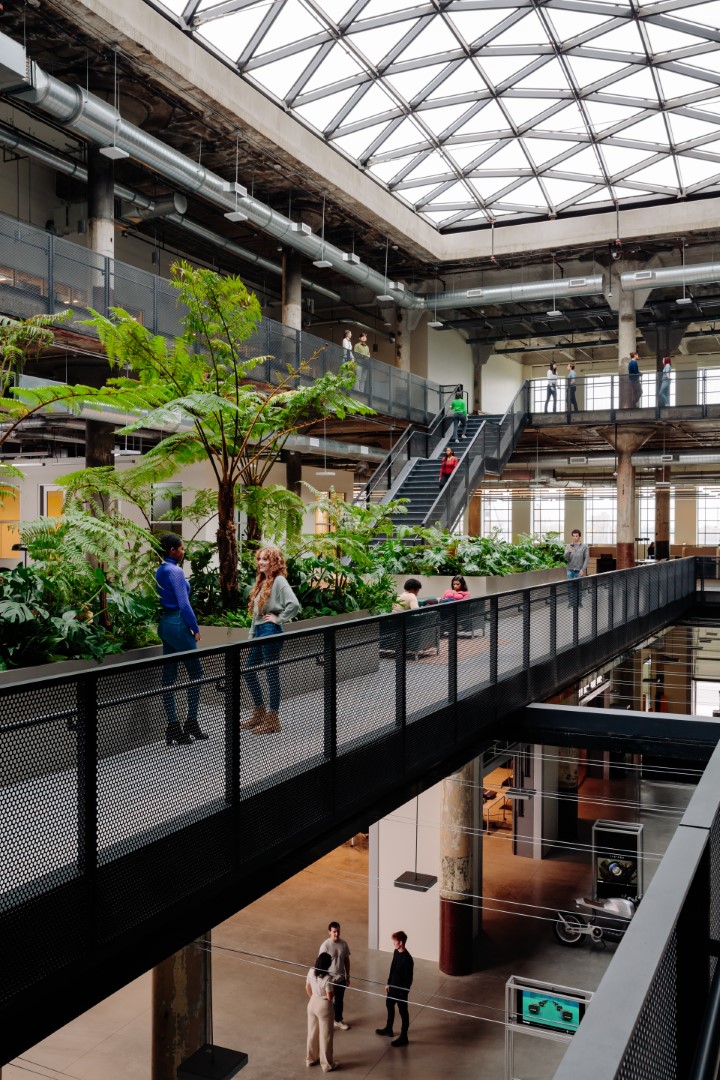
Newlab’s Detroit hub opened in April 2023 inside the 270,000-square-foot former Book Depository, part of Michigan Central. The site supplied a home for startups in a city with manufacturing talent and industrial partners. But a successful prototype creates a new problem: where do you make the next batch?
In July 2025, Newlab announced work with 23rd Street Holdings and member company Beacon Manufacturing on The 23rd. The partners were activating a dedicated section of a 380,000-square-foot industrial campus. That distinction matters: the entire campus should not be counted as Newlab’s exclusive new facility.
The practical attractions include cranes, heavy-duty power, truck docks and a rail spur. Lease footprints start at 500 square feet. Supporting services include contract manufacturing and supply-chain coordination. These are the details a founder starts caring about when a product becomes awkward to move by hand.
The expansion suggests how Newlab’s offer is changing as members mature. Shared labs address invention; early production requires different space and services. For Detroit, keeping that next stage nearby could help retain the companies the hub attracted. The test will be whether growing businesses can use the capacity economically.
Admission is useful. Adoption is the prize.
The community also has routes for founders who might struggle to buy their way into it. Newlab’s fifth Founder Fellowship, announced in January 2026, supports 15 founders. It includes a year of Brooklyn membership for two hot seats with lab access, mentoring and business-development support. The stated investment commitment is at least $75,000 across one or more participating startups, rather than a check promised to every fellow.
Its Global Ocean Innovation Challenge brings the model to conservation with The Nature Conservancy and YKAN. The 2026 program described a $200,000 non-dilutive stipend pool shared among selected companies, initially focused on Indonesia. Applicants needed a sufficiently developed prototype and a route to scaling beyond dependence on philanthropy. Affordable adoption was part of the brief.
By August 2026, Newlab’s own commentary on industrial development stressed the long commitments behind factories, equipment and supply contracts. The emphasis fits its trajectory: an attractive workspace starts the relationship, but the difficult work continues after a startup has something worth showing.
For readers building a physical product, the transferable habit is to organize around the next commercial decision. Find the operator who owns the problem. Agree on a test that would change that operator’s mind. Budget for the connections, power and support the product needs. Then go outside and let the customer use it.