The first version of PlantSwitch could fit under an arm: a bundle of straws, a marketing brochure, and enough optimism to walk into restaurants uninvited. Dillon Baxter and Maxime Blandin carried that kit through Dallas and Uptown in early 2020. They had been Southern Methodist University golfers, and they had lately become salesmen for an idea that sounded suspicious in a city with no great appetite for plastic bans. One prospect delivered the local review in a single line: “Son, this is Texas, not California. We use plastic.”
The rebuff was comic. The timing was worse. Baxter and Blandin had begun selling agave-based straws and cutlery to restaurants just before restaurants closed. For two months, PlantSwitch made no revenue while rent, inventory and the website continued sending their little invoices. They had perhaps two neighborhood clients. Baxter was finishing his finance degree and had an investment-banking job waiting.
He told Blandin he was going to take it. Blandin asked for a few more months. Their compromise had the charm of an arrangement nobody would recommend: Baxter joined the bank and sold PlantSwitch before and after work. When Dallas businesses reopened on June 1, the founders went back out. PlantSwitch booked about $30,000 in sales over four months, almost all in Texas. Baxter quit banking after one month.
“We just went door knocking with a bunch of straws and a marketing brochure in hand, walking Dallas and Uptown.”
The golfer notices a bad trade
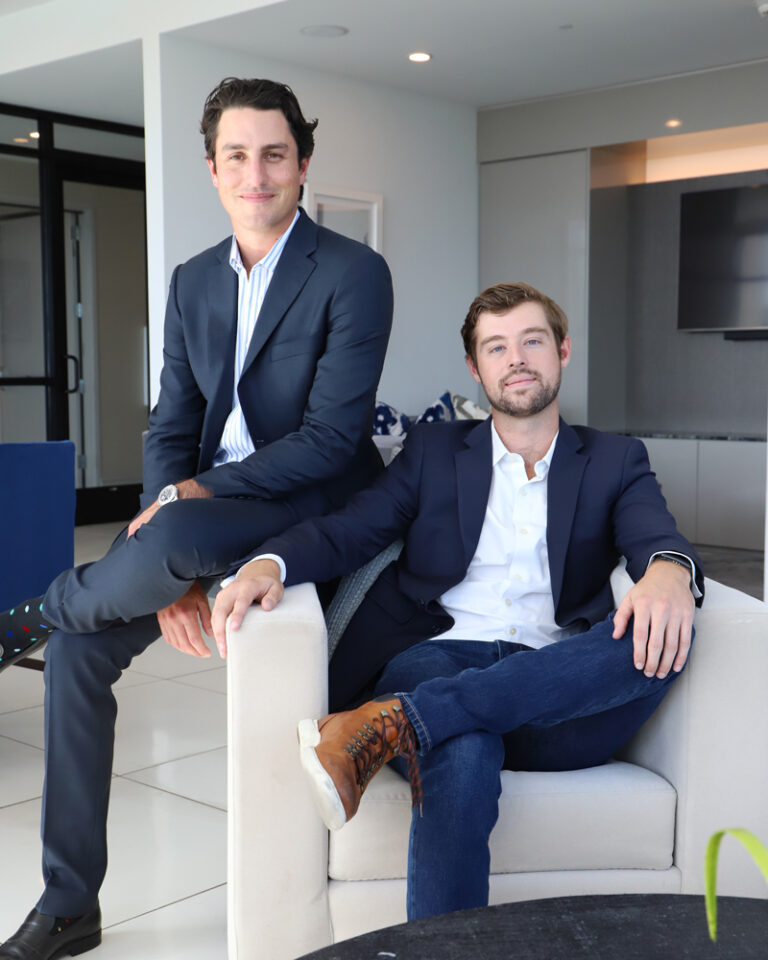
Baxter grew up in Austin and arrived at SMU on athletic and academic scholarships. He played Division I golf, recorded a collegiate low round of 72, studied finance and alternative asset management, and was named one of Poets&Quants’ Best & Brightest business majors in 2020. Golf also supplied his co-founder. Blandin, an earlier member of the SMU team, and Baxter began talking seriously about plant-based plastic in late 2019.
The prompt came partly from an internship. While researching smaller manufacturers for a private-equity firm, Baxter encountered the bioplastics category and saw both possibility and friction. The products were trying to displace petroleum plastic, an incumbent that is cheap, sturdy and already understood by every factory in the chain. Many alternatives required new equipment. Others cost too much. A paper straw made the problem intimate: the customer could taste the compromise before finishing the drink.
That observation became Baxter’s durable business thesis. Environmental virtue would not excuse a worse object. The replacement had to feel familiar, survive its assigned task, fit existing equipment and eventually approach conventional plastic on price. PlantSwitch began as an importer and distributor of products made with leftover agave fiber. It evolved into a materials and manufacturing company using cellulose-rich residues such as rice husks and wheat straw.
Wheat straw
compound
equipment
straw · bowl
pathways
There is a shrewdness in beginning with the boring objects. A fork has no fandom. A cup rarely inspires loyalty. They move, however, in volumes large enough to change a factory’s economics. Baxter has said PlantSwitch deliberately focused on high-volume, low-margin products because the scale can lower costs and open other plastic-dependent industries later. The cutlery is both merchandise and rehearsal.
The money that wasn’t there
By 2023, PlantSwitch looked ready for its industrial chapter. It had customers, successful equipment trials, a lease for a Sanford, North Carolina, facility, equipment deposits and job offers in motion. The company also had a signed $8 million term sheet. Baxter sent final subscription documents in May and expected signatures within days.
Silence took two or three weeks. Then the fund said a limited partner had not provided the expected capital. PlantSwitch had commitments arranged like dominoes and roughly two months of cash left. Baxter was 25. He described the call with unusual physical precision: “your heart hits the ground and your stomach’s in your throat.”
He and Blandin called advisers, many of them entrepreneurs they knew through the SMU golf community. This network had never been ornamental. People around Trinity Forest had offered warehouse advice, leads and financial introductions; the course itself became a PlantSwitch customer. Now the advisers explained that broken financings happened and helped the founders map alternatives. PlantSwitch eventually assembled early-growth financing and continued the facility build. The disappointment became less a morality play than an operating rule: signed intentions cannot run an extruder.
Sanford made sense for less dramatic reasons, which are often the useful ones. It put PlantSwitch near agricultural feedstocks, labor and an ocean port. A roughly $4.9 million U.S. Department of Agriculture grant supported work with farmers in North Carolina and Virginia, including payments for climate-smart commodities. The 52,000-square-foot site was planned to produce 50 million pounds of resin each year. A student idea had acquired loading docks.
When the order is bigger than the factory
The next pivot arrived disguised as a customer. PlantSwitch had developed its resin, but a Taylor Farms opportunity tied to Walmart’s private-label salad business required finished forks at enormous scale. The initial order was for 25 million units. PlantSwitch did not have the production capacity.
Baxter flew to China. In 45 days, the company stood up a 300,000-square-foot, vertically integrated facility. By the end of the year, it had delivered 100 million forks for the Walmart-linked program. The sprint changed more than output. PlantSwitch had originally imagined selling material through existing manufacturers. The order exposed an incentive problem: for a large converter, a new resin would remain a small experiment; for PlantSwitch, it was the whole company. Owning the finished object meant owning urgency, quality and the conversation with the customer.
“You have to get in the weeds, you have to get dirty, do it yourself, and then come to the customer with the finished solution.”
The phrase is a concise portrait of Baxter’s operating style. He is a finance graduate who ended up discussing extrusion lines. He is also willing to make the product argument at dinner. One of his demonstrations asks a potential investor to cut a thick steak with a PlantSwitch knife. Sustainability claims may invite debate; a knife either survives the steak or it does not.
Four things a founder can steal
- Compete on the customer’s experience, not on the nobility of your intention.
- Design around infrastructure customers already paid for.
- When an intermediary lacks urgency, own more of the delivery.
- Treat a signed term sheet as possibility until the cash arrives.
The fork reaches a stadium
PlantSwitch’s products moved from demonstration to shelf. Taylor Farms put certified home- and industrial-compostable forks into six chopped salad bowls sold through Walmart. Live Nation began working with PlantSwitch across events. Starlink carried products at corporate campuses. In May 2026, the company announced an oversubscribed $17 million Series A, bringing its reported total funding to $28 million.
The vivid customer was SoFi Stadium, the 70,000-seat Los Angeles venue scheduled to host eight matches during the 2026 World Cup. Cups and cutlery are background characters at a stadium, noticed mostly when they fail. For Baxter, that anonymity is the opportunity. If PlantSwitch works, the fan should not need a lecture before lunch. The object should behave like the one it replaced and have a more sensible ending.
The company says its material can break down naturally within ten weeks under suitable conditions and is certified for home and industrial composting. The distinction matters because compostability is not permission to litter, and waste systems remain local and imperfect. Baxter’s commercial answer is to design for several existing pathways rather than wait for an immaculate new disposal system to appear.
He is careful about the obstacle. Most consumers and businesses, he says, want to make a responsible choice. “The issue is how,” especially when the proposed alternative is something customers dislike. This is less romantic than demanding a revolution in human behavior. It may also be more workable. PlantSwitch is asking factories to keep much of their machinery, buyers to keep the familiar shape of a fork, and agricultural leftovers to do an extra job.
Baxter’s ambition is measured in pounds: first millions, then billions of pounds of petroleum plastic replaced. Food service is the opening wedge, not the boundary. At various points, customers have asked about sunglasses, cosmetic kits and containers. The company sees a route into other categories once volume lowers price and manufacturing grows repeatable.
The path so far has not been a clean conversion from plant waste to triumph. It has been a sequence of objections. Texas restaurants did not want the straw. A pandemic removed the restaurants. Distributors wanted customer demand before listing the product, while customers wanted distributor availability before buying it. A venture fund promised money it could not send. A national order required a factory that did not exist.
Baxter changed the route each time while keeping the central constraint: the alternative has to work. Golf may have been apt preparation. The ball is frequently somewhere it was not meant to be, the score remains public, and complaint does not move it toward the hole. You inspect the lie. You choose a club. Then you take the next shot.