In 2017, Alex Blum flew to Bangladesh and met a man who had spent 25 years chasing a single idea. Dr. Mubarak Ahmed Khan, a former nuclear physicist, believed jute - the coarse plant fiber that Bangladeshi farmers grow by the millions of tons - could be turned into a building material tough enough to replace tin and fiberglass. What he lacked was someone willing to sell it without slapping a "green premium" on the tag. That meeting became Applied Bioplastics.
The Austin company Blum went on to co-found with Colin Ardern has a thesis that sounds almost too plain for a climate startup: sustainable plastic will only win when nobody has to be a hero to buy it. Not the factory, which shouldn't have to retool. Not the customer, who shouldn't have to pay more. And not the accountant, who should be able to sign off on the switch and move on. The carbon savings, in this framing, are the bonus - not the sales pitch.
That is a genuinely contrarian position in a field that has spent a decade selling guilt. Most bioplastics reach the market as a moral upgrade you are asked to fund: a compostable cup that costs three times as much, a bio-resin that needs its own curing line. Applied Bioplastics decided the guilt model does not scale, and that the only version of green materials big enough to matter is the version a purchasing manager picks because it is cheaper, not because it is virtuous. Everything the company builds is bent toward removing reasons to say no.
01 / THE PRODUCTSTwo materials, one stubborn rule
Applied Bioplastics sells two things. The first is BioFi, a thermoplastic that mixes agricultural plant fiber into standard, recycled, or bio-based polypropylene and polyethylene. The hard part was never the plant matter - it was getting fiber to actually bond to the plastic. The company developed a proprietary treatment that makes the two adhere, so BioFi can be fed into the same injection-molding and extrusion lines a factory already runs. No new machines. Household goods, automotive parts, appliances, electronics, and outdoor equipment are all on the target list.
The second is BTTR Board, known in Bangladesh as Jutin - a nod to the jute that lets it stand in for tin. It is a biothermoset composite built from woven jute fiber, and it is water-, heat-, and fire-resistant. Where BioFi competes with plastic pellets, Jutin competes with fiberglass and sheet metal, two materials it undercuts on both price and rust.
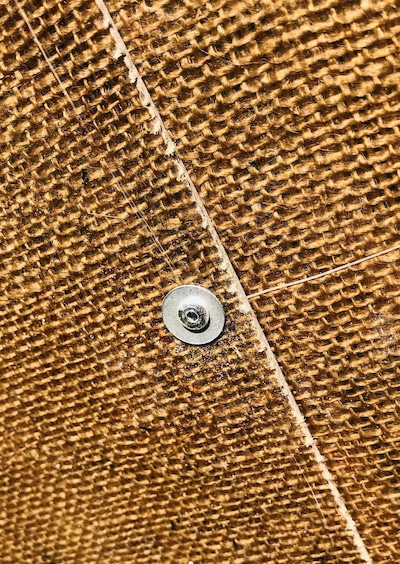
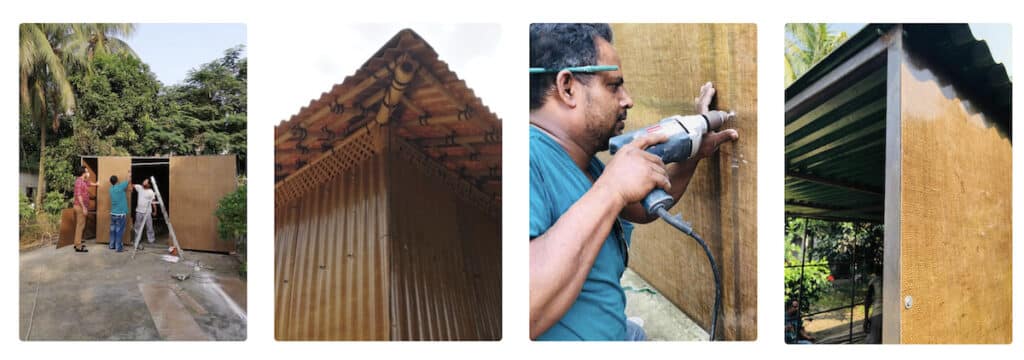
The recipe reads like a craft project with a lab attached: jute is woven into burlap, layered onto a base with a thin Mylar film, treated with a non-toxic, food-safe chemistry, painted with a thermoset resin, and molded. A full wall panel takes about 45 minutes, and it can be built by hand or sped up with a heat press.
There is a supply-chain reason the material starts in Bangladesh rather than a Texas lab. Jute is one of the country's oldest crops, grown by rural farmers for generations and often worth little at market. Building the composite around it means the raw input is abundant, cheap, and already sitting in the communities the company wants to help - up to 50% of the finished material by mass is plant biomass, which is also what keeps the price from swinging with the oil market. Dr. Khan, who conceived the composite roughly 25 years ago and now serves as chief scientist, frames the sourcing as the point rather than a footnote.
02 / THE PROOFA $1,000 house and a typhoon
The most convincing test of a building material is not a lab report - it is weather. In January 2022, working with the Bangladeshi health-research institute icddr,b and the charity Caritas, the company built six BTTR Board homes for six families in the Cox's Bazar refugee camp. Each shelter runs about 151 square feet, stands roughly 8.5 feet tall, and costs in the neighborhood of $1,000. Then a typhoon rolled through. The houses were still standing, with no damage and no injuries.
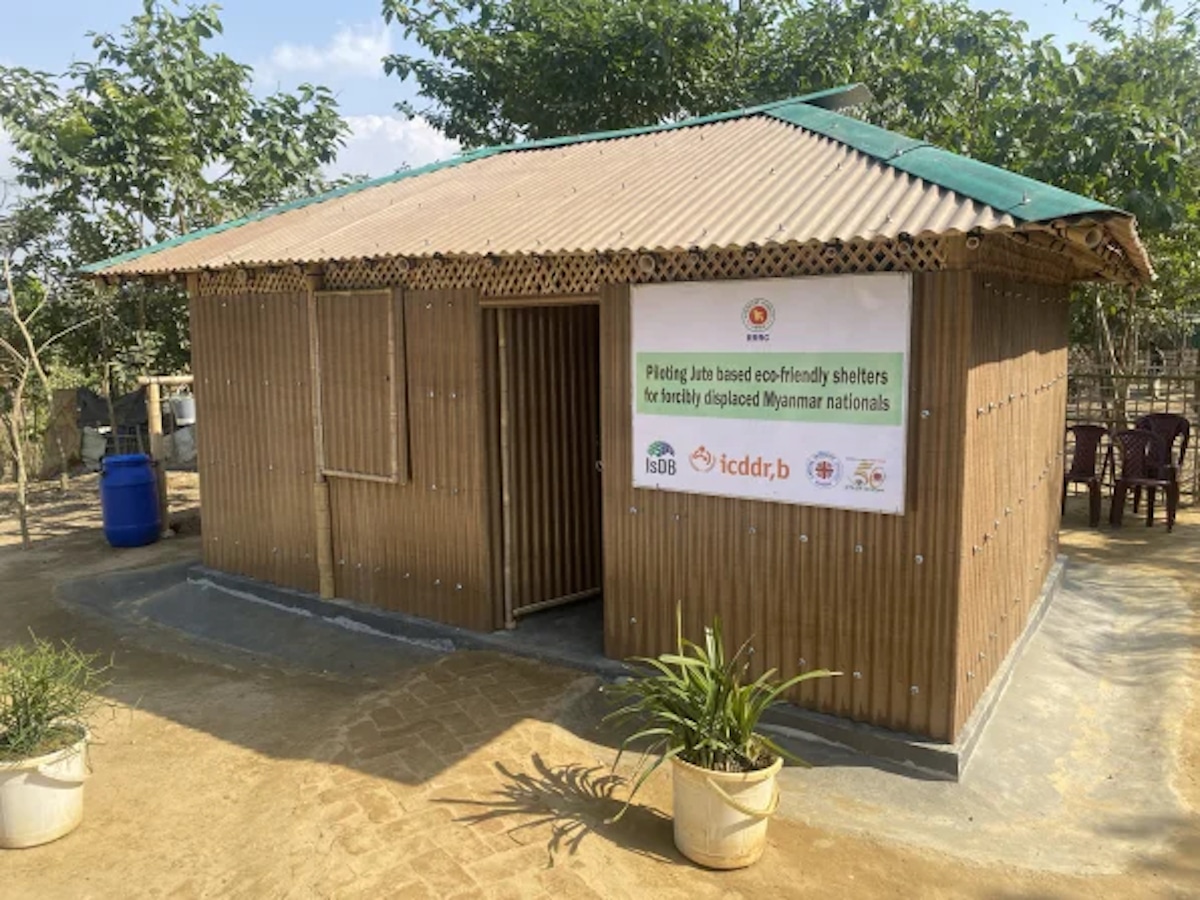
Residents reported the obvious upgrades over tarpaulin - dry, secure, harder to steal, less likely to catch fire - and some less obvious ones, like dignity. Blum's plan for this version is where the company's values show. Rather than sell it for profit, he wants to license the housing formulation to governments for somewhere between $1 and $10 per home, and the material is now in trials with the United Nations for refugee housing.
03 / THE CARBON MATHNet-negative, on the spec sheet
The reason this counts as climate tech and not just clever manufacturing is the arithmetic per tonne. By displacing petrochemical content, the company says one tonne of its material avoids roughly 500 kg of CO2. Because the plant fiber captured carbon while it grew, that same tonne adds another 200 kg of CO2 uptake. Put together, the material's footprint runs net-negative - and the company has cited a potential to cut plastic manufacturing emissions by up to 97%.
04 / THE MARKETWhy "boring" is the strategy
Plenty of companies make bioplastics. Most run into the same wall: their material asks the buyer to change equipment, accept different performance, or pay a premium - sometimes all three. Applied Bioplastics aimed at the switching cost instead of the chemistry, and that is what sets it apart from the PLA and biocomposite crowd. Its real competition is not other startups; it is the incumbent it quietly replaces on a line item.
| Against the incumbent | Price parity | Runs on existing gear | Rusts / rots | Fire-resistant |
|---|---|---|---|---|
| BioFi vs. virgin plastic | Yes | Yes | No | n/a |
| Jutin vs. sheet metal | Cheaper | Yes | No rust | Yes |
| Jutin vs. fiberglass | Competitive | Yes | No | Yes |
| Jutin vs. tarpaulin | Higher | n/a | Durable | Yes |
The business model follows the same drop-in logic. It is a B2B materials supplier: sell BioFi pellets and BTTR Board to manufacturers as substitutes at competitive prices, distribute through marketplaces like Knowde, and license the humanitarian version separately at near-cost. Reported traction includes five major domestic pilots and an automotive pilot pointed at 2027 production.
05 / THE TRACTIONFrom pitch stage to profitable sale
The company came up through the accelerator circuit - Greentown Labs, Capital Factory's All Access Fund, a run of SXSW Pitch wins in 2020 and 2021, the Rice Alliance Most Promising Company nod in 2022, and a stack of category prizes in 2024. On the money side it has raised more than $1.2M, including a $250,000 convertible note in late 2023. The signal that matters most, though, is the least glamorous one: a first profitable sale in December 2024 at a 16% margin, followed by USDA BioPreferred certification and roughly 200,000 lbs shipped the next year. For a team of about 15, that is the moment a science project turns into a supplier.
The expertise underneath all of it is a slightly odd blend: polymer chemistry from Dr. Khan's decades in jute composites, materials engineering to make plant fiber stick to plastics that normally reject it, and a go-to-market instinct that treats a purchasing spreadsheet as the real customer. Blum splits his time between the CEO seat and the role of chief impact officer, while Ardern - who has also served as president and COO - has handled the operational build from lab bench to production line. The company still leans on partners for reach, from icddr,b and Caritas on the humanitarian side to research backing associated with Daigle Labs at UConn.
What is left to prove is scale - whether a drop-in plant plastic can hold its price advantage as volumes climb, and whether the automotive pilot converts. But the shape of the bet is clear, and it is the part worth copying: lead with the P&L, keep the price flat, and let the carbon-negative footprint be the thing you mention second. It turns out that is the order that gets you into the injection molder.