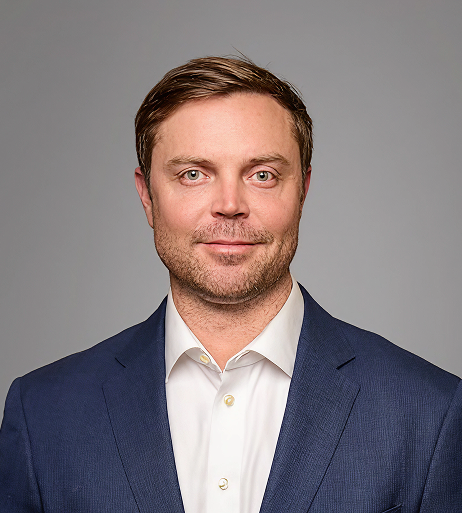
A periodic table problem, solved by biology
Nathan Ratledge runs a company in Boulder, Colorado that builds microscopic protein robots. They have one job: find a single rare earth element in a messy soup of metals, grab it, and let everything else wash away. He calls the broader idea "un-mining" - getting the metals modern life depends on without digging a single new hole.
The company is Alta Resource Technologies, and Ratledge is its co-founder and CEO. The pitch is deceptively simple. Rare earth elements - neodymium, dysprosium, the metals inside electric motors, wind turbines, fighter jets and the phone in your pocket - sit shoulder to shoulder on the periodic table. They are chemically almost identical. That is exactly why they are so miserable to separate.
Conventional refining throws acid and energy at the problem, again and again, in a long chain of chemical baths that is dirty, expensive, and - inconveniently for the United States - overwhelmingly controlled by China. Ratledge's bet is that biology has a steadier hand than chemistry. Proteins, computationally designed and licensed from Lawrence Livermore National Laboratory, can be tuned to recognize one element and ignore its near-twin neighbor.
When things are less complex, chemicals can tend to win, because chemicals are cheaper. And when things are more complex, biology tends to shine because of the selectivity. The trick is harnessing biology in the right way.
- Nathan Ratledge, on why proteins beat acid bathsHere is the strange specific that makes it stick. To explain how little mining has changed, Ratledge reaches back almost two thousand years - to Pliny the Elder, the Roman naturalist who wrote about metals and mining and then died watching Vesuvius erupt. "Mining hasn't really progressed since the days of Pliny the Elder," he likes to say. It is the kind of line that lands in a venture pitch and a policy hearing equally well.
Proteins in a column, doing the dirty work clean
Strip away the biochemistry and Alta's process reads like a very selective coffee filter:
Design
Custom proteins are computationally engineered to latch onto one specific rare earth element.
Anchor
The proteins are fixed to resin and packed into columns, like beads in a tube.
Pour
A solution from ore, tailings or e-waste percolates through. The proteins grab their target.
Release
Once saturated, the column is flushed and gives up high-purity metal. The proteins prove surprisingly durable.
The feedstock is the radical part. Instead of fresh mines, Alta aims at low-grade ore, mine tailings that everyone else wrote off, and electronic waste - the dead laptops and drives quietly stockpiling rare earths in drawers and landfills. The output is the same metals the defense and clean-energy industries are scrambling for. The footprint is a fraction of the acid-and-energy status quo.
From satellites over Africa to columns in Colorado
Ratledge did not arrive at protein engineering in a straight line. His doctorate is from Stanford - an MA in Economics and a PhD in Environment & Resources - and his research had almost nothing to do with mining. He studied the economics of clean energy and climate technology in the Global South, especially East and Southern Africa, using satellite imagery and machine learning to measure something notoriously hard to see from the ground: who gets electricity, and what it does to their lives.
Before Stanford there was Princeton, where he earned an MPA and a certificate in Science, Technology and Environmental Policy and won the David Bradford Prize. Before that, the University of Georgia, where he graduated summa cum laude as a Foundation Fellow. And in between the degrees, real-world chapters: Executive Director of the Community Office for Resource Efficiency (CORE) in Aspen, research for Resources for the Future, a stint at the White House Council on Environmental Quality, and his own consulting firm, Apogee EP.
It is an unusual resume for a deep-tech founder - economist, policy hand, field researcher - and that is the point. Ratledge frames Alta less as a chemistry play than as a supply-chain and security one. The science is the lever; the goal is national.
To de-risk some of the core national security concerns, you don't need hundreds of thousands of tons. You're talking single-digit-thousands of tons.
- Nathan Ratledge, on what it actually takes to matterThat argument has found a receptive audience. Alta's seed round, which started at $5.1 million and grew to roughly $10 million, was co-led by DCVC and Voyager Ventures, with Orion Industrial Ventures and - notably - In-Q-Tel, the venture-capital arm of the CIA. When a national-security investor writes the check, the "weaponized supply chain" framing stops being a slide and starts being a thesis.
The company has also advanced to the final phase of DARPA's EMBER program for domestic critical minerals, working as part of a Lawrence Livermore-led team. The near-term plan is humble in size and large in ambition: a pilot plant roughly the size of a shipping container, proving the proteins hold up outside the lab.
The avalanche-report kind of optimist
Ratledge is an avid backcountry skier - the sort of person who, when asked about the hobby, turns it into a gentle lecture on reading the avalanche report before you drop in. It is a fitting tell. A man who quantifies risk on mountainsides for fun is a reasonable bet to take on the unglamorous, high-stakes risk of rebuilding a critical-mineral supply chain from scratch. He tends to talk in numbers, not slogans, and his optimism comes with conditions attached.