DCVC Climate Fund targets $300-400M under Werner's leadership NextGen Industry Group bridges the 'missing middle' for 140+ FOAK manufacturers Former Tesla NPI lead joins deep tech VC as General Partner Milo Werner: "Advanced manufacturing is solving climate change" DCVC's first dedicated climate fund closes as industrial renaissance accelerates C3E Innovation & Technology Award Winner 2013 From Model S launch to decarbonizing heavy industry DCVC Climate targets companies that revolutionize value chains, not just cut emissions DCVC Climate Fund targets $300-400M under Werner's leadership NextGen Industry Group bridges the 'missing middle' for 140+ FOAK manufacturers Former Tesla NPI lead joins deep tech VC as General Partner Milo Werner: "Advanced manufacturing is solving climate change" DCVC's first dedicated climate fund closes as industrial renaissance accelerates C3E Innovation & Technology Award Winner 2013 From Model S launch to decarbonizing heavy industry DCVC Climate targets companies that revolutionize value chains, not just cut emissions

General Partner - DCVC / Climate Investor

Milo
Werner

General Partner, DCVC - Climate & Deep Tech

She was on the floor at Tesla when they built two prototype cars and had 200 employees. She was still there when they had 12,000. Now she writes checks for the companies trying to do something just as hard - decarbonize the industries that actually move the world.

Deep Tech VC Climate Investor Operator DCVC MIT Alum
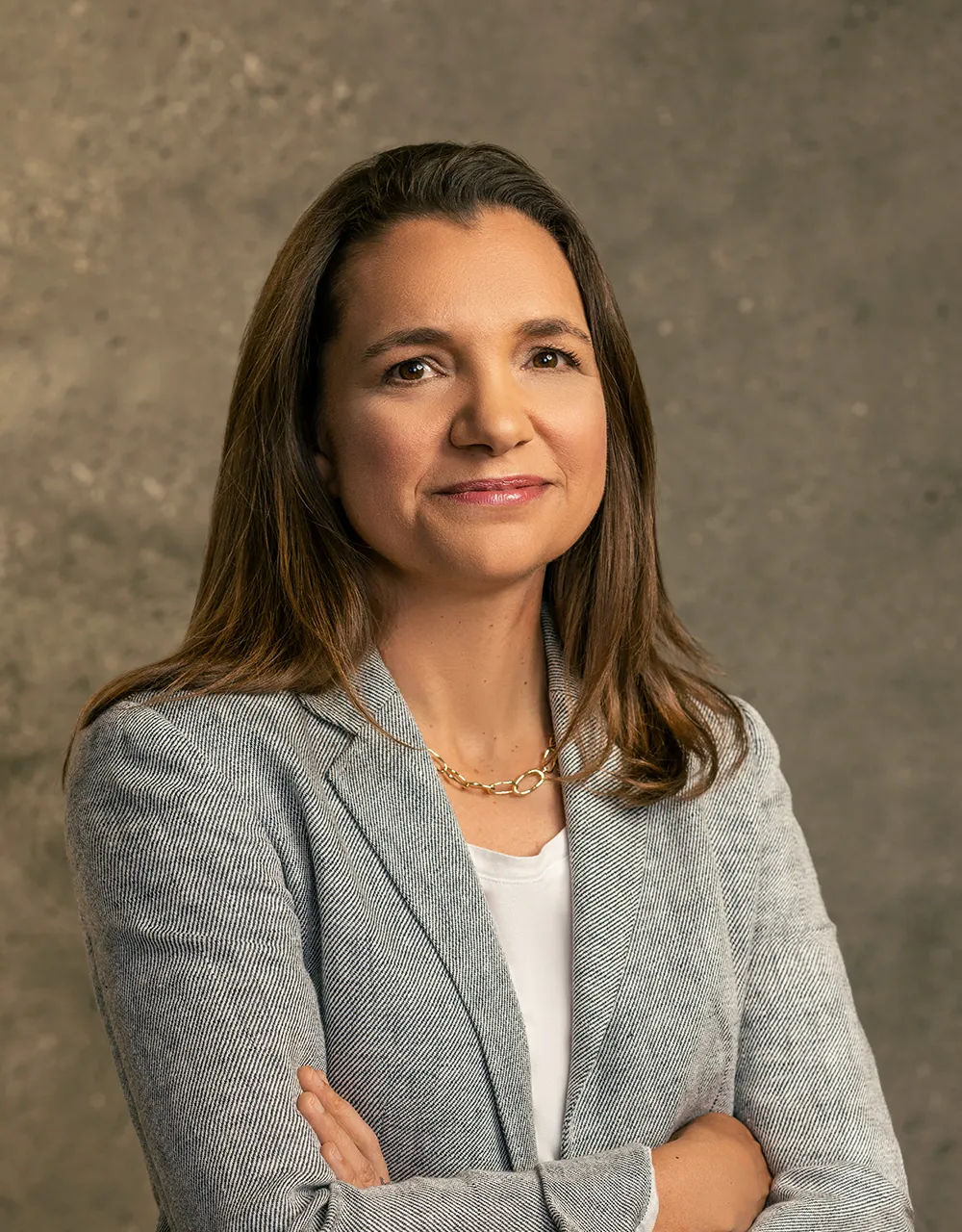
Milo Werner, General Partner at DCVC
8
Years at Tesla
200
Tesla Employees When She Joined
12K
When She Left
$350M
DCVC Climate Fund Target
140+
NextGen Industry Group Members
1M+
Families Powered at Zola
The Story

From the Factory Floor to the Fund

When Milo Werner joined Tesla in 2007, the company had roughly 200 employees and two prototype cars. Most people in Silicon Valley were still hedging their bets on whether electric vehicles were a real business or an expensive science project. Werner didn't hedge. She moved into the thick of new product introduction - the unglamorous, load-bearing discipline of actually making things - and stayed for eight years.

Her portfolio at Tesla reads like a checklist of the company's formative achievements: the Model S powertrain (battery, drive unit, and everything in between), the dual-motor drivetrain, driver assist systems, and the Model X. These weren't incremental improvements. Each launch required solving supply chain problems that had no precedent, building supplier relationships from scratch, and managing production ramp-ups that other manufacturers had decades to figure out. Werner did them on compressed timelines, at a company that was simultaneously trying not to go bankrupt.

"Advanced manufacturing is solving climate change."

- Milo Werner, General Partner, DCVC

She left Tesla for Fitbit, where she ran New Product Introduction and launched four factories in China simultaneously, transitioning the company to fully automated production - a feat that involves equal parts engineering precision, cross-cultural negotiation, and tolerance for chaos. Then she went to Zola, a solar-battery startup serving distributed energy to over one million families in Sub-Saharan Africa. Three continents, three radically different industrial contexts.

The pivot to venture capital was less a career change than a lateral move into a different kind of leverage. As an Operating Partner at Khosla Ventures, she used the same toolkit - commercialization strategy, supplier development, sourcing - to support deep tech founders. At Ajax Strategies, she led mid-stage investments in energy, transportation, agriculture, and industrial sectors. In 2018, she walked into MIT's inaugural Tough Tech Summit and found her people.

The Engine - MIT's tough tech venture fund - formally brought Werner on as General Partner in 2022. The mission was deliberately hard: invest in the breakthrough technologies that are too important to ignore but too capital-intensive and long-horizon for conventional VC. Werner's board seats at Atlantic Quantum, Foundation Alloy, Mori, Resonant Link, and TeraDar map the perimeter of what "tough tech" means in practice: quantum computing, advanced materials, food preservation, wireless power, radar sensing.

In July 2024, DCVC recruited her to lead DCVC Climate - the firm's first dedicated climate fund, targeting $300-400 million, launched twelve years after DCVC made its first climate-related investment. The timing matters. The Inflation Reduction Act money that seeded much of the clean manufacturing sector was already being contested. Werner arrived not as a policy optimist but as someone who had built things when the rules kept changing.

Her investment thesis at DCVC Climate goes beyond emissions reduction. She's hunting for companies that can restructure entire value chains - decarbonize cement, steel, chemicals, agriculture - at the level where it actually counts. "Solutions that go beyond emissions reduction to revolutionize value chains," as she puts it. The bar is high and deliberately so.

C3E Innovation & Technology Award - 2013

Bridging the Missing Middle

In the spring of 2024, before joining DCVC, Werner founded The NextGen Industry Group - a nonprofit that nobody else was building but everyone in advanced manufacturing desperately needed.

The problem: roughly 140 companies in the US had successfully built pilot facilities for clean manufacturing technologies. They had the science, the patents, the small-scale proof. What they didn't have was a roadmap for getting from pilot to profitable at commercial scale - what the industry calls "first-of-a-kind" or FOAK production.

Federal funding was never designed for this gap. Conventional equity can't structure around it. Werner's answer: build a peer network, develop a new capital stack model, and create the thought leadership that helps these companies build their board's operational expertise before they hit the most expensive mistakes.

Her capital innovation: milestone-dependent credit and customer purchase orders as loan guarantees. Let the market finance what the government was never designed to.

140+
Companies in Peer Network
FOAK
First-of-a-Kind Production Focus
2024
Founded Spring
$0
Federal Dependency by Design
Career Arc

The Long Game

2007
Joined Tesla as an early employee - employee count: ~200, vehicle count: 2 prototypes. Led New Product Introduction through the Model S powertrain, dual-motor, driver assist, and Model X launches.
~2015
Moved to Fitbit as head of New Product Introduction. Launched four factories in China simultaneously and transitioned the company to fully automated production.
~2016-2019
Joined Zola as VP Engineering & Product. Led engineering and product for this distributed solar-battery startup serving over one million families in Sub-Saharan Africa.
~2019
Joined Ajax Strategies as Partner. Led mid-stage venture investments in energy, transportation, agriculture, and industrial sectors.
~2020
Joined Khosla Ventures as Operating Partner. Supported deep tech founders with commercialization, sourcing strategies, and supplier relationship development.
2018-2022
First encountered The Engine at its inaugural Tough Tech Summit. Spent years mentoring founders and advising on deal evaluations before formally joining as General Partner in 2022.
2024 Spring
Founded The NextGen Industry Group, a nonprofit to support ~140 companies navigating the 'missing middle' between pilot production and commercial-scale FOAK manufacturing.
2024 July
Joined DCVC as General Partner to lead DCVC Climate - the firm's first dedicated climate fund, targeting $300-400M, investing in deep tech ventures that decarbonize high-emitting industries.

The Operator-to-Investor Arc

🚗
Tesla
NPI Lead
2007-2015
Fitbit
NPI Lead
~2015
☀️
Zola
VP Eng & Product
~2016-19
💡
Khosla / Ajax
Operating &
Investment Partner
🔬
The Engine
General Partner
2022-2024
🌍
DCVC
General Partner
2024-Present

In Her Own Words

What She Actually Says

They were never going to last forever. And I think we have to chart a path forward, with or without them.

These companies don't have a lot of peers to look to or support to gain around their natural ecosystem.

It's incredibly hard to navigate across the missing middle - there is just not a financial instrument to support them.

Some funding is going away, but it is really forcing us to have to figure out how to structure our financial markets to take advantage of this huge opportunity.

The industrial renaissance is about decarbonization - advanced manufacturing is solving climate change.

We've spent the last 40 years outsourcing the majority of our production capabilities - these companies need the ecosystem that was never built.

Investment Thesis

Where She Puts Capital

🏭

Industrial Decarbonization

Not carbon offsets. Structural transformation of steel, cement, chemicals, and heavy manufacturing - where emissions are baked into the process itself.

Advanced Manufacturing

Technologies that change how things are made, not just what's made. Automation, materials, and process innovation that can scale from pilot to profitable.

🌱

Climate Mitigation & Adaptation

Solutions that address climate change at the system level - from energy storage to precision agriculture to climate-resilient infrastructure.

🔗

Supply Chain Innovation

The infrastructure behind the product - supply chains that are cleaner, more domestic, more resilient, and less dependent on adversarial dependencies.

🧬

Deep Science Ventures

DCVC's core: computational biology, synthetic biology, materials science, and other disciplines where the science itself is the moat.

🏗️

FOAK Commercialization

First-of-a-kind production is where great technologies go to die or succeed. Werner specializes in helping companies survive the crossing.

Education

The Foundation

University of Vermont
B.S. in Geology and Civil & Environmental Engineering
Undergraduate
Massachusetts Institute of Technology
M.S. in Civil Engineering
Graduate
Massachusetts Institute of Technology - Sloan
MBA
Graduate Business

A geology degree before a civil engineering master's before an MBA before eight years on Tesla's factory floor before VC. The pattern is: Werner insists on understanding things from the ground up.

Five Things Worth Knowing

The Details That Define It

1
Her geology degree means she understands the literal ground beneath the industries she's trying to decarbonize - from mineral extraction to subsurface storage.
2
Werner grew up in Brookline, Massachusetts - about three miles from MIT, where she would later earn two graduate degrees and become a General Partner at the university's own venture fund.
3
She has personally built approximately 20 teams across her operational career - an unusually high number that reflects a habit of joining early, building from scratch, and moving on.
4
DCVC has been investing in climate solutions since 2012. Werner arrived to lead its first-ever dedicated climate fund, twelve years later - a long lead time that speaks to the firm's commitment and patience.
5
Her career spans three continents of industrial work: manufacturing in China at Fitbit, energy access in Sub-Saharan Africa at Zola, and deep tech venture capital across the US.

Share This Profile

Know someone who should read this?