Karl Strovink - CEO, Blue Bottle Coffee Berkeley native, MIT Sloan '01 Twelve years at Converse Zero layoffs through the pandemic Oat milk default at every U.S. café Instant espresso, ships flat Cherry atop Nestlé's cake Karl Strovink - CEO, Blue Bottle Coffee Berkeley native, MIT Sloan '01 Twelve years at Converse Zero layoffs through the pandemic Oat milk default at every U.S. café Instant espresso, ships flat Cherry atop Nestlé's cake
The Operator Dossier - Vol. 1

Karl &
the Quiet Bottle

He didn't drink specialty coffee before he ran a specialty coffee company. He learned the way you learn a language - by living inside it.

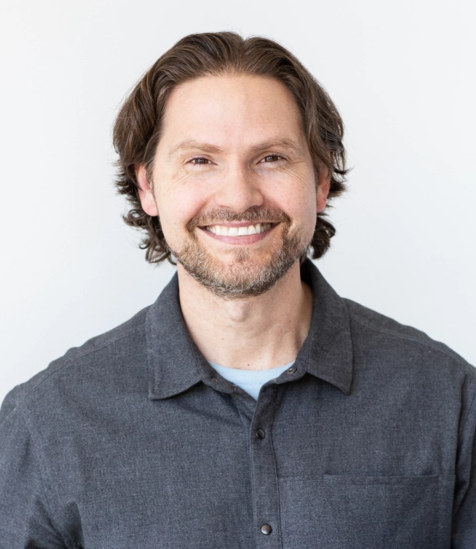
Karl Strovink, CEO of Blue Bottle Coffee Karl Strovink, photographed in editorial portrait. The smile of a man who got hired to run a coffee company and immediately asked the roaster to teach him.
The brief

The CEO of Blue Bottle Coffee grew up in Berkeley, learned strategy at BCG, sold sneakers at Converse for twelve years, and now spends his days deciding what oat milk does to a cortado. The throughline is patience. The output is precision.

A novice with a blue bottle.

Strovink runs a coffee company he didn't drink from until he was hired to run it. That is the single fact that explains everything else about how he operates. He arrived in 2019 as Chief Operating Officer and President for North America, a Berkeley kid coming home after twelve years inside the Nike machine at Converse, and he walked into Blue Bottle's roastery and asked the people working the drums to teach him what they knew. The novice CEO is now a posture, not a problem. It travels with him into every meeting where someone is about to explain why a thing has always been done a certain way.

The thing he runs is not large. Blue Bottle's footprint, even after the international push, is small relative to the mass-market players. The customer base is fanatical. The store designs lean Japanese. The blue bottle on the bag is a 17th-century reference to a Viennese café, kept around because James Freeman, the clarinetist who started the company in an Oakland garage, liked the story. Strovink inherited all of it - including the founder's allergy to anything that might cheapen the ritual - and proceeded, very carefully, to change a few things on purpose.

"Over coffee, you're becoming energized and you're becoming connected to one another."

The first thing he changed was the milk. In 2021 a handful of Blue Bottle cafés piloted oat milk as the default in any drink that called for milk. Customers who wanted dairy could ask. The pilot was not subtle in its implications - it shifted the operational center of gravity, the supply chain, the packaging, the menu boards, and a non-trivial percentage of the bean-to-cup carbon footprint, all at once. It worked. By May 2022 the program had gone company-wide across the U.S. Sixty-plus percent of customers stayed on oat milk. He had moved the herd by moving the gate.

The second thing he changed was the idea of what Blue Bottle would put in a package. Instant coffee, to a third-wave brand, is a dare. Strovink took the dare. Working with Nestlé's R&D bench, Blue Bottle launched an instant espresso that ships flat in a tin and rehydrates without theatrics. "It was at some level jarring for us," he told MIT Sloan, "and risky." He shipped it anyway. The purists shrugged. The customers ordered it.

To explain how a fundamentally conservative organization keeps green-lighting things like instant espresso and default oat milk, Strovink talks about two internal mechanics: a culture of yes, and the swarm. The culture of yes is the standing instruction that an idea, when raised, gets engaged with rather than batted down. The swarm is what happens when a high-stakes idea gets serious - finance, ops, marketing, R&D, retail, sourcing - everyone converges on the same problem in the same week, and the decision either accelerates or dies cleanly. Nobody hides behind a slow no.

The hometown setup.

The biography reads like a clean line. Berkeley public schools. UC Berkeley professor for a father. High school teacher for a mother. Vassar College for the undergraduate degree. MIT Sloan for the MBA, class of 2001. Boston Consulting Group for seven years as a Principal. Converse for twelve years - General Manager Canada, then GM Direct-to-Consumer North America, then VP Corporate Strategy, then VP Global Retail. Then the call to come back across the country and run a coffee company headquartered nine miles from where he grew up.

Coffee, to be clear, was already in the house. The Strovink kitchen made coffee a ritual long before the kid grew up to professionalize it. The Bay Area he came back to in 2019 had spent the intervening twenty years inventing the entire category Blue Bottle was now the figurehead of: third-wave coffee, single-origin sourcing, slow bars, paperless pour-overs, the whole liturgy. Strovink had spent those same twenty years learning how to run a direct-to-consumer business at scale. The two careers met at a roaster in Oakland.

"We are the cherry atop the cake."

That cake is Nestlé. In 2017 the Swiss food giant bought a controlling stake in Blue Bottle for roughly $425 million. By the time Strovink took the CEO seat in 2020, Blue Bottle had been a Nestlé property for three years. He talks about the relationship the way a smart founder talks about a useful board - the parent company puts a bench of food scientists at his disposal and otherwise stays out of the way. The instant espresso program is the most visible evidence that the arrangement works. The unspoken evidence is everything that hasn't changed: the cafés, the bag, the bean.

The pandemic decision.

March 2020 arrived. Blue Bottle's cafés - the cash machines of the brand - went dark for three months. Strovink decided that the baristas would keep getting paid. Full wages. Full insurance. Zero layoffs across the company. The math did not look good. The morality looked simple. "Just recognizing the asymmetry," he told Fortune later. The people who needed the income, needed the insurance, were the people working the counters; the company sat on a balance sheet backed by Nestlé. The asymmetry went one way. He acted in the other direction.

That was also the year Blue Bottle's digital business effectively doubled. The team that would have been pouring shots was instead packing subscription boxes, shooting brew-guide content, building out a Shopify Plus storefront, and figuring out how to teach a customer over the internet to extract espresso from a tin. A Friday morning all-hands - called coffee hour, naturally - kept the distributed team meeting over the product. The brand exited the pandemic with more baristas than it started with, more customers than it had before, and a CEO who had spent the worst quarter of his career proving that the soft thing and the hard thing can be the same thing.

The Asia push.

Tokyo. Yokohama. Kyoto. Seoul. Hong Kong. Shanghai. The Blue Bottle pin map outside the U.S. is, increasingly, an Asia map. Strovink has been candid in interviews that the international growth thesis is not about plonking a Brooklyn café into a new city; it's about reading what each market wants from the brand and then giving them exactly that and nothing more. The Japanese cafés - which arrived in 2015, before Strovink - have shaped the company aesthetically more than they have been shaped by it. The minimalist, light-flooded slow bar with the long timber counter is by now the Blue Bottle archetype, and it came from Tokyo.

The 2026 roadmap, as he has narrated it to Global Coffee Report, focuses on continued café openings across East Asia, deeper carbon-neutral and zero-waste commitments at the operational level, and using the parent's scale to lower the cost of doing the right thing on sourcing. The strategy is not novel. The execution is the moat. Strovink has built his career on operational fidelity inside premium brands. He is doing it again, with beans this time.

The through-line.

The word he uses most in interviews is care. Care for the people behind the counter. Care for the farmers two continents away. Care for the cup. It is the kind of word that, in the wrong mouth, sounds like a poster. In his mouth, it sounds like a job description. He has spent thirty years learning how operations can be a love language at scale - first at Gartner, then BCG, then Converse, now Blue Bottle. The asymmetry he keeps returning to is the one between a small team that needs you to act and a large parent that can afford for you to. He acts on behalf of the small team. That is, more or less, the whole strategy.

What's left to do is large. Blue Bottle still has a relatively small footprint relative to its cultural weight. The Asia rollout is years from done. The sustainability commitments are real engineering problems, not marketing copy. The brand has to keep being precise as it gets bigger - the precise thing that scales is the rarest object in retail. Strovink is the operator the company hired to find out whether such an object can exist. The clarinetist made the bottle. The novice is filling it.

It was at some level jarring for us, and risky.
- Strovink, on shipping instant espresso under the Blue Bottle name

A scoreboard, abbreviated.

0
Pandemic layoffs
Cafés closed for three months. Every barista kept on payroll, full wages, full insurance.
Digital growth
Blue Bottle's e-commerce business roughly doubled after March 2020 under his watch.
60%+
Oat milk share
Share of U.S. café drinks staying on oat milk after the default flip in 2022.
$425M
Nestlé deal, 2017
The acquisition that handed him, two years later, the keys and an R&D lab.
12
Years at Converse
From GM Canada to VP Global Retail. The DTC reps that bought him this job.
1,100
Blue Bottle employees
Roasters, baristas, designers, engineers, sourcing - the small army he runs.

From Gartner to the bean.

  • 1995-1997Research Director, Gartner.
  • 1997-1999M&A Director, Gartner.
  • 2001MBA, MIT Sloan School of Management.
  • 2002-2008Principal, The Boston Consulting Group.
  • 2008-2019Twelve years at Converse - GM Canada, GM Direct-to-Consumer North America, VP Corporate Strategy, VP Global Retail.
  • 2019Joins Blue Bottle Coffee as COO and President, North America.
  • 2020Becomes CEO. Three months later, every café in the U.S. closes. Nobody loses a job.
  • 2022Oat milk default rolls out company-wide. Instant Blue Bottle espresso ships.
  • 2023Featured speaker at MIT Sloan Alumni Online.
  • 2024-2026Continued Asia expansion. Zero-waste and carbon-neutral targets pushed deeper into operations.

Things he actually said.

On coffee, broadly

"Over coffee, you're becoming energized and you're becoming connected to one another."

On Blue Bottle inside Nestlé

"We are the cherry atop the cake."

On not firing baristas

"Just recognizing the asymmetry of people who needed income, and needed insurance, and security, working on our cafes."

On the instant espresso bet

"It was at some level jarring for us, and risky."

Small things, loud.

The kitchen table

Coffee was already at home.

Berkeley childhood. Professor father at UC Berkeley, schoolteacher mother. Coffee was ritualized in the house decades before Berkeley got its title as the third-wave epicenter.

The novice posture

He asked the roaster.

Walked into Blue Bottle in 2019 a self-described coffee outsider. Refused to perform expertise. Asked the people pulling shots to teach him from the bean up. It stuck.

Friday ritual

Coffee hour, literally.

Started a weekly all-hands he calls coffee hour. A distributed team meeting over the actual thing the company sells. Nothing about the name was a metaphor.

The swarm

Decisions move in a week.

His operating mechanic for high-risk launches: every function lands on the problem at the same time, the decision either accelerates or dies clean. No slow no.

The cake metaphor

Cherry, not cake.

Inside a $30B Nestlé coffee empire, he positions Blue Bottle as the small thing on top, not the structural thing below. The metaphor is also the strategy.

The Asia map

The aesthetic came from Tokyo.

The slow bar archetype - timber counter, light flooding, minimal signage - was shaped by the Japan stores. Strovink has not tried to ship Brooklyn to Tokyo. He has shipped Tokyo to everywhere.