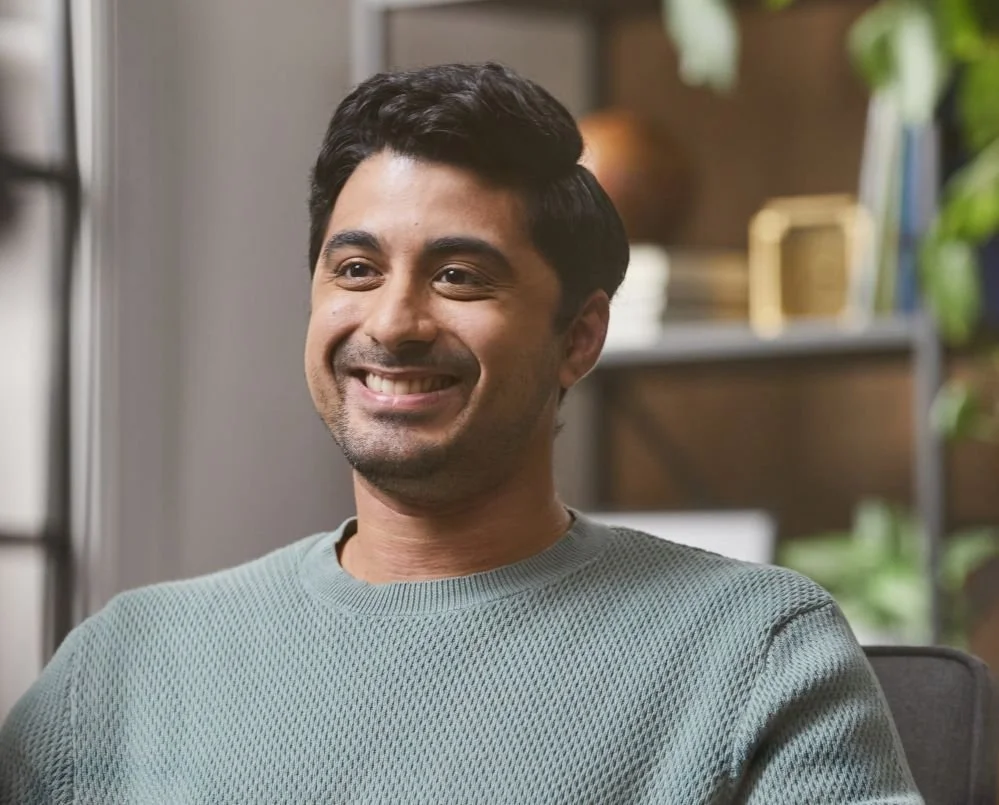
The Bagel That Started It All
Ryan Pandya became vegetarian as a teenager. Not reluctantly - with conviction. Animal welfare and environmental impact were not abstract concerns; they were the kind of thing that makes you skip the meat counter entirely. The veganism came later, and with it, a specific frustration: every dairy substitute he tried was an insult. The cream cheese was the worst offender. Pale, gummy, and entirely missing the point of cream cheese - it was the moment that pivoted a career.
Pandya was studying Chemical and Biological Engineering at Tufts University at the time, contributing to early research on tissue-engineered meat at the Kaplan Lab. He understood fermentation. He understood proteins. And he understood that the molecules in dairy - the casein and the whey - were not proprietary to cows. They were sequences. You could, in principle, teach a microbe to make them.
In 2014, two 22-year-olds showed up to a biotechnology accelerator called Synbiota in Cork, Ireland. Ryan Pandya from Boston. Perumal Gandhi, who had arrived at the same problem from a different direction - both convinced that making dairy without animals was not only possible but necessary. They had never met before. The accelerator introduced them. They formed a company within weeks.
The company they incorporated on April 28, 2014 was called Muufri - a phonetic wink at "moo-free." The name was playful. The science was serious. The plan was to use fermentation technology borrowed from the pharmaceutical industry to produce whey protein identical to what comes from a cow, without a cow ever being involved.
By 2016, the company had rebranded to Perfect Day - the name a nod to a Lou Reed song - and its ambitions had clarified. Rather than compete directly in the consumer dairy aisle, Perfect Day would become an ingredient supplier. The proteins were the product. The brands would be someone else's problem.
How You Build a Dairy Company Without Cows
Pandya and Gandhi started Perfect Day with a fundamental bet: that precision fermentation - the process of programming microorganisms like yeast or fungi to produce specific proteins - could be made commercially viable for food at scale. Experts were skeptical. The fermentation yields that would be needed to make the economics work were thought to be physically improbable.
Perfect Day's team proved those experts wrong by a factor of five to ten. The fermentation yields they achieved - five to ten times higher than what the industry thought achievable - changed the calculus entirely. That number is not an abstraction. It is the difference between an interesting science experiment and a scalable business.
"What we were trying to do was show this model of fermentation-derived dairy is fully ready to go and people are ready for it."
- Ryan Pandya, 2025The B2B pivot was not a retreat - it was a recognition of where the leverage was. Rather than build Perfect Day into a consumer brand itself, Pandya's team realized that the real opportunity was to become the ingredient supplier to the entire food industry. Major food and beverage companies - including Fortune 500 names across dairy, ice cream, and protein products - began licensing Perfect Day's proteins.
To validate the technology in the market, the founders also launched The Urgent Company as a separate consumer-facing venture. Its flagship product, Brave Robot ice cream, became the first commercially available animal-free dairy protein ice cream at scale - in eight flavors, on grocery shelves, at $5.99 a pint. The Bored Cow milk brand followed. These weren't permanent businesses; they were demonstrations. Proof that consumers would buy the product and that the taste was real.
In 2018, Perfect Day announced a partnership with Archer Daniels Midland for commercial-scale non-animal whey protein production. In 2020, Bob Iger - the former chairman of Walt Disney Company - joined the board. The company that started in a Cork accelerator had attracted the architect of modern Disney.
The Funding Arc
Nearly $800 million raised across a decade - from early-stage accelerator backing to a pre-Series E round that closed in early 2024, led by Temasek and Horizon Ventures.
Note: bars are illustrative per-round sizes, not cumulative. Total funding approximately $800M. Key backers include Horizons Ventures, Temasek Holdings, CPP Investment Board.
Ten Years, Then Letting Go
By 2023, Perfect Day had done something unusual in the food tech world: it had built a genuinely global supply chain for a novel protein, validated it across twelve or more product categories, attracted the biggest names in packaged food as customers, and maintained the kind of venture relationships needed to close an $800 million funding journey. The question Pandya started asking was not "what's next for Perfect Day" but "what's next for the technology itself."
The answer came in the form of nth bio - a subsidiary built to license Perfect Day's precision fermentation platform to other companies wanting to produce their own proteins. The technology had become so robust that it could be rented out. A decade of R&D turned into an infrastructure business.
"We really want to get off the need for venture capital, which I think is a healthy mindset. The way that we've always viewed it is that we're trying to build a business that could exist as a really strong public company."
- Ryan PandyaOn December 31, 2023, Pandya and Gandhi stepped away from Perfect Day's day-to-day leadership. After exactly ten years, the company they had built moved to new management - TM Narayan as interim CEO, with board co-chairs from Temasek and Horizon Ventures. The departure was not a failure. It was the natural inflection point between building a technology and institutionalizing it.
Pandya joined New Harvest as a Board Director, an organization focused on sustainable food innovation - the same network that had originally connected him to Gandhi back in 2014. The full circle is exact.
Quotes That Stuck
"Large food companies move kind of slowly."
"The overall impact that can be achieved here isn't necessarily in products that are entirely animal-free... companies wanted to use this ingredient to start to move their portfolio in that direction."
"Because of the incredible people behind this business, we've de-risked world-changing technology."
"We accomplished the mission to such an extent that we didn't feel the need to run consumer brands anymore."
What He Built
- Co-founded Perfect Day in 2014 - raised approximately $800M in total venture funding over a decade
- Named Forbes 30 Under 30, 2019
- Tufts University Alumni Award, 2020
- Achieved fermentation yields 5-10x higher than experts initially considered possible
- Built partnerships with Fortune 500 food & beverage companies across 12+ global product categories
- Co-created Brave Robot - the first mass-market animal-free dairy protein ice cream
- Launched nth bio to license precision fermentation infrastructure to third parties
- Attracted Bob Iger (former Disney chairman) to Perfect Day's board in 2020
- Partnered with Archer Daniels Midland for commercial-scale non-animal whey production (2018)