Aaron Walls had a problem that would resist an elegant spreadsheet. In his small Atlanta apartment, the summer heat was getting into his beer. The window air conditioner could not keep up. A second refrigerator would not fit. He was brewing at home, but the home was contributing rather more to the recipe than he wanted.
In 2008, that was an irritating domestic constraint. It eventually became the starting point for BrewJacket, a company he built with Matthew Goff and Evgeniy Tkachenko. Their answer was a compact device that controlled fermentation temperature without requiring the brewer to surrender another refrigerator's worth of floor space. A closet shelf would do when it was time to put the equipment away.
Today Walls is the co-founder and CEO of ZioSec, based in Boulder, Colorado. Its team tests AI agents by attacking them and develops defenses against attackers using AI. The move from a fermenting vessel to enterprise software covers considerable territory. Yet both businesses ask a practical question: what happens after you set a system running and stop watching every step?
That question gives his career a useful thread. There are machines, investors, students and a television appearance along the way. There is also the less glamorous work of explaining why an apparently simple product needs so much engineering. A countertop appliance looks pleasantly uneventful when it works. Uneventful is a demanding specification.
An apartment with no room for the obvious answer
Walls's early professional work involved modeling businesses rather than brewing equipment. Before Cornell, he was senior economist at PKF Hospitality Research, overseeing economic and financial modeling and helping develop and launch products. At Cornell's Johnson school, where he studied from 2012 to 2014, he became a BR Venture Fund manager and an Entrepreneurship and Innovation Institute Fellow.
This placed him on both sides of the entrepreneurial table. He was evaluating young companies while working on one of his own. Cornell's venture fund offered a setting where the appeal of a new idea had to coexist with due diligence. For a founder, the two activities make an instructive pairing: explain why your company should exist, then examine somebody else's explanation.
The first plan he worked on with Goff in an entrepreneurship class involved a chain of coffee carts. They abandoned it and turned to brewing. The coffee business stayed on paper; the temperature problem already existed in Walls's apartment. There was an advantage in starting with a nuisance he could describe without commissioning a market survey.
Walls, Goff and Tkachenko incorporated BrewJacket in 2013 after meeting at Cornell. The team brought together business and technical experience, and the company passed through Cornell's eLab accelerator. Their work also reached the patent system: all three are named on a liquid-temperature-control application published in January 2015, based on an earlier provisional filing.
The device's physical arrangement was admirably economical. An insulating jacket wrapped around the fermentation vessel. A rod extended into the liquid. Solid-state heat exchange moved heat, with the equipment regulating the chosen temperature. The system occupied the space of the vessel it served. In an apartment, the difference between an additional appliance and an attachment can decide whether an idea is welcome at all.
“I didn’t have room for a second refrigerator.”Aaron Walls, on his 2008 brewing setup
First control the temperature. Then reconsider the whole kitchen.
BrewJacket Immersion reached the market in 2015; Immersion Pro, which could heat as well as cool, followed in 2016. Walls's Kickstarter campaign for the Pro ran from February 16 to March 17 that year. It attracted 323 backers and $76,988 in pledges against a $65,000 goal. Those are campaign figures, a record of support for a particular product rather than a measure of the company's eventual fortunes.
With BEERMKR, the team broadened the problem. Instead of asking a homebrewer to add better temperature control to existing equipment, it designed a countertop brewing system. The ambition was to reduce the equipment, handling and monitoring required to make a small batch. The name dispensed with several vowels; the engineering had rather fewer opportunities for economy.
The company worked on flexible fermentation vessels and on preparing hops so their desired bitterness could be achieved without boiling them during the customer's brewing process. Patent applications name Walls alongside his collaborators. These details matter because the convenience lived in several places at once: ingredients, containers, temperature management and the steps left for the person at home.
A 2019 demonstration at the Housewares Show presented an open brewing system with a separate dispenser. Ingredient kits offered a guided route for customers who wanted it. The appliance and dispenser were then advertised together for $399 after Kickstarter. That historical price describes the offer at that point, when the product was still making its way toward customers.
For Walls, the progression was substantial. A brewing enthusiast's equipment problem had grown into a consumer product whose appeal depended on making a complicated process feel manageable. The product had to be explained at trade shows, financed before broad adoption and delivered to people who had supported its development. Each stage demanded a different kind of confidence.
Eight minutes on television, a much longer argument
On May 7, 2021, Walls and fellow Cornell MBA alumnus Brett Vegas appeared on Shark Tank with BEERMKR. They asked for $500,000 for a 2 percent stake. The arithmetic implied a $25 million valuation, giving the Sharks a financial question to consider alongside the beer.
The pitch had been filmed in September 2020. At that point, only 24 machines were out in the world. A product whose case depended on customer use had relatively little customer evidence to bring into the room. Kevin O'Leary made an offer; the team declined it and left without a deal.
The television segment lasted about eight minutes, drawn from roughly an hour of discussion. Editing compressed the questions, explanations and negotiations into a small piece of entertainment. A viewer could see the outcome while missing much of the argument. Founders already spend their days shortening complicated stories; television supplies a particularly firm deadline.
Walls later described the timing as the central difficulty. He would have preferred to pitch after shipping, with sales and customer reviews available. He also counted the exposure to millions of viewers as a success. The assessment allowed room for a missed partnership and a useful public introduction in the same event.
Customers could become shareholders
BEERMKR launched an equity crowdfunding campaign on the day the episode aired. Walls explained that customers had already asked whether they could invest, and that earlier Kickstarter campaigns had given the team experience managing crowdfunding. He also saw an advantage in a product category people could understand without specialized training.
The distinction between the two kinds of backing was consequential. A Kickstarter supporter helps fund a project in anticipation of its promised reward. Equity crowdfunding invites investment in the company. For an appliance business, the same person might be interested in both the machine on the counter and the enterprise behind it. The paperwork, naturally, has other ideas about simplicity.
The company's later offering materials reported nearly $1 million in 2021 sales. By 2023, Walls was publicly seeking introductions to companies, family offices, partners and breweries in Germany, citing consumer interest there. His request was specific about the people he wanted to meet. International interest was something to work on through conversations and relationships.
- 2013 / BrewJacketHow do you control fermentation in a small space?
- 2021 / Shark TankHow much evidence can you bring to the pitch?
- 2024 / Yampa ValleyHow can experience help other founders?
- Now / ZioSecHow do AI agents behave under attack?
The founder returns to the classroom
Walls also returned to the institutions that had helped him develop his own company. In summer 2016, he spoke to participants in Rev: Ithaca Startup Works' hardware accelerator about raising Kickstarter funds. Several teams were considering their own next steps toward a product launch. His experience was directly relevant to the problems on their desks.
At Cornell, he became an eLab advisory board member. During a 2023 student startup trip to Silicon Valley, Walls and investor Justin Smithline answered students' questions and shared their entrepreneurial experience. The relationship had come full circle: an accelerator alumnus was now helping newer founders think through their ventures.
In June 2024, the Routt County Economic Development Partnership announced him as managing director of the Yampa Valley Entrepreneurship Center. He succeeded Randy Rudasics, who had served for 17 years. The appointment brought his startup experience into a regional organization supporting small businesses across Routt County and the Yampa Valley.
This part of his career enlarges the picture beyond the appliance. He has worked with student ventures, hardware teams and a local business-support organization. Advice in these settings has to meet people where their businesses actually are. A founder preparing a crowdfunding campaign needs a different conversation from a student choosing which idea to pursue.
A new kind of unattended system
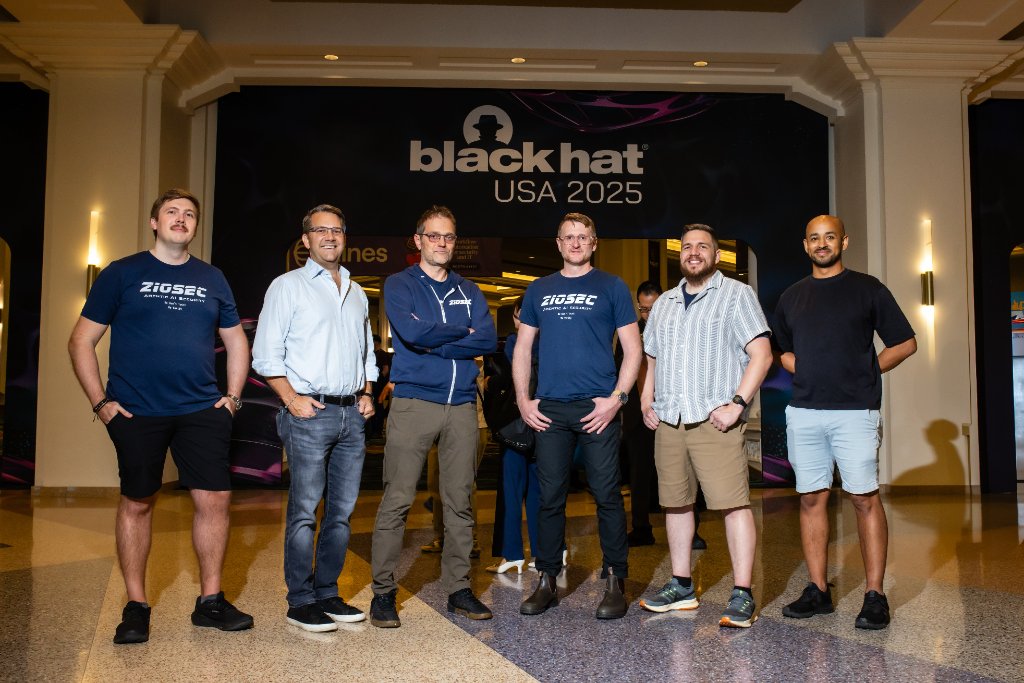
ZioSec pairs Walls with co-founder and CTO Andrius Useckas, whose background includes more than 25 years in penetration testing. Its leadership team also includes security architect Alex Gatz and researcher Javier Rivera. The company describes itself as venture-backed and operates with a remote team, while identifying Boulder as its headquarters.
In May 2025, Walls and Useckas appeared on This Week in Startups to discuss AI-agent security. Walls also published a LinkedIn article that month addressed to developers building agentic AI. His public work now concerns systems that can use tools and act within a business, and the testing required before those systems are trusted.
By 2026, he was taking that subject to AI Agent Conference NYC. His announced talk title was a compact expression of the approach: “Break Your AI Agent Before They Do”. He described conversations with enterprise security teams that needed evidence about whether custom agents were ready for production.
There is a change in consequence here. With BrewJacket, a controlled process served a homebrewer's recipe. With ZioSec, testing addresses software behavior and access inside organizations. The resemblance is a way to read Walls's career, rather than a claim that fermentation and cybersecurity share a technical solution. His work has repeatedly returned to what a system will actually do once it leaves the demonstration.
The apartment problem had a clear physical limit: no space for another fridge. His present business deals with boundaries that are less visible. Across those years, Walls has built products, sought backing, explained a difficult television pitch and helped other entrepreneurs do their own explaining. The enduring question is still a practical one. What must be controlled before you can leave the thing alone?