BREAKING  Elemind exits stealth with $12M seed NEUROTECH  A headband that reads your brainwaves uBEAM  She raised ~$40M to charge phones with sound PATENTS  25 granted, more pending VISION  An app store for the brain BREAKING  Elemind exits stealth with $12M seed NEUROTECH  A headband that reads your brainwaves uBEAM  She raised ~$40M to charge phones with sound PATENTS  25 granted, more pending VISION  An app store for the brain
Meredith Perry
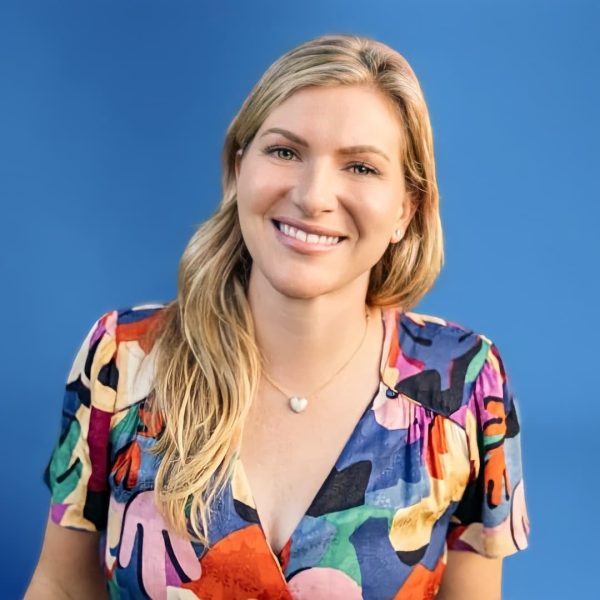
Meredith Perry. She has spent a career pitching ideas physicists called impossible - and getting the smart money to agree with her anyway.
Inventor / Founder / CEO

Meredith Perry

She once tried to beam electricity through the air. Now she builds a headband that listens to your brainwaves and quietly talks them to sleep.

Share LinkedIn X Facebook Instagram
25
Patents granted
$40M
Raised for uBeam
$12M
Elemind seed
48%
Faster to sleep*
The Story

She is trying to give your brain an off switch

A small band sits across the forehead. It is not measuring steps or heart rate. It is reading the electrical chatter of your brain, frame by frame, and the moment it spots the restless alpha waves of a mind that will not settle, it answers with a short burst of pink noise through the bone of your skull. The wave gets interrupted. The thinking quiets. You drift off. Meredith Perry describes the feeling in five words: noise cancellation for the brain.

That headband is Elemind, the company Perry co-founded and runs as CEO. It came out of stealth on February 6, 2024 with $12 million in seed money and a claim that sounds like science fiction read aloud at a sleepover: sleep on demand, without a pill. The investor list reads like a who's who of people who fund the improbable - Village Global (whose backers include Jeff Bezos, Reid Hoffman, Bill Gates and Ann Wojcicki), LDV Partners, and the MIT Investment Fund among them.

Perry did not invent the neuroscience alone. Elemind grew out of an MIT classroom, where David Wang and Nir Grossman were teaching how to measure brain oscillations without cutting anyone open. The neuroscientist Ed Boyden, a co-founder, supplied the mathematical techniques that became the company's core intellectual property. What Perry brought was the thing she has always brought: the conviction to wrap a wild idea in a product and sell the world on it.

We wanted to create a nonchemical option for people who wanted to get great sleep without side effects - all the benefits of natural sleep without the risks.

- Meredith Perry, on why Elemind exists

How the headband actually works

Strip away the marketing and Elemind is an elegant feedback loop. EEG electrodes pick up the brain's electrical signals. Custom electronics estimate the phase of those waves - where, exactly, each oscillation sits in its cycle. Then a bone-conduction speaker fires pink noise timed to land at just the right moment, a technique called phase-locked acoustic neurostimulation. The goal is to dampen the high-frequency waves of wakefulness and coax the slow waves of deep sleep. When the device senses you have fallen asleep, the audio quietly tapers off on its own.

The Mechanism

Read. Estimate. Pulse. Fade.

01
Read

EEG electrodes detect the brain's electrical activity in real time.

02
Estimate

Algorithms calculate the phase of your brainwaves moment to moment.

03
Pulse

Pink noise fires through bone conduction, phase-locked to interrupt wakeful alpha waves.

04
Fade

Once sleep is detected, the audio automatically tapers to silence.

Before The Brain

The dinosaurs, the aliens, and the impossible beam

Long before neurotech, Perry studied paleobiology and astrobiology at the University of Pennsylvania. She did research with NASA - the Ames Research Center and the Astrobiology Institute - and co-authored two papers with the NASA scientist Christopher McKay, the kind of work that asks whether life could exist somewhere other than here.

Then, in 2011, still an undergraduate with no engineering degree, she won Penn's PennVention competition for an ultrasonic wireless power system. She called it uBeam: the idea that you could send electricity across a room as sound and charge a phone with no cord at all. She demonstrated it on stage at the All Things Digital conference that year and turned it into a company.

The reaction split the room in half, and stayed split. TechCrunch founder Michael Arrington called uBeam "the closest thing to magic I've seen." A physicist countered that it was "an impossible idea." Perry kept going. She raised roughly $40 million from Founders Fund, Andreessen Horowitz, Mark Cuban and Marissa Mayer. The press wondered aloud whether she was the next Elon Musk. The engineering, critics argued, ran into hard limits of physics and safety, and a commercial product never arrived. In September 2018 she stepped down as CEO as the company pivoted to licensing.

It would be easy to read uBeam as a cautionary tale. Perry read it as training. The next idea she chased - moving energy and information not across a room but across the membrane of the skull - would carry the same signature: a claim experts found hard to believe, backed by investors who could not look away.

How do we move beyond sleep into what could become an app store for the brain - where you download a brain state like you download an app?

- Meredith Perry, on the long-term vision

Who it is for

Perry frames Elemind's audience in plain terms - not patients in a clinic, but people in everyday binds. "Whether you're a breastfeeding mom that might not want to take a sleep drug, somebody traveling across time zones that wants to fight jet lag, or someone that simply wants to improve your next-day performance," she has said. The pitch is control. Sleep, reframed as a setting you can adjust.

It is a big bet, and Perry has made big bets her whole career. She holds 25 patents and counting, sits on the board of the J. Craig Venter Institute, and has collected the usual garlands for people who refuse to wait their turn: Forbes 30 Under 30, Fortune's 40 Under 40 Mobilizers, Vanity Fair's New Establishment, Fast Company's Most Creative People. The honors are nice. The headband shipping is the point.
In Her Words

Quotable

"It cuts through my rumination, quiets my thinking. It's like noise cancellation for the brain."

"All the benefits of natural sleep without the risks."

"An app store for the brain, where you download a brain state like you download an app."

"Someone that simply wants to improve your next-day performance and feel like you have more control over your sleep."

Good To Know

Five things that explain her

// 01

She trained as a paleobiologist and astrobiologist before ever touching hardware.

// 02

She co-authored astrobiology research with NASA scientist Christopher McKay.

// 03

Her first invention beamed energy through air; her second beams sound through bone.

// 04

Elemind's pink-noise pulses ride bone conduction, not your ears.

// 05

25 patents span fields from wireless power to neurostimulation.

The Arc

A career of impossible ideas

Pre-2011
Researches astrobiology with NASA Ames and the NASA Astrobiology Institute; co-authors two papers with Christopher McKay.
2011
Wins Penn's PennVention for an ultrasonic wireless power system, names it uBeam, demos it at All Things Digital and founds the company.
2011-2018
Builds uBeam, raising roughly $40M from Founders Fund, Andreessen Horowitz, Mark Cuban and Marissa Mayer.
2018
Steps down as uBeam CEO as the company pivots toward B2B licensing.
2020
Co-founds Elemind with Ed Boyden, David Wang, Nir Grossman and Heather Read.
2024
Elemind exits stealth on Feb 6 with $12M seed; launches its phase-locked acoustic sleep headband.