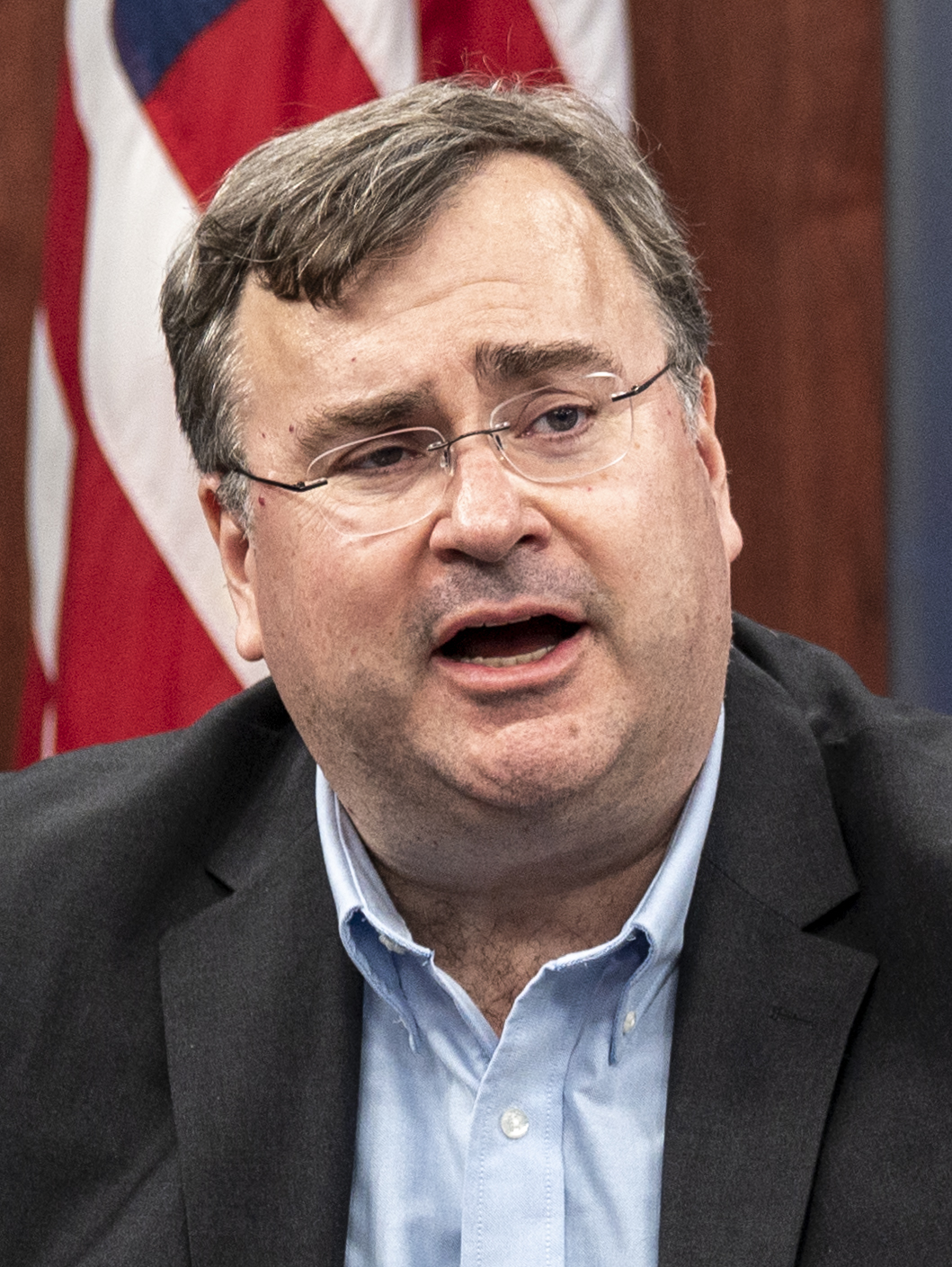
// Profile
Born in Palo Alto. Raised on tear gas and epistemology.
His parents were leftist activists who brought him, as an infant, to street demonstrations where tear gas occasionally drifted through the crowd. By fourteen, Hoffman had enrolled in the Putney School - not for sports or college prep, but to study epistemology. He wanted to know how we know what we know.
This is the detail that explains everything that came after.
Stanford gave him a degree in Symbolic Systems and Cognitive Science. Oxford gave him a Master's in Philosophy on a Marshall Scholarship. Neither gave him an MBA. He has been, from the start, less interested in accumulating certainties than in building systems that could hold uncertainty - networks of people, companies, and ideas resilient enough to survive the things nobody predicted.
You throw yourself off a cliff and assemble your airplane on the way down.
- Reid HoffmanThe First Draft of the Social Internet
In 1994, before anyone had uttered the phrase "social network" as a product category, Hoffman joined Apple to work on eWorld - an early attempt at an online community. It went nowhere. He then moved to Fujitsu. Then, in 1997, he co-founded SocialNet.com, one of the first online dating and professional matching platforms. It was ahead of its time by about six years.
Peter Thiel later called it "ahead of its time." Hoffman calls it "not right." The distinction matters: being early is not the same as being wrong, but it is often just as expensive.
SocialNet (1997) predated MySpace by six years. Facebook by seven. It is tempting to read that as a cautionary tale. Hoffman reads it as calibration - he learned what users actually wanted in an online identity before anyone else had to learn it in public.
PayPal, and the People Who Changed Everything
In 2000, Hoffman joined PayPal as COO, then became SVP of Business Development. He worked alongside Peter Thiel, Elon Musk, Max Levchin, and a cohort of people who would go on to collectively rewrite what "tech company" meant. This group - later nicknamed the PayPal Mafia - would found or fund Tesla, SpaceX, YouTube, Yelp, Palantir, and LinkedIn.
Hoffman was the connective tissue. He is the one who introduced Thiel to Mark Zuckerberg in 2004 and helped arrange Thiel's $500,000 investment in Facebook - one of the most consequential early bets in the history of venture capital. He also invested himself.
He was not just present at the creation. He was doing the introductions at the door.
LinkedIn: The Professional Network That Wasn't Supposed to Win
In December 2002, Hoffman co-founded LinkedIn in his living room with a handful of people from SocialNet and Fujitsu. The idea was simple and, at the time, widely dismissed: a network for professional identity and career relationships, not social ones. LinkedIn launched in May 2003.
For years, Silicon Valley considered LinkedIn "boring." Facebook was the exciting one. Twitter had the cultural cachet. LinkedIn was where you went when you needed a new job - awkward, transactional, slightly embarrassing.
And then: 900 million users. A 2016 acquisition by Microsoft for $26.2 billion. The boring one turned out to be the most durable one.
Hoffman stepped back as CEO in 2007, becoming Executive Chairman - a pattern he would repeat. He is constitutionally a builder of systems, not a manager of them. The machines he builds are designed to run without him.
If you are not embarrassed by the first version of your product, you've launched too late.
- Reid HoffmanBlitzscaling: The Doctrine
In 2018, Hoffman published Blitzscaling with Chris Yeh, codifying a strategy that Silicon Valley had been practicing instinctively for a decade. The idea: in winner-take-all markets, speed matters more than efficiency. You scale before you are ready, burn capital before you are profitable, and accept managerial chaos as the price of being first.
It is deliberately uncomfortable advice. Most business books tell you to get the foundations right before you build. Blitzscaling says: sometimes the foundations have to catch up to the floors above them.
// The Blitzscaling Playbook
- Prioritize speed over efficiency in the face of uncertainty
- Accept chaos and imperfect information as operating conditions, not failure states
- Grow your team faster than your processes can handle - then fix processes on the fly
- Raise capital to fund speed, not to achieve comfort
- First to scale in a winner-take-all market takes the market
The Philosopher Behind the Investor
Hoffman has said, more than once, that his Oxford philosophy degree is worth more to him than an MBA ever would have been. The training was not in what to think but in how to think - how to stress-test arguments, hold contradictions without collapsing, and move clearly through uncertainty.
This shows up in how he invests. He backed Airbnb at Series A. He invested in Aurora Innovation (autonomous vehicles), Helion Energy (nuclear fusion), and has stakes in more than 37 AI companies as of 2023. He is not chasing consensus. He is looking for companies that seem implausible and are therefore underpriced - which is, structurally, a philosophical claim about epistemology.
His personality traits read like a character sheet from the tabletop RPGs he grew up playing. As a young man, he worked at Chaosium - the game company behind Call of Cthulhu. He is an obsessive Settlers of Catan player. He says the game teaches the same skills as running a company: resource allocation, diplomacy, timing, and the willingness to trade from a position of apparent weakness.
The PayPal Mafia - Where Are They Now?
Masters of Scale: The Podcast That Became a Platform
In May 2017, Hoffman launched Masters of Scale - a podcast in which he interviews the founders of companies like Airbnb, Netflix, and Apple about the counterintuitive lessons behind rapid growth. It accumulated tens of millions of downloads and spawned a book, a live event series, and a media company.
In 2023, he launched a second podcast, Possible, with Aria Finger. Where Masters of Scale focuses on the mechanics of building, Possible focuses on the question of what AI can do for humanity - the optimistic case, made rigorously, without pretending the concerns are not real.
Both podcasts reflect a consistent Hoffman preoccupation: the technology is only as interesting as the human question underneath it. What does it mean to build something that outlasts you? What does it mean to give people access to things previously available only to the privileged few?
The fastest way to change yourself is to hang out with people who are already the way you want to be.
- Reid HoffmanThe AI Bet: Bigger Than LinkedIn
In 2022, Hoffman co-founded Inflection AI with Mustafa Suleyman (formerly of DeepMind) to build AI systems capable of genuine natural conversation. In 2023, he co-wrote Impromptu - an entire book - with GPT-4 as co-author, before most people had heard the name ChatGPT. The book arrived as a kind of demonstration: this is not science fiction, this is already happening.
In January 2025, Hoffman took a sharper aim. He co-founded Manas AI with oncologist Dr. Siddhartha Mukherjee (author of The Emperor of All Maladies) and raised a $24.6 million seed round from General Catalyst and Greylock. The mission: use AI to compress cancer drug discovery from decades to years. Breast cancer. Prostate cancer. Lymphoma. The timelines that have killed people while the science caught up.
That same month, his book Superagency: What Could Possibly Go Right With Our AI Future hit the New York Times bestseller list. The title is a provocation. The book is an argument that the question "what could go wrong?" has received enough attention. "What could go right?" deserves equal rigor.
Hoffman's 2026 prediction: AI agents will move beyond coding and customer service into every domain of knowledge work. Lawyers, analysts, doctors, researchers - all will routinely run parallel AI agents to handle work that previously required weeks. He calls biology the breakout AI application of this decade. Manas AI is the bet behind that thesis.
The Books
-
2012
The Start-Up of YouWith Ben Casnocha. NYT/WSJ bestseller. Treat your career like a startup.
-
2014
The AllianceWith Casnocha and Chris Yeh. NYT bestseller. Rethinking the employer-employee relationship.
-
2018
BlitzscalingWith Chris Yeh. The doctrine of speed-first growth.
-
2021
Masters of ScaleLessons from the podcast. Counterintuitive lessons on growth.
-
2023
ImpromptuCo-written with GPT-4. WSJ bestseller. An AI wrote half of a book about AI.
-
2025
SuperagencyWith Greg Beato. NYT bestseller. The optimistic case for AI, made with evidence.
The Billionaire Who Still Drives a Sensible Car
For years after becoming a billionaire, Hoffman drove the same Acura he had owned before LinkedIn's IPO. His most recent "upgrade": an Audi S7. He does not own a yacht. He does not have a second home collection. His Saturday nights are locked - weekly date nights with his wife Michelle, a healthcare professional he married in 2004. One non-negotiable item on the calendar of a man who fills calendars with other people's companies.
Peter Thiel once staged an informal intervention because Hoffman's health habits were concerning enough that friends organized a personal trainer for him. The detail is not embarrassing. It is characteristic: Hoffman is genuinely not performing the lifestyle. He is genuinely absorbed in the work.
In 2018, he signed The Giving Pledge, committing the majority of his wealth to philanthropy. He has donated $20 million to the Chan Zuckerberg Biohub, co-founded the pro-immigration lobbying group FWD.us, funded the MIT Disobedience Award, and sits on the boards of Kiva.org, Code for America, and Opportunity@Work.
In 2024, he created ReidAI - a deepfake AI version of himself, trained on 20+ years of his writing and interviews, to explore what it might feel like to have a conversation with your own accumulated thought. The experiment was not promotional. It was philosophical: what does it mean to externalize a mind?
What He Is Actually Building
Hoffman's career has a consistent internal logic that only becomes visible in retrospect. At Apple, he tried to build an early network. At SocialNet, he built a pre-social-network. At PayPal, he was the connector. At LinkedIn, he built the professional identity layer of the internet. At Greylock, he invested in the layer above that - the applications. At Inflection and Manas, he is now working on what he believes is the next layer entirely: AI that can do knowledge work, including the hardest kind - finding cures for cancer.
This is not a diversified portfolio strategy. It is one thesis, executed across three decades. The thesis: human potential is vastly underutilized because of access and coordination failures. Networks fix access. Blitzscaling fixes coordination. AI fixes the ceiling on what a single human being can accomplish. Each chapter follows from the previous one.
He has said he chose not to have children because he could not do this work and also be the kind of parent he would want to be. That is a sentence most people say privately, if they say it at all. He says it plainly, without apology. The career is the life he chose. He is building things that outlast him. In his framework, that is not a substitute for family. It is a different kind of legacy - one designed for a larger number of beneficiaries.
An individual without information can't take responsibility. An individual with information can't help but take responsibility.
- Reid Hoffman// Words Worth Keeping
On the Record
Blitzscaling is always managerially inefficient. But you have to be willing to take on these inefficiencies in order to scale at speed.
Culture is critical because it influences how people act in the absence of specific directives - or when those rules reach their breaking point.
I couldn't do this if I had children. It's a trade I made consciously and I don't regret it.
// Strange But True
The Details You Won't Find in the Press Release
He worked at Chaosium - the company behind Call of Cthulhu - before any of the tech jobs.
He arranged Peter Thiel's $500K Facebook investment in 2004 - possibly the best favor in Silicon Valley history.
He drove the same Acura for over a decade after becoming a billionaire. No upgrade until the Audi S7.
He co-wrote a book with GPT-4 before most people had a GPT account. It became a WSJ bestseller.
His parents took him to protest marches as an infant. Tear gas at age zero. Epistemology at fourteen.
He deepfaked himself in 2024 to have a conversation with his own accumulated thought. Purely as a philosophical experiment.
// Where to Find Him