corporate-cards
(35)
Airbase Put the Company Card on a Leash
The spend-management pioneer bundled approvals, bills, expenses and cards before that became the category’s house style. Now it lives inside Paylocity for Finance, with serious controls, quote-only pricing and a few rough edges worth testing.

Brex Put the Expense Report on a Short Leash
The startup card grew into a control room for company money. Its best trick is catching bad spend before finance has to chase it, but the grown-up platform deserves a grown-up buying process.

Spendesk Puts a Bouncer at the Company Wallet
Employees get a faster route to the company card. Finance gets to decide the route, the limit and who waves it through.

Mesh Wants Your Expense Report to Disappear
Mesh is trying to make travel and expenses vanish from the employee’s to-do list without making control vanish from finance. The idea is sharp; the buying decision still comes down to integrations, geography and whether the mobile experience can keep up.
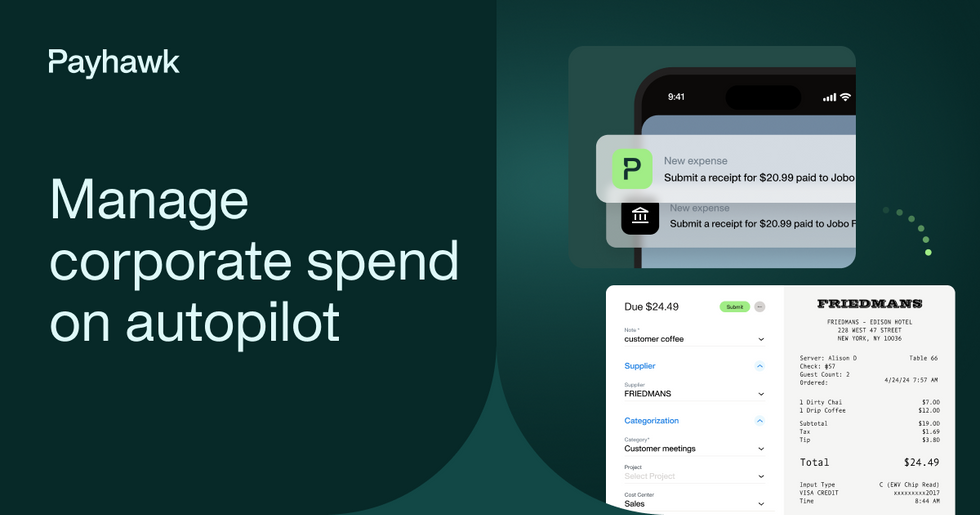
Payhawk Wants Your Company Card to Do the Paperwork
Payhawk bolts policy, receipts, approvals and accounting data to the moment money moves. For finance teams juggling countries and entities, that can turn the company card from a plastic problem into a useful control surface.

TravelPerk Grew Up. Your Expense Report Came Along.
The booking tool once known as TravelPerk now wants the whole awkward trip - approval, receipt, invoice and all. Here is where Perk earns its keep, where the fees bite, and who should put it on the shortlist.

Cristóbal Grinbergs Is Turning the Expense Report Into a Relic
A failed machinery marketplace taught the Chilean founder where to look: not for glamorous problems, but for the stubborn little tasks that quietly swallow a finance team’s week.

Brent Jackson Put the Corporate Card Inside the Bank
He began with a better card for small businesses. Then customer conversations led Torpago toward a quieter, more consequential job: helping banks issue modern cards under their own names.

BILL and Brex Are Fighting for the Same Finance Desk
One began with invoices, the other with cards. Their race toward an all-in-one finance desk reveals what CFOs gain, what they risk, and why ownership now matters.

The Card Network Ate Center. Emburse Ate Everyone Else.
Two expense-software empires took opposite roads to the same prize. Emburse spent years stitching together aging brands like Certify and Chrome River; Center simply handed the keys to American Express - and finance teams are the ones who have to live with the difference.

Brex and Modern Treasury Belong in Different Rooms
Brex helps employees spend company money; Modern Treasury helps software and finance teams move and track it. The useful question is not which one wins, but where each one belongs in your stack.

Brex and Rippling Want Your Spend for Different Reasons
Brex built a finance stack and learned to choose its customers. Rippling built a workforce system and turned spend into one more reason to stay.

Ramp and BILL Are Fighting to Own Every Company Dollar
BILL bought Divvy to move beyond paying invoices. Now its fight with Ramp is a contest over who gets to control business spending before, during, and after the swipe.

Ramp and BILL Are Selling Two Different Kinds of Control
The expense tools look increasingly alike. The choice comes down to whether finance wants a standalone command center or spend management inside a broader back-office suite.
NetSuite Already Has The Controls So Why Bolt On Ramp
NetSuite bakes spend controls and approval workflows straight into its general ledger. So the finance team's real decision is not which tool wins, but whether to run the module they already own or bolt Ramp's card platform on top of it.

Odoo or Airbase Is a Bet on Who Owns Your Stack
One lets you assemble and host the machinery of your business. The other streamlines company spending inside Paylocity's expanding finance suite. The real choice is control versus convenience.

Stop Comparing Finance Tools Feature by Feature
Brex, Rho, Rippling Spend, Wise Business, and Arc overlap on paper. The useful choice begins with the workflow your company cannot afford to get wrong.

The Spend Stack Is Shrinking Before Your Eyes
Ramp, BILL and Emburse still compete for the finance desk. Airbase and Center now live inside larger companies, changing what buyers are really choosing.
AppZen
AppZen built its business around an unglamorous but expensive corporate blind spot: the receipts, invoices and card charges that finance teams cannot inspect one by one. Now its AI is moving from flagging suspicious spend to resolving the work itself - while leaving the company’s existing finance stack in place.

Cardda
Cardda is a Chilean fintech (YC W22) building all-in-one spend management for Latin American businesses. It combines virtual and physical corporate cards, automated local and international transfers, reimbursements, and accounts payable in one dashboard, plus a payments API for mass payouts. It plugs into Chile's SII tax service and ERPs like SAP, Oracle, Defontana and Nubox, giving finance teams real-time control over company spending.

Florin
Florin is a financial operating system for startups that brings banking, payments, cards, and treasury into a single account. Rather than reselling another bank's rails, the company is building the underlying infrastructure end to end, so money moves in real time on a single ledger it owns. Florin launched out of Y Combinator's Summer 2026 batch with an invite-only membership for venture-backed companies.

Transfez
Transfez is a Jakarta-based fintech that makes sending money across borders cheaper and faster for Indonesians, letting users move funds to 50+ countries in 26 currencies. Founded in 2019 by Edo Windratno and Bondan Herumurti, it grew from a consumer remittance app into a group that also runs Jack, a business finance platform for corporate cards, international payments, payroll and expense management. Transfez is a Y Combinator W22 company backed by East Ventures and BEENEXT.

HALA
HALA is a Riyadh-based fintech building the 'bank of the future' for small and medium enterprises across Saudi Arabia and the wider MENA region. Founded in 2018 by Esam AlNahdi and Maher Loubieh, it combines business IBAN accounts, card issuance, POS and soft-POS payment acceptance, expense management and SME financing into a single platform regulated by the Saudi Central Bank (SAMA). HALA serves more than 140,000 businesses, processes over $8 billion in annual transactions, and in September 2025 raised a $157 million Series B - one of the largest fintech Series B rounds in the Middle East - at a reported valuation near $900 million.

Weel
Weel (formerly DiviPay) is a Sydney-based fintech that gives Australian and New Zealand finance teams an all-in-one corporate card and spend management platform. It combines virtual and physical Visa cards, budget controls, approval workflows, accounts payable automation and AI-powered receipt and invoice capture so businesses can track every expense - from a coffee to a large invoice - in real time and sync it straight to their accounting system.

Everett Cook
Everett Cook is the co-founder and CEO of Rho, a New York-based financial operations platform that combines business banking, corporate cards, payments, and expense management for growing companies. Before founding Rho in 2018 with Alex Wheldon, Cook spent roughly a decade in global macro investing, leading research at multi-billion-dollar funds and working in the orbit of figures like Steve Cohen and Michael Bloomberg. Raised in a New York finance family, he blends the discipline of a trader with an entrepreneurial streak that started at age 14, and has raised more than $200 million to build banking software for real, operating businesses rather than consumers.

Malte Rau
Malte Rau is the Berlin-based CEO and co-founder of Pliant, a B2B fintech that lets companies and banks issue physical and virtual credit cards and plug the resulting data straight into their finance stacks. A former risk manager and fintech investor, he founded Pliant in February 2020 with Fabian Terner and has grown it into a modular, API-first card-issuing platform serving thousands of European businesses. In April 2025 the company closed a $40 million Series B led by Illuminate Financial and Speedinvest to fund its expansion into the United States.

TERA
TERA is an AI-native spend management and finance automation platform that gives businesses a single command center for corporate cards, accounts payable, procurement, and payments. Built around a team of autonomous AI agents that capture receipts, code bills, enforce policy, route approvals, and post to the ERP, TERA aims to replace spreadsheets and manual finance ops with real-time, self-driving workflows. Founded by Madhu Tera in Acton, Massachusetts, the company markets itself to finance teams across healthcare, manufacturing, e-commerce, logistics, and agritech.

Eric Glyman
Eric Glyman is the co-founder and CEO of Ramp, the New York fintech that turned the corporate credit card upside down by rewarding companies for spending less, not more. A Las Vegas native and Harvard economics graduate, he first built the price-tracking app Paribus, sold it to Capital One in 2016, then launched Ramp in 2019 with Karim Atiyeh and Gene Lee. In under seven years he grew Ramp to more than 40,000 business customers and a $32 billion valuation, championing a vision of AI-run 'self-driving money' where finance work happens in the background without anyone asking.

Madhu Tera
Madhu Tera is the founder and CEO of TERA (tera.cloud), an AI-powered finance automation platform that bundles corporate cards, expense management, accounts payable, procurement and payments into a single command center for finance teams. Before founding TERA in 2018, Madhu spent years as a solutions architect inside the engine rooms of American finance - Fidelity Investments and State Street - an experience that shaped a conviction that small and mid-size businesses are badly underserved by traditional banks. TERA today reports more than 1,200 customers across healthcare, manufacturing, e-commerce, agritech and logistics.

Ramp
Ramp is a finance operations platform that combines corporate cards, expense management, bill pay, procurement, travel, treasury and accounting automation into one system. Built to save businesses time and money, it uses AI to cut manual finance work, enforce spend controls, and surface savings. Founded in 2019 by Harvard friends Eric Glyman, Karim Atiyeh and Gene Lee, Ramp serves 70,000+ organizations and reached a $44B valuation in June 2026.