Spendesk is for the moment when a company card stops being a useful rectangle and becomes an office legend. Nobody knows who has it. Somebody has photographed it. A subscription renews on it every month. Finance discovers the purchase after the receipt has begun its new life in a trouser pocket. Spendesk replaces that folklore with a controlled route from “I need this” to “it is in the books.”
The fit is a growing company whose employees buy software, travel, equipment and services across teams or legal entities. Spendesk says its core market runs from about 50 to 1,000 employees. That is the zone where a shared card and an expense spreadsheet have become brittle, yet an enterprise procurement suite can feel like installing airport security around a sandwich.
The pitch is decentralised spending with central rules. An employee requests money, an approver sees the context, and the approved amount can land on a physical or virtual card. Receipts are captured against transactions, invoices follow an approval path, and accounting gets structured data instead of a monthly mystery parcel. Buyers looking only for reimbursements may be shopping too high up the shelf. Buyers trying to connect purchasing, payment and close will understand why the platform has expanded.
Why it exists: the receipt chase is a design failure
Expense software traditionally starts after money leaves. Spendesk tries to start before. Approval policies, limits and dedicated payment methods push the decision toward the purchase request, when somebody can still ask why the thing is needed. Finance sees committed spend earlier; the employee avoids borrowing the CFO's card or funding the company from a personal account.
That timing is the product's real idea. A single-use virtual card can cover a one-off purchase. A recurring card can isolate a software subscription. A multi-use card, where available, can hold a project or trip budget. Physical cards handle the ordinary world. Each method can carry a limit and approval history. If a subscription card is compromised, the team need not replace the payment method for every vendor attached to one shared number.
What you can put through it
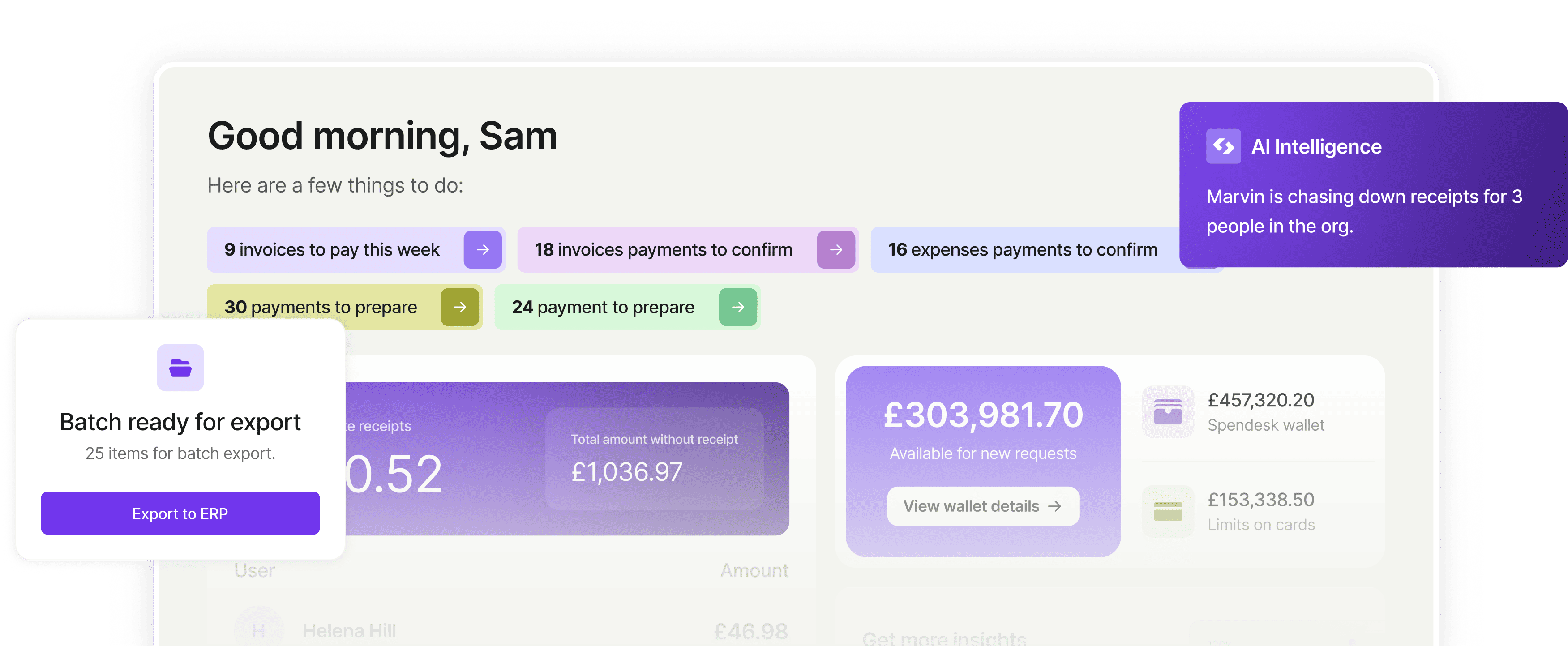
Cards get the shop-window treatment, but the useful scope is wider. Employees can submit out-of-pocket claims from iOS or Android, photograph receipts and receive reminders when proof is missing. OCR reads receipt details and matching connects evidence to the relevant transaction. Finance can monitor budgets in real time rather than waiting for a ledger export to reveal that the off-site acquired a fog machine.
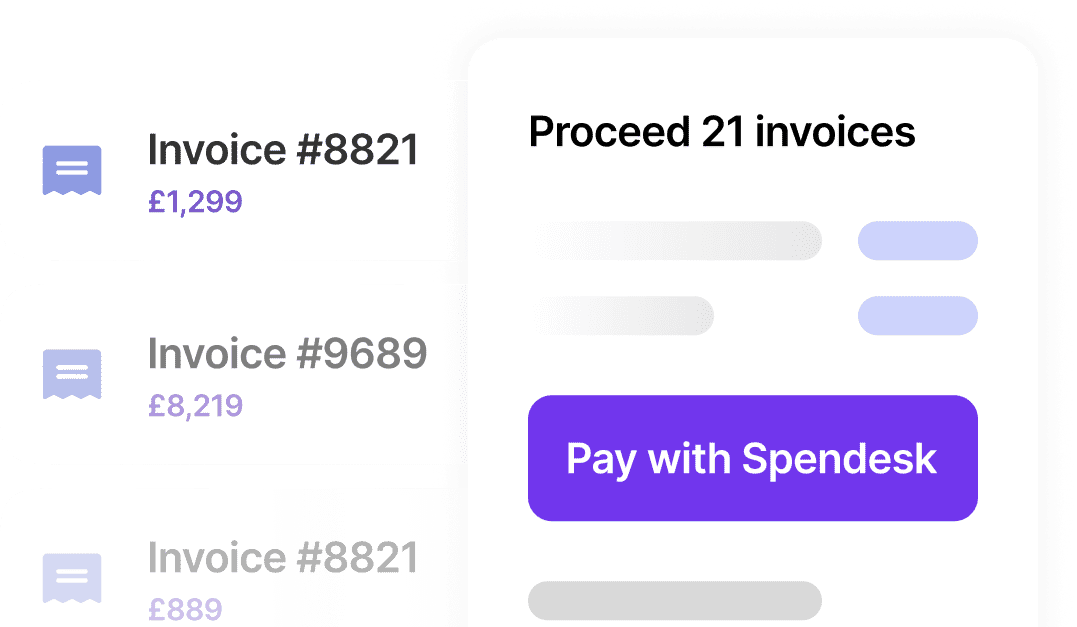
Accounts payable handles invoice capture, routing and payment. Approved suppliers can be paid in more than 70 currencies. In June 2026, eligible AP customers also gained the ability to generate a single-use virtual card from the invoice review flow, useful when a supplier accepts cards more readily than transfers. Differences are surfaced before payment, when correction is cheaper than recovery.
Procurement is the newer limb. Spendesk bought Paris procurement startup Okko in April 2024 and folded vendor onboarding, collaborative purchase requests, purchase orders and contract renewal tracking into the route. This matters because expense control cannot stop maverick spend that has already become a contract. The combined system reaches back to the first request.
The useful new stuff, minus the robot fog
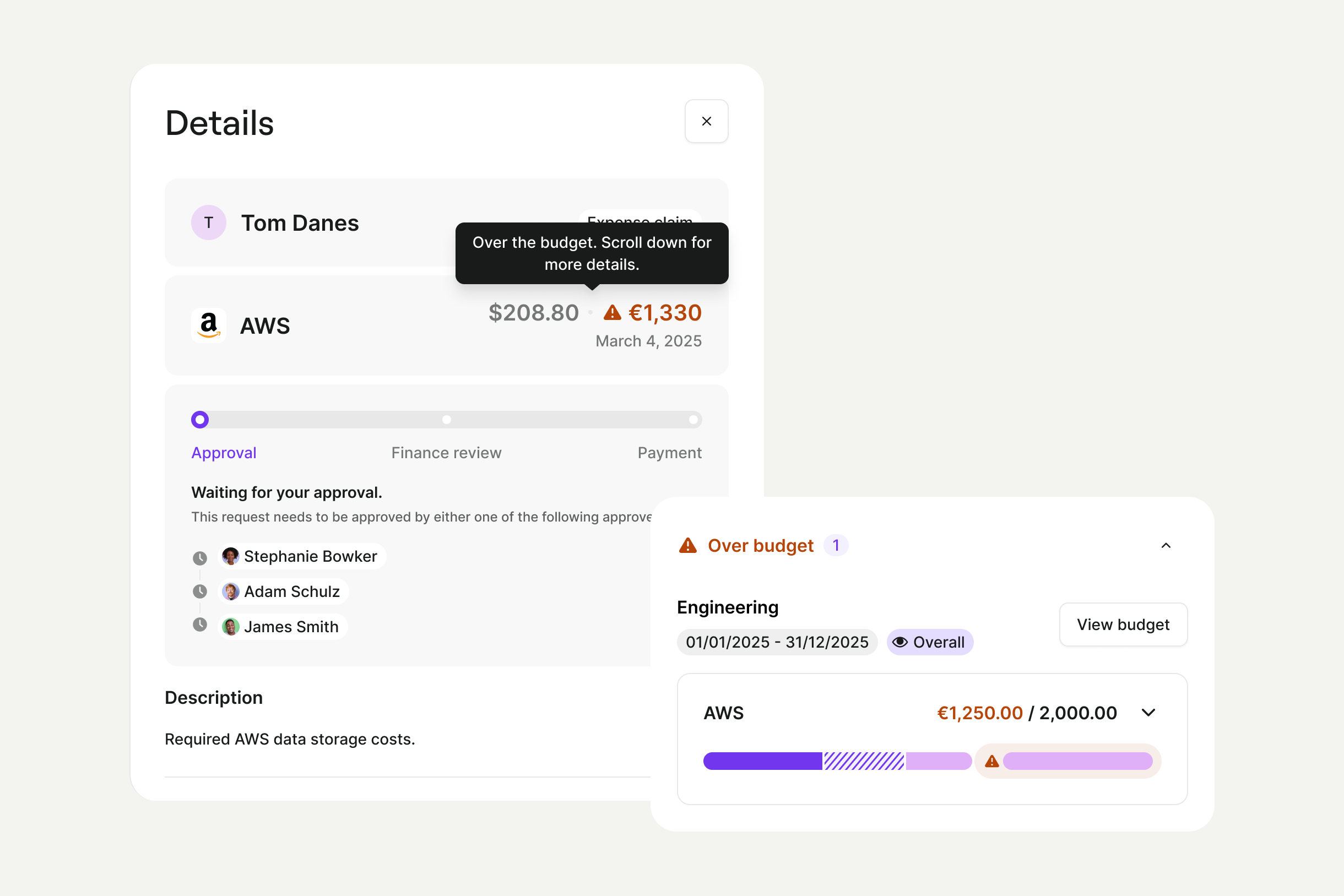
Spendesk's 2026 release work adds Budgets 2.0, two-way Microsoft Dynamics 365 Business Central syncing, a Pennylane connection, custom bank-journal exports, authenticator-app login codes and a consolidated spend-policies screen. Budget owners can see the effect of a request as it happens, while finance can import an existing budget file with AI-assisted setup. Some budget features require a paid add-on.
AI Connect is the sharper update. It uses the Model Context Protocol to expose live, permission-aware Spendesk data to assistants including ChatGPT, Claude and Dust. A controller can ask for top suppliers, overdue payables or cost-centre spend without exporting a stale spreadsheet first. As of July 2026, the connection is read-only. It can answer and structure reports, but it should not be described as an autonomous bookkeeper changing records. Spendesk's public roadmap discusses write actions, but direction is not delivery.
“The clean interface is the employee benefit. The earlier decision is the finance benefit.”Our read on Spendesk's advantage
The price is behind a curtain
Spendesk publishes the shape of its pricing, not the number. A fixed monthly subscription buys platform access; variable charges follow card purchases, invoice payments and expense claims. Paid plans include unlimited users, and the Foundations package includes unlimited physical and virtual cards plus core controls. Procurement, AP, advanced workflows, deeper multi-entity management, HR and ERP connections, and AI automation can be add-ons.
That structure can suit a company with many occasional spenders because adding a person does not add a per-seat fee. It also makes a public price comparison impossible. Ask for a model based on last year's real transaction counts, expected entities, payment mix, implementation and every required module. Request the renewal mechanics in writing. A low platform fee can become secondary if ordinary activity is metered.
What users like, and where the shoe rubs
The broad review pattern is favorable. In late August 2026, Capterra showed 4.7 out of 5 from 228 reviews, including 4.8 for ease of use. G2 showed 4.6 from more than 400 reviews. Reviewers repeatedly mention fast receipt uploads, understandable approvals and virtual cards. The same sources surface card-acceptance problems, rigid workflows in more complex setups, imperfect receipt recognition and inconsistent support experiences.
Very easy to use for uploading receipts.Verified Capterra review, edited for length
Approval across multiple entities is very elementary.Capterra reviewer, February 2025
Trustpilot is a smaller and harsher pool, with 2026 complaints about slow support, card access and cancellation handling alongside positive comments about invoice tools. Those reports deserve attention without being mistaken for a statistically balanced sample. Reddit discussion is thin. One UK accounting thread said Spendesk was liked during demos, though the company chose Pleo because incoming managers already knew it. Familiarity often beats a feature matrix.
The right response is a test plan, not star arithmetic. Ask Spendesk for references resembling your size, countries, accounting system and entity structure. Run real card transactions in common merchant categories. Time a support escalation. Map who owns funds held for cards in each market. Payment services differ: Spendesk Financial Services serves the EEA, Adyen the UK, and Sutton Bank the US.
The shortlist: compare operating models
| Option | Start here when | Interrogate in the demo |
|---|---|---|
| Spendesk | European mid-market teams want procurement, cards, AP and expenses connected. | Total metered cost, entity flexibility, card acceptance and support. |
| Pleo | Employee cards and a familiar European expense experience lead the brief. | Procurement and AP depth for your future scope. |
| Payhawk | International entities and ERP-led finance operations dominate. | Local payment coverage, implementation and module pricing. |
| Ramp or Brex | A US-centered company values card economics and domestic financial products. | Exact availability and accounting fit in every operating country. |
| SAP Concur | A large enterprise prioritises established travel and expense processes. | Employee usability, rollout effort and pre-spend controls. |
Do not choose by feature-list length. Decide whether the center of gravity is employee cards, procurement, global entities, US credit, travel or enterprise expense. Then test the awkward workflow that happens every Friday at 4:57 p.m. Spendesk makes a persuasive case when the brief crosses several stages of the purchase, particularly for a European business that has outgrown disconnected tools.
A five-question buying guide
- Where does control need to begin? If approval after payment is already too late, request-to-pay coverage matters more than a prettier expense form.
- How complicated is the organisation? Draw every entity, currency, budget owner and substitute approver. Make the vendor reproduce that map.
- What does accounting need? Verify field mapping, taxes, credit notes, amortisation, daily sync behavior and the recovery path when an export fails.
- How will employees actually pay? Check merchant acceptance, mobile flows, wallet support, limits and the process for emergency top-ups or disputes.
- What will a normal year cost? Model fixed fees, transaction volume, add-ons, implementation, foreign exchange and renewal terms together.
Verdict: buy the workflow, not the card
Spendesk's central proposition is the continuity between need, permission, payment, evidence and accounting. The interface lowers the burden on employees, while virtual-card types and approval rules give finance practical levers before money moves. Procurement and AP make it relevant beyond the expense team; multi-entity controls and integrations give it room to follow a company through its awkward middle years.
The caveats are ordinary but material. Pricing needs a sales conversation. Reviewers report card and support problems worth testing. Complex approvals can expose rigidity. AI Connect is useful precisely because its current boundary is clear: query live records, respect permissions, leave write access for later.
For a 50-to-1,000-person European company whose finance staff are acting as human middleware between cards, inboxes, spreadsheets and an ERP, Spendesk belongs on the shortlist. A tiny team needing simple reimbursements can spend less and carry less machinery. A US-first business should compare domestic card platforms. Everyone else should arrive at the demo with a dreadful invoice and no patience for theatre.