The old company-card ritual depends on memory, luck and a wallet full of thermal paper. Someone buys train tickets on Tuesday. The receipt becomes a pale accordion by Friday. Finance asks about it three weeks later, when nobody remembers whether the coffee was for a client, a candidate or an especially ambitious solo breakfast. Pleo moves that question to the moment of purchase.
An employee taps a physical or virtual card, gets a prompt, snaps the receipt and adds the detail finance needs. The transaction appears in the company dashboard while the story is fresh. Managers can review it, bookkeeping data can travel to the accounting system, and the employee does not have to lend the company money until payday. That timing shift is the whole product in miniature.
Pleo is aimed first at European businesses whose spending has outgrown one shared card and a spreadsheet but does not deserve an enterprise software expedition. It now stretches from simple cards into reimbursements, mileage, invoices, recurring vendors, budgets, cash visibility and multi-entity control. The pitch is broad. The reason people like it remains refreshingly small: fewer humans chasing other humans for tiny rectangles of paper.
Start with the whyWho should put Pleo in the wallet?
The cleanest fit is a company with distributed buyers and a finance team that wants control without becoming a purchasing help desk. Think agencies buying props, salespeople on trains, operators renewing software, and managers feeding a project team. Give each person a card, set the boundary, and collect evidence immediately. A three-person firm can use Starter, but the product becomes more interesting once the number of cardholders makes manual reconciliation feel like a recurring practical joke.
Pleo is also worth a look when card spend, employee-paid expenses and supplier invoices currently live in separate tools. Its feature set puts those flows in one review environment. That does not automatically make it your best option. A US-first company should start with US-native products. A large SAP estate may prize Concur's reach. A complex multinational should compare Pleo's country coverage and multi-entity controls with Payhawk, Spendesk, Soldo and others before admiring the app.

The daily loopA card tap becomes accounting evidence
Pleo's design joins the payment and the paperwork instead of asking users to reunite them later. Cards can be physical, virtual or dedicated to a vendor. Finance can set individual limits and, on higher plans, more detailed controls. After purchase, mobile receipt capture and email-based Fetch try to match the document to the transaction. Teams can require a category, cost centre, note or other field before an expense is complete.
Review rules can route spend by team or tag. AI expense review, available on the top UK plan at the time of writing, checks fields against company guidance and flags possible problems. This is a sensible use of automation: point a human toward the odd purchase rather than declaring every sandwich innocent. Pleo can also freeze cards when receipts stay missing, which is effective in the same way a locked biscuit tin is effective.
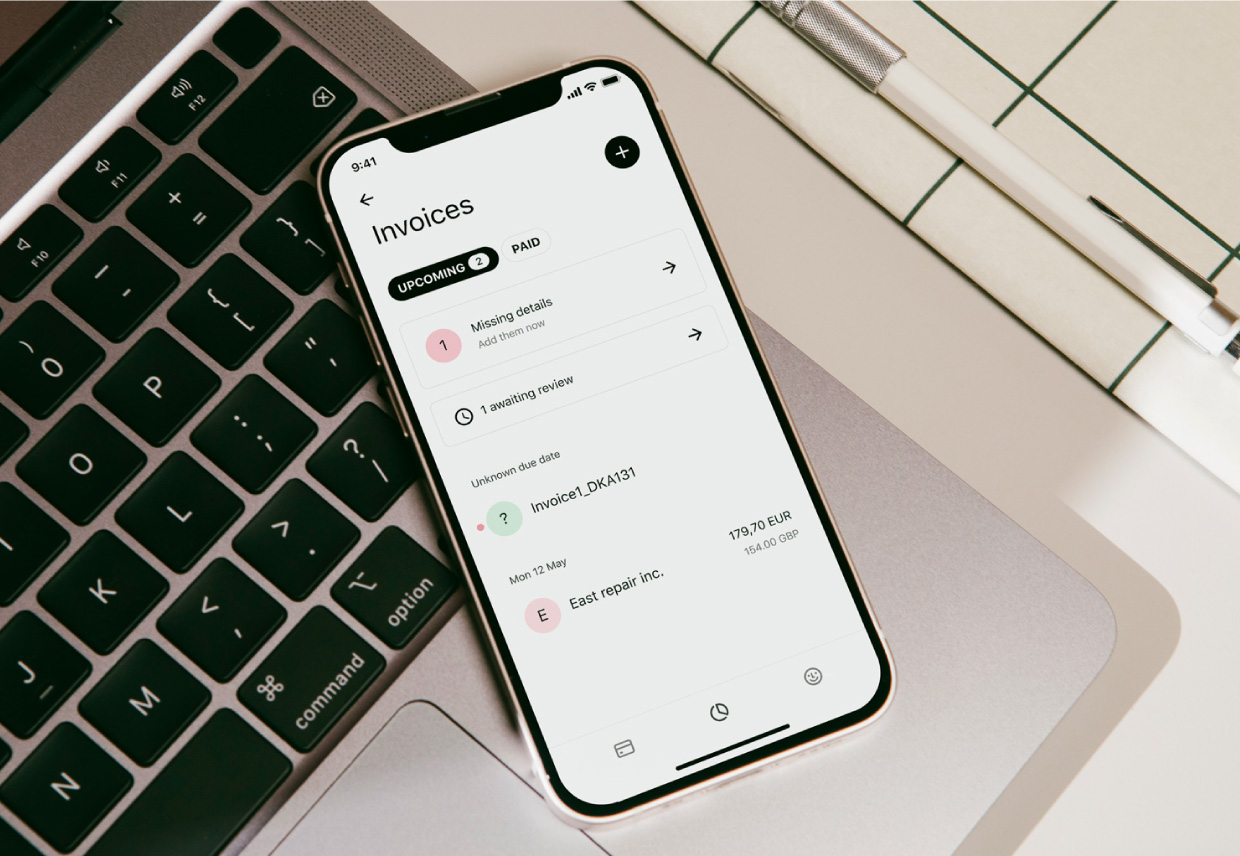
Out-of-pocket expenses enter the same stream. Employees without a card can be invited to submit claims, mileage can be calculated from a journey, and approved reimbursements can be scheduled. Accounts payable brings invoice OCR, duplicate detection, approvals and payment scheduling. Vendor cards give recurring suppliers their own controlled number, with default accounting values that reduce repetitive categorisation.

The buyer's bitFour plans, several calculators
Pleo publishes country-specific pricing, a welcome habit in finance software. On the UK page checked for this review, annual billing put Starter at £9.50 a month for no more than three users. Essential was £39 a month including three users, then £11 for each additional user. Advanced was £99 plus £15 per extra user. Beyond was £199 plus £18 per extra user. Monthly prices and other countries differ.
| Plan | Best reason to choose it | The catch to inspect |
|---|---|---|
| Starter | Cards, invoice handling, live expenses and accounting connections for a tiny team. | Three-user ceiling, one vendor card and the least forgiving transaction fees. |
| Essential | Reimbursements, mileage, flexible limits, approvals and recurring-vendor tracking. | Per-user pricing begins to matter as the cardholder list grows. |
| Advanced | Budgets, advanced card controls, HRIS links and multi-entity management. | A large step up from Essential before extra-user costs. |
| Beyond | AI review, spend insights, purchase orders, more sub-accounts and hands-on support. | Premium price; test whether the extra automation removes enough real work. |
Subscription price is not the final number. The pricing page lists fees for foreign exchange, invoice payments, direct reimbursements and some administrative events. Cashback and credit limits depend on eligibility. Ask for a sample invoice based on your actual mix of users, entities, card currencies, reimbursements and supplier payments. Then multiply the little percentage by a real year of spending. Tiny type enjoys a growth spurt inside spreadsheets.
What users sayThe love is real; so are the paper cuts
Review sites are unusually warm. G2 showed 4.7 out of 5 from more than 1,400 reviews; Capterra showed 4.8 from 199. Ease of use, quick setup, visibility and simple receipt uploads recur in positive comments. That matters because expense software is communal: the elegant finance dashboard fails if the person at the airport refuses to use the mobile app.
“Very simple and easy to understand interface for employees and management.”
Accounts payable manager, retail / December 2025Users report occasional slow receipt scans, imperfect Fetch matching, card or app hiccups, and uneven support response times.
Patterns across G2, Capterra, Trustpilot and RedditTrustpilot was more mixed at 3.8 from roughly 1,550 reviews when checked, with recent praise for individual support agents beside severe complaints about delayed resolutions and disputed money. Different review sites attract different moments in the customer journey, so the gap is not a clean verdict. It is a reason to test support: ask who owns fraud claims, which channels your plan includes and what happens when a card fails during travel.
The product succeeds when employees feel trusted and finance can still see the fence.YesPress verdict
From shoeboxes to agentsA good origin story, still in motion
Jeppe Rindom and Niccolo Perra started Pleo in Copenhagen in 2015 after working at Tradeshift. Rindom has traced the problem back to his teenage years, matching faded receipts from shoeboxes to statements at his father's accounting business. According to a later founder interview, the pair incorporated a company before settling on an idea, briefly tried payroll software and discovered that an early self-service launch could acquire customers faster than their unfinished operation could serve them.
The company won the Pioneers Festival startup competition in 2016, reached unicorn status after a $150 million round in 2021, then raised another $200 million at a reported $4.7 billion valuation. Growth was not tidy. Pleo cut roles in 2022 and again during a 2026 reorganisation. Meanwhile, the customer claim moved above 40,000, and investor Kinnevik reported annualised recurring revenue of €164 million with gross margin above 80% in Q4 2025.
In June 2026 Pleo announced finance agents intended to handle policy checks, invoices, treasury monitoring and bookkeeping, escalating exceptions to people. The direction fits the product's history, though buyers should judge shipped behaviour rather than vocabulary. Recent practical releases may be more immediately useful: scheduled monthly reimbursements, quicker approvals, original-currency export filters, consolidated cash views, stronger permissions and a clearer expense history. A September brand and navigation refresh acknowledged that the once-simple card product now has many rooms.
The fieldWhat makes Pleo distinct?
Pleo's edge is the combination of European payment coverage, friendly employee interactions and finance controls that can grow without immediately feeling like procurement machinery. Spendesk and Payhawk cover similar territory, with Payhawk often shortlisted for international and multi-entity complexity. Soldo leans into controlled cards and wallets. Moss is strong in Germany. Concur brings enterprise breadth. Ramp and Brex deserve attention for US-centred businesses and are pushing further abroad.
The decision should follow your awkward cases. Which product handles your local accounting package? Can it issue cards in every employing entity? How does it treat VAT, per diem, cash withdrawal, travel deposits and foreign exchange? Does the approval model match the company you have, or the org chart someone wishes you had? Pleo's attractive surface is a benefit, but plumbing wins month-end.
The bottom line
Pleo is a strong candidate for a European small or midsize business ready to replace shared cards, reimbursement drift and end-of-month receipt theatre. It gives employees useful autonomy while moving controls and evidence closer to the purchase.
Choose it when adoption matters as much as policy, your accounting integration works properly, and the all-in cost survives a realistic model. Compare alternatives if you operate beyond Pleo's footprint, need deeper procurement, expect complex multi-entity workflows or require a support arrangement with explicit escalation. The smartest pilot is not the happiest card tap. It is the quietest month-end.