The expense report has always been a small tax on having a job. Buy lunch, photograph the receipt, choose a cost center, explain the lunch, wait for approval, then discover that accounting still has a question. Payhawk's proposition is that the transaction should arrive with its administrative entourage already attached: policy, receipt, category, approver and a clean route into the ledger.
That makes it less interesting as a flashy employee perk and more interesting as plumbing. Payhawk combines company cards with reimbursements, supplier bills, procurement, business travel, budgets and accounting integrations. Employees get a mobile app and cards. Finance gets rules before money moves and data after it does. The strongest case appears when a company has several entities, several currencies and an ERP that nobody wants polluted by mystery coffee.
Who should keep reading?
Good fit: international, mid-market and enterprise teams that want one policy layer across cards, invoices, travel and purchasing. Think twice: tiny companies wanting transparent month-to-month pricing or a simple receipt app. Payhawk has a small-business program, but its center of gravity is plainly more complex finance.
The card is the opening scene
Payhawk began in Sofia in 2018 with Hristo Borisov and Boyko Karadzhov; Konstantin Dzhengozov joined as co-founder and CFO. Borisov had noticed his own forgotten software subscriptions after leaving Telerik. The first idea was a virtual card that could stop companies overspending on the same kind of digital cupboard clutter.
The founders built an MVP in five days, then spent €8,000, more than half their budget, on Amazon gift cards to persuade CFOs to test it. The research delivered a better problem: finance leaders did not merely want subscription brakes. They wanted visibility over all company spend. The first customer, a one-person Belgian firm, requested a meeting at Web Summit to check that the team was not running a scam. Within six months, Payhawk says it had customers in 16 countries.
There was also a less photogenic chapter: more than 60 investor rejections and a point when the company was roughly 30 days from running out of money. Earlybird, now Bek Ventures, eventually invested. In 2022 a $100 million extension took its Series B to $215 million and valued Payhawk at $1 billion, making it Bulgaria's first unicorn. Its current careers page lists $239 million raised, more than 450 employees and nine offices.
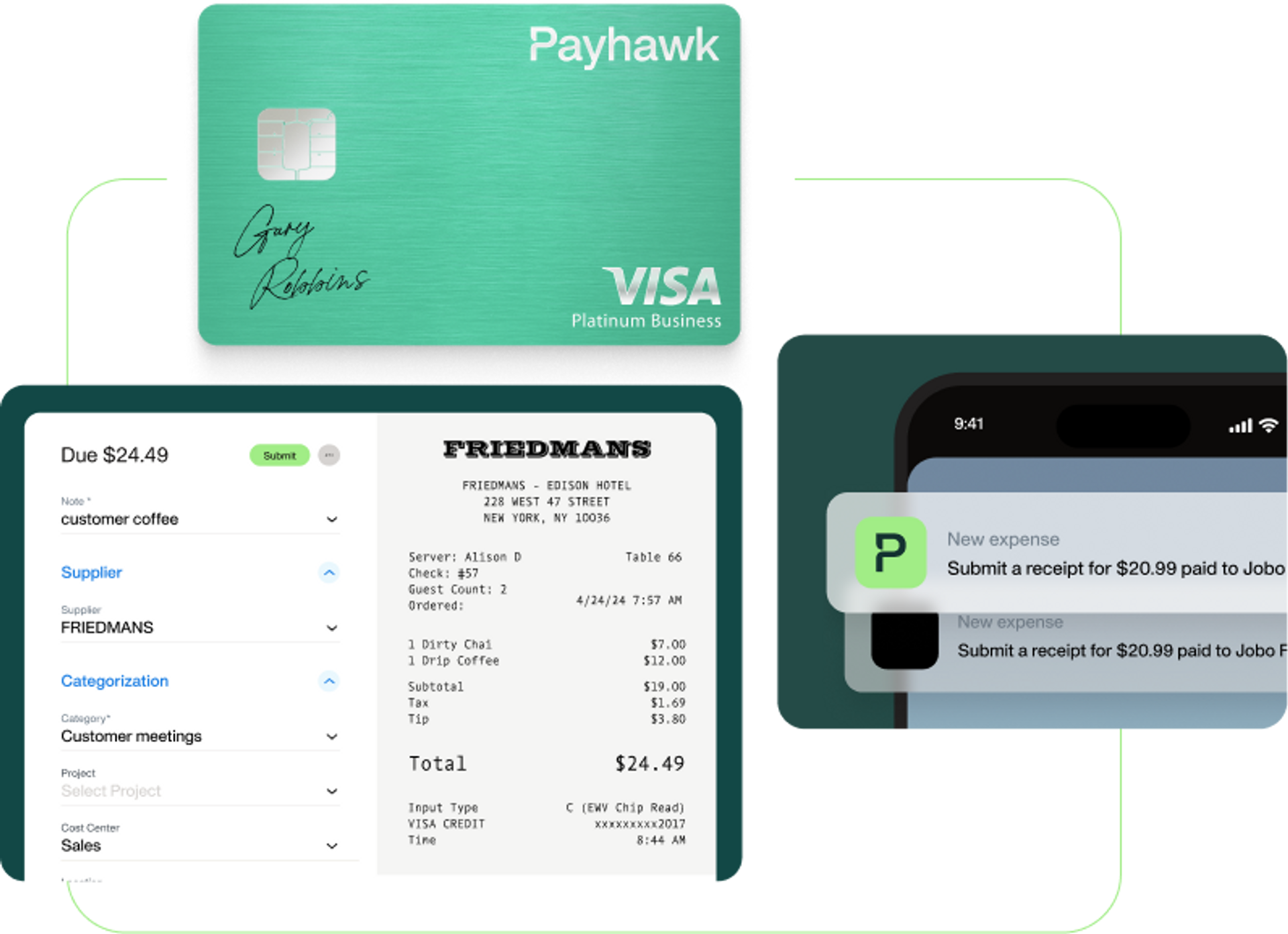
What happens after somebody taps?
A card purchase can trigger a phone notification asking for the receipt. Payhawk extracts invoice or receipt data, applies required fields, checks policy and sends the item through an approval path. Finance can set limits by merchant, category, team or budget. Physical, virtual, team and single-use cards are available in supported markets, with Apple Pay and Google Wallet support. Companies can also connect certain existing card programs rather than replacing every piece of plastic.
One swipe, three jobs
creates spend
and approval
to the ERP
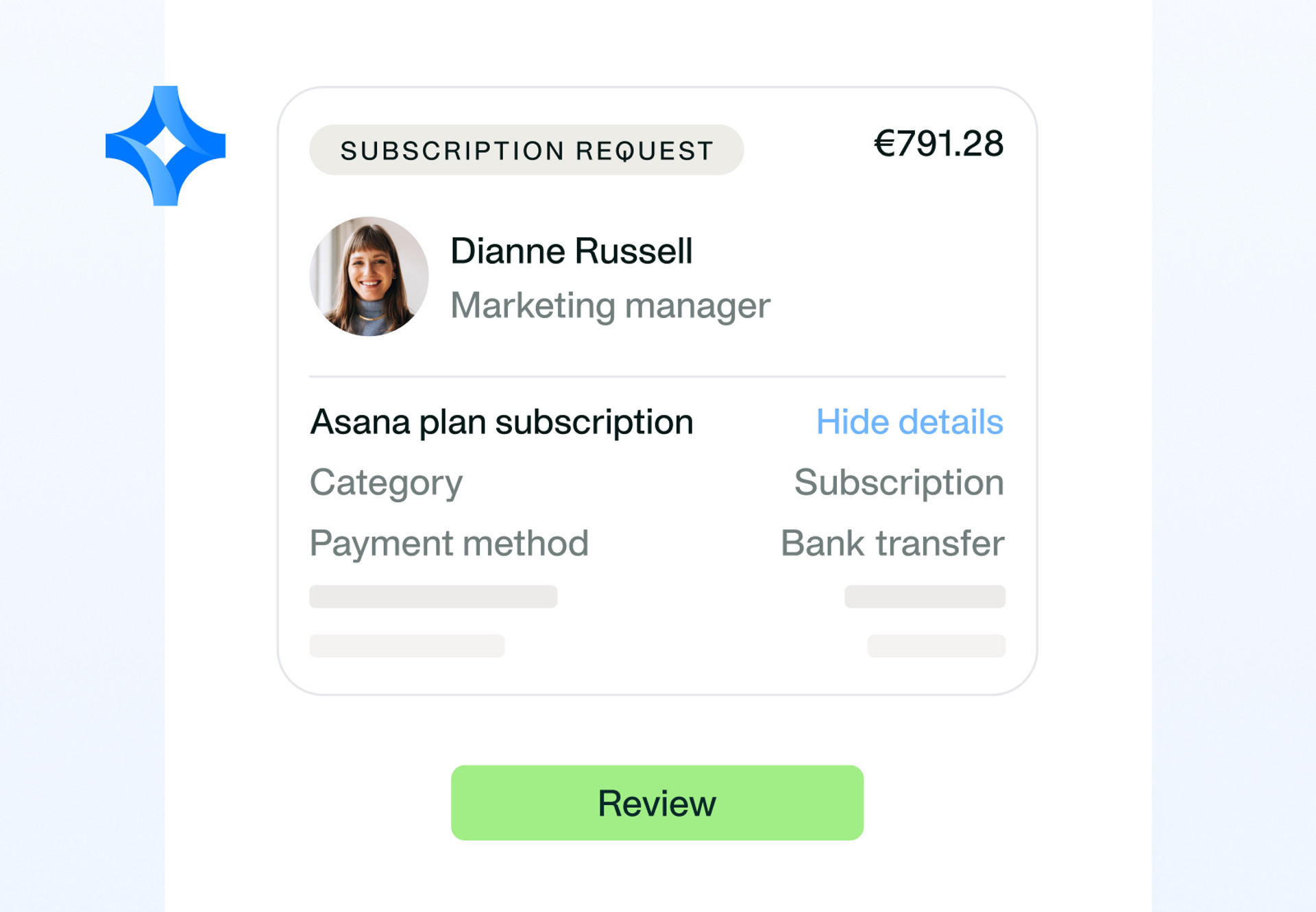
The same logic extends beyond cards. Employees can submit reimbursements. Accounts-payable teams can collect invoices, run approval flows and pay suppliers. Procurement starts with a purchase request rather than a surprise invoice. Travel adds policy checks, booking and changes. The common thread is pre-accounting: build the context while work is happening, instead of making the month-end team reconstruct it from bank statements.
| Workflow | What Payhawk handles | What to test in a demo |
|---|---|---|
| Cards & expenses | Issuing, limits, receipt capture, categorization and approval | Your worst merchant, VAT split and missing-receipt case |
| Accounts payable | Invoice intake, matching, approvals and supplier payment | Duplicate bills, credit notes and multi-currency payment rails |
| Procurement | Requests, budgets, purchase orders and policy enforcement | Exceptions, temporary approvers and partial receipts |
| Travel | Requests, booking, policy, changes and linked expenses | Rebooking, negotiated rates and out-of-policy emergencies |
| Accounting | Native ERP sync, custom exports and API access | Dimensions, refunds and the exact journal your ERP receives |
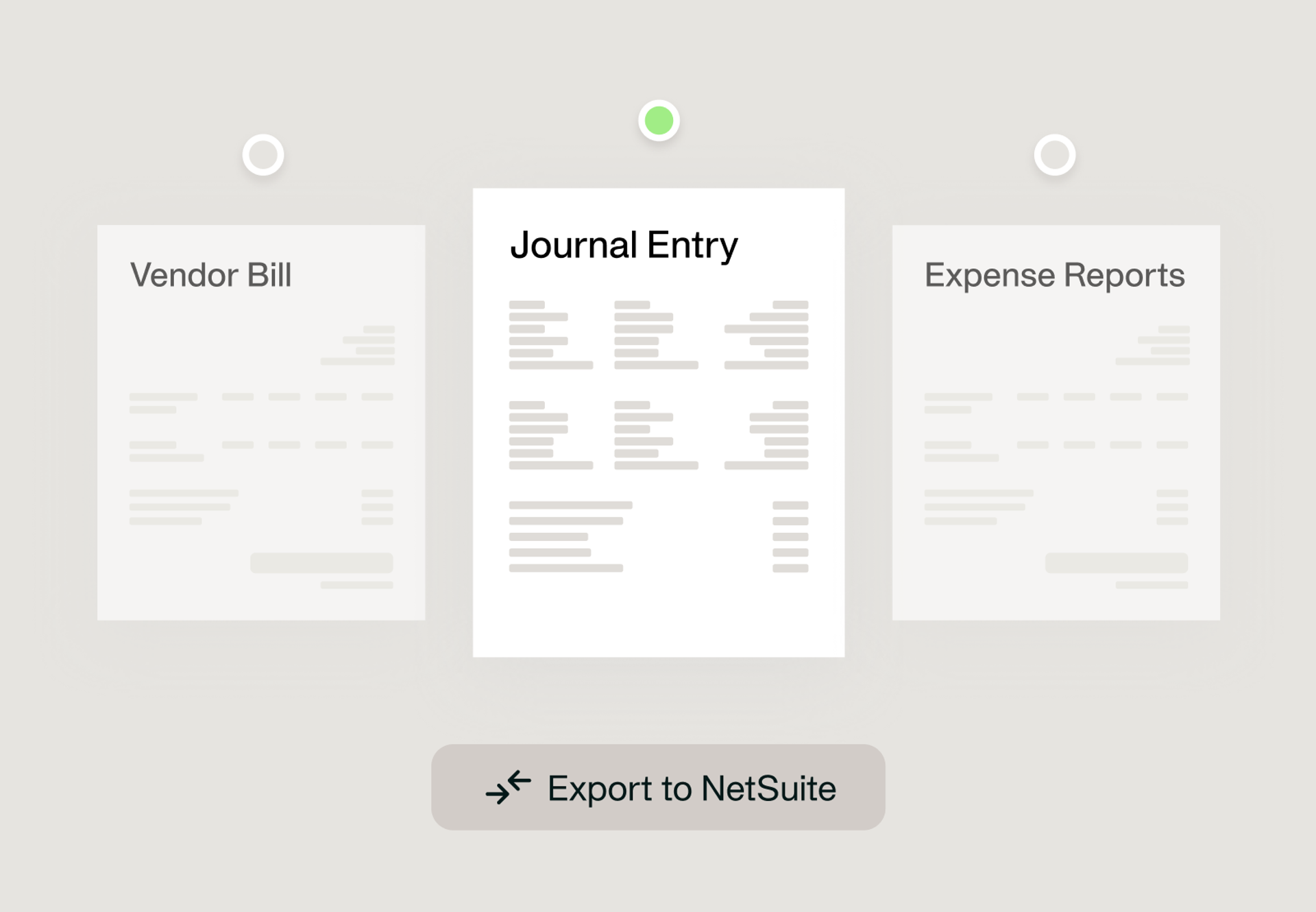
Integration depth is one reason Payhawk feels more enterprise than expense app. The company advertises more than 10 native bidirectional ERP integrations and more than 50 HRIS and identity connections. Named systems include NetSuite, Microsoft Dynamics, Sage Intacct, Xero and, since the Summer '26 release, SAP S/4HANA Public Cloud. Its engineering job listings identify Node.js, TypeScript, PostgreSQL, Kubernetes, Docker, Google Cloud, React, React Native and Apache Kafka. That list is not a guarantee of reliability, but it does reveal a modern, service-heavy architecture rather than a pretty form pasted onto a card account.
The agents have finance jobs now
Payhawk's latest chapter is an “AI Office of the CFO”: Financial Controller, Procurement, Payments and Travel agents attached to specific modules. The practical test is whether they remove a task, not whether the chat bubble uses a clever verb.
Agent Fetch is the clearest example. After a Payhawk card transaction, it can use an authenticated browser session to retrieve an invoice from a supplier portal and attach it to the expense. Payhawk says passwords do not enter its systems. In an April 2026 product Q&A, the company reported about 70 percent success across connected portals, with failures flagged for manual handling. That number is more useful than a vague claim of autonomy. It tells a buyer to expect a meaningful reduction in fetching, plus an exception queue.
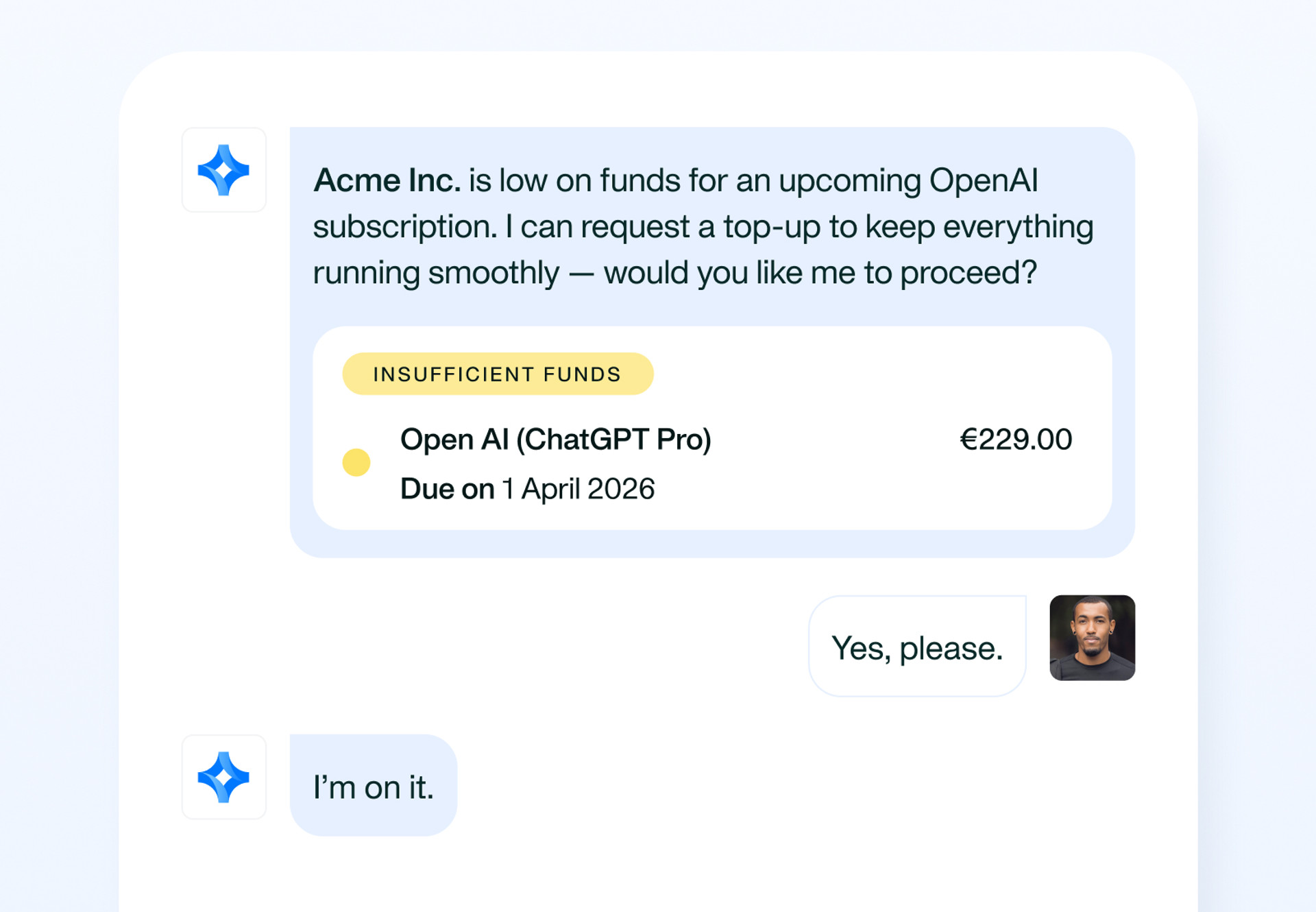
The Spring '26 edition also put agent workflows on mobile and expanded travel changes, procurement controls and ERP exports. Summer '26 followed with role-based visibility, unified EU invoice capture, more payment currencies and SAP integration. In July, Payhawk said its controller capability could gather vendor invoices 12 times faster than a person. These are company-reported performance figures, so a serious evaluation should reproduce the relevant workflow with the buyer's own portals, policies and documents.
“The biggest win for us? Our employees no longer groan when it's time to submit expenses.”Trustpilot reviewer, March 2026
Users like the daily work. Contracts draw heat.
Review sites paint a useful, untidy picture. G2 showed Payhawk at 4.5 from hundreds of reviews, while Capterra showed 4.6 and high marks for ease of use and service. Common praise concerns a clean interface, responsive support, mobile submission and the relief of centralizing entities. One 2025 Capterra reviewer said the software had reduced expense errors and labor in two property businesses. A 2026 G2 reviewer praised its API and onboarding but called the initial configuration of workflows, fields and integrations complex.
Employees can submit from a phone, while finance sees cards, entities and supporting documents in one place.
Pattern across G2, Capterra and positive Trustpilot reviewsSetup can be intricate, and several recent public complaints focus on renewal terms, price changes or account management.
Pattern across critical G2 and Trustpilot reviewsTrustpilot was much more polarized, with a 3.3 score when checked for this review. Some recent customers praised implementation and human support. Others complained about long queues, mid-contract price communication, automatic renewals and difficulty leaving. Payhawk answered several of those reviews and acknowledged poor communication in at least one pricing case. The right conclusion is not that every contract is troublesome. It is that procurement should treat commercial terms as part of the product.
Price: there is one public door
Most Payhawk plans are assembled from core modules, usage and add-ons, then sold on annual or multi-year agreements. Enterprise pricing is by quote. The public exception is the Growth program for eligible small companies in the UK and European Economic Area. It starts at £149 a month and includes ten cards, eight employee seats, two admin or accountant seats, and monthly allowances of 15 invoices and 15 reimbursements. An optional seven-day trial is advertised.
The limits matter. Growth is for one entity and excludes advanced procurement, multi-entity management, budget tracking and the modular add-on library. That is a starter lane, not a cheap miniature of the full enterprise platform. Compare the three-year cost using the actual number of cards, entities, invoices and reimbursements, then include implementation time and ERP work.
The shortlist depends on your borders
Spendesk and Pleo are natural European comparisons. Ramp and Brex belong on a US-led shortlist. SAP Concur remains relevant for large travel and expense estates; Navan for travel-heavy operations; Tipalti for payables; Airwallex for global accounts and payments. Payhawk's distinction is the attempt to join European payment infrastructure, multi-entity control, ERP depth and employee-facing usability in one product.
| Option | Put it on the shortlist when... | Key comparison with Payhawk |
|---|---|---|
| Spendesk / Pleo | Your center of gravity is European expense management | Compare local rails, pricing visibility and multi-entity depth |
| Ramp / Brex | The US is your primary operating market | Compare card economics, global entities and ERP requirements |
| SAP Concur / Navan | Travel is the dominant workflow | Compare booking inventory, service and expense-to-ledger flow |
| Tipalti / Airwallex | Supplier payables or global accounts matter most | Compare payment coverage against Payhawk's broader spend suite |
Seven questions before you sign
- Country map: Which cards, account types, currencies and payment rails are available for every legal entity?
- ERP proof: Can Payhawk export a real refund, split VAT case and project-coded expense into a sandbox?
- Exception rate: How many documents still need human correction in your supplier and merchant mix?
- All-in price: What changes when you add entities, cards, invoices, budget owners, ERP connectors and implementation sessions?
- Renewal mechanics: What are the notice window, uplift language, auto-renewal term and early-exit conditions?
- Support reality: Who handles launch and escalations, in which hours and languages, with what response commitment?
- Human control: Which agent actions require approval, which are logged, and how are failures surfaced?
The verdict
Payhawk makes the most sense when spend is already complicated. Its appeal is not a single miraculous feature; it is the continuity from request to payment to document to ledger across a group. The product has credible scale, broad integrations and a fast release cadence. Its early subscription-card idea has matured into a serious attempt to sit above the ERP and below every person who spends company money.
Buyers should match that ambition with disciplined diligence. Test real exceptions. Price the modules you will actually use. Read the renewal language slowly. If the platform handles your borders and your books, Payhawk can remove an impressive amount of clerical drag. If all you need is ten cards and a receipt inbox, the hawk may be more bird than the branch requires.