At some point in every expense claim, a perfectly capable adult becomes the custodian of a curling lunch receipt. It lives in a pocket, migrates to a desk and resurfaces when finance sends the third reminder. Webexpenses has built a business by shortening that little tragicomedy. Its software photographs the evidence, reads it, checks the rules, finds an approver and pushes the clean result toward the ledger. The trick is not making expenses thrilling. It is making them brief.
From Witney, Oxfordshire, the company now serves more than 2,000 organisations and about 300,000 users in more than 70 countries. It has offices in Britain, Australia and the United States, roughly 150 employees, and a product that has grown from online claims into invoice processing, reimbursements, auditing, reporting and corporate cards. The legal entity is Signifo Ltd; the public face is the pleasingly literal Webexpenses.
The real product is sequence
Expense products tend to be described as bags of features: OCR, mileage, approvals, cards, dashboards. Webexpenses makes more sense as a sequence. A worker pays or uses a company card. The mobile app captures the receipt. Optical character recognition extracts the details. Rules flag a duplicate, a missing field or an out-of-policy purchase. The claim reaches up to six approval levels. Approved data moves into accounting software such as Xero, Sage Intacct, NetSuite or Microsoft Dynamics 365 Business Central. If reimbursement is needed, a Wise Platform connection can return the money to the employee.
The receipt-to-ledger relay
That order matters. A PDF policy stored on an intranet explains what should happen; a rule inside the claim form changes what can happen. Webexpenses supports soft warnings and hard stops, mandatory fields, duplicate checks and limits by merchant, location, day, week or month. Finance sees exceptions while memories are fresh, rather than reconstructing them from a card statement four weeks later.
What failed first? The hand-off.
The most revealing customer stories are not about a spectacular accounting disaster. They are about the hand-offs that quietly failed: email to spreadsheet, card statement to receipt, claimant to approver. Trust Inheritance had multiple people collating emailed claims into paper, little visibility and no clean approval route. Its old Microsoft Access process was clunky enough that the company set a modest target - save four working hours. A configured dashboard and dedicated approvers got it there. Chief finance officer Joanne described the implementation as the easiest software installation of her 25-year career.
At Procure4, consolidating and checking claims consumed at least a day. With Webexpenses, the task fell to a couple of hours. Coleg Cambria offers the sharper stopwatch: a payment run that took two to three days came down to three or four hours, allowing the college to run payments fortnightly rather than monthly. Those are not universal benchmarks, but they reveal the mechanism. Remove re-keying and chasing; force completeness earlier; spend time on the exceptions.
The failures also explain why buyers changed their minds. Trust Inheritance did not choose automation because “digital transformation” sounded attractive; it wanted four hours back and one accountable route for approval. Curaden already owned the software but only saw its full value after card spend joined the same workflow. Coleg Cambria wanted a more frequent payment cadence without devoting more days to it. In each case, the old process first failed at scale: more claims meant more email, more reconciliation and more chances for a missing field to stop the batch.
There is a useful distinction between faster clicking and fewer loops. A nicer form saves seconds. A mandatory field prevents a claim returning days later. Automatic card matching removes a reconciliation task entirely. An approval reminder prevents finance becoming a human notification system. The reported time savings come from eliminating loops, not merely putting the same sequence behind a cleaner screen. That is the test buyers should carry into any demo: ask which step disappears, not which button has moved.
“It doesn't let you do half a job.”Rachael Hollis, financial controller at Curaden
Curaden changed its mind about the system already sitting in the building when it joined the expense and payment sides together. The UK team had Webexpenses, but still ran company spend through Barclaycard and managed expenses separately. Moving about 15 people to Webexpenses Cards removed the manual reconciliation between two systems. Processing time was at least halved. One Barclaycard remained with the general manager “just in case” - the most believable detail in any software migration.
A mature SaaS business learns the card trick
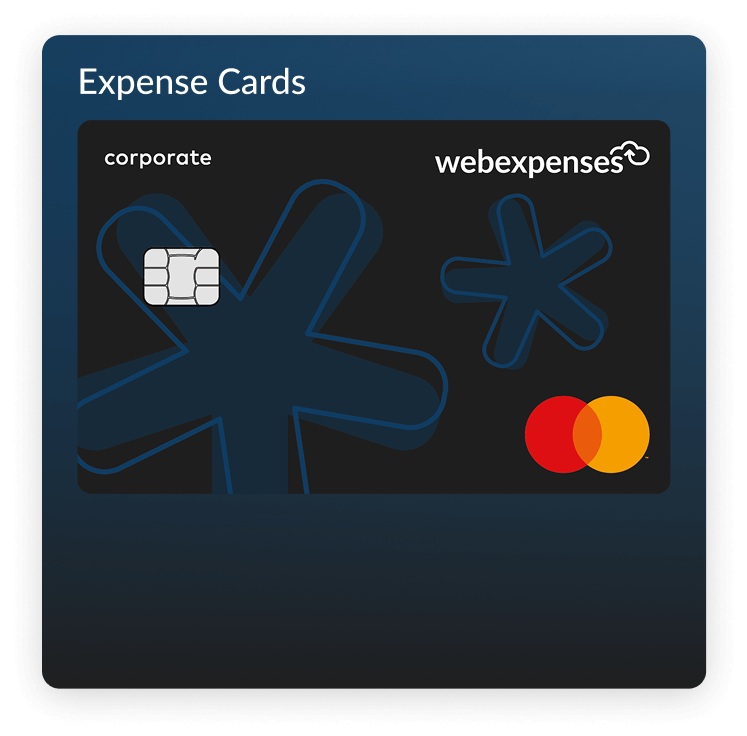
Webexpenses was founded in 2000, when an online claim form itself looked radical. It launched a mobile app in 2008. Over time, the category moved closer to the moment of purchase. Card-first challengers began promising control before reimbursement existed. Webexpenses responded by widening its perimeter: integrated payments in 2023, then physical and virtual Mastercard expense cards in 2025. A card transaction creates an expense record, receipts can be matched immediately and a finance team can restrict spending before it happens.
That makes Webexpenses more than a receipt app, but it is not trying to become a bank. Its place is the operational layer between employee, company policy and accounting system. Against broad suites such as SAP Concur, it stresses configuration and guided onboarding. Against lightweight apps, it offers multi-level controls, auditing and enterprise integrations. Against card-led platforms such as Pleo, Spendesk and Ramp, it can point to the awkward mixed reality most companies inhabit: existing corporate cards, new expense cards and out-of-pocket claims all at once.
The competitive choice is therefore less a feature checklist than a starting point. A global corporation already committed to SAP may prefer Concur's breadth and procurement links. A young company choosing its first cards may favour a card-first platform and its rapid setup. A small Xero customer may decide the accounting package's own expense module is enough. Webexpenses is most persuasive in the middle: businesses with a real finance function, a policy worth enforcing and systems that need integration, but without an appetite for a huge enterprise-suite project.
Where it wins
Organisations with messy approval routes, mixed payment methods, mileage, several entities or an ERP that needs clean coded data.
Where it strains
A three-person team wanting instant self-service may find an eight-to-ten-week configured implementation excessive. Reviews also mention dated interface elements and integration gaps.
The price of making the chase optional
Published UK pricing starts at £7.50 per active user per month for Essential, £9 for Scale and £13 for Pro. “Active” is the interesting word. A company can give everyone access but pay around the number who actually process claims that month. Unlimited submissions are included once a user is active. Invoice processing is quoted according to document volume, users, integrations, entities and configuration. Reimbursements require a small setup fee and transaction charges. The cards are included for Webexpenses users, while Scale and Pro advertise cashback.
At the published starting rates, 100 active claimants imply £750 a month on Essential, £900 on Scale or £1,300 on Pro, before any negotiated terms, tax, implementation or adjacent services. That arithmetic is intentionally simple. The business case depends on labour avoided, errors prevented and cash recovered, not the licence alone. Webexpenses' own calculator models hours saved, monthly savings and payback, but a careful buyer should replace vendor assumptions with wage costs, monthly claim volume, existing card fees and the actual time spent chasing.
The less visible cost is implementation. Webexpenses says setup can take up to eight to ten weeks depending on complexity. That period buys policy mapping, approval design, integration and training. It also defines the conditions under which the product will disappoint. If nobody can decide who approves what, if categories are inconsistent or if workers keep sending receipts in private channels, software merely gives the confusion a login screen.
AI, with the volume turned down
The company’s first conspicuous AI feature arrived in 2026: auto-category selection. It reads a receipt, compares it with that customer’s own history and suggests a category. At high confidence it fills the field; when uncertain, it leaves the user to finish. The restraint is more interesting than the label. Expense data is company-specific, and a confidently wrong category simply moves work downstream.
The design also avoids training one generic model on a mixed pool of customer behaviour. A hotel receipt may be travel for one company, client entertainment for another and prohibited for a third. Learning from an organisation's own history makes the suggestion more relevant, while a confidence threshold preserves a human checkpoint. It is a small use of AI, almost defiantly so. In a category where errors touch tax, payroll and audit, boring accuracy is a more credible ambition than autonomous finance.
That practical posture fits a quarter-century-old vendor. Webexpenses has seen fashionable layers come and go while the core job stayed put. New CEO Joe Sanchez, appointed in early 2026, has said the next chapter will combine international growth with deeper AI capability. Tenzing Private Equity, which acquired the business from K1 Investment Management in November 2023 for an undisclosed sum, is backing that expansion across the Office of the CFO.
There is risk in broadening. Cards, payments, invoice automation and AI place Webexpenses against richer rivals, not merely paper forms. Its reported 99 percent retention and billion-plus value of processed expense claims are company figures, not a guarantee that every new module will land. Review sites broadly praise ease of use and support, while some users ask for a fresher interface, more detailed reporting or wider integration. Mature software carries mature seams.
The useful lesson is boringly portable
What can another finance team copy? Start with the failure, not the demo. Trust Inheritance’s failure was fragmented ownership. Procure4’s was consolidation time. Curaden’s was a card workflow detached from expenses. Coleg Cambria’s was a payment run too slow for the cadence it wanted. Each improvement attached a specific mechanism to a specific delay.
Webexpenses works best when an organisation has enough volume and policy complexity to justify configuration, a finance owner willing to define the rules, and an accounting system ready to receive structured data. It works less well when the business wants no implementation, has no stable policy or expects software to settle political arguments about spending. The camera can read a receipt. It cannot decide whether the client dinner was wise.
That boundary is also the company’s charm. Webexpenses has not abolished the expense claim. It has moved each irritating decision to the earliest useful moment and made the remainder visible. The receipt still exists, briefly. Then, if the system is doing its job, everybody gets back to theirs.