low-latency
(22)
Exegy and the $3 Million Case for Doing Less
A St. Louis engineering company built its reputation on fast market data. Its newer proposition is more intriguing: stop making so many computers do the same job.
The Database That Began With a Failed Operating System
ScyllaDB's founders tried to make an operating system faster. Cassandra refused to cooperate. That stubborn benchmark became a company - and, years later, helped Discord cut its message cluster from 177 nodes to 72.
Aerospike
Aerospike built its reputation in the least forgiving corner of software: decisions that must be correct before the next millisecond arrives. Now the database specialist is turning that discipline toward AI, graph workloads and a managed cloud business.
Avea Robotics
Avea Robotics builds Sentinel, ultra-low-latency software that lets a human operator step into a robot from anywhere in the world. When an autonomous robot gets stuck on an edge case, an operator teleoperates it back on track - keeping fleets running and capturing the intervention data that makes the next model better. Founded in 2026 by UIUC engineers Ary Indarapu and Vikram Vadrevu and backed by Y Combinator (P26), the company reports roughly $18K MRR and has helped deploy close to 30 robots.

Integuru
Integuru is a San Francisco startup (YC W24) building an AI agent that reverse-engineers the internal APIs behind websites and apps that have no official API, then generates fast, production-ready integration code. Instead of brittle browser automation, Integuru analyzes network requests and cookies to produce direct API calls that complete in about three seconds with 99.9%+ success. The open-source agent has over 4,700 GitHub stars, and the hosted managed service powers more than a million API calls a month per platform across healthcare, logistics, proptech, and legal.

Sequence Markets
Sequence Markets is a New York and Toronto based trading-infrastructure startup (Y Combinator W26) that lets traders execute a single view across fragmented crypto venues - centralized exchanges, decentralized exchanges, perps, prediction markets, and tokenized assets - from one system. Its venue-neutral smart order router sits on proprietary low-latency infrastructure (roughly 2 microseconds internal latency, network paths up to 2.5x faster than the public internet) to find better prices and cut slippage, with access via terminal, API, SDK, and MCP for human traders, algorithmic systems, and AI agents.

Lime Trading
Lime Trading (Lime Trading Corp., operating as Lime Financial) is a New York-based broker-dealer that gives independent and institutional traders access to institutional-grade trading technology. Born in 2000 inside a quantitative hedge fund as Lime Brokerage, the firm built low-latency infrastructure for high-frequency trading and now offers direct market access, trading APIs, colocation, and proprietary web and mobile platforms for trading U.S. equities, options, and futures. It positions itself in the gap between bulge-bracket banks and retail apps, serving sophisticated traders and developers who want speed, transparency, and quality execution.
Firebolt
Firebolt is a cloud data warehouse company building a low-latency, high-concurrency analytical database for engineers building data-intensive and AI applications. Founded in 2019 by former Sisense leaders, it decouples storage and compute to deliver sub-second SQL queries over terabyte- and petabyte-scale datasets, positioning itself on price-performance against Snowflake, Amazon Redshift, Google BigQuery and ClickHouse. Firebolt has raised roughly $269 million and reached a $1.4 billion valuation as a unicorn.

LiveKit
LiveKit is an open-source platform and global edge network for building real-time voice, video, and physical AI applications. Born as a WebRTC media server for livestreaming and conferencing, it has grown into the infrastructure layer that lets AI agents see, hear, and speak with sub-100ms latency. Its technology powers ChatGPT's Advanced Voice Mode and is used by developers at OpenAI, xAI, Salesforce, Tesla, and Spotify, collectively facilitating billions of real-time calls each year.
eTopus Technology
eTopus Technology is a San Jose-based semiconductor IP company that designs ultra-high-speed, ADC/DSP-based SerDes and die-to-die interconnect IP for data centers, high-performance computing, AI, 5G and storage. Founded in 2012 by Harry Chan and Peter Kou, the company licenses silicon-proven PHY IP - spanning 112G on advanced 6/7nm nodes down to 22nm - plus chiplet interfaces supporting UCIe, Bunch of Wires, PCIe Gen 5/6 and CXL. eTopus positions itself on low latency and low power, and has built collaborative chiplet platforms with partners including QuickLogic, OpenFive and CoMira.
SPARK Microsystems
SPARK Microsystems is a Montreal-based fabless semiconductor company building ultra-wideband (UWB) wireless transceivers that aim for wire-like performance without the wire. Its patented LE-UWB technology delivers ultra-low latency, high data throughput, and very low power draw, targeting applications where Bluetooth falls short: wireless audio, gaming peripherals, AR/VR and AI wearables, presence detection, and industrial IoT. Founded in 2016 by researchers out of Montreal's engineering community, SPARK has raised roughly CAD $48M+ and is scaling commercial adoption of its second-generation SR1120 transceiver.

Upstash
Upstash is a serverless data platform built for developers who deploy at the edge. Its flagship product is a Redis-compatible database that talks over HTTP instead of a persistent TCP connection, which makes it work inside serverless and edge runtimes where traditional Redis breaks. Around that core it has added QStash (a serverless message queue and scheduler), Upstash Vector (a serverless vector database), Search, and Workflow (durable serverless functions). Everything is priced per request with a guaranteed cap, so developers start free and pay only for what they use. Founded in 2020 by ex-Hazelcast engineers, Upstash powers Vercel KV under the hood and reached $1M ARR two years after its seed round.

Incept AI
Incept AI is a New York-based voice AI company building order-taking systems for quick-service restaurants, starting with the two hardest environments in the business: the drive-thru and the phone. Founded in 2024 by former Amazon and Presto Automation engineers, Incept pairs a proprietary neural audio engine that strips out background noise, echo and crosstalk with foundation models and POS integrations, so the AI can complete restaurant orders end-to-end without a human stepping in. The company says its system reaches 95%+ order completion without human intervention, well above the roughly 83% where most competitors escalate to a person, and raised a $3 million pre-seed round led by Rally Ventures in early 2025.

N1
N1 (formerly Layer N) is a high-performance Layer-1 blockchain built specifically for onchain finance at scale. Founded by DeFi veterans Dima Romanov, David Cao, and Sheheryar Parvaz, N1 pairs an ultra-low-latency, congestion-free execution layer with native financial primitives - an onchain orderbook, atomic transaction bundles, unified margining, and RFQ - so that trading applications that previously had to run offchain can run natively onchain. Every app runs in its own isolated environment with no state congestion, and developers can write smart contracts in TypeScript (with Python and other languages on the way). Backed by Founders Fund, Multicoin Capital, dao5, Kraken Ventures, and Arthur Hayes, the New York-based team is targeting the performance ceiling that has kept serious finance from moving onchain.

Zayo Group
Zayo Group is a Denver-based communications infrastructure company that owns and operates one of North America and Europe's largest fiber-optic networks - over 150,000 route miles after its 2026 acquisition of Crown Castle's fiber business. It sells the physical layer of the internet: dark fiber, wavelengths, Ethernet, IP transit, dedicated internet access, colocation and managed edge services to wireless carriers, hyperscalers, enterprises, governments and ISPs. Founded in 2007 on a contrarian bet that bandwidth demand would only explode, Zayo has spent its life buying and building fiber, and is now positioning that network as the backbone for AI workloads moving data between data centers.
Quantum Corridor
Quantum Corridor is a Midwest network-infrastructure company building North America's first inter-state, quantum-safe commercial fiber backbone. Its live coherent optical network links Chicago to Northwest Indiana with 40 Tbps capacity and 0.274 ms round-trip latency, connecting quantum research labs, hyperscalers, data centers and defense partners. Formed in 2021 as a public-private partnership, it is extending the route toward Purdue, Indianapolis and the Crane naval research base.
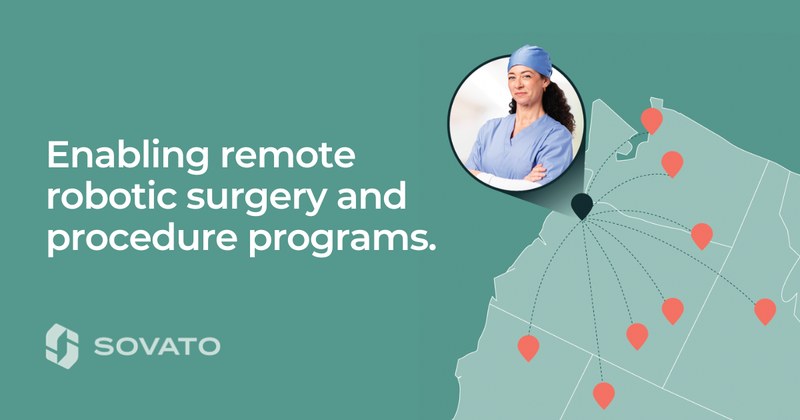
Sovato
Sovato is a Santa Barbara health-tech company building the first comprehensive, system-agnostic platform for remote robotic surgery and procedures - what the industry calls telesurgery. Co-founded by surgical-robotics pioneer Yulun Wang and healthcare strategist Cynthia Perazzo, Sovato lets a skilled surgeon operate a robotic system from hundreds or thousands of miles away, aiming to extend top surgical care to patients regardless of where they live. The company has raised $41M across its rounds and helped enable the longest-distance telesurgery ever completed.

Agora
Agora is a real-time engagement platform that gives developers simple APIs and SDKs to embed live voice, video, interactive streaming, chat, and conversational AI into apps and devices. Trusted by more than 1,700 organizations across social, live shopping, education, telehealth, and gaming, Agora's network reaches devices worldwide with sub-second latency. The company trades on Nasdaq under the ticker API.
MIPS
MIPS is a San Jose-based semiconductor IP company with a 40-year heritage in RISC computing. After abandoning its own legacy architecture, MIPS reinvented itself around the open RISC-V instruction set and now builds compute subsystems for autonomous platforms across automotive, industrial, robotics, and edge AI markets. Its Atlas portfolio - spanning Sense, Think, Act, and Communicate building blocks - targets the low-latency, safety-critical demands of what the company calls Physical AI. In July 2025, GlobalFoundries announced a deal to acquire MIPS.
Qwilt
Qwilt builds the Open Edge Cloud - a federated CDN embedded inside service provider networks (Verizon, BT, Vodafone, Comcast, Telecom Italia and dozens more) that pushes video, software, and real-time applications closer to the end user than any traditional cloud. Founded in 2010 by ex-Cisco and ex-Juniper engineers, it operates 2,196 edge nodes across 38 countries on 6 continents with 150+ Tbps of edge capacity, and is the leading commercial champion of the Open Caching standard inside the Streaming Video Technology Alliance.
Vapi
Vapi is a San Francisco developer platform for building, testing, and deploying conversational voice AI agents over phone and web. It abstracts the messy plumbing of speech-to-text, LLMs, text-to-speech, and telephony so developers can ship human-sounding voice agents in minutes, with sub-500ms latency and enterprise-grade compliance.

Wispr Flow
Wispr Flow is a San Francisco-based AI voice dictation platform that converts natural speech into polished, formatted text across any application at roughly 220 words per minute - about 4x faster than typing. Built by two Stanford AI researchers, the company has quietly become the voice layer that 270 Fortune 500 companies rely on, combining a 10% word error rate (vs. 27% for OpenAI Whisper), 100+ language support, and context-aware formatting that automatically adjusts tone and style based on the active app. With $81M raised and a $700M valuation as of late 2025, Wispr Flow is racing to become the default voice-first operating system for a billion users.