Consider the little dance that happens when a call goes wrong. You say hello. Nothing. You say hello again just as the other person answers. Both of you stop. Both begin apologizing. The conversation has acquired a third participant: the delay. Agora’s business lives inside that awkward interval.
- Agora rents developers the voice, video, and streaming infrastructure inside their own apps.
- Its next bet is voice AI that hears clearly, answers promptly, and handles interruptions.
- The meter matters: human calls count participant-minutes; managed AI has its own rate.
The company supplies APIs and software development kits. A team building a therapy app, a live shopping service, or a game can add conversation without assembling the entire media network. The customer owns the experience. Agora handles much of the difficult journey between microphones, screens, and distant servers. Its name can remain invisible while its work is audible.
The engineer who kept hearing the same problem
Bin, better known as Tony, Zhao had worked on audio and video calling at WebEx and later became chief technology officer at YY, the video-based social network. He founded Agora in November 2013. That background matters: enterprise meetings and consumer live interaction expose different habits, devices, and network conditions. His documented career crossed both worlds.
Agora turned the recurring technical problem into a service. Its Software-Defined Real-Time Network routes media through distributed infrastructure and adapts to network conditions. Audio processing tackles noise and echo. SDKs connect the application to that machinery. The proposition is practical: spend your engineering time on the part your users came for, while buying expertise in moving a conversation.
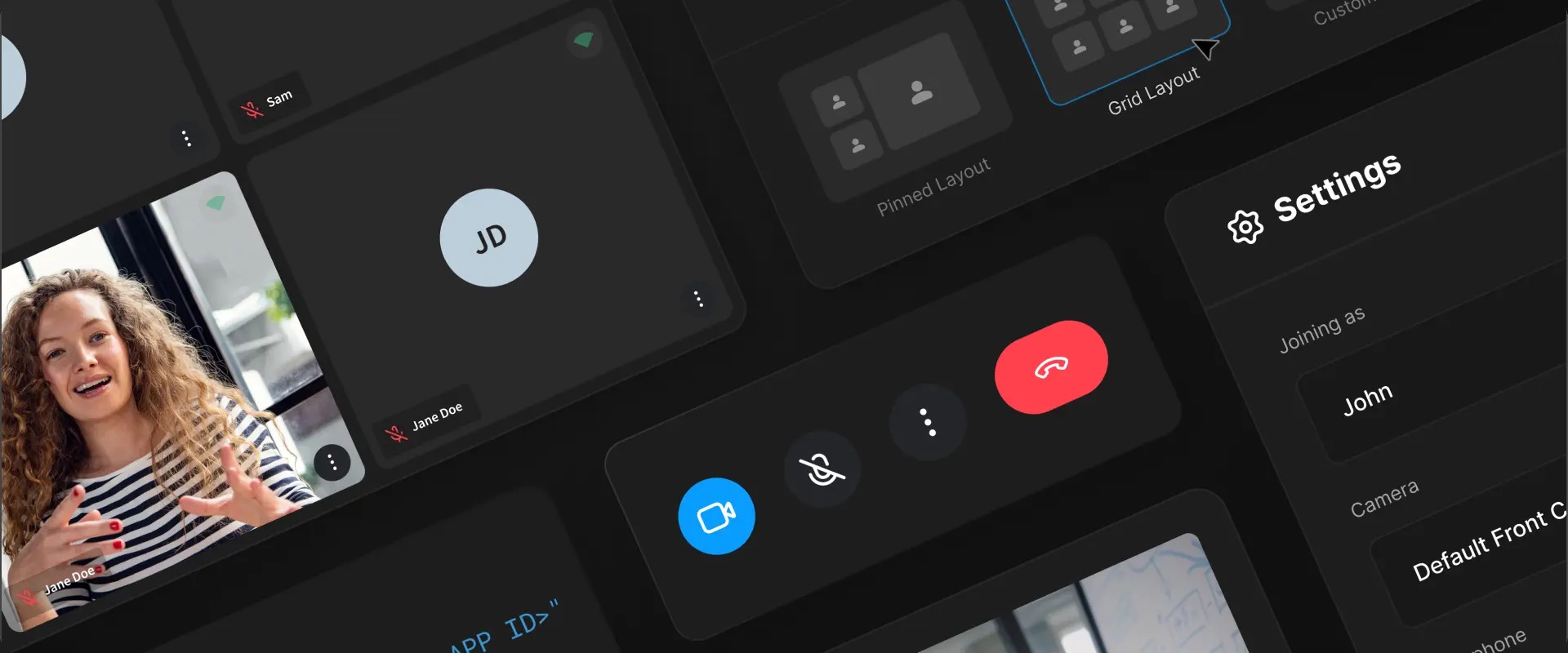
There is a revealing example in Talkspace’s customer story. The therapy provider wanted a customizable video experience. That makes sense: a therapy session belongs inside a care relationship, with its own interface and workflow. The product is the appointment and the connection to a therapist. Video transport is essential, but it is only one component.
A very small price with a very specific unit
Agora makes money when customers use its infrastructure. Voice calling, video, interactive streaming, chat, signaling, recording, and analytics extend the basic offering. Some services use minutes; others use messages, monthly users, or subscriptions. Customers can begin with free allowances, buy prepaid packages, or negotiate contracts. This is communications infrastructure sold in measurable portions.
participant-minutes
Illustration for a two-person audio callThe October 2026 RTC rate card lists audio calling at $0.99 per thousand participant-minutes and HD video at $3.99. Two people talking for thirty minutes therefore generate sixty participant-minutes. At the audio list rate, that is about six cents before free allowances or other charges. Agora offers 10,000 combined RTC minutes free each month. Recording, specialized proxy options, and paid analytics can change the total.
Managed voice AI is a different purchase. Its current list rate is $0.10 per minute, with 300 introductory free minutes. Selected speech-recognition, language, and speech-synthesis models are included. Bringing your own provider key does not reduce that standard unit price. For telephone agents, answered duration rounds up to the next full minute. Read those details before multiplying a demo into a business.
First the customers’ world changed
A usage meter is also a dependency. In 2022, Agora reported that regulatory changes sharply reduced usage in the K12 academic tutoring sector. Consolidated annual revenue fell 4.4%, to $160.7 million, and the net loss reached $120.4 million. More active customers did not compensate for disappearing activity. The lesson is uncomfortable: infrastructure can work while the market it serves shrinks.
Zhao described organizational and strategic adjustments, including streamlined operations and a simpler structure. In 2023, consolidated revenue fell again, to $141.5 million. The international Agora business reported reduced usage from some emerging-market customers facing tighter financing. These reported setbacks give the subsequent expansion context. They do not establish a private moment when management changed its mind.
The next caller is a machine
Agora publicly launched its Conversational AI Engine in March 2025. The connection to its earlier work is straightforward. A voice agent needs speech recognition, a model, a voice, and transport. It also needs to distinguish an interruption from background chatter. A clever answer delivered after an awkward silence still makes a clumsy product.
“Most AI models don’t yet offer the ability to interact via voice, and those that do haven’t optimized the experience.”Tony Zhao · March 2025 launch announcement
HearRecognize speech02
ThinkRun the model03
SpeakGenerate audio04
ListenHandle interruption
The engine coordinates those components; Agent Studio adds a visual environment for building and deploying agents. Expanded OpenAI Realtime support followed in September 2025. By March 2026, Agora was presenting customer-service and outbound engagement solutions. FasesBI, a named survey customer, reported a 10% invitation conversion rate in Agora’s announcement. That is one customer’s account, rather than a universal performance benchmark.
The ambition now reaches hardware. A March 2026 Seeed Studio partnership brought voice interaction to Reachy Mini. September’s Physical AI announcement introduced voiceprint, voice cloning, and connections to external tools through MCP. A robot or connected device poses the old communication problem in a new shape: someone speaks in an ordinary room, and expects an appropriate response.
Copy the test, then choose the plumbing
Agora occupies the layer between an application and a live interaction. LiveKit and Daily offer alternatives in real-time media and AI. Teams that want to operate their own stack can consider self-hosted approaches, including the Agora-supported TEN Framework. The choice depends on deployment control, integration effort, geography, and the workload being billed. A feature list alone will not settle it.
A useful experiment is small: build one conversation, measure how quickly audio returns, interrupt it, and repeat on a poor connection. Then count the billable units. Offline devices, highly restrictive data requirements, or simple prerecorded broadcasts can make this architecture a poor fit. Fast transport also cannot make a model’s answer correct. Agora sells a way to carry the conversation; the customer still has to make it useful.
Website · Developer docs · AI pricing · Blog · News
Try the voice demos · Watch: voice AI in production · YouTube
LinkedIn · X · Instagram · Facebook · GitHub
Explore the Physical AI announcement, the OpenAI integration, and the 2022 results.