call-center-automation
(24)
The $7 Phone Call That Became a Call Center
Phonely began with an after-hours demo and a first sale for $7 a month. Now three customers have invested in the company - and every phone script is a candidate for an experiment.

Bland AI Wants to Make Hold Music Extinct
The enterprise voice platform is betting that people do not hate phone calls. They hate phone trees, dead air and explaining the same problem twice.

Hyro Bet the Future of Healthcare AI on the Least Glamorous Part: Answering the Phone
The Cornell Tech startup learned that a pleasant chatbot is worthless if it cannot touch the calendar. Eight years, $95 million and 100 million patient interactions later, Hyro is selling hospitals the decidedly unglamorous plumbing behind AI that can actually finish a job.

Retell AI
Meet your AI call center from the future.

Voice AI Agents Are Eating the Chatbot Business Alive
In 2026 the tidy world of customer-service chatbots split in two. On one side, legacy vendors like LivePerson and Verloop.io are being sold for parts; on the other, voice-native upstarts like Retell AI and deep-pocketed enterprise players like Kore.ai race to answer your next call in under a second.

Teneo.ai Bets the Contact Center on Boring, Reliable AI
While Zendesk rewires customer service around outcome-priced AI agents, Sweden's Teneo.ai is chasing the same market with a different promise: 99% accuracy, no LLM output reaching your customers, and voice bots that answer millions of calls a month.
Retell AI Built a $60M Business on 5 Cents a Minute
The YC-backed voice startup raised about $5 million, then rode 650% growth to a $60 million run rate - selling AI phone agents by the minute while Microsoft, Salesforce and Cresta chase the same calls.
Retell AI and boost.ai Are Rewiring the Customer Call
Two companies - one a Norwegian chatbot pioneer, the other a Y Combinator voice startup - are pulling conversational AI in opposite directions. Whoever wins gets to decide how you talk to every business you deal with.

Omilia
For 24 years Omilia has been trying to kill the phone menu. Now, with $67 million in fresh funding and a billion conversations a year running through its systems, the Cyprus-born company is betting that the future of customer service sounds less like a robot and more like a person who already knows why you called.

Regal's AI Answers the Phone So Your Call Center Doesn't Have To
The New York startup is betting the future of the call center isn't fewer humans and cheaper bots - it's AI voice agents that sound like your best rep, never sleep, and have already worked their way through 500 million calls.
AI Rudder
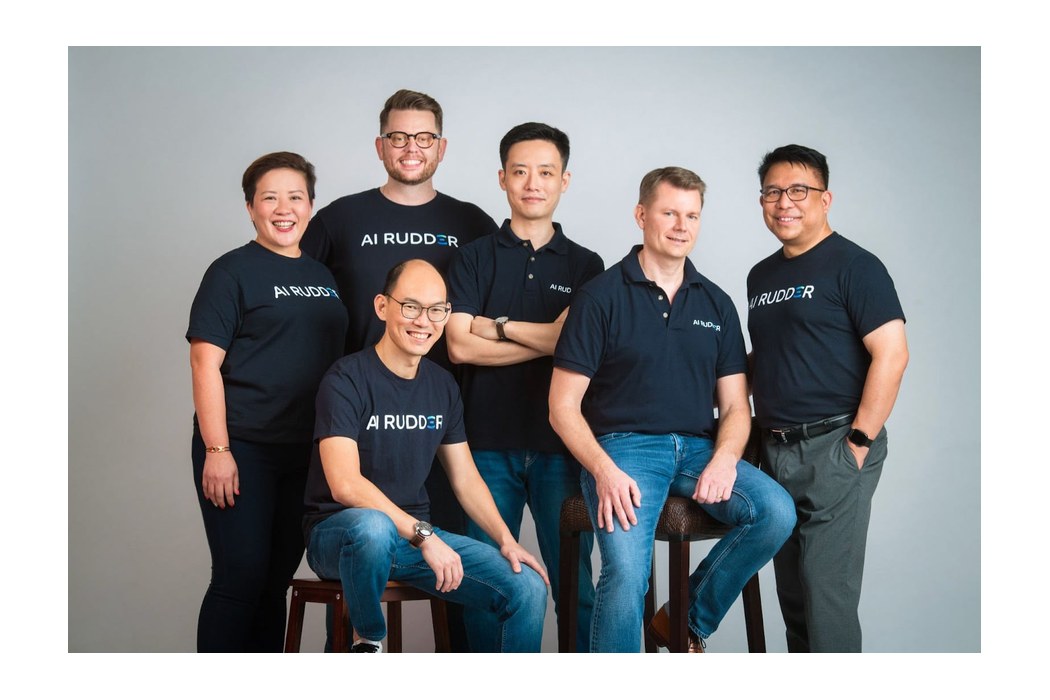
AI Rudder is a Singapore-based voice AI company that automates high-volume customer phone calls and chats for banks, lenders, insurers, e-commerce and logistics firms. Its human-sounding voice agents handle payment reminders, verification, surveys, telemarketing and customer service across 15+ languages and regional accents, letting enterprises scale contact-center work without adding headcount. Backed by Sequoia, Tiger Global and Coatue, it serves 500+ enterprise clients concentrated in Southeast Asia and Latin America.

Callab AI
Callab AI builds AI voice agents that plug directly into the legacy, on-premises phone systems most large call centers still run on. Instead of forcing a cloud migration, its carrier-grade telephony stack connects to hardware like Avaya, Cisco UCM, and Mitel over SIP trunks and automates a large share of inbound calls within about a week. Founded by Tunisian engineers Haithem Kchaou and Chehir Dhaouadi and part of Y Combinator's Spring 2026 batch, the company handles calls in Arabic and its dialects plus several other languages, and serves customers across North America, Europe, and the Middle East.
careCycle
careCycle (YC W25) builds voice AI teams for Medicare agencies and Field Marketing Organizations. Its AI agents handle the non-licensed parts of the member journey - pre-screening, appointment booking, 24/7 questions, and post-enrollment follow-up - then warm-transfer to licensed human agents. The pitch is that a Medicare agency loses roughly half its members each year to poor post-sale engagement, and careCycle keeps those members answered, called back, and retained without the agency hiring a call center.
Cignara
Cignara builds AI voice and chat agents that run sales and customer support end to end for large B2C enterprises. Instead of answering FAQs, its agents ingest a company's knowledge base, policies, workflows and customer profiles to take governed, policy-bound actions - and to spot upsell, cross-sell and churn moments in the middle of a conversation. Founded by two-time YC founder Nalin Gupta (previously Auro Robotics, acquired by Ridecell), the company launched in Y Combinator's Spring 2026 batch after rebranding from Bujo AI, and counts Fortune 500 brands like LG among its users.
Dasha
Dasha is a voice AI platform that lets developers build, test, and deploy human-like conversational voice agents to automate phone-based business processes such as sales calls, customer support, and lead qualification. Founded by Vladislav Chernyshov and Ilya Stupakov, the company built its own low-latency speech recognition and text-to-speech stack, and exposes conversation design through a purpose-built scripting language (DashaScript) and a JavaScript/Node.js SDK. It positions itself as infrastructure for developers who want production-grade, real-time voice AI at scale.

Syllable
Syllable is a Mountain View, California company that builds, deploys, and manages AI voice and text agents, originally to automate patient communication for health system call centers and medical practices. Founded in 2016, it has expanded from healthcare-specific natural language understanding into a broader, model-neutral agentic platform that lets organizations build agents once and run them across any cloud with governance, analytics, and compliance built in. The company has raised roughly $81.7M+ across Seed through Series C, counts investors like TCV, Oak HC/FT, Verily, and Northwell, and acquired Actium Health in 2024.

Vlad Chernyshov
Vlad Chernyshov is the co-founder and CEO of Dasha.AI, a New York conversational-voice-AI company he started in late 2016 to build machines that talk like people - with the ums, the breaths, the interruptions and all. A competitive programmer out of Novosibirsk, Russia, he landed his first paying customer (a San Francisco dental practice) the day after Y Combinator rejected him, raised a $2M seed from RTP Global in 2019, and has framed Dasha's real target not as call centers but as artificial general intelligence reached through speech.

Simple AI
Simple AI is a San Francisco startup building enterprise-ready voice AI agents that handle inbound and outbound B2C phone calls. Its agents answer questions, personalize offers, qualify leads, and close and upsell transactions over the phone - the company says they convert and upsell up to 30% more than trained human reps. Founded in 2024 by former Y Combinator software leads Catheryn Li and Zach Kamran, Simple AI runs on a proprietary voice stack with sub-850ms end-to-end latency and raised $14M in seed funding in February 2026.

Catheryn Li
Catheryn Li is the co-founder and CEO of Simple AI, a San Francisco voice-AI startup building phone agents that sell. After four years at Y Combinator - where she led the software team behind Startup School, the YC Library, and Co-Founder Matching - she and Zach Kamran started Simple AI in the 2024 YC batch. Their agents are trained on top human reps, know every product SKU, and the company says they outperform trained live reps by 30% on conversion and upsell. Simple AI raised a $14M seed round led by First Harmonic with Y Combinator, True Ventures, and Massive Tech Ventures. Li holds degrees in computer science and mathematics from MIT.

Assort Health
Assort Health builds specialty-specific voice AI agents that answer patient phone calls for medical practices and health systems, resolving them rather than routing them. Trained on more than 150 million patient interactions and integrated directly into EHR and practice-management systems, its agentic platform schedules appointments, triages, verifies insurance, handles refills and follows up with patients across 20+ specialties. Founded in 2023 by Jeff Liu and Jon Wang, the San Francisco company raised a $76M Series B in 2025, bringing total funding to $102M.

Flip
Flip is a New York-based vertical Voice AI company that answers customer service phone calls and resolves them end-to-end, without a live agent. Instead of routing callers through legacy IVR menus, Flip's AI assistant integrates deeply into a brand's backend systems to actually complete tasks - checking order status, processing returns, booking rides, and handling billing. The platform is purpose-built for specific industries (retail eCommerce, healthcare, and transportation) rather than offered as a one-size-fits-all bot. As of January 2026 Flip had automated more than 300 million calls for over 250 brands, automating up to 90% of inbound volume, and raised a $20M Series A.

Health Note
Health Note is a healthcare AI company that automates the administrative work surrounding a clinical visit. Founded by physician Joshua Reischer, MD, its platform collects patient information before an appointment through conversational texting and AI voice agents, then turns that data into structured EHR documentation and pre-written clinical notes. The goal is to cut the paperwork and phone-tag that drives physician burnout, shorten check-in times, and let care teams spend more time with patients and less with screens.

PolyAI
PolyAI builds enterprise voice assistants that answer customer calls and handle them end-to-end. The London- and San Francisco-based company spun out of Cambridge's dialogue systems lab in 2017, and now runs AI agents in 18 languages for brands like Marriott, Caesars, PG&E, FedEx and Hopper.

Replicant
Replicant builds voice AI that handles the calls contact centers would rather not - the password resets, the order checks, the billing nudges - so human agents can spend their time on the calls that actually need a human. Founded in 2017 and headquartered in San Francisco, the company has raised more than $113M, including a $78M Series B led by Stripes in 2022.