The most persuasive story in healthcare AI begins with a password reset. At Baptist Health, forgotten MyChart credentials were a relentless call-center chore: high volume, low glamour, and expensive precisely because a human had to keep doing it. Hyro plugged an AI voice agent into the workflow. Baptist reported nearly $1 million in savings within 90 days. No robot diagnosed a rare disease. No digital bedside manner won an award. The software simply answered the phone, verified the caller and finished a repetitive job.
That is Hyro in miniature. The New York company, with a large operation in Tel Aviv, builds voice and digital agents for the administrative front door of healthcare. A patient can ask for a cardiologist, reschedule an appointment, reset a portal password, request a refill, check a bill or find the right department. The agent retrieves governed information, touches the health system's software when permission allows, and passes the conversation to a person when the request stops being routine.
The distinction is useful because “healthcare AI” now covers everything from clinical documentation to diagnosis-adjacent outreach. Hyro sits on the operational side. It is not trying to be a nurse on the telephone. It is trying to prevent a nurse, scheduler or contact-center representative from spending another afternoon explaining parking, hunting an appointment slot or transferring a caller three times.
It started with an Echo and a bad chatbot
Israel Krush and Rom Cohen met at Cornell Tech in 2017. In Krush's Roosevelt Island apartment, they peppered a new Amazon Echo with trivia and watched voice interfaces stumble through the Alexa era. The pair saw the direction of travel but disliked the experience. Early chatbots and phone trees depended on designers guessing every intent in advance. Change the website, add a physician or rewrite a policy, and somebody had to repair the conversational flow.
Their 2018 Startup Studio project, originally called Airbud, proposed another route. It would ingest an organization's existing information, arrange entities and relationships in a knowledge graph, parse what a person was asking, then retrieve an answer without a mountain of example conversations. Uri Valevski, an NLU specialist with Google Search and Duplex experience, joined as the third co-founder.
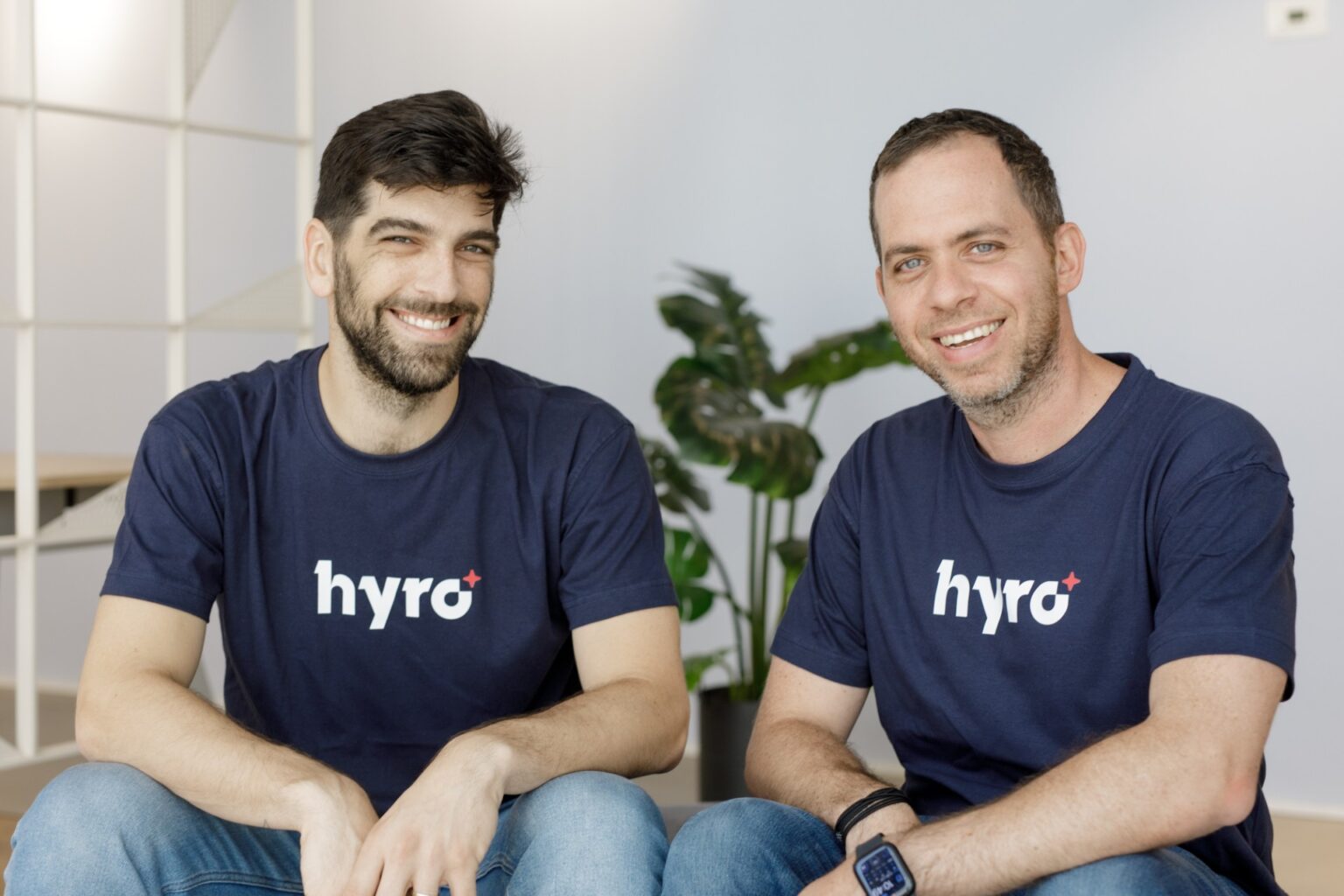
At first, the founders described the product as “vertical agnostic.” Travel, finance and education all looked plausible. Cornell Tech instructors pushed them to choose. Deborah Estrin connected the team with Weill Cornell Medicine, where a pilot made data on more than 1,500 physicians searchable in natural language. Healthcare's combination of messy information, burnt-out staff and punishing call volume changed the founders' mind. The general interface became a vertical company.
So what failed first? Not the Weill Cornell pilot. What failed was the prevailing design assumption: that every conversation should be mapped as a branching script. COVID-19 made the weakness obvious. Hospital information changed faster than teams could rewrite bots and IVRs. Hyro's pitch hardened around adaptability - ingest the current source, ground the answer, and avoid rebuilding the conversation every time a policy moves.
The voice is becoming a commodity. The plumbing is not.
A modern speech model can make a demo sound smooth. Hospitals buy something harder. The AI has to identify the patient, understand local scheduling restrictions, query the live calendar, write the appointment back, preserve an audit trail and transfer the edge case without making the caller repeat everything. Hyro's technology combines large language models with smaller models, knowledge graphs, policies and decision trees. The company calls the current architecture ACE, its Agentic Conversational Engine.
The integration list explains the market position better than an AI adjective can. Epic and Salesforce support patient records and scheduling. Cisco, Genesys, NICE and Five9 supply contact-center rails. Kyruus contributes provider search. Microsoft Azure supplies cloud infrastructure; Microsoft says Hyro reached 99.9 percent uptime and shortened model-deployment cycles by about 40 percent. In August 2026, Hyro added ServiceNow, pairing a conversational layer with ticket, knowledge and workflow systems.
This is also the competitive fault line. Assort Health, Syllable, Parlance and other healthcare-native vendors chase similar front-office work. Contact-center suites can add their own agents. A health system can assemble a custom stack. Hippocratic AI overlaps in voice but leans toward non-diagnostic clinical outreach, while Hyro is strongest at access transactions. Buyers should choose by workflow, integration depth and governance, not by which demo voice pauses most convincingly.
The receipts are customer claims - and the denominator matters
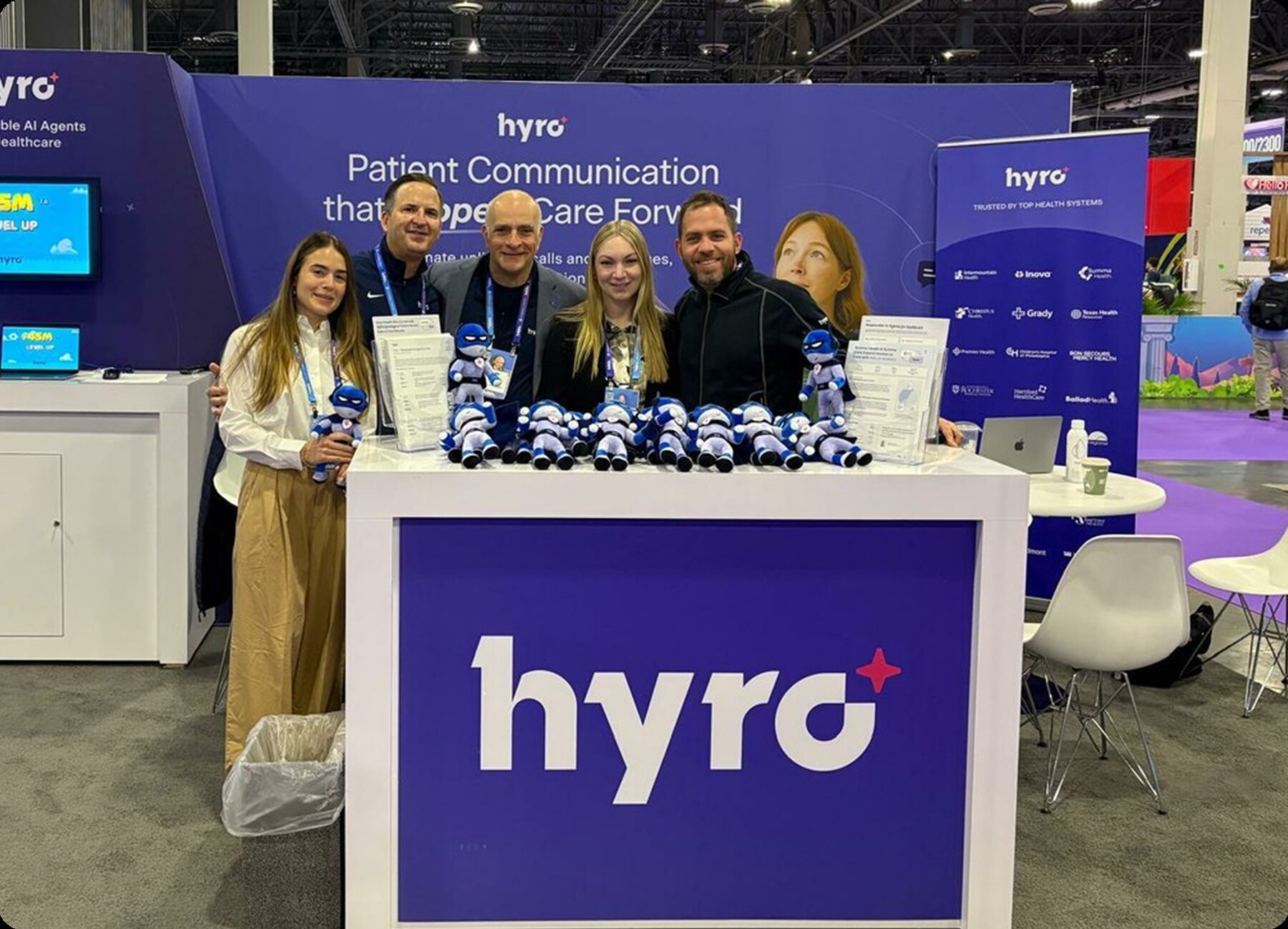
Hyro reports more than 50 healthcare organizations across 2,500 hospitals, clinics and other facilities. Named customers include Intermountain Health, Inova Health, Weill Cornell Medicine, Prisma Health, Tampa General Hospital, Sutter Health and Bon Secours Mercy Health. The last of those became an investor in Hyro's October 2025 growth round, alongside ServiceNow Ventures.
Inova reported 8.8 times return on investment in six months. Intermountain found 27 percent of patient inquiries arrived after hours and reported an 85 percent decline in call abandonment. Weill Cornell reported 47 percent more appointments booked. Those numbers are concrete enough to be interesting and varied enough to require caution. “Resolution” can mean a fully completed transaction, a correct answer or a routed call depending on the workflow. A buyer should insist on the denominator, the escalation policy and the pre-deployment baseline.
The cost is less visible. Hyro does not publish a price card. It sells custom enterprise subscriptions, typically shaped by interaction volume and deployment scope. Contract values and implementation bills in the named case studies are private. That makes the economic test straightforward: start where annual call cost, abandonment or missed appointment revenue can be measured, then compare the fee and integration work against an agreed baseline.
From taking calls to reading the whole waiting room
The product has expanded in two directions. Proactive Px, launched in 2025, moved Hyro beyond inbound support. Health systems can send voice or SMS outreach for referrals, screenings, bills, prescriptions and appointment reminders, then let the patient act inside the same conversation. Its first public campaign included ARMR, an agent intended to help patients navigate Medicaid redetermination and ACA re-enrollment amid coverage changes.
Care Intelligence, launched in June 2026, turns the accumulated conversations into an operating map. It benchmarks resolution and routing, separates clinical distress from frustration with the interaction, spots repeat callers and looks for access failures such as rising cardiology demand paired with unused slots. Hyro says its benchmark layer draws on 100 million interactions with 30 million patients. If the agents are the front desk, Care Intelligence is the manager listening for the queue nobody noticed.
That expansion is logical and risky. Conversation data can expose demand that scheduling reports miss. It can also produce tidy dashboards that imply more certainty than messy patient speech deserves. The value will depend on how well health systems validate categories, protect data, and connect a discovered bottleneck to someone empowered to fix it.
The playbook worth stealing
Hyro's copyable move is not “install an AI agent.” It is choosing one expensive, frequent and bounded job. Password resets work because the rules are explicit, the volume is visible and success is binary. Appointment changes, physician search and routine routing share those qualities. Connect the agent all the way to the system of record, retain a human escape hatch, measure cost per completed task, and expand only after the first workflow earns trust.
Conditions that help
- High, repetitive interaction volume
- Reliable knowledge and accessible APIs
- A task with a measurable completion state
- Governance plus contextual human handoff
Conditions that break it
- Low volume that cannot justify integration
- Stale data or closed systems of record
- Requests requiring clinical judgment
- No staff path for ambiguity or distress
There is a quiet discipline in that boundary. Hyro's most defensible line is not that it can talk like a person. It is that the software knows which administrative jobs it can finish, which records it may touch and when to stop. In healthcare, the glamorous demo lasts five minutes. The calendar has to work on Monday morning.