BREAKING  Pranjal Daga drops Purdue PhD, builds AI labs instead ACCEND  $3.2M seed led by Adverb Ventures YC S23  Summer 2023 batch BREX  Risk product work tied to ~$20M fraud prevented CISCO  Grew Innovation Labs from 1 to 35 CUSTOMERS  Corpay, Brex, Rippling, Rho, Column, Settle BREAKING  Pranjal Daga drops Purdue PhD, builds AI labs instead ACCEND  $3.2M seed led by Adverb Ventures YC S23  Summer 2023 batch BREX  Risk product work tied to ~$20M fraud prevented CISCO  Grew Innovation Labs from 1 to 35 CUSTOMERS  Corpay, Brex, Rippling, Rho, Column, Settle
Founder Dossier // Fintech

Pranjal Daga

He left a doctorate to build machines that read the documents nobody wants to read - and got banks to trust them.

Co-Founder & CEO, Accend YC S23 ex-Brex ex-Cisco
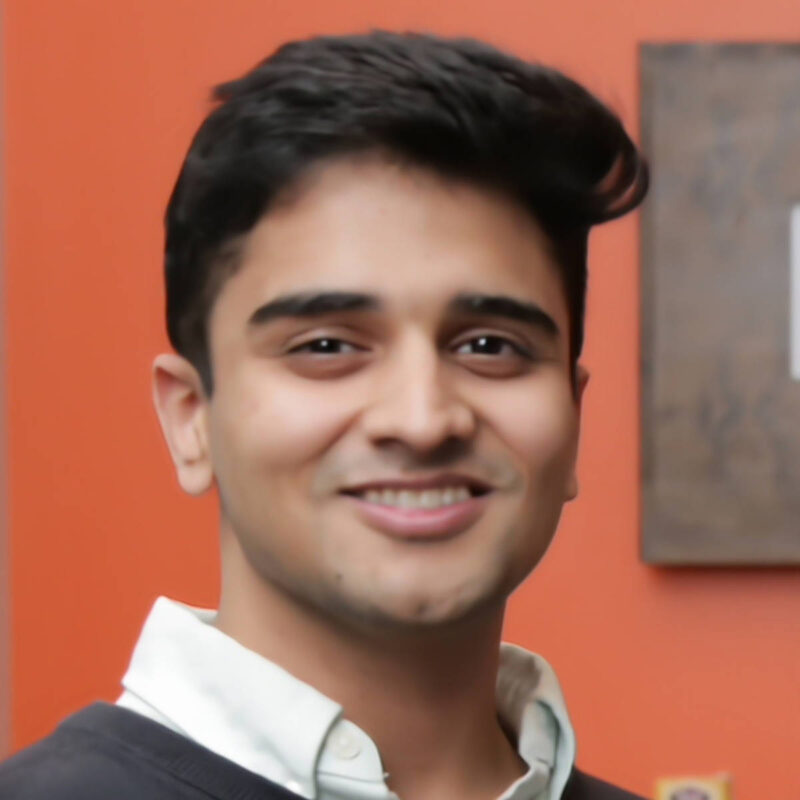
Pranjal Daga, co-founder and CEO of Accend

// The face of a man who reads credit memos for sport, then taught a computer to do it instead.

The Now

The compliance whisperer

Every loan a bank makes starts with a pile of paperwork and a tired analyst. Pranjal Daga decided the analyst could keep the judgment and hand over the pile.

Today Pranjal Daga runs Accend, a San Francisco company that builds AI agents for commercial credit underwriting and compliance at banks and fintechs. The pitch is deceptively plain: take the slow, manual back-office work - document intake, financial statement spreading, cash-flow modeling, credit memo writing, KYC review - and let software do the grinding while a human still signs off on the decision. Audit-ready AI with a person in the loop. Not a chatbot. Plumbing.

It is the kind of work that doesn't trend on social media and never will. A credit memo is not glamorous. A KYC file is not a product launch. But every fintech and every bank lives or dies on whether they can onboard a business customer quickly without letting a fraudster or a sanctioned entity slip through. That gap - fast versus careful - is the whole game. Accend's customers, names like Corpay, Brex, Rippling, Rho, Column and Settle, have cut application processing time by as much as 80 percent. Pranjal's bet is that the entire back office of finance, the part still quietly outsourced to BPO armies, is about to be rebuilt.

He is blunt about the stakes. "These shortcomings pose multiple risks," he has said of the old manual way - "the business risk of providing a suboptimal customer experience, and the compliance risk leading to hefty penalties." Speed that creates fines is not speed. That tension is what Accend was built to resolve.
$3.2M
Seed Raised
80%
Faster Processing
1 → 35
Cisco Lab Team Built
~$20M
Fraud Curbed at Brex
The Strange Path

A doctorate left on the table

Start with the choice most people would not make. Pranjal was deep into a PhD in AI and machine learning at Purdue. He had research stints at Adobe Research and at IBM Research behind him, a publication trail spanning natural language processing, computer vision and graph neural networks - an academic footprint broad enough to make a career out of any one slice of it.

He walked. Not into a safe lab job, but to help stand up Cisco Innovation Labs from scratch. He was employee one. Four years later the team was 35 strong. That is the tell about how Pranjal thinks: the unfinished dissertation mattered less than the thing he could build with his hands. He would rather grow a team from nothing than defend a thesis.

From Cisco he went to Brex, the fintech darling, and landed on the Risk team leading product for AI. This is where the Accend story actually germinates. Fraud is a numbers war fought one suspicious application at a time, and Pranjal's work there is tied to roughly $20 million in fraud losses prevented. He also met an engineer named Yutong Pei in those same trenches. Two people staring at the same problem: too much risk and compliance work still done by hand, and an obvious opening to fix it with AI.

In 2023 they left to find out. With Joseph Zhou, a former startup CFO who brought the finance lens, they founded Accend and rode into Y Combinator's Summer 2023 batch. Product, engineering, finance. A triangle, not a duo.

"The business risk of a bad experience. The compliance risk of a hefty penalty. You don't get to pick one."
- Pranjal Daga, on why onboarding is the hardest easy problem in fintech
The Build

What the robots actually do

Accend is not trying to replace the person who decides. It's trying to replace the six hours before the decision.

Intake

It reads the pile

Documents land in every format imaginable. Accend's agents ingest, classify and pull structure out of the mess so nobody re-types a bank statement again.

Spreading

It does the math

Financial statement spreading, ratio analysis, cash-flow modeling - the rote analytical work that eats an analyst's afternoon, handled in minutes.

Memo

It writes the draft

AI-generated credit memos and industry-risk assessments, sourced and checked, so the human starts from a draft instead of a blank page.

Compliance

It screens the risk

KYC review, AML screening and automated web search to verify a business is real, legitimate, and not on a list it shouldn't be.

Oversight

A human still signs

Every output is audit-ready and routed for human review. Regulators can trace the decision. That's the part competitors skip.

Portfolio

It keeps watching

Real-time business insights and portfolio monitoring after onboarding - because risk doesn't end the day the account opens.

The Target

Naming the incumbent out loud

Most startups are coy about who they want to kill. Accend isn't. Its own framing names the BPO giants - the Accentures of the world - as the thing it intends to make obsolete. For decades, when a bank needed compliance and underwriting grunt work done, it shipped the work to a building full of people. Accend's argument is that a building full of people is just an AI workflow that hasn't been written yet.

It is a confident position, and Pranjal earned the right to take it the hard way - by watching the manual machine from the inside at Brex. He didn't read about the problem in a deck. He lived in it. That is why the human-in-the-loop insistence isn't marketing. Anyone who has actually shipped risk software knows that fully autonomous and finance do not yet belong in the same sentence. The regulator has to be able to audit it. If they can't, it doesn't ship.

The Margins

Things that don't fit on a pitch deck

Rebuild the back office of finance - fast enough to delight, careful enough to survive an audit.
- The Accend thesis, in one breath