embedded-payments
(44)
Fluz makes your shopping pay a little rent
A gift card, a group of friends, and a bank account you already own: Fluz turns ordinary spending into cashback. The interesting part is who pays for it - and how much survives the fees.
BlueSnap: Your checkout has a geography problem
A payment can travel farther than the product it buys. BlueSnap makes the route matter - connecting local acquiring, billing and embedded payments in one platform, now backed by Payroc.

PushPress and the case of the never-ending class pass
A gym owner discovered that people were training on passes nobody checked. The software he helped build now connects the money, the members, and the moments that keep them coming back.
EBizCharge and the work that starts after “paid”
A payment can arrive in seconds and still leave hours of accounting behind it. EBizCharge has built a business around closing that awkward little gap.

Salonkee and the secret life of an empty chair
Five founders wanted an easier way to book a haircut. They ended up building software for the business behind the mirror - where a missed appointment, a forgotten formula and an unpaid bill all belong to the same story.

Vanco and the Art of Passing the Plate
A donation takes seconds. Accounting for it can take the afternoon. Vanco has built a business around the distance between those two things.

EatClub wants to sell the hour before dinner
An empty table has a sell-by time. EatClub turns that awkward fact into dining deals - and its bet on invisible discounts has become a business spanning Australia and Britain.

Modulr wants to make payday boring
Behind the payroll run, the used-car sale and the supplier invoice sits a surprisingly complicated money journey. Modulr is building a business by taking the manual work out of it.

ClearCourse Bought the Software Behind Britain’s Small Businesses - Then Put Payments Inside It
The quiet systems running a marina, a garage or a golf club are hard to replace and easy to overlook. ClearCourse has spent eight years buying those niche operators, joining their workflows to payments, and betting that useful beats fashionable.

Amy Huff Spent 29 Years Learning the Software Before Selling the Story
Before she became Xplor Technologies’ chief marketing officer, Amy Huff trained the users, answered the customers and managed the products. Her 29-year route to the C-suite explains why her version of marketing begins unusually close to the work.

Jenn Reichenbacher Makes the Invisible Parts of Payments Matter
The Stax executive has spent three decades turning finance, marketing, and customer experience into one discipline - with a sharp eye for data and an old-fashioned belief in earned trust.
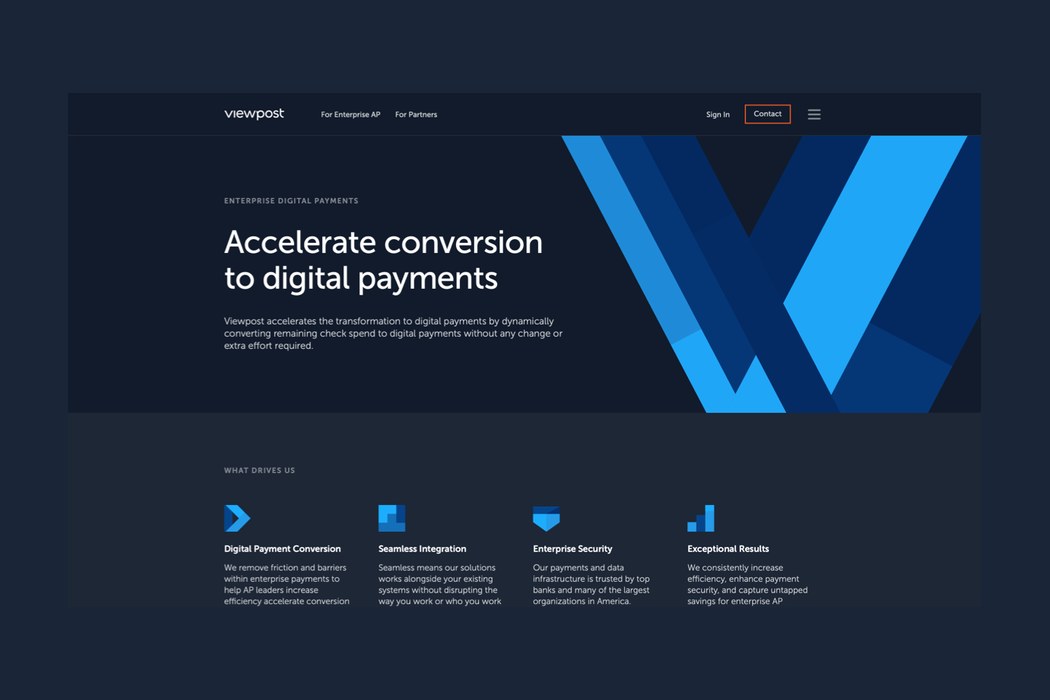
Viewpost Found a Business in the Checks Everyone Else Gave Up On
Most payment companies want to replace the plumbing. Viewpost built its second act around the opposite promise: send the same check file, keep the same partners, and let it hunt for digital payments in the stubborn remainder.

The $74 Million Bet on the People Who Keep America’s Pools Blue
A software engineer rode along with a pool pro drowning in paperwork. Nine years later, Skimmer is stitching routes, chemicals, payments, parts and construction into an operating system for an industry that still runs on truck rolls and trust.
Wink Wanted to Kill the Password. Then It Found the Payment Rails.
Wink began with a clever premise: any ordinary camera could become a checkout credential. Its 2025 merger with Phoenix Managed Networks turned that identity layer into a payments business with real rails, real distribution and a much harder question about trust.

The $47 Billion Back Office You Use Without Knowing It
Xplor Technologies stitched together the software behind gyms, golf clubs, parks, preschools and plumbers. Now it is betting an eight-figure sum that AI can turn a sprawling portfolio into one quietly useful machine.
ProfitSolv Bought the Boring Software That Keeps Professional Firms Alive - Then Added Payments
The private-equity-backed company assembled a shelf of legal and accounting software, kept the specialist brands, and built payments into the daily work. Its bet: the least glamorous screen in a firm may be the most valuable one.
Stax Bet Merchants Would Pay a Subscription to Stop Paying Markups. Then It Rebuilt the Payment Stack.
A processor laughed off Suneera Madhani's flat-fee idea. She and her brother built it anyway, reached a $1 billion valuation, and then discovered the bigger business was not one clever price - it was owning more of the machinery behind every swipe.

PatientNow Wants to Run the Whole Med Spa - Right Down to the Missed Call
The 22-year-old software company built its business by stitching charts, calendars, payments and before-and-after photos into one system. Its next bet is that artificial intelligence can catch the revenue leaking out after the front desk goes home.
One Inc Built the Checkout Lane for Insurance - Then Turned It Into a Network
The Folsom fintech started by trying to rebuild insurance software. Its sharper idea was hiding in plain sight: make money move cleanly through the industry’s messiest workflows.
Basys Spent 24 Years Making the Most Boring Part of Software Feel Human
The Kansas fintech started by selling card terminals. Now it wants banks and software companies to treat payments as a product - with custom APIs, shared revenue and a real person answering when the invisible machinery jams.

The Salon Software That Waited 30 Years for Outside Money - and What Beauty Operators Can Steal From Its Playbook
Millennium Systems International turned an 18-year-old's salon POS into Meevo, a cloud operating system used by more than 150,000 people a day. Its advantage is also its risk: three decades of industry detail packed into software that must now feel as simple as a booking link.
The 42-Year-Old Insurtech Quietly Moving $16 Billion a Year
Input 1 began with a teenager, a programming book and a family insurance business. Four decades later, its unglamorous specialty - helping insurance companies collect, reconcile and finance premiums - offers a useful playbook for building durable vertical software.

The 17-Year-Old, the Leaky Parts Room, and the Software That Runs 4,500 Dealerships
A motorcycle dealer was losing profit in the parts room. A teenage programmer built the fix. Four decades and five ownership chapters later, Lightspeed DMS is turning that stubborn little system into the operating layer for recreational retail.
PayIt Put a Checkout Button on City Hall - Then Learned Ease Is Not Adoption
PayIt built a modern front door for taxes, tags and tickets without asking government to bulldoze the systems behind it. Grand Rapids shows the playbook can work; Toronto shows exactly where it can crack.

Austin Talley Put the Checkout Counter Inside a Text Message
The Everyware founder spent two decades turning awkward business processes into software. His wager now is simple: the most useful payment terminal may be the phone already in your hand.
Greater Sum Ventures Built a Private Equity Machine With No Fund Clock
The Knoxville firm turned one church-software roll-up into a repeatable playbook for buying, combining and operating unglamorous but essential software - without the forced exit date of a conventional fund.

The Private Equity Firm That Treats Payments Like Product
Blue Star Innovation Partners does not sell founders a distant board seat. It sells them a working session - then brings a payments playbook, an operator bench, and capital to the table.

The $625 Million Bet on Making Payments Feel Personal
Celero Commerce assembled a top-tier non-bank payments platform one acquisition at a time. Its sharper idea was to pair the machinery of modern commerce with something the industry keeps automating away: a person who answers.

Fortis Wants the Payment to Disappear - and the Workflow to Finally Make Sense
Fortis spent years buying the unglamorous pieces of payment infrastructure that businesses notice only when they break. Now it is turning those pieces into one embedded layer for ERP software, receivables, checkout and reconciliation.

The Payments Company You Rarely See - Even When It Moves $700 Billion
NMI built a large payments business by staying behind the curtain. Its white-label infrastructure lets software companies and payment specialists assemble, brand and monetize the route from merchant sign-up to checkout to payout.