The least memorable payment is often the best one. It appears inside the software, accepts the money, records the invoice, updates the ledger and gets out of the way. No scavenger hunt through a second portal. No CSV passed between departments like a diplomatic pouch. No finance employee wondering why the sale exists in one system and the deposit in another. Fortis has made a business out of that vanishing act.
The Plano, Texas, company sells payment infrastructure to software platforms, ERP ecosystems, marketplaces and mid-market businesses. A Fortis integration can handle cards, ACH, mobile wallets, recurring billing, payment links, cloud-connected terminals, merchant onboarding, tokenization, reporting and settlement. The interesting part is not the length of that list. It is where the tools live: inside the systems a company already uses to sell, invoice, collect and account for money.
That makes Fortis less like a consumer fintech brand and more like a quiet translator between commerce and operations. Its job begins at checkout, but it earns its place by carrying useful data through the rest of the workflow.
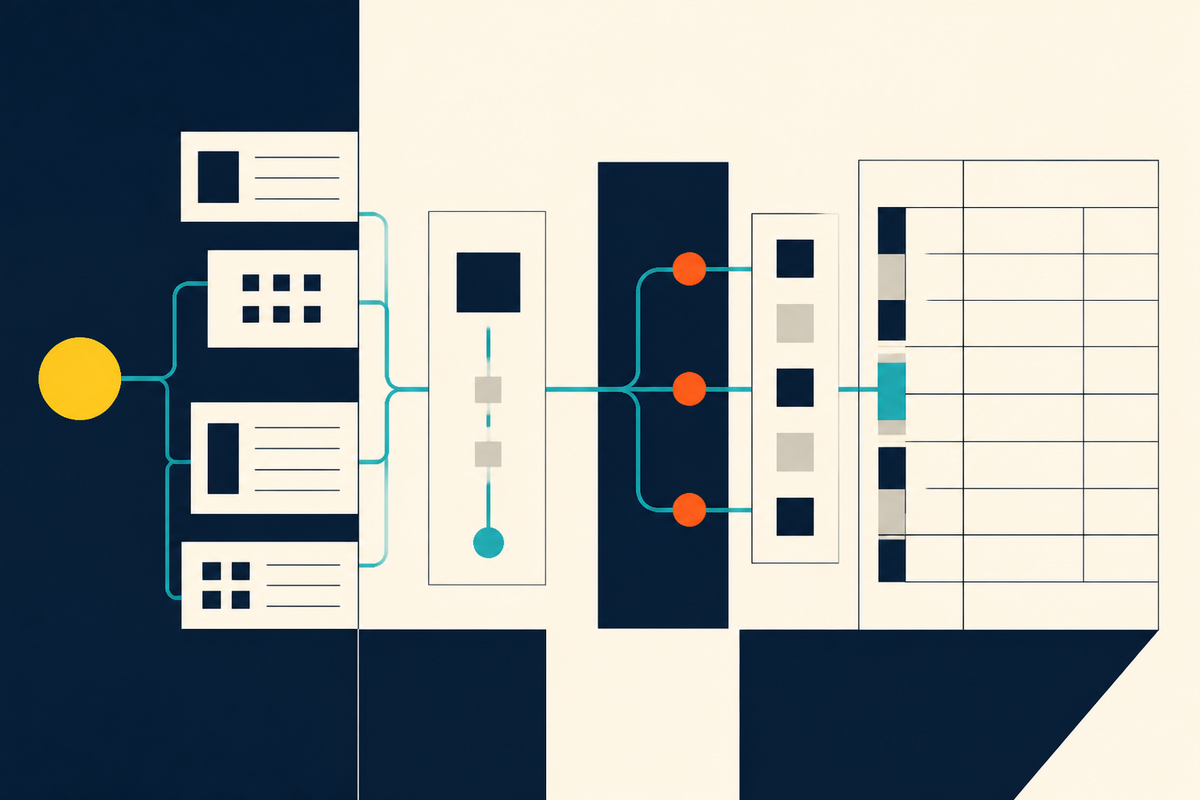
A checkout can be smooth while the business behind it is stuck in traffic
Consumer commerce trained everyone to judge payments by the last ten seconds: tap, click, confirmation. B2B commerce is less photogenic. An order might begin on a website, be amended by a salesperson, paid partly by ACH and partly by card, carry purchase-order and line-item data, and need to settle against several invoices. The customer sees a payment. The finance team sees a week of consequences.
Disconnected gateways create extra entry, brittle exports and reconciliation queues. They also hide context. A transaction without the right Level 2 or Level 3 commercial data may cost more to process. A deposit that cannot be matched cleanly slows cash application. A software provider that sends users elsewhere for payment gives up control of the experience - and often the revenue attached to it.
Fortis addresses those seams. Its Microsoft Dynamics 365 Business Central product, for example, supports card and ACH payments, recurring billing, customer payment links, tokenized card storage and automated reconciliation inside the ERP environment. Its NetSuite, Sage and Acumatica work follows the same logic: keep payment action and payment data near the operational record.
One API is the front door; industry context is the furniture
Developers encounter Fortis through an API designed for online, in-person and mobile payment scenarios. Elements is its customizable hosted interface for cards, ACH and wallets. Paylinks place a payment request inside branded email or text messages. Cloud EMV connects physical terminals without requiring traditional on-premise terminal software. Other modules cover recurring payments, account updating, invoicing, cardholder portals, fraud controls, PCI compliance and multi-merchant accounts.
A software company can embed those capabilities rather than build a regulated payments operation from scratch. Fortis can support payment-facilitator models, quick merchant onboarding and split settlement. Its Secondary Amount feature allows a platform fee to be assessed within a transaction and deposited separately. In plain English: the software provider can make payments a product and participate in the processing economics.
For merchants, the proposition is different. They are not shopping for an API philosophy; they want to collect sooner, reduce processing and administrative costs, and stop stitching reports together. Fortis offers next-day funding in some programs, automated receivables, compliant surcharging where permitted, and enriched B2B transaction data. A manufacturer can take a payment in a call center, a distributor can send an invoice link, and a field-service business can accept contactless payment on an iPhone - with the transaction tied back to the business system.
That range also reveals the business model. Fortis earns processing and platform revenue as money moves through merchant accounts; prices depend on the partner, industry, payment mix and risk profile rather than a single public rate card. Software companies can receive a portion of processing revenue, giving them a reason to make the integration central to their product. The merchant gets fewer vendors and a payment flow shaped for its workflow. Fortis gets distribution through software that customers use every day. The arrangement can be sticky because changing a processor is no longer a matter of replacing a terminal. It can mean retesting checkout, migrating stored tokens, retraining staff and rebuilding the path back to the books.
03 / How it got hereThe platform is also an acquisition history written in software
Fortis was founded in 2010 by a group that included Jimmy Nafso, Nirav Shah, Timothy Nafso and Samir Pimputkar. Several came from hotel and retail operations. That background gave the early merchant processor an unusually tactile view of payment pain: the terminal that stalls during a rush, the chargeback that needs a human answer, the processor statement that reads like weather from another planet. The company described its service as “white glove,” a hospitality phrase that still explains its preference for guided implementation and vertical expertise.
The technology strategy arrived in pieces. Fortis acquired API-first gateway Zeamster in 2019 and took investment from Lovell Minnick Partners later that year. It merged with BLUEDOG in 2020, combining gateway technology with a larger distribution operation. In 2021 it bought EpicPay and Change Merchant Solutions, adding PayFac capability and more vertical reach, then acquired OmniFund for accounts-receivable and ERP technology.
Payment Logistics followed in 2022, SmartPay in 2023, and MerchantE's NetSuite payments division in 2024. The 2025 acquisition of Serve First brought deeper B2B processing experience in wholesale, distribution and manufacturing. Lovell Minnick says Fortis increased revenue and adjusted EBITDA by more than 13 times between its 2019 investment and 2025, while building a staff of more than 325. Current head-count estimates vary; the company remains private and does not publish revenue or valuation.
Acquisitions can create breadth faster than coherence. Fortis's challenge is to make gateway code, merchant portfolios, ERP channels and service teams behave like one platform. Customers do not care which deal supplied a capability. They care whether onboarding, support and data feel continuous.
04 / The competitive laneNot as horizontal as Stripe, not as narrow as a plug-in
Payments is crowded with capable alternatives. Stripe and Adyen offer global developer platforms. Global Payments, Fiserv, Worldpay and Nuvei combine acquiring scale with software ambitions. Square is familiar to smaller merchants. Then there are ERP-focused options such as Versapay, EBizCharge and Paystand, alongside gateways including Authorize.net and Braintree.
Fortis's answer is focus. It concentrates on software-led distribution and business workflows, especially B2B, ERP, healthcare, hospitality and specialty commerce. Its platform-to-platform model is meant to preserve an ISV's branded experience and accommodate different operating models. The sales pitch combines technical flexibility with people who understand interchange, underwriting, chargebacks and the peculiarities of an industry.
Partnerships extend that lane. Fortis has built into Sage, Acumatica, Microsoft Dynamics and NetSuite ecosystems. In 2025 it released an Adobe Commerce extension certified through Adobe's App Assurance program and partnered with BigCommerce on integrated checkout, reconciliation, next-day funding and support for more than 135 currencies. Tap to Pay on iPhone added a hardware-light path for card-present acceptance.
The company now calls the broader idea “Workflow Commerce.” The phrase is new; the observation is not. Payments create the most value when they carry context and trigger the next operational step. For a software platform, that can mean stronger retention and transaction revenue. For a finance team, it can mean fewer manual touches and clearer cash flow. For a customer, it mostly means nothing strange happened.
05 / What comes nextInvisible is a demanding product standard
Fortis received a growth-oriented recapitalization from Audax Private Equity and existing investor Lovell Minnick in March 2025. The amount was not disclosed. The company used the year to add products, partnerships, an acquisition and senior executives, including a new CFO and chief risk and operations officer. That pace suggests expansion, but also raises the ordinary integration questions that follow any acquisition-heavy company.
Its market opportunity is large because business payments remain fragmented and because ERP publishers increasingly see payments as recurring revenue rather than a utility. Yet invisible infrastructure is unforgiving. Reliability, compliance, support and accurate data are the product. When they work, nobody applauds. When they fail, everyone learns the processor's name.
That asymmetry suits Fortis's origin story. A company shaped by operators has chosen an operator's problem: not how to make payment technology louder, but how to make commerce calmer. The yellow confirmation button is only the beginning. The real work is getting the money, the data and the books to agree.