accounts-receivable
(41)
Brodie Marshall Learned to Read the Ledger. Now He Teaches Machines to Do It.
He began by auditing accounts receivable, taught himself to code through games, and arrived at Monk with an unusually useful question: how do you automate money without losing the evidence?
You clicked pay. BillGO wants to cancel the paper chase.
An online bill payment can still end up in an envelope. BillGO built a business around catching it before the printer - and getting small businesses paid sooner.
Tungsten Network and the art of getting an invoice accepted
The London-born invoice network tackles a stubborn business problem: getting different companies’ accounting systems to understand each other. Its history shows why persuading suppliers matters as much as moving data.
B2BE makes the paperwork move. The hard part is getting the rules right.
Orders arrive as PDFs. Suppliers want different formats. Finance wants to get paid. B2BE has built a business in the gaps between those demands - and its customer stories show why automation starts before the software.

The $800 Million Bet on Making the Invoice Disappear
Thomson Reuters bought Pagero for roughly $800 million because Europe’s invoice is becoming a live tax report. The prize is not prettier paperwork - it is a network that makes the paperwork vanish into the workflow.
Sonovate Found Its Fortune in the 90-Day Gap Between Work and Payment
Recruiters pay people this Friday and may not collect from clients until next quarter. Sonovate turned that awkward interval into a specialist lender, a software platform and, most recently, a testing ground for digital workers.
BILL Put the Back Office on Autopilot - Then Turned It Into a $371 Billion Money Highway
Small businesses came for fewer checks and cleaner approvals. BILL stayed to build the payment rails - a network moving more than 1 percent of U.S. GDP while quietly turning accounting chores into transaction revenue.
The $160 Billion Spreadsheet Problem Handle Wants to Pour Into Concrete
Construction payments come wrapped in waivers, deadlines and state-by-state rules. Handle turned that paperwork trap into a software platform now touching more than $160 billion in invoices and financial workflows.

Elizabeth Bramlage Knows the Hard Part of Fintech Is Making It Feel Simple
Across Amazon, American Express, Klarna, ComplyAdvantage and Versapay, Elizabeth Bramlage has built a career translating financial machinery into stories people can use - and teams can act on.
BillingPlatform Bet That Every Pricing Experiment Becomes Finance's Problem - Now It Wants AI to Untangle the Bill
The Colorado software company built a business around an awkward truth: flexible pricing creates rigid accounting headaches. Its answer is one configurable system from usage event to journal entry - useful when the mess is genuinely enterprise-sized.

Riley Lovingood Has Built a Career Around the Snap
The former Tennessee long snapper now runs PAYRA, a Nashville fintech built for businesses that cannot pause to replace the systems keeping their money moving.
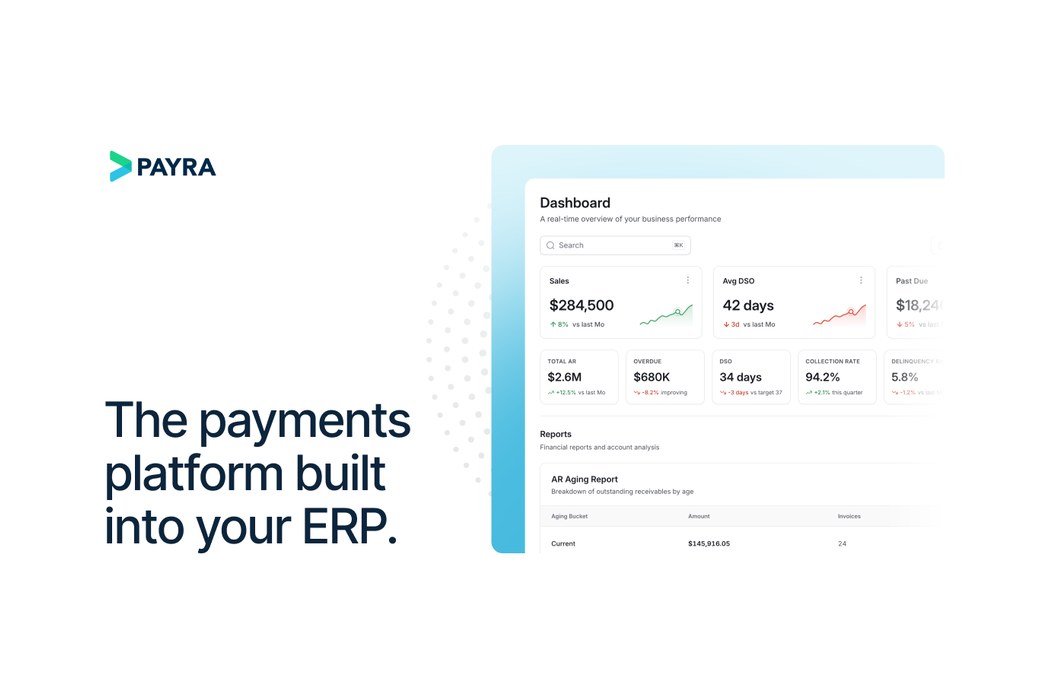
The startup teaching 30-year-old concrete ERPs to take a credit card
Payra bootstrapped its way into a $200 billion corner of the economy that still runs on paper checks and spreadsheets - then took $15 million to speed it up.

Caitlin Leksana Found a Startup in the Spreadsheet Nobody Wanted to Open
A mechanical engineer, a failed crypto startup and a hundred nervous cold messages led Caitlin Leksana to an overlooked corner of finance. Now she is building Fazeshift around a deceptively hard question: why is getting paid still managed by hand?

Aravind Gopalan Is Turning the Awkward Business of Asking for Money Into Software
After selling one startup and learning to scale products inside Freshworks, Gopalan went looking for an unglamorous, expensive problem. He found it in the gap between revenue on paper and cash in the bank.
Fortis Wants the Payment to Disappear - and the Workflow to Finally Make Sense
Fortis spent years buying the unglamorous pieces of payment infrastructure that businesses notice only when they break. Now it is turning those pieces into one embedded layer for ERP software, receivables, checkout and reconciliation.
Monkey’s R$200 Billion Trick: Make Banks Bid Against Each Other
The Brazilian fintech found a simple way to loosen a stubborn credit market: put approved invoices in front of many funders and let the lowest rate win. Now its infrastructure is moving from supply chains into cards, white-label banking and Brazil’s new digital-duplicata system.
Quadient
A century-old maker of postage meters quietly turned itself into a software company. Here is how Quadient bet its future on the mail nobody thinks about - the bills, statements and packages that decide whether a customer stays.

Peakflo
Peakflo is a Singapore-founded, Y Combinator-backed (W22) finance automation platform that puts B2B accounts receivable and accounts payable on autopilot. It connects to accounting systems and ERPs to automate invoice collections, bill payments, expense reimbursements and reconciliation, helping finance teams get paid faster, cut vendor payment time and reclaim thousands of hours a month. Positioned as the AI-native alternative to legacy AP/AR tools for the mid-market and Southeast Asia.

The New Money Company
The New Money Company (YC W24) is a San Francisco fintech that protects B2B invoices against nonpayment and moves the money across borders. Its product, Numo, underwrites a buyer's creditworthiness instantly, guarantees the seller gets paid even if the buyer defaults, and settles funds to more than 80 destinations - with an early focus on getting international contractors in emerging markets paid in USD within seconds. Founded in 2023 by three former Hologram operators, it aims to let businesses sell into new markets without carrying the risk of a buyer who never pays.

Toothy AI
Toothy AI builds HIPAA-compliant AI agents that run the insurance side of a dental practice - verifying patient coverage, filing and correcting claims, chasing denials, and posting payments. Using voice AI to make payer phone calls and portal automation to check eligibility, Toothy aims to take the roughly 160 hours a month that clinics spend on insurance busywork off staff plates. A Y Combinator Winter 2025 company founded in 2024 by Johnny Chen and Matthew Kerrigan, it sells a subscription service to dental clinics looking to collect more, faster, with smaller back-office teams.

Rohit Gupta
Rohit Gupta is the co-founder and CEO of Auditoria.AI, a Santa Clara startup that builds AI agents for corporate finance teams. A serial entrepreneur with more than 25 years in enterprise software, he previously founded the cloud-security company Palerra (acquired by Oracle in 2016) and ran the Remedy IT Service Management division at BMC Software. He started Auditoria in 2019 to bring automation to the back office of finance, and in 2025 raised a $38M Series B to push the company into the agentic-AI era.
Fluid
Fluid is a Singapore-based B2B payments platform that lets suppliers and marketplaces offer their business buyers flexible credit terms and installments at the point of purchase. Its AI underwriting engine approves buyers in seconds, pays suppliers on day one, and automates reconciliation - bringing consumer-grade buy-now-pay-later mechanics to business commerce across Southeast Asia. Founded in early 2023 by former Atome and Uber operators, Fluid has raised US$7M and serves 3,000+ businesses across Singapore and Malaysia.
ipaymy
ipaymy is a Singapore-based fintech that lets businesses and individuals use their existing credit cards to pay expenses that normally do not accept cards - rent, salaries, supplier invoices and taxes. By routing these payments through its platform, ipaymy helps users free up working capital with up to 55 days of interest-free credit, earn card rewards on everyday expenses, and get paid faster through its Fetch invoicing tool. Licensed by the Monetary Authority of Singapore as a Major Payment Institution, it operates across Singapore, Malaysia, Hong Kong and Australia.

Joyful Health
Joyful Health is a New York-based health-tech company building AI-powered financial infrastructure for healthcare revenue. Its platform connects fragmented revenue cycle systems - EHRs, billing software, clearinghouses, payer portals, and bank deposits - into a single structured view of every claim's lifecycle, then pairs AI with experienced revenue cycle operators to investigate denials, file appeals, and recover unpaid and underpaid insurance claims. The company targets the roughly $125 billion U.S. providers lose to denied and underpaid claims each year and charges on a performance basis tied to recovered revenue.

Skit.ai
Skit.ai is a New York-based conversational AI company that automates debt collection and accounts receivable operations for banks, agencies, fintechs, healthcare systems, and utilities. Founded in 2016 as Vernacular.ai and rebranded to Skit in 2021, it runs a generative-AI-powered platform of voice, SMS, email, and chat assistants plus a Collection Intelligence Platform and an ecosystem of specialized AI agents that negotiate payments, capture dispositions, and enforce federal and state collection compliance at scale.
Zenskar
Zenskar is an AI-native billing and revenue automation platform for complex B2B businesses. It combines usage-based billing, revenue recognition (ASC 606/IFRS 15), collections, usage metering and SaaS analytics into a single order-to-cash system, layering AI agents on top so finance teams can automate invoicing, dunning and month-end close without engineering support. Founded in 2021 by Apurv Bansal and Saurabh Agarwal, the New York-based company has raised roughly $24-63M and serves SaaS, cloud infrastructure, AI and fintech companies with dynamic pricing, prepaid credits, multi-entity and multi-currency needs.

Ascend
Ascend is a San Francisco-based financial operations platform purpose-built for the insurance industry. It automates the money workflows brokers, agencies, wholesalers, MGAs and carriers deal with every day - billing and invoicing, premium collection and financing, cash application, commission reconciliation and carrier payables - so businesses close their books faster and cut manual accounting work. Founded in 2021 by Andrew Wynn and Praveen Chekuri, the company is trusted by more than 4,000 insurance businesses, including over half of the 50 largest brokers in the US, and in 2026 agreed to merge with premium finance firm Honor Capital to form what the companies describe as insurance's first fully vertically integrated, AI-powered financial operations platform.

Auditoria.AI
Auditoria.AI is a Santa Clara-based enterprise software company that builds agentic AI agents for corporate finance teams, automating accounts payable and accounts receivable workflows across major ERP systems. Its SmartBots act as digital teammates that digitize invoices, chase collections, answer vendor and customer inquiries, and surface real-time cash intelligence - all governed by company policies and auditable at every step. Founded in 2019 by serial entrepreneur Rohit Gupta, the company processes more than $9B in invoicing and $2.4B in collections annually and raised a $38M Series B in early 2025.

Growfin
Growfin is a B2B SaaS company that builds an AI-powered accounts receivable (AR) automation platform - effectively a 'Finance CRM' - that helps finance teams track invoices, automate collections, match and post payments, and forecast cash inflow. Founded in 2020 by ex-Freshworks product and engineering leaders Aravind Gopalan and Raja Jayaraman, the company connects finance, sales, and customer success teams to accelerate cash collection and give CFOs visibility and predictability over receivables.

Plooto
Plooto is a Toronto-based fintech that automates accounts payable and accounts receivable for small and medium-sized businesses and the accounting firms that serve them. It unifies invoice capture, approval workflows, domestic and international payments, and two-way reconciliation with QuickBooks, Xero, and NetSuite - giving finance teams one place to control money moving in and out. More than 10,000 organizations across North America use the platform.