Richard Koh had spent fifteen and a half years building M-DAQ when he chose a rather different assignment: becoming a beginner again. In May 2025, he handed the Group CEO job to Tan Choon Seng and began a full-time, four-year PhD in business. The founder would remain non-executive chairman. The student would have to get comfortable with questions.
It was an appealing reversal. Founders spend much of their working lives persuading people that they know where they are going. Doctoral study requires room for uncertainty. Koh welcomed the change, hoping it would open another creative period. There was something familiar about the move, too. His career had already taken several detours through classrooms, failed plans and unfamiliar work.
To understand the chairman heading back to school, begin with a boy trying to sell software, then follow an accountant into a bank. Somewhere along that route, a small question about his own compensation would refuse to go away.
A software company before the school gates closed
Koh grew up as an only child in a family with little money. At fourteen, he attempted to build a software business. He stayed with it for three years before it folded. His school results also fell short of securing a place on the two-year A-level route. The early record contained ambition, effort and two conspicuous disappointments.
Accountancy became his way forward. A scholarship and changes in his academic direction eventually brought him into the profession. NTU lists him as a 1997 Nanyang Business School graduate. Later came an executive MBA at Aalto University, where he graduated as valedictorian. The education kept accumulating; the teenage outcome had hardly settled the matter.
His early professional opening came through an audit client. Koh joined JPMorgan Chase in its global markets and foreign-exchange business, eventually becoming regional head of e-commerce. He also held senior roles at Standard Chartered. Inside those banks, he learned how currencies moved, how electronic markets worked and how an idea had to survive contact with customers.
The question hidden in a payslip
In 2001, Koh had an idea that sounded almost too modest to become a company: display US stocks in Singapore dollars. Part of his bank compensation came in US-listed shares. Their dollar price was easy enough to see. Their value in the currency he used at home was another matter.
A share price and an exchange rate are both moving targets. Looking at only one leaves half the picture unfinished. A Singapore investor may be pleased with a stock’s performance in US dollars while seeing a different result after conversion. The problem becomes more awkward when the currency rate for the actual transaction arrives separately from the decision to buy.
Koh’s question joined two worlds that financial systems often handled separately. It concerned the price a person could understand and the amount that person would eventually pay or receive. The attraction was practical. People could make a decision in familiar money, with fewer calculations standing between the screen and the transaction.
He carried the idea through his banking years. At a career crossroads in late 2009, he decided to build it. M-DAQ’s foundations were laid that December; the company dates its founding to January 2010. Wong Joo Seng and Noboru Takahashi joined him as co-founders. A question born inside a bank now needed a business outside one.
Two moving numbers. One price an investor can read in familiar money.
Eight months is a long time to believe
The first years tested a more uncomfortable kind of conversion: turning conviction into enough cash to keep going. In 2012, a dispute between investors left M-DAQ without cash for roughly eight months. Members of the team stayed through the funding gap. Fresh funding arrived in 2013 after the company demonstrated a securities-trading solution.
There is a temptation to make loyalty sound effortless after the danger has passed. Eight months gives that word some weight. A product can remain intellectually promising while the business around it struggles to continue. For a founder, colleagues who stay become part of the explanation for everything that follows.
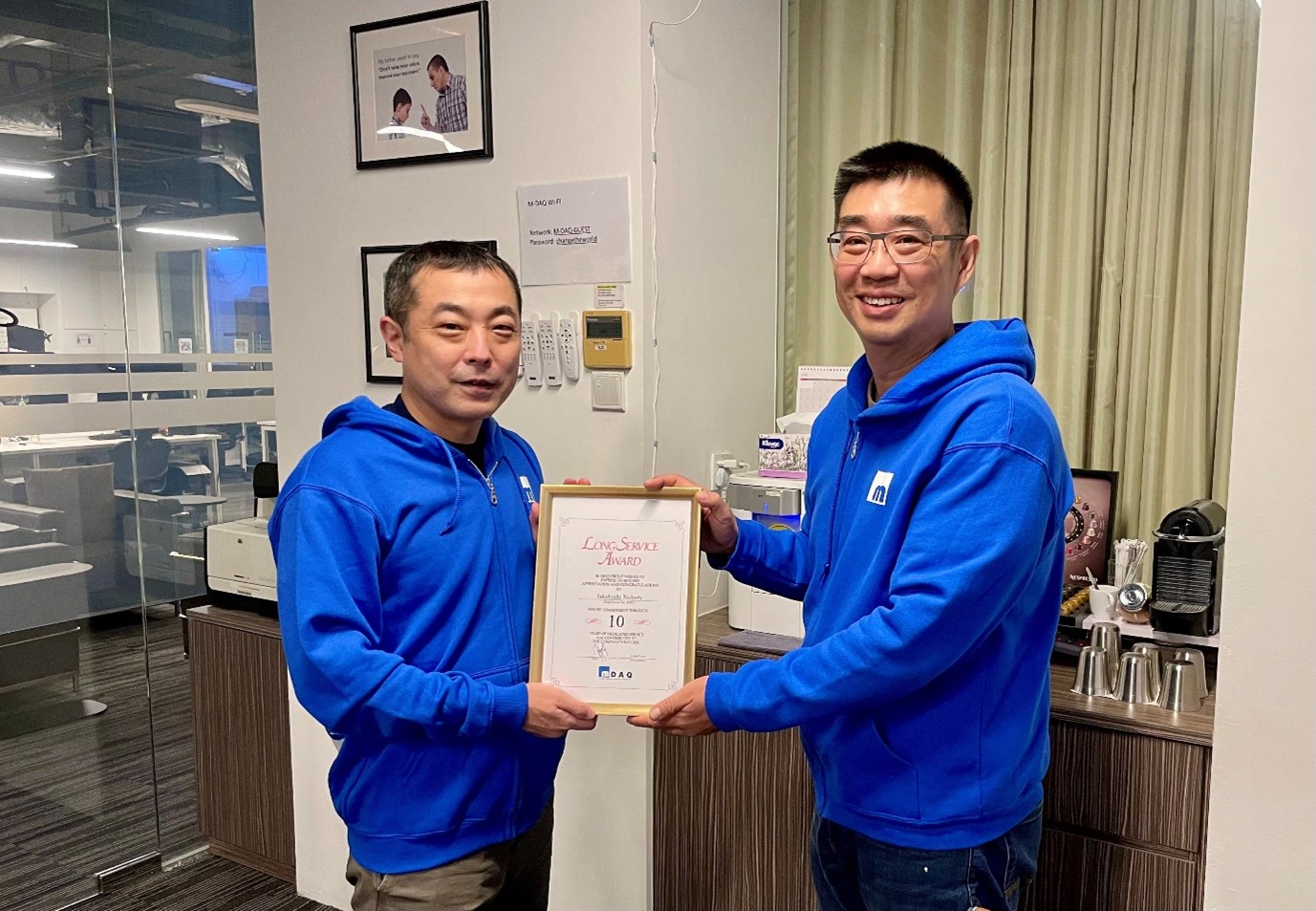
Takahashi’s arrival offered a particularly human example. The JPMorgan veteran moved to Singapore to join M-DAQ in 2010, only six months short of a twenty-year pension milestone at the bank. Koh recalled that his colleague did not ask about salary. He did eventually ask for a bidet in the new office. Even a leap of faith can come with a sensible facilities request.
Years later, Koh still named the people who made the company possible. In his handover message, he credited complementary partners who could turn his ideas into working products. He described himself as more drawn to dreaming, patents and product development. The acknowledgement helps explain why the founder could contemplate giving someone else the chief executive’s chair.
The same question, a different checkout
In 2015, the business found a new use for its currency expertise. Alibaba and Ant Group opened the route into e-commerce. M-DAQ adapted its original approach so customers shopping across borders could see prices in their local currencies. A question about a banker’s shares had travelled to the checkout.
The setting changed, but the awkwardness was recognisable. An unfamiliar currency makes a shopper perform extra work before deciding whether something is affordable. A price that changes between browsing and paying introduces another hesitation. Sellers, meanwhile, may want to receive a different currency from the one their customers prefer to use.
M-DAQ’s Aladdin product addressed that gap by allowing buyers to shop in their home currency while merchants received their preferred currency. The product placed the foreign-exchange machinery behind a familiar number. For a shopper, the useful part was the price. The engineering could remain backstage, where engineering often does its most courteous work.
By 2018, M-DAQ had become net profitable. In August 2021, Affinity Equity Partners invested approximately S$200 million in its Series D round. Ant Group, EDBI, NTT Communications, Samsung and Kiwoom-Shinhan were among its investors and business partners. The list illustrates how far Koh’s idea had travelled through institutions as well as countries.
- 2001US shares, seen in Singapore dollars
- 2010M-DAQ begins in Singapore
- 2015The currency idea reaches e-commerce
- 2018The company becomes net profitable
- 2025Koh hands over the CEO role
≈ S$200 million
Affinity Equity Partners’ investment in M-DAQ.
The stock-market idea never left
The e-commerce pivot did not erase the original securities question. M-DAQ developed Trading the Right Chart, or TRC, around the relationship between a share transaction and its currency conversion. Koh explained the approach in a 2023 interview: allow orders in an investor’s portfolio currency and link the foreign-exchange component to execution of the underlying trade.
The distinction is timing. Converting money before buying can leave a foreign-currency balance waiting for an order that never happens. Converting after buying can leave the home-currency cost uncertain when the investment decision is made. TRC’s proposed at-trade model brings the two events together. It is a technical answer to the old, ordinary question: how much does this cost me?
Japan gave that idea another setting. In March 2024, Koh discussed a feasibility study with the Fukuoka Stock Exchange to examine implementing TRC. He described Fukuoka’s cooperation between public and private organisations as resembling Singapore’s. The company had chosen a city where relationships could help an unfamiliar financial product find its footing.
A feasibility study has its own quiet discipline. It asks whether an attractive concept can work in a particular market, with particular participants. Koh’s Japanese account focused on collaboration, local institutions and practical cross-border use. The currency problem travelled widely; its implementation still required people on the ground.
An apprentice programme with a Star Wars name
Koh’s attention to learning extends into the company. M-DAQ has used a “padawan” programme to expose high-potential employees to new projects and initiatives. The name borrows from Star Wars; the purpose is fairly down-to-earth. Give people a chance to attempt something unfamiliar, then examine mistakes for lessons.
He has argued that leaders should mentor people and offer another chance to those who stumble. Given his own early experience, the view has some biographical substance. A failed venture at fourteen and a missed academic route could have become a permanent verdict. His later career supplies reasons to resist treating the first result as the final one.
At NTU, mentoring has also meant individual conversations. Duo Geng, an NBS graduate working in people and strategy at Glints, recalled Koh’s advice about leadership and making space to think. One experiment was a “blue-sky-day”: clear the calendar and work in a different environment. The suggestion is wonderfully ungrand. Move the schedule, move the setting, see what becomes thinkable.
His teaching and advisory work now occupy a substantial place in his public life. He is an adjunct associate professor at Nanyang Business School and serves on its advisory board, alongside the NUS Business School accounting advisory board and the ISCA Academy board. His professional experience has become material other people can question, use and improve.
Giving the next chapter some daylight
There are other small windows into Koh’s habits. In 2023, M-DAQ described his use of electric vehicles and solar panels at home, and his advocacy for solar installations at a commercial building and schools. He had taken an interest in the infrastructure around everyday life as well as the infrastructure behind payments.
The recognitions arrived along the way: Singapore Computer Society’s Entrepreneur of the Year in 2018, EY’s financial-technology category award in 2020 and NTU’s Nanyang Alumni Achievement Award in 2024. They mark different audiences noticing the work. They also sit beside a less ceremonial continuity: the willingness to return to a problem, change the setting and keep learning.
On 13 May 2025, Tan Choon Seng became Group CEO. He had joined M-DAQ in 2022 and served as general manager of revenue and chief of staff. Koh’s new role concentrated on board governance. He expressed confidence in Tan and hoped his successor would guide the company towards a liquidity event, an aspiration rather than a completed milestone.
“The lightness of being a beginner again, less sure about everything.”
Richard Koh, on starting his PhD in 2025
For Koh, the handover made space for study without cutting his ties to the business. After years of finding answers for investors, shoppers and colleagues, he had arranged a setting in which uncertainty was useful again. The fourteen-year-old software entrepreneur had learned that a first attempt could end. The chairman had learned that another attempt could begin.