A child wants to play. A parent wants to know whether the game was worth playing. In 2011, Bjorn Lee was building a company around the distance between those two wishes. Stickery, the educational games startup he co-founded in San Francisco, approached the smartphone as something a family could share, with different reasons for picking it up. The small screen had room for more than one customer.
Lee called it a “dual-user model”. Children would experience the game; parents would control access and look for evidence of learning. His proposed destination was an on-demand teaching assistant for parents. It was a product idea with a domestic negotiation built into it. The mermaid could have her adventure, provided somebody could explain what she had taught the child.
That early distinction offers a useful way to read the Singaporean entrepreneur’s subsequent career. He moved through games, customer-service software and the company he helped establish in 2017, MindFi. The settings changed. The question of how a product serves a person while satisfying somebody else remained. This is an interpretation of the work, rather than a theory Lee has attached to every job. But it makes the route considerably more interesting than a procession of titles.
A degree with an exit door
Before the companies came a choice of university course. Lee’s parents suggested law. He chose business at the National University of Singapore, drawn by the opportunity to join the NUS Overseas Colleges programme. He graduated in 2006. His education included the programme’s Silicon Valley experience and coursework at Stanford, an encounter with entrepreneurship that later appeared in the story of his partnerships.
On his LinkedIn profile, there is another revealing piece of student work: an honours thesis examining influence in social-networking websites, using Facebook as its research subject. He also completed the interdisciplinary University Scholars Programme and served as president of the sixth NUS Entrepreneurs’ Association in Silicon Valley. Both the classroom and the student community were places to study how ideas travelled between people.
A business degree can look tidy in retrospect. At the time, Lee’s choice involved turning away from the profession his parents had proposed toward a programme offering exposure to startups abroad. There is no need to invent a family confrontation to appreciate the fork in the road. One option had a familiar professional name. The other put him near people trying to create occupations that did not yet have one.
- 2006NUS business graduate
- 2010Starts Stickery
- 2013Joins Zopim
- 2017Co-founds MindFi
- 2021YC Summer batch
First, assemble the room
Lee was also part of the early group behind e27, the Southeast Asian startup community and media business. Mohan Belani’s account of its beginnings places Bjorn Lee and Justin Lee among the people who started a community at NUS before Belani returned from his own overseas programme in July 2007. This was a collective beginning, with other future founders in the group.
The distinction matters. A startup ecosystem sounds impressively permanent once it has conferences, investors and an address everyone recognises. A community begins with the more ordinary work of bringing people together. Lee’s early involvement places him on that side of Singapore’s startup history: helping build a setting in which other people’s companies could take shape.
His public career has continued to intersect with that community. In 2018, he returned to NUS as a speaker at UNICON, alongside Seedly co-founder Kenneth Lou and RateX co-founder Jake Goh. In 2019, he began a part-time entrepreneur-in-residence role at WeWork, helping early-stage businesses with product management, marketing and company culture. Building a product and talking to people who are building one have occupied adjacent spaces in his working life.
A mermaid, a parent and a business model
Stickery began in 2010 and attracted Google Ventures backing. By October 2011, its ambitions were being expressed through children’s games, including Mermaid Waters: Adventures of Hana & Cory, which taught basic mathematics. A contemporary funding announcement put the investment at $325,000, with Google Ventures, 500 Startups and other investors participating.
The premise had a practical complication. A child’s enthusiasm and a parent’s approval are separate tests. The parent might value an account of progress that the child would find entirely uninteresting. The child might love an animation that tells the adult very little. Designing for both means deciding which information belongs to whom, rather than treating everyone who touches a device as the same user.
It is tempting to make educational software sound like a simple bargain: entertainment in, knowledge out. Lee’s stated interest in giving parents data and context was more specific. He wanted the phone to help adults understand their children through the games. The device would mediate a relationship as well as deliver a game. In that arrangement, a successful session had to survive scrutiny after the screen went dark.
Stickery was eventually acquired in 2013. That year also brought the next stage of Lee’s career, in product innovation and management at Zopim. The move took him from a founder’s own venture into another startup’s product organisation. A completed chapter did not mean he was finished with the problem of serving multiple constituencies.
When the buyer wears a different badge
At Zopim, Lee served as head of product innovation. Zendesk acquired the company in 2014, and Lee’s background includes work as a Zendesk product manager. His experience now involved software sold to businesses, a different commercial setting from the preschool games he had helped create.
There is a useful tension in business software. The person signing the contract may rarely use the tool. The person using it every day may have little say in the purchase. A product must make sense in the procurement conversation and in the ordinary working hours that follow. Those are different performances, sometimes delivered by the same button.
MindFi took Lee further into that territory. Co-founded in 2017, the company entered Y Combinator’s Summer 2021 batch. Its directory entry identifies Lee’s previous Zendesk experience and describes selling to companies in Asia, including Deutsche Bank, KPMG, PatSnap and Visa. The business placed individual users inside an organisational buying decision.
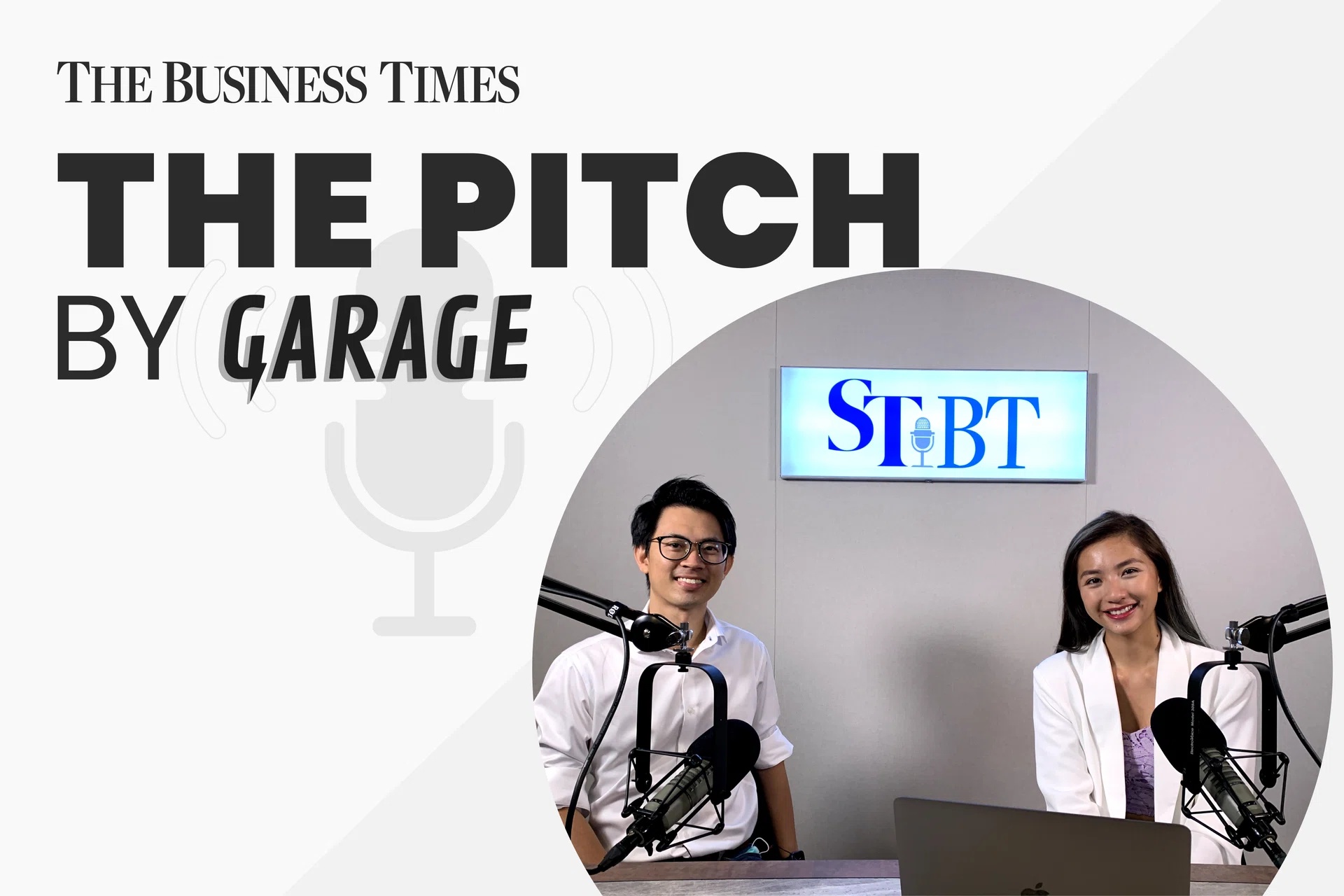
A July 2022 podcast conversation with Vanessa Ho addressed how MindFi developed its product for consumers and corporate customers. By December 2023, Lee was discussing regional expansion, localisation and the need for HR teams to become more comfortable with data and technology. The audience had changed from parents to employers. The requirement to persuade more than one person had grown familiar.
The calendar is a product, too
For someone who works on software, Lee has supplied a notably mundane description of his own operating system: his calendar. In a first-person account published in 2019, he said he placed external meetings at the beginning or end of the day, protecting the middle for team discussions and concentrated work. Anyone who has watched a promising afternoon dissolve into appointments can recognise the appeal.
This is a small detail with more texture than a founder’s usual declaration of relentless productivity. Meetings have social momentum. A calendar invitation gives an hour a purpose before anyone has established whether that purpose deserves an hour. Lee’s arrangement assigned different kinds of conversation to different parts of the day. It made room for work that needed continuity.
He has also described himself as a science-fiction enthusiast, interested in stories about humanity’s relationship with technology. His Medium biography ends with the joke “Waiting for warp drive.” It is a pleasant line for a product manager: even the future has an outstanding feature request. His interest in speculative stories gives a more personal colour to a career often summarised through accelerators and employers.
In a public post accompanying a Mothership video appearance, he resisted the notion that social platforms are staffed by mysterious villains. His description was more ordinary: they are made by people, and can connect audiences and teach new ideas. It is a view of technology that leaves responsibility with both its makers and its users, without requiring a secret lair.
“Waiting for warp drive.”Bjorn Lee’s Medium biography
Back to the question
There is a later turn in the public record. The speaker list for e27’s Flux Series, dated 14 October 2025, named Lee as CEO of “Stealth Mode”. The event concentrated on practical uses of AI for small and medium-sized businesses. The listing gives a title and a setting; it leaves the venture’s details behind the curtain.
MindFi’s present leadership page names co-founder Leon CK Leong as chief executive. Lee’s place in this story is therefore as its co-founder and founding CEO, with earlier product work at Zendesk and Zopim behind him. A person’s career deserves the same care with version numbers as a software release. Old descriptions can remain searchable long after the organisation has moved on.
Look back across the visible chapters and the recurring interest is people in relation to other people. A student investigates influence on Facebook. A community brings founders together. A games company tries to give parents context. A workplace business must satisfy individual users and corporate buyers. These connections do not erase the differences between the projects. They make those differences worth examining.
The childhood game is still a good place to begin. Two people hold the same phone and expect different things from it. Neither expectation disappears because the product designer prefers the other one. Lee’s career has repeatedly put him near that negotiation. The customer behind the customer remains there, waiting to be considered, usually with a perfectly reasonable question and considerably less patience than the mermaid.