Thirty dollars is a peculiar price for permission. It can be a modest dinner bill or a substantial obstacle, depending on how much money you have brought to the table. For Rohit Mulani, trying to buy U.S. stocks from Singapore, it was a trading charge that made the invitation to become an investor feel rather conditional. The companies were familiar. The route to owning them was expensive.
He tried Robinhood, too. An American Social Security number was required. Here was another door with a very particular key. His frustration eventually became Gotrade, founded in 2019 with Norman Wanto and David Grant. The idea was easy to explain: let people outside the United States buy into its stock market without needing a large starting sum. Getting that idea into somebody’s hands took considerably longer.
By 2026, Mulani’s work had moved through a consumer investing app, a digital bank’s investment offering and a brokerage infrastructure company. He is now President of Alpaca Southeast Asia. The titles have changed; the recurring problem has a familiar shape. A person wants to participate. Between intention and action sit prices, paperwork, product design and rules.
A warehouse before Wall Street
Before Gotrade, Mulani worked on growth in venture-backed software businesses. One stop was Spaceship, a Singapore storage startup where he led sales and marketing in 2015. The company offered collection, warehouse storage and return delivery, with an online dashboard for keeping track of belongings. Its name suggested escape velocity. Its business dealt with the more terrestrial question of where to put your things.
At Spaceship, he described a plan to serve small businesses and accept bulky or awkwardly sized items. That is a pleasingly specific commercial concern. A customer’s problem is seldom as tidy as the category written on a pitch deck. Some possessions refuse to fit the box. Some customers refuse to fit the assumptions.
His writing that October provides a clearer view of how he thought about finding those customers. In an essay on startup marketing, he argued against chasing a user target before understanding the larger plan. The sequence he proposed began with discovering a target market, asking whether the product delivered value, and improving it until people would miss it.
Only then came the work of finding channels, measuring conversion and fixing the places where prospective customers dropped away. The argument favoured patient discovery over a clever trick. Read alongside his later career, it offers a useful thread: first identify the obstruction in somebody’s life, then build something they have a reason to keep using. A growth chart comes afterwards.
One dollar, several moving parts
Gotrade joined Y Combinator’s Summer 2019 batch. The founding team brought different skills to the same problem. Wanto built technology; Grant brought brokerage operating experience, including a previous role as CEO of Charles Schwab Singapore. Mulani’s account of recruiting Grant emphasised what experience made possible: building processes as well as a product. An investing app needs both, even when only one appears in the screenshots.
The first invite-only pilot arrived in March 2021, roughly two years into the undertaking. Development and licensing had to come before the download. A $7 million seed round followed that June, led by LocalGlobe, with participation from investors including Social Leverage, Picus Capital and Y Combinator. This was capital for a company whose appeal rested partly on letting its customers begin with very little capital of their own.
Fractional shares gave the product its most legible unit: $1. In Alpaca’s 2021 description of the service, Gotrade enabled investors in more than 150 countries to buy whole or fractional U.S. shares. Rather than making the price of an entire share the admission charge, the app could accommodate a smaller budget. It changed the amount needed to start, while leaving the underlying business of investing intact.
Alpaca supplied the brokerage infrastructure through its Broker API. Behind the simple purchase were stock execution, account systems and the connection to the U.S. market. The screen could be approachable because other layers handled the machinery. Mulani’s later move to Alpaca would take him closer to those layers. The partner behind the early product would become his next workplace.
“Fractional trading is from $1 and anybody can get access.”
Rohit Mulani, June 2021
The meeting behind the milestone
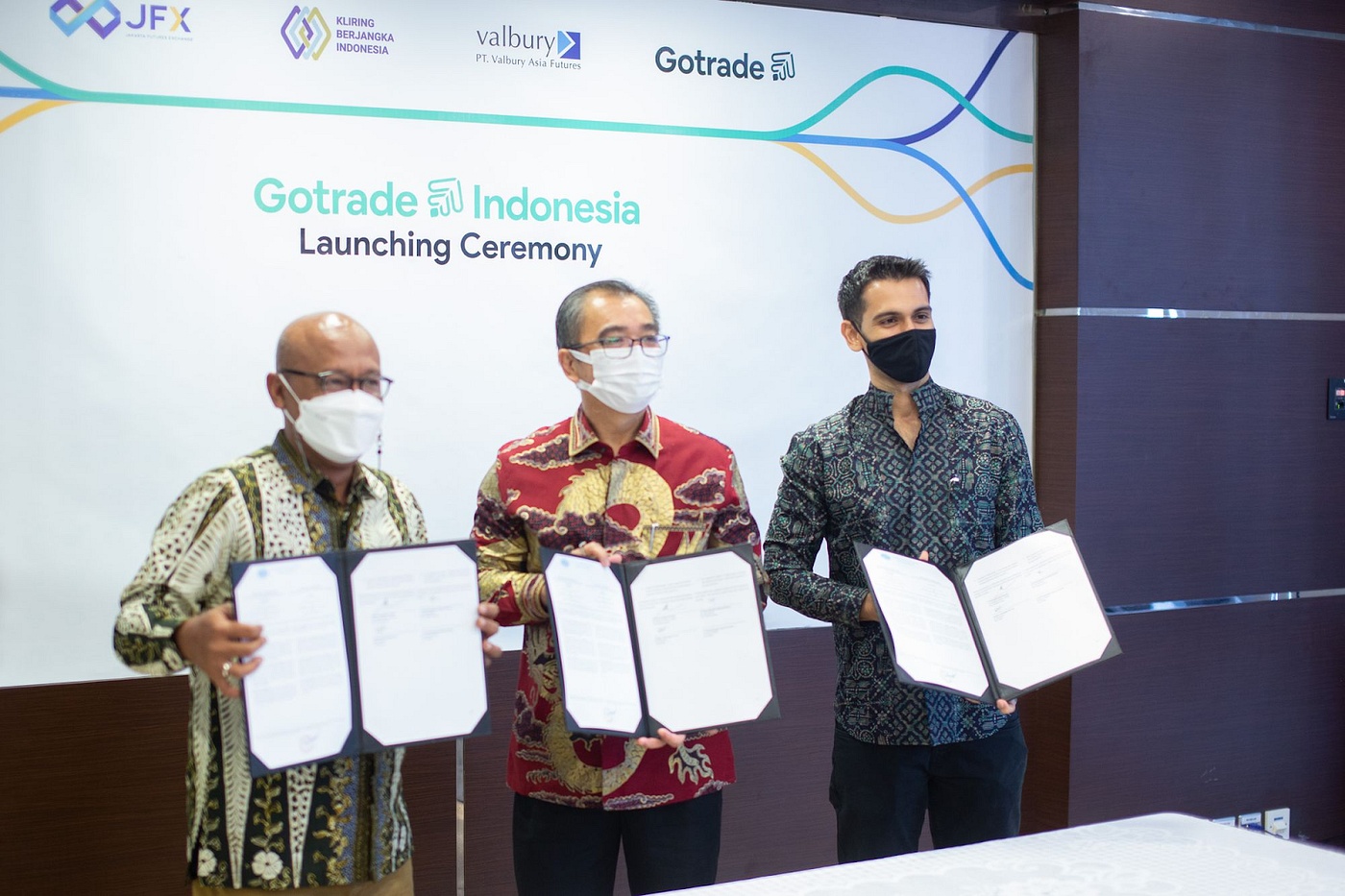
The Indonesian launch in April 2022 makes the practical side of Mulani’s work visible. A photograph shows him beside Fajar Wibhiyadi, then CEO of the Indonesian Futures Clearing House, and Stefanus Paulus Lumintang, then CEO of the Jakarta Futures Exchange. Each holds an open document. It is a photograph of people who have reached an agreement, which is a useful corrective to the usual startup photograph of people pointing at a laptop.
Gotrade Indonesia worked with Valbury Asia Futures, the exchange and the clearing house to offer access through fully backed contracts. The 2022 arrangement used derivatives backed by real shares held in the United States. That distinction matters: the Indonesian product had a particular legal structure, rather than simply being the international app translated into another language.
LocalGlobe investor Remus Brett remembered Mulani’s detailed knowledge of Indonesia’s regulatory environment in their earliest conversations in 2019. He also credited the relationships with Grant and Valbury owner Andrew Haryono. Haryono had been involved from the beginning and was formally recognised as a co-founder in 2022. In Brett’s assessment, the team’s ability to work through regulation could become a lasting competitive advantage.
That launch came with a $15.5 million Series A led by Velocity Capital Fintech Ventures. The company reported more than 500,000 users across over 140 countries during its first year, with growth driven by referrals and word of mouth. It planned local languages and deposit methods. A global ambition was becoming a set of local jobs.
Users reported after the app’s first year. Historical company figure, rather than a current count.
A different doorway at Trust
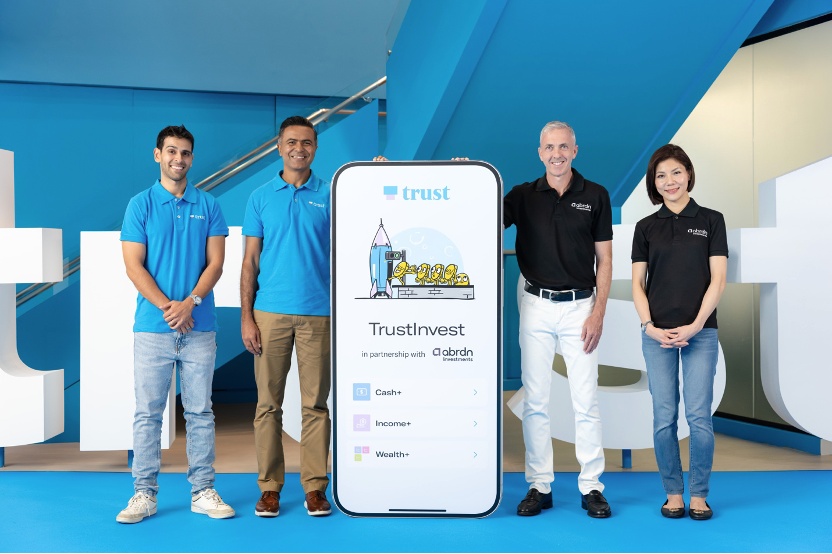
TrustInvest brought the access question into an existing banking relationship. In February 2025, Trust Bank Singapore announced an investment offering inside its app, alongside reaching one million banking customers. Mulani appeared at the launch as the bank’s Head of Invest. Next to him were Trust CEO Dwaipayan Sadhu and investment partner abrdn’s Asia-Pacific CEO Ian Macdonald and Southeast Asia wholesale head Natalie Tan.
The launch offered five funds covering different goals and risk profiles, with an entry amount of S$100. Its announced fee structure had a fund management fee, with no platform or sales fees. Those were the terms of that launch, and the product was a different proposition from buying fractional shares through Gotrade.
The continuity is in the doorway. Gotrade asked someone to try a new investing app. TrustInvest met a customer inside a bank app they could already use. One approach built a destination; the other added a service to an existing relationship. Mulani had worked on both sides of that decision. Distribution, the subject of his earlier marketing essay, was again part of the product itself.
Back to the machinery
Alpaca later announced Mulani’s appointment as CEO of its Singapore operation, citing his work founding and leading Gotrade and TrustInvest. By September 2026, its public announcement identified him as President of Alpaca Southeast Asia, with David Grant serving as CEO of Alpaca Singapore. The two Gotrade co-founders were working together again, now on the infrastructure side of investing.
On 28 September, Alpaca Singapore announced in-principle approval from the Monetary Authority of Singapore for a Capital Markets Services licence. The status was conditional. It did not yet authorise the entity to provide the planned brokerage and custodial services. That precision belongs in this story because permission has always been part of the work, from the first inaccessible brokerage account onwards.
Mulani described Singapore as a hub connecting the region’s investors to global markets. The proposed services would support institutional partners locally. The scale of the job had shifted: help other financial businesses offer access, rather than put every customer inside a single app.
Earlier that year, in April, he discussed Alpaca’s engagement with Philippine regulators, the Philippine Stock Exchange and local brokers. He pointed to demand for foreign securities and explained how fractional purchases could lower the amount required to assemble a portfolio. He also argued that participation in U.S. markets could encourage participation in local markets. That was his case for broader access, rather than a promise about investment returns.
The geography was changing while the questions stayed concrete. Which institution can offer the service? Under which framework? What minimum amount makes participation practical? The attractive little buy button depends on answers that rarely fit on the button.
A book, and some room to think
There is a quieter detail in Mulani’s account of his working life. In January 2023, he described a fully remote company and days organised around growth and product stand-ups, individual meetings and wider operational discussions. The calendar was full of conversation. Learning, he said, was something he preferred to do through printed books.
Among the books he named were Annie Duke’s Thinking in Bets and William MacAskill’s What We Owe the Future. He had also begun setting aside occasional half-hour walks without an audiobook, a call or anything else competing for attention. He described the point simply as making room for reflection. After a day spent moving information around, he wanted time to consider it.
It is an ordinary detail, and useful for that reason. Mulani’s public career contains funding rounds, market launches and executive titles. It also contains somebody deliberately leaving a gap in the day. The original complaint was concrete, too: a fee, an account requirement, a transaction that was difficult to make. His career keeps returning to the space between wanting to begin and being able to begin. There is plenty of work in that space.