A property company sounds like an odd destination for someone who writes about the future of finance. There are keys, appointments, agents and the stubborn requirement that a buyer actually like the place. In September 2019, Jonghyun Kim was announced as an incoming board member of Rever, a Vietnamese property platform, following a US$2.3 million investment by the joint GEC-KIP fund. The company combined digital tools with physical experience centres. Its future still involved opening a door.
That combination makes a useful introduction to Kim, also known professionally as Synclare. His career connects financial research, books, venture investment and the work of running Korea Investment Partners' Singapore operation. Across those roles, technology meets institutions that have their own habits and requirements. A promising idea has to survive the trip from a presentation to somebody's everyday business.
The researcher who moved closer to the decision
Before Kim became a venture investor, he worked in research at Samsung Economic Research Institute and Woori Finance Research Institute. Finance and information technology were his territory. His earlier career also included KTB Network and Mirae Asset Venture Investment. He joined Korea Investment Partners in 2016, bringing that background into a firm where research could lead to a decision to fund a company.
His academic route crossed three institutions: a bachelor's degree in business at Sogang University, a master's in management information systems at KAIST, and a doctorate in business administration at Sungkyunkwan University. The combination places the business question beside the technical one. Who needs a service? How might it work? An investor eventually has to add another: can a team build a business around it?
Kim's account of his investment interests gives the career change a specific purpose. Research into the financial sector drew his attention to gaps in access and limitations in existing systems. He came to see technology as a way to widen participation, and venture investing as a way to support the teams attempting it. That is a practical ambition. Financial access is experienced through the services people can actually use.
“Investing in the architects of tomorrow.”
Jonghyun Kim's KIP team tagline
The architectural metaphor fits the task. A financial product needs supporting structures: distribution, usable software and a workable place within the rules. Even a handsome building needs plumbing. Kim's present areas of interest include fintech, AI applications, software as a service and blockchain, all fields in which the usefulness of the underlying system deserves close inspection.
A bookshelf with a business model inside
Alongside investing, Kim has continued to explain business change in print. His books include Hidden Market, 새로운 업의 발견 and Fintech 4.0. His publishing biography also records teaching at Sungkyunkwan University, an earlier adjunct appointment in financial IT at Konkuk University, and a research fellowship at the National University of Singapore's School of Computing. These are different ways of staying in conversation with the same subject.
The 2025 edition of Fintech 4.0 was published on August 26 by the Korea Banking Institute. Its contents move from definitions and business models into the histories of PayPal and Alipay, internet banking, global competition and the future of financial services. The book also gives space to policy and regulation. The glamorous part of fintech has to share a table with the paperwork.
That range is revealing. Readers are asked to consider how companies develop, how established financial businesses respond and how public rules shape what becomes possible. It offers a broader view than a procession of product launches. A payment service lives among merchants, users and institutions; changing the interface is only one part of changing the experience.
Kim has taken that explanatory work onto public stages, too. At Korea Fintech Week in May 2019, he was scheduled to speak on the Korean fintech industry's growth and direction as KIP's managing director and fintech team head. The programme put that subject alongside discussions of financial policy and developments in Singapore, Vietnam and Europe. His specialist subject already had an international itinerary.
Blockchain has to earn its place
Kim's interest in new technology predates some of the later attention around his Singapore role. He led investment in the Korean digital-asset exchange Korbit in December 2016. By April 2021, his discussion of blockchain investing centred on companies capable of demonstrating commercial uses, including applications in existing industries. He expected investment to concentrate around businesses that had already established workable models.
One example was TEMCO, associated with the luxury-shopping marketplace Guhada. KIP made a further investment in the business in 2021 after an earlier investment in 2018. Its work included supply-chain traceability. The underlying question was concrete: could a technology help establish information about goods moving through a commercial system? A luxury purchase gives the question an especially well-dressed setting.
Kim also treated regulation as part of an industry's long-term development. In that 2021 interview, he described progress in the policy environment since he began fintech investing in 2016 and argued that a better framework could support continuing innovation. Read together, these positions suggest an emphasis on usable products and durable operating conditions. The technology still needs somewhere sensible to live.
Singapore, then a wider circle
KIP chose Kim to lead its Singapore entity when it established the operation in 2019. He had been heading the firm's fintech investment team. The regional venture had a partner-led beginning: in 2018, KIP and Singapore's Golden Equator launched their joint technology and innovation fund. Building a local operation added a continuing presence to that relationship.
By October 2023, Korea Investment Partners Southeast Asia had announced a US$60 million close for its own flagship venture fund. Investors included institutions from South Korea, Hong Kong and Singapore. The fund targeted companies from seed through Series B, with fintech, property technology and enterprise software among its focus areas. A portion was reserved for Korean companies expanding into Southeast Asia.
Kim described the firm's intention to use KIP's networks to identify and support emerging companies across the region. For a founder, that proposition has practical meaning: an investor's connections may introduce a prospective collaborator or help make an unfamiliar market less remote. The regional operation gives those conversations an institutional home. Geography becomes something to work through, meeting by meeting.
Announced fund close for investments from seed through Series B.
The person at the other end of the cheque
The Rever investment offers an earlier example of that involvement. Kim was to represent the GEC-KIP fund on the company's board and provide support to its team. In explaining his confidence, he pointed to the founders' varied backgrounds and experience at companies including VNG and Grab. The people carrying out the plan were central to his reasoning.
“We are looking forward to an exciting journey ahead with the team!” he said at the time. The joint fund had previously invested in Singapore's Ohmyhome, another property business combining online services with the work required to complete transactions. Together, the deals show an interest in businesses where software and the physical world remain closely acquainted.
A founder's account adds another texture. In 2023, Yann Schuermans welcomed KIP Southeast Asia and Golden Equator Ventures as investors, recalling repeated meetings with Kim and colleague Shane Ang during the previous year. They had discussed possibilities and shared learning before the investment announcement. Schuermans described the capital as “patient, long-term, and helpful.” The relationship had accumulated before the cheque arrived.
It is a small, telling episode. Funding announcements compress a relationship into a date and a list of names. The conversations leading there can be much less tidy. A founder may have to explain the business several times, and an investor may need to see how the thinking develops. Schuermans' recollection gives that preparatory work its place in the story.
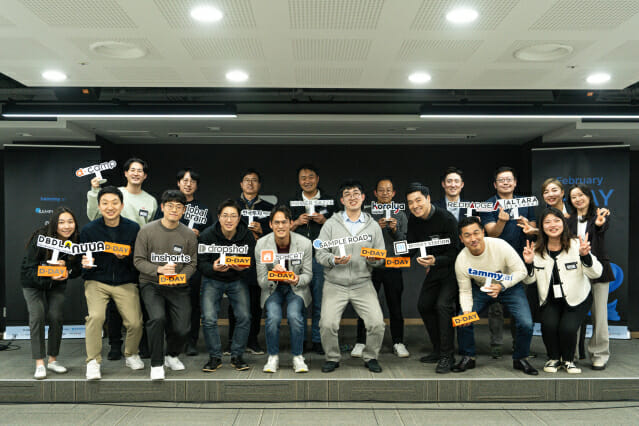
Back in the room where ideas get tested
In February 2024, Kim joined the judging panel for D.Camp's D.Day, an event featuring companies with international ambitions. Other judges included investors from Global Brain, Primer Sazze, Korelya Capital, Redbadge Pacific and Altara Ventures. Inshorts, which develops an AI solution for placing advertising in video, won the competition. Kim's role placed him among founders presenting businesses beyond his established fintech speciality.
In April 2025, he appeared in the announcement of an oversubscribed funding round for viAct, whose AI systems serve industrial workplaces. Korea Investment Partners participated alongside Singtel Innov8 and the PolyU Entrepreneurship Investment Fund in a round led by VentureWave Capital. Kim spoke about the company's opportunity to extend its technology internationally. The setting had shifted again, from financial systems to working environments.
A new edition of his fintech book followed that August. Investment and explanation continue side by side in his public work. There is a consistent question running between them: what happens when a technical possibility meets the people and organisations expected to use it? In Kim's career, the answer has taken the form of research, teaching, board involvement and investment. The door at the property viewing is a useful reminder. Eventually, somebody has to walk through.