A pitch deck can tell an investor what a startup wants to build. It cannot tell a first-time founder which investor will take the meeting, which corporate team might try the product or whom to ask about entering Singapore. ACE.SG works in that less glamorous territory between having an idea and finding people who can help test it.
The Action Community for Entrepreneurship is Singapore's startup trade association, with a brief that stretches from policy representation to practical founder support. Its calendar contains workshops, investor sessions and overseas missions. Its programmes bring together startups, corporations, educational institutions, capital providers and public agencies. For a founder, the attraction is straightforward: fewer disconnected searches for useful advice and access.
There is a revealing distinction in its offer. Startup membership is promoted as complimentary, while the incubator publishes a participation fee. A founder can enter the community without buying the whole curriculum. That makes ACE.SG worth understanding as several services with different purposes, commitments and entry conditions.
A government initiative learns to share the steering wheel
ACE began in 2003 under the Ministry of Trade and Industry. Looking back in January 2014, then-Minister of State Teo Ser Luck described an earlier Singapore with few entrepreneurial networks, limited resources and a less welcoming view of starting a business as a career. The initial problem was basic support: people needed somewhere to find financing, learn and meet one another.
By 2014, the diagnosis had changed. An entrepreneurship review had consulted more than 100 entrepreneurs, investors and incubators over six months. It identified difficulties selling to large organisations without a track record, alongside the need to expand beyond Singapore's small domestic market. Starting more businesses was only part of the job; helping them grow required different connections.
The review recommended a larger private-sector role in a maturing startup scene. ACE was subsequently relaunched as a private sector-led nonprofit. Government support continued, but entrepreneurs and business practitioners gained a larger leadership role. That institutional change explains the organisation better than a conventional founder biography. Its mandate came from public policy; its delivery increasingly depended on people who had built businesses themselves.
Three months, S$2,000, no equity
The incubator makes the support tangible. Its FAQ, updated in June 2025, lists a S$2,000 fee for a three-month programme, including classes, mentoring and three months of coworking. It takes no equity and permits up to two participants per team. Applicants must be tech startups less than ten years old, incorporated or planning to incorporate in Singapore; founder nationality does not determine eligibility.
The curriculum covers business models, product-market fit, hiring, go-to-market planning, fundraising and legal and intellectual-property questions. Those subjects describe the intended buyer: an early-stage team still assembling the commercial foundations of its company. The programme also offers consultations and a demo day. Paying buys participation in that process, with the work of finding customers still sitting firmly with the founders.
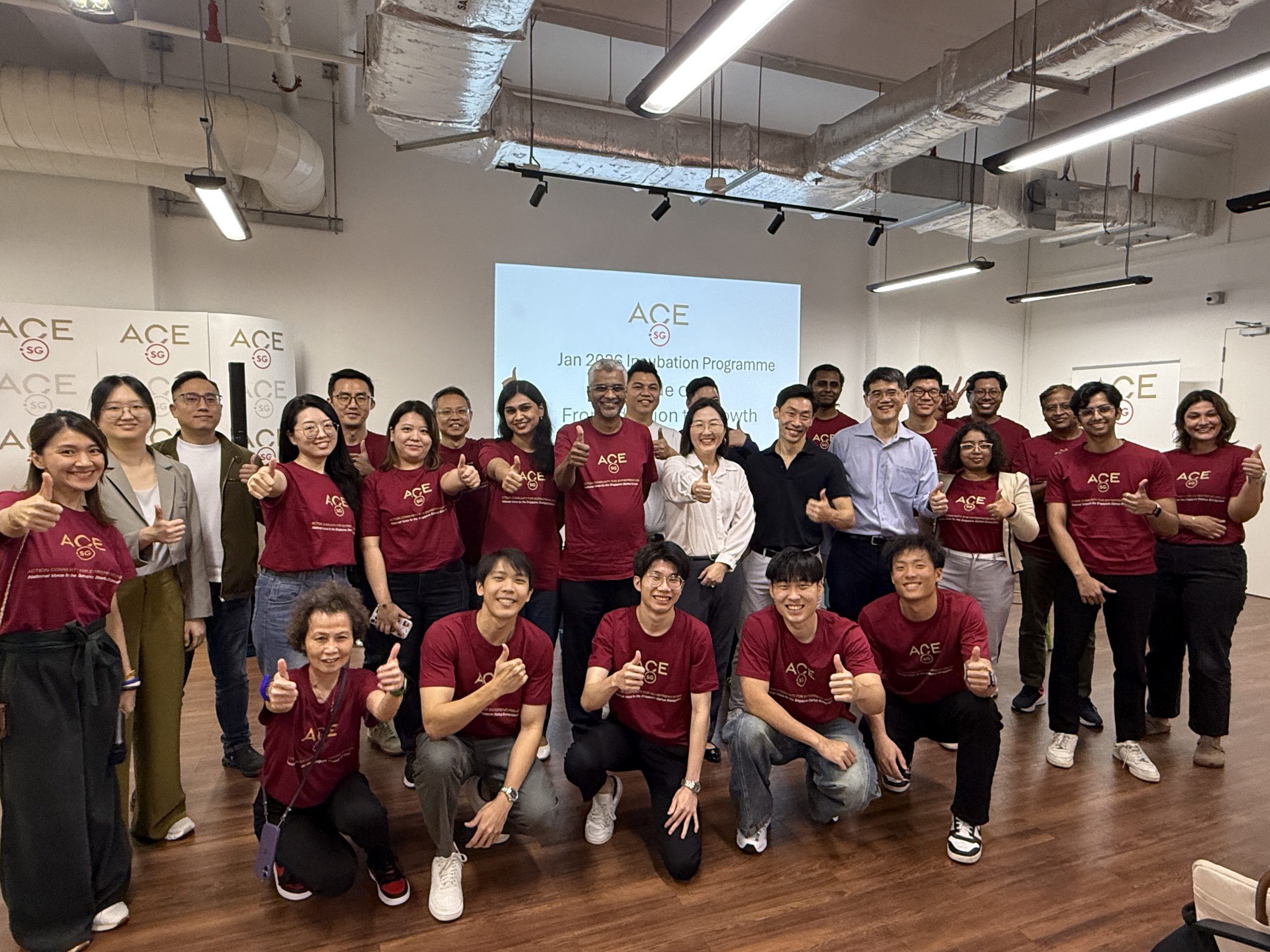
Some of ACE's earlier support left a personal impression. In a testimonial on the incubator website, Carousell co-founder Quek Siew Rui recalls an early startup grant: “It was an important psychological boost to our business.” The remark captures something a benefits spreadsheet misses: assistance can also give a young team confidence to keep working.
A front door for founders arriving from abroad
International access has become a substantial part of the job. Stage One, jointly initiated by Enterprise Singapore and the Economic Development Board and supported by JTC, is operated by ACE.SG. Announced at SWITCH in 2024, its physical campus opened at LaunchPad @ One-North on 30 October 2025.
Its remit follows three practical needs: setting up, building capabilities and finding market opportunities. At the campus opening, Enterprise Singapore said ACE.SG had received interest and engaged close to 700 local and international startups since the announcement. New agreements with Finland's Maria 01 and Switzerland's Innovaud added connections into European startup communities.
The wider international work runs in both directions. Overseas missions take Singapore-based founders into other markets for organised meetings with agencies, research institutions, investors and fellow entrepreneurs. Singapore Immersion helps incoming startups explore the local business environment. Growth Beyond Borders sessions provide market intelligence before a company commits to a trip or expansion effort.
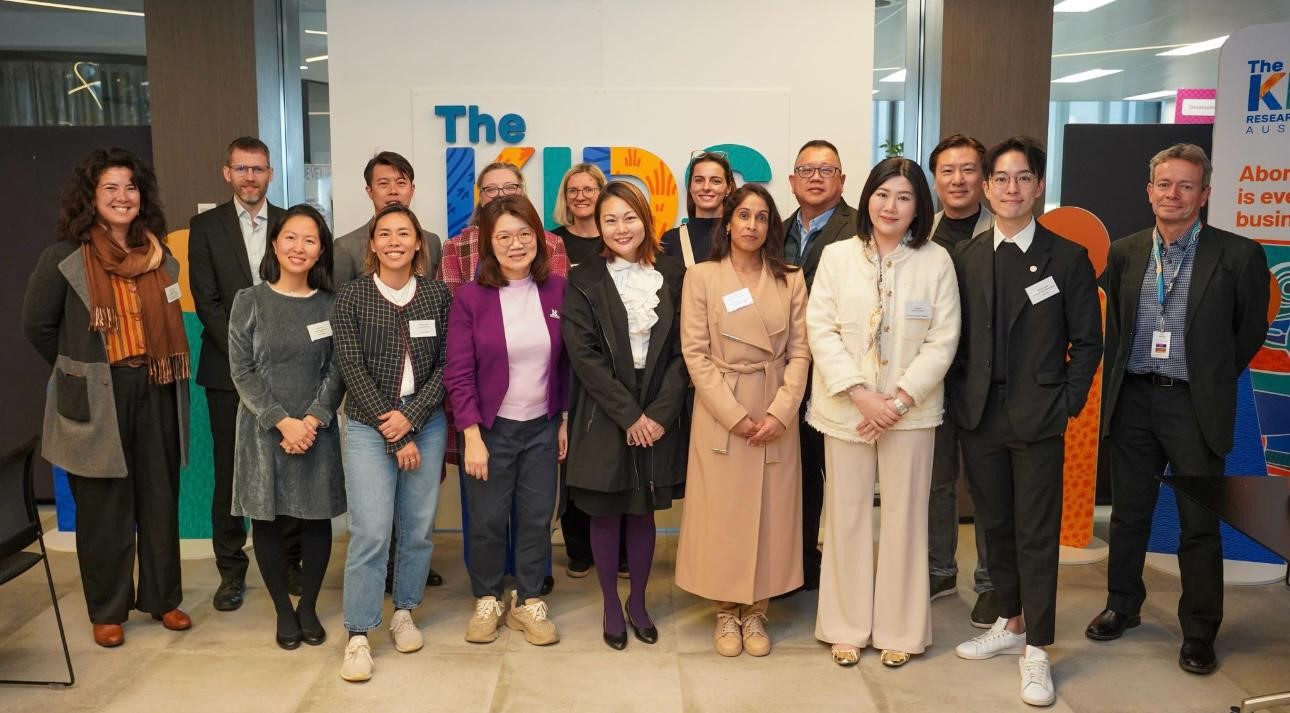
In its 2025 year-end account, ACE.SG reported five outbound missions, covering Japan, Korea, Taiwan, Australia and the UAE. It also reported engaging more than 900 foreign startups from around 40 markets. These are measures of activity and reach. A useful commercial result still depends on what the parties do after the meeting.
“One big challenge is having access to global markets.”
Joseph Khong, ACE communications executive, speaking to KrASIA in 2023
The useful part of a network is a specific request
ACE.SG divides its local connections into recognisable formats. Innovation Nexus Connect brings corporate problem statements together with startup solutions. In-Residence offers monthly consultations with mentors, corporate partners and investors. ShowcACE gives partners a platform to share specialist knowledge. FundrACE arranges targeted fundraising sessions.
The names are cheerful; founders should be precise. Someone trying to understand an investor's expectations has a different need from someone seeking a pilot customer. The practical lesson to copy is to define that need before choosing an event. A conversation becomes easier to evaluate when the founder can say what decision it is supposed to improve.
An editorial guide to the services, not a required sequence or a promise of results.
A separate Startup Support Package handles more mundane expenses. Its listings include banking, incorporation, legal advice, hiring, cloud services and workspace offers. Examples include up to six months of Notion's Business plan and a first-year brioHR software discount. Each offer needs to be judged against the startup's actual spending and the provider's conditions. A perk has value when it removes a cost the business would otherwise incur.
That distinction also clarifies the business model. ACE.SG operates as a nonprofit association and programme provider, collaborating with public agencies and commercial partners. Its activities include paid incubation and training alongside complimentary membership and partner resources. The various offers should be evaluated separately: membership, a course and an overseas programme are different commitments.
A classroom, a committee and a gastropark
The organisation's educational work starts before incorporation. Its youth programmes combine ecosystem visits with founders recounting their experiences. ACEpiration introduces participants to LaunchPad and even includes Timbre+, the industrial gastropark. It is a pleasingly literal way to make entrepreneurship less abstract: see where founders work, then see where they might have lunch.
The National Youth Entrepreneurship Awards provide an annual platform for young founders. The Academy adds continuing education, including programmes listed with Ngee Ann Polytechnic and the Singapore University of Social Sciences. Its 2026 offerings cover startup strategy, funding, operations and angel investing. Teaching investors as well as founders broadens the audience beyond people preparing their first pitch.
ACE.SG also launched its Women's Entrepreneurship Committee in March 2024. Its work includes mentoring, advocacy and international networking, and the association describes it as part of an effort to reach beyond technology startups. Alongside youth initiatives and founder-led learning, this shows the community culture ACE.SG is trying to build: multiple ways to participate, at different stages of a career.
Introductions need somewhere to lead
The 2026 partnership activity points toward practical next steps. A Vidacity collaboration announced in April covers founder referrals, joint programmes and community connections. It sits alongside ACE.SG's Stage One role at One-North. In March, JTC also announced a joint agreement with ACE.SG and INSEAD intended to give startups access to global hubs.
The near-term calendar makes that international brief visible. ACE.SG lists a VC Office Hour for 22 September 2026, hosted by Artem PACE with MDEC and Stage One. The session is reserved for qualified investors and features Malaysian technology companies. For founders browsing the site, that is a useful reminder to check the audience before registering: some gatherings are built around investor needs, and an event listing is not an open invitation to every startup.
These arrangements matter because a useful network needs places to test ideas and people able to act on them. ACE.SG's involvement in the immersion programme for SLINGSHOT 2025's Top 60 startups offers another example: a competition became an occasion for mentoring, workshops and introductions within Singapore's innovation community.
Founders have alternatives. NUS Enterprise's BLOCK71 offers incubation and international connections, while specialist accelerators can organise support around a narrower technology or sector. ACE.SG's distinctive combination is trade representation plus practical programmes across the wider startup community. Its advocacy work gives recurring founder problems a route into discussions with public agencies, alongside the individual help offered through training and introductions.
That breadth is useful when the problem is finding guidance, partners or an entry point into a market. It has less to offer someone expecting attendance alone to produce demand. A specialised technical problem may require a specialist programme. An untested product still needs testing. Founders can make a clearer choice by naming the gap they want ACE.SG to help close.
For someone considering the association, the next move can be modest: explore membership, choose a relevant consultation or examine the incubator's terms. Bring a defined customer problem and a question worth answering. ACE.SG can arrange the room and help identify the people in it. The founder needs to arrive ready for a conversation that goes somewhere.
Find your next conversation
Explore the programmes, follow the community or watch an incubator course preview.