A startup can have a working product, a polished pitch and no idea whom to call on Monday morning. French Tech Méditerranée occupies that awkward gap between building something and getting someone to buy it. Its offer is grounded in introductions: to a bank, a public-service expert, a larger company or another founder who has already wrestled with the same problem.
For an eligible startup in Gard or Hérault, membership costs €100 for 2026. One useful service costs nothing at all: individual expert appointments through French Tech Central, including for businesses that have never joined. There is a refreshing lack of velvet rope in that detail.
The association’s challenge is familiar to anyone who has returned from a conference with a pocketful of business cards. A contact is easy to collect. A useful next step takes more work. French Tech Méditerranée’s story is about organizing that work, across two departments and a sometimes bewildering collection of institutions.
A national movement, a local number to call
Created in February 2019, the association received the Capitale French Tech label that April. Its first publicly reported president was Frédéric Salles, then CEO of Matooma, supported by a group of entrepreneurs. The national badge gave a local coalition a shared identity and a route into France’s startup programs.
Today its stated territory is Gard and Hérault. Startups, scale-ups and innovative businesses are its core audience; universities, incubators, larger companies and public bodies also participate. A December 2024 report put membership at 250. That dated figure describes an association of some substance without turning everyone in the regional technology economy into a supposed customer.
Its place in the market is between organizations that already exist. Incubators such as BIC de Montpellier and BIC Innov’up offer another route into business support. Chambers of commerce serve a broader business public. French Tech Méditerranée brings the national startup movement into these local relationships. Some apparent alternatives are collaborators, which makes this a poor subject for a winner-takes-all league table.
The appointment comes before the membership card
French Tech Central is the clearest demonstration of the offer. Its booking site sorts help by the problem a business is trying to solve: financing, international development, initial procedures, talent, tax, communication, human resources and legal questions. Entrepreneurs choose a participating public organization or private partner, select an appointment and receive an email confirmation.
The service is free for innovative businesses across stages of development, from startups to larger companies. Meetings take place by video or in person through thematic workshops. Membership is explicitly optional. A founder can therefore test the usefulness of the network with a concrete question before paying to become part of it.
The expertise comes partly from knowing which specialist belongs in the conversation. That is a modest-sounding skill until a small team has spent several afternoons finding the right office. For a participant, preparation matters: bring the decision, the relevant documents and the point of uncertainty. An appointment can clarify a route; the business still has to travel it.

Lockdown gave the network a harder question
The pandemic was an early test for an association built around connecting people. During the first lockdown, it collected information on aid and health measures. A Covid task force brought together banks, incubators and public institutions. During the second lockdown, weekly virtual coffee calls gave members somewhere to discuss immediate difficulties.
The consequential move was a July 2020 survey. Businesses put market access and financing at the top of their priorities, and the association used those answers to build its 2021 action plan. This is a documented change in the agenda, with members supplying the reason.
Business Link made the commercial emphasis tangible. For March 2021, the association reported 12 large companies, 19 startups, 73 qualified meetings and 10 projects underway. Those figures describe activity and developing relationships, not booked revenue. They also suggest a useful discipline for other networks: identify what buyers need, arrange relevant conversations and look beyond the attendance sheet.
Reported activity. Projects underway do not mean completed sales.
Put the buyer on the agenda
That concern now has a national counterpart in Je choisis la French Tech, which encourages public and private organizations to purchase from French startups. French Tech Méditerranée relays the initiative locally. The national ambition is to double those purchases by 2027, an objective rather than a result the local association can claim.
One practical component is Je choisis la French Tech Académie, launched nationally in February 2025 with OpenClassrooms. The free online course takes four hours and introduces startups to public procurement. Forty specialists contributed to its development. It treats selling to public buyers as something founders can learn, with preparation preceding the pitch.
A more immediate commercial offer appeared around REF Montpellier on September 10, 2026. The association advertised five exhibition places for member startups at €500 excluding VAT each. Selection was to be conducted with MEDEF Hérault Montpellier. The attraction was exposure to a broader economic audience than a conventional startup gathering.
That offer gives a founder a straightforward decision to make: are the relevant buyers likely to be there, and is the company ready to follow up? A stand buys a chance to be seen. The sales case still needs to justify the spend.
Another route in, for founders without the usual connections
French Tech Tremplin addresses access at an earlier stage. Created nationally in 2019, the program supports entrepreneurs from backgrounds underrepresented in technology. The local association describes preparatory support and an incubation route connecting selected businesses with partner incubators and the surrounding business community.
The national fifth cohort, announced in June 2026, includes incubation and financial support of up to €15,000 under the program’s conditions. That money belongs to a selective national support mechanism. It should be understood separately from paying association dues or meeting an investor at an event.
At the other end of the maturity range, French Tech Next40/120 offers selected growth companies state support, administrative connections and peer exchange. The association’s program menu therefore spans very different needs. A first-time founder and an established scale-up may share the French Tech name while requiring entirely different appointments.
Entrepreneurs choose the agenda
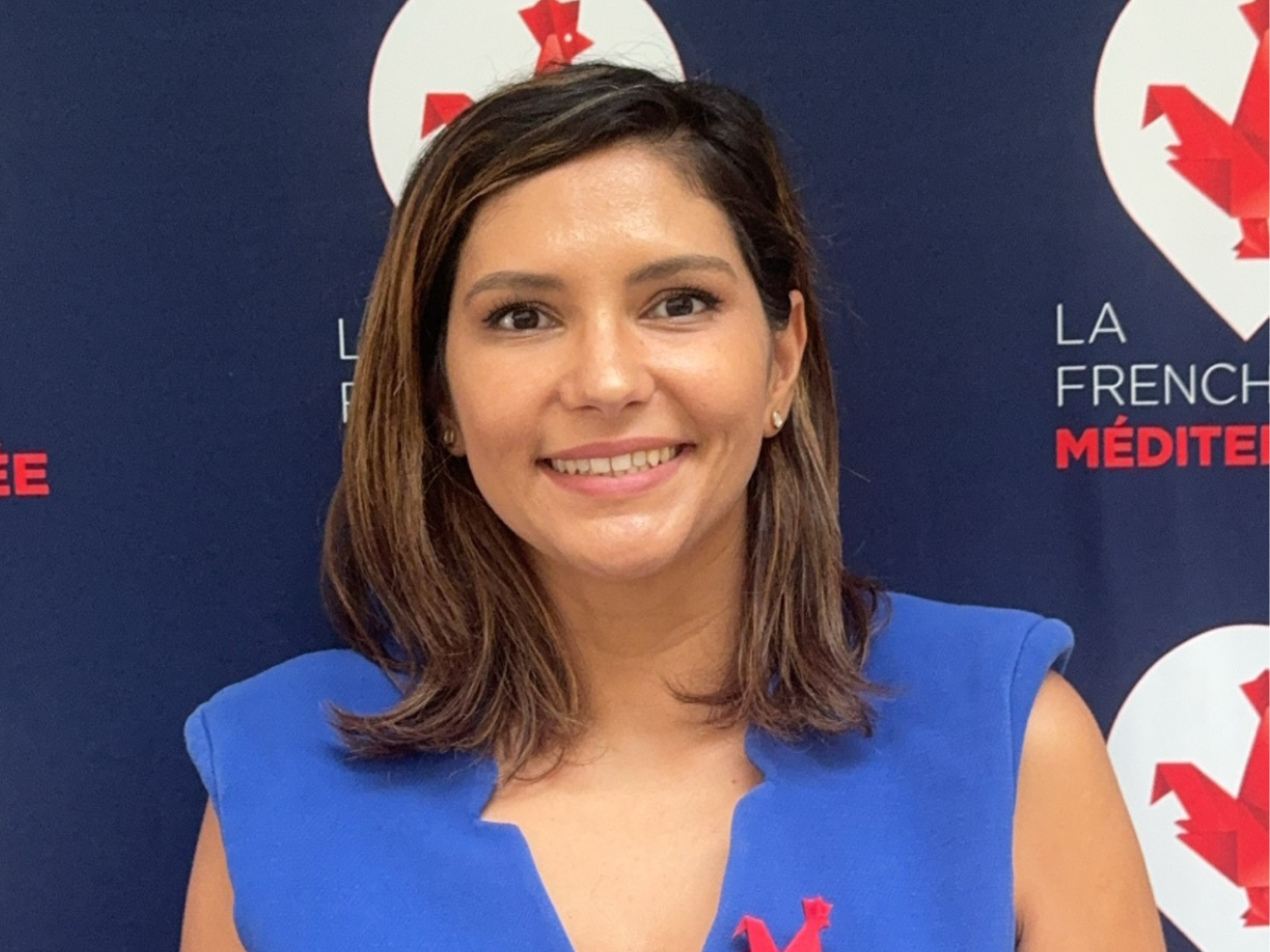
The current president, Tassadit Quivy of Yoo Soft, succeeded Sébastien Lacaze in 2026. The leadership announcement emphasized continuing the buyer-access program and strengthening relationships among startups, larger companies and public organizations.
“Mon mandat sera celui du collectif.”
Tassadit Quivy, on taking the presidency in 2026
Translation: “My term will be about the collective.”
The organization gives entrepreneurs specific subjects to lead. Its published board responsibilities include financing, health technology and international development, industry and greentech, and AI, defense and deeptech. Laure Lenzotti leads the operational team that turns these priorities into appointments, communications and events.
Responsible growth has also appeared as actual programming. Its 2022 Méditerranée Impact work included climate-awareness activities, carbon measurement and eco-design workshops. This makes environmental and social impact part of the association’s teaching record. It does not establish that every member is a climate company, or that attending a workshop produces an emissions reduction.
Banks in the workshop, Hollande at the museum
The event calendar mixes specialist work with occasions that get a broader crowd into the room. Hello La Tech’s fifth edition took place on May 28, 2026, at MO.CO. La Panacée in Montpellier. The organizer subsequently reported more than 450 participants and the presence of former French president François Hollande.
The published program combined geopolitics with cybersecurity, AI and business conversations. Speakers included representatives of Swile, Quantum Surgical and IBM France. Alongside the stage program were startup exhibits and B2B appointments. The museum setting supplied the scenery; founders still had meetings to make.
Meet, Think & Act shows the more workmanlike side. Its December 2025 agenda included bank lending criteria with Crédit Agricole du Languedoc, Banque Populaire du Sud and CIC Sud-Ouest, plus customer acquisition with Dell and Septeo. Other sessions addressed due diligence, international expansion and HR. Those are recognizable operating problems, useful well beyond the day someone first calls a company a startup.
What the €100 actually commits you to
The published 2026 membership runs from January 1 to December 31. Startup membership is reserved for already-created companies established in Gard or Hérault. The €500 scale-up tier lists SMEs or companies exceeding 20 employees, €1 million in revenue or €1 million raised in equity among its criteria. These are association membership categories.
Some exhibition and event opportunities carry additional fees.
The business model combines dues, public support and private partnerships, with charges for some opportunities. A national 2024 funding decision selected French Tech Méditerranée for territorial ecosystem support. That helps explain why its work includes access to government programs as well as member networking.
For founders, the other expense is time. Paying the fee without using the network leaves much of the offer untouched. A business outside the territory, one needing intensive incubation or a team expecting an automatic grant should examine the relevant eligibility and service description before committing.
Bring a problem small enough to solve
The most useful way to approach French Tech Méditerranée is with a specific next step in mind. Use an expert appointment to clarify a process. Attend a bank workshop with a financing question. Approach a buyer event with a defined customer profile and the capacity to respond afterward.
Other business communities can borrow the sequence visible in its history: ask members what is holding them back, give named people responsibility for the priorities and create meetings around actual needs. The 2020 survey is a better starting point than copying the shape of a conference stage.
The association can make a business easier to find and a system easier to navigate. It cannot supply customer demand on command. The founder’s part of the bargain begins when the introduction ends: send the document, schedule the demonstration, answer the buyer. That is where a better address book starts earning its keep.